LACMA

ShopMembershipMyLACMATickets
LACMA
Los Angeles County Museum of Art
5905 Wilshire Blvd.
Los Angeles, CA 90036
info@lacma.org
(323) 857-6000
Sign up to receive emails
Subscribe
© Museum Associates 2025

Museum Hours

Monday

11 am–6 pm

Tuesday

11 am–6 pm

Wednesday

Closed

Thursday

11 am–6 pm

Friday

11 am–8 pm

Saturday

10 am–7 pm

Sunday

10 am–7 pm


  • About LACMA
  • Jobs
  • Building LACMA
  • Host An Event
  • Unframed
  • Press
  • FAQs
  • Log in to MyLACMA
  • Privacy Policy
© Museum Associates 2025
Collections

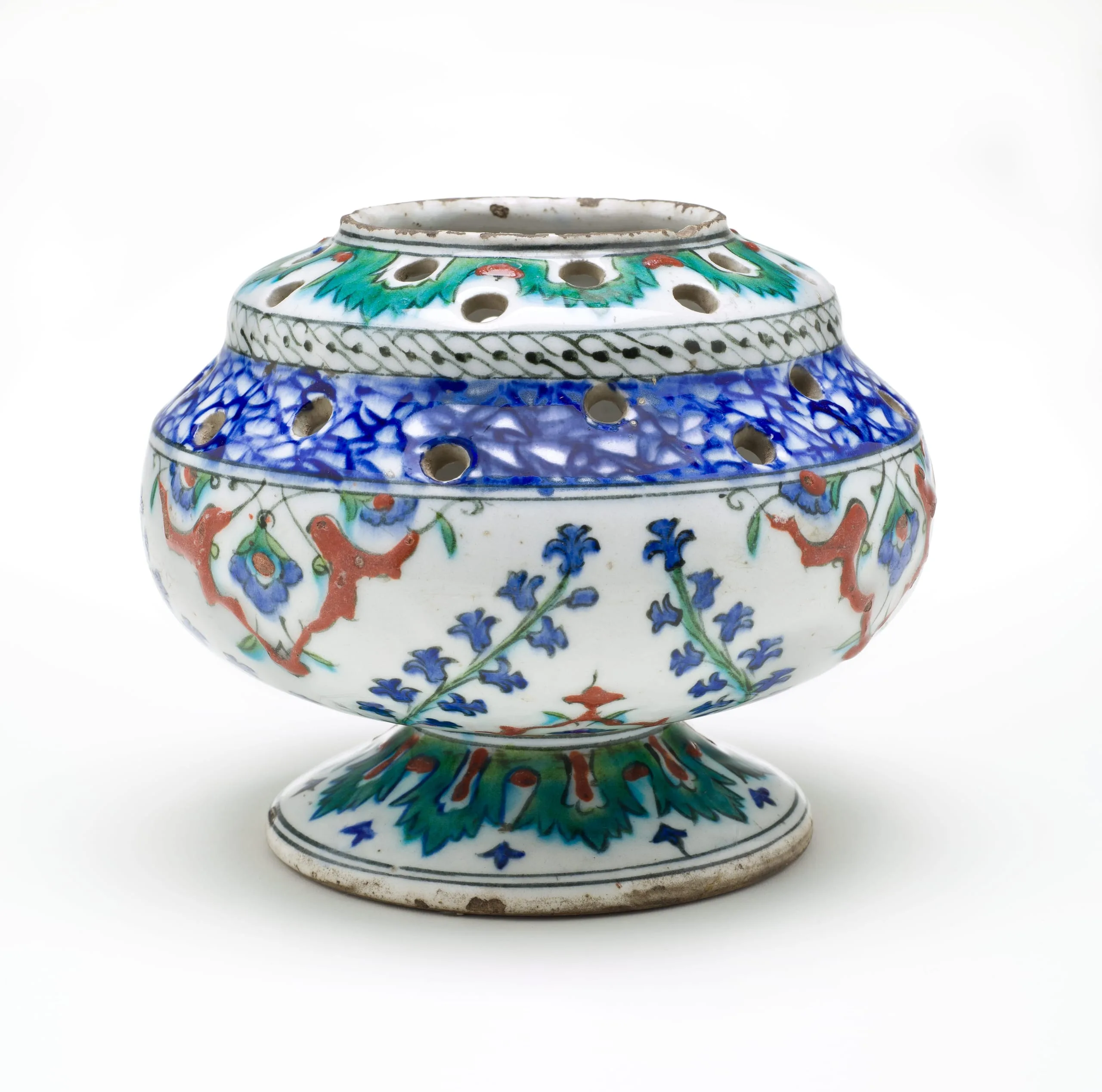
Pierced Flower-Vasethird quarter of 16th century

Not on view
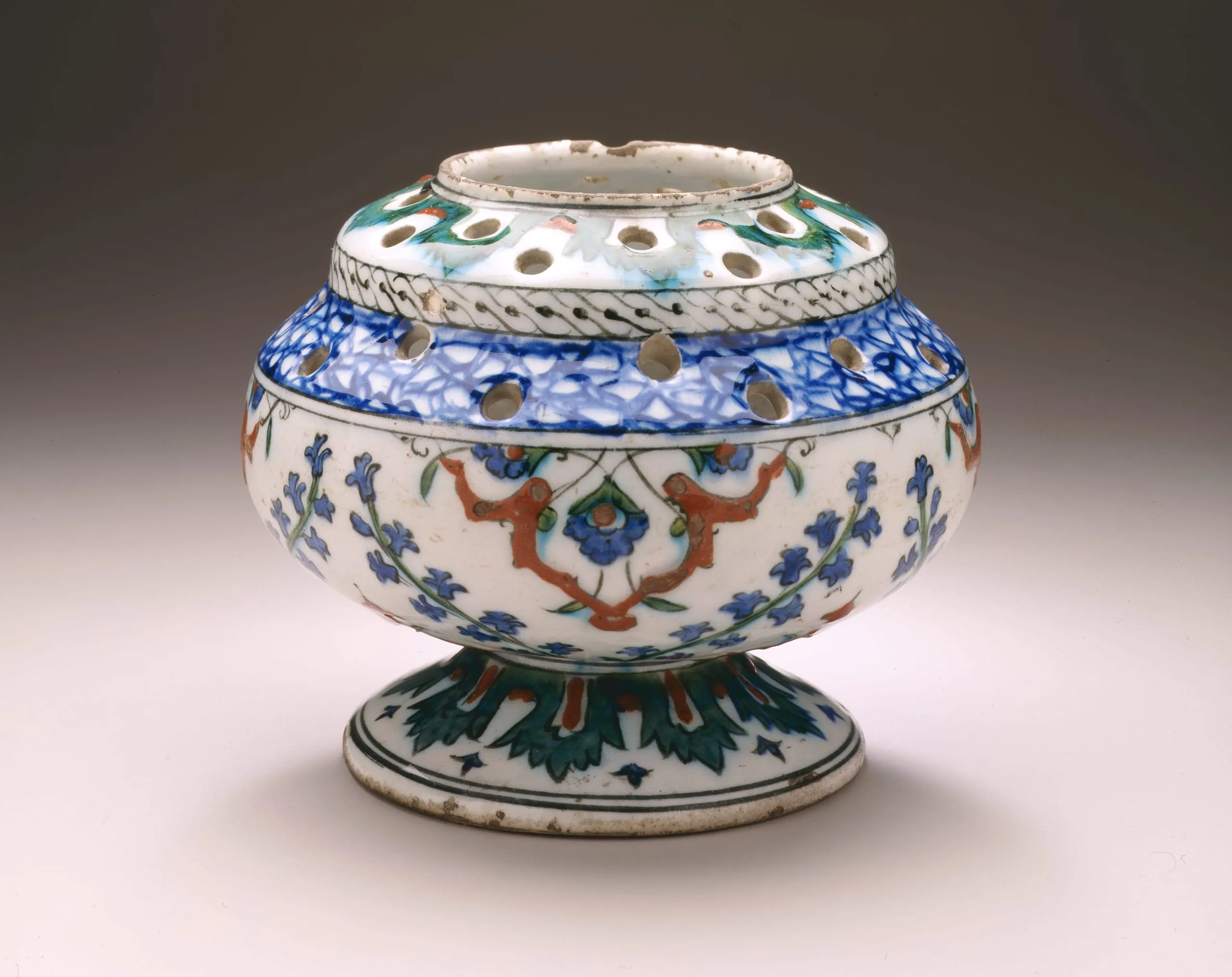
Ceramic vessel with squat rounded body and footed base, white ground decorated with cobalt blue, teal, and coral-red floral and leaf motifs, pierced holes along the shoulder and neck
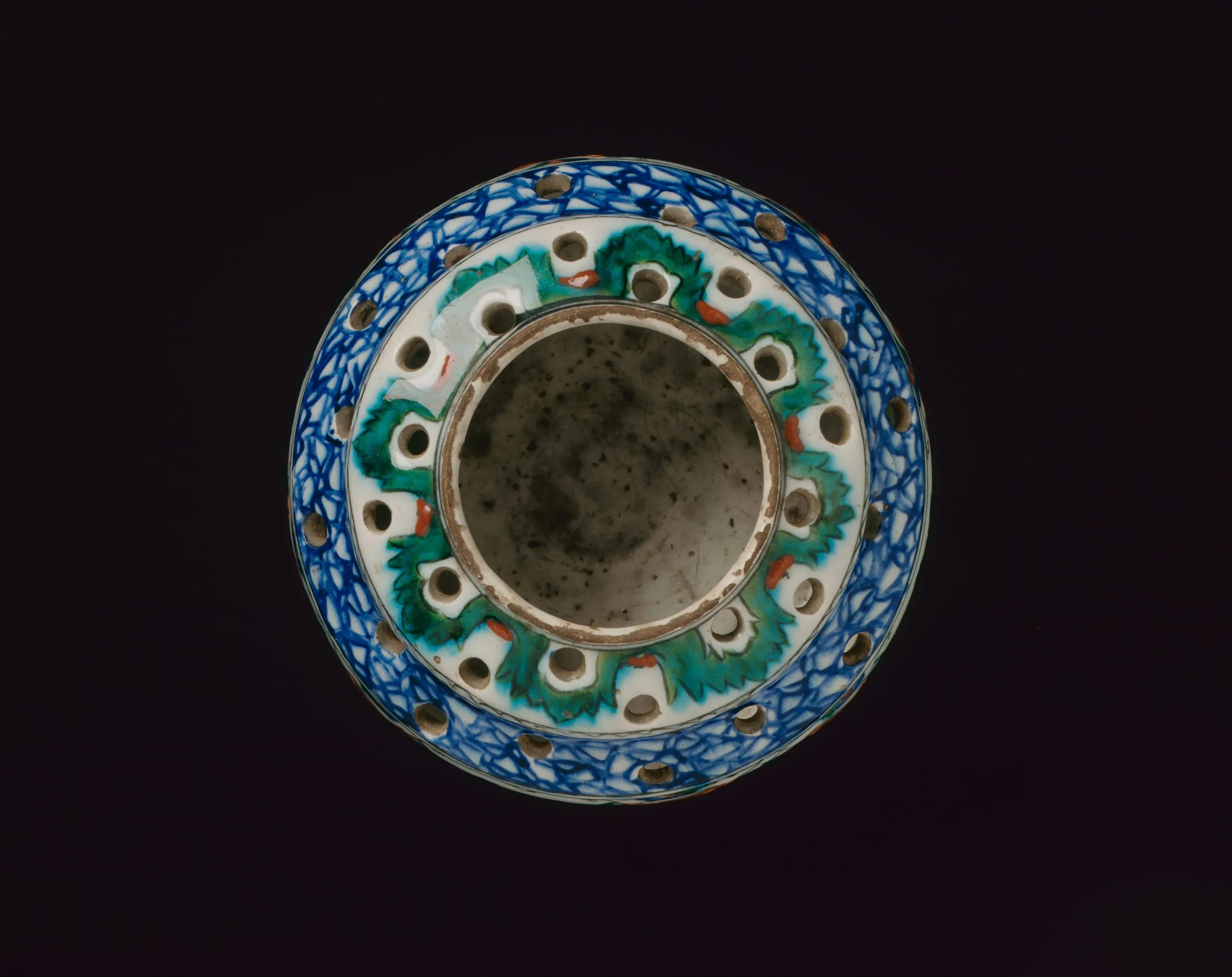
Ceramic vessel photographed from above against a black background, showing a circular opening surrounded by concentric decorative bands: an inner ring of green leaf-like forms and small perforations with orange accents, and an outer band of interlocking blue lattice pattern on white.
Fritware vessel on a low foot ring with a pierced domed lid, decorated in cobalt blue, red, green, and turquoise on a white ground with floral and arabesque motifs; a rope-twist band separates the perforated upper section from the bulbous body.
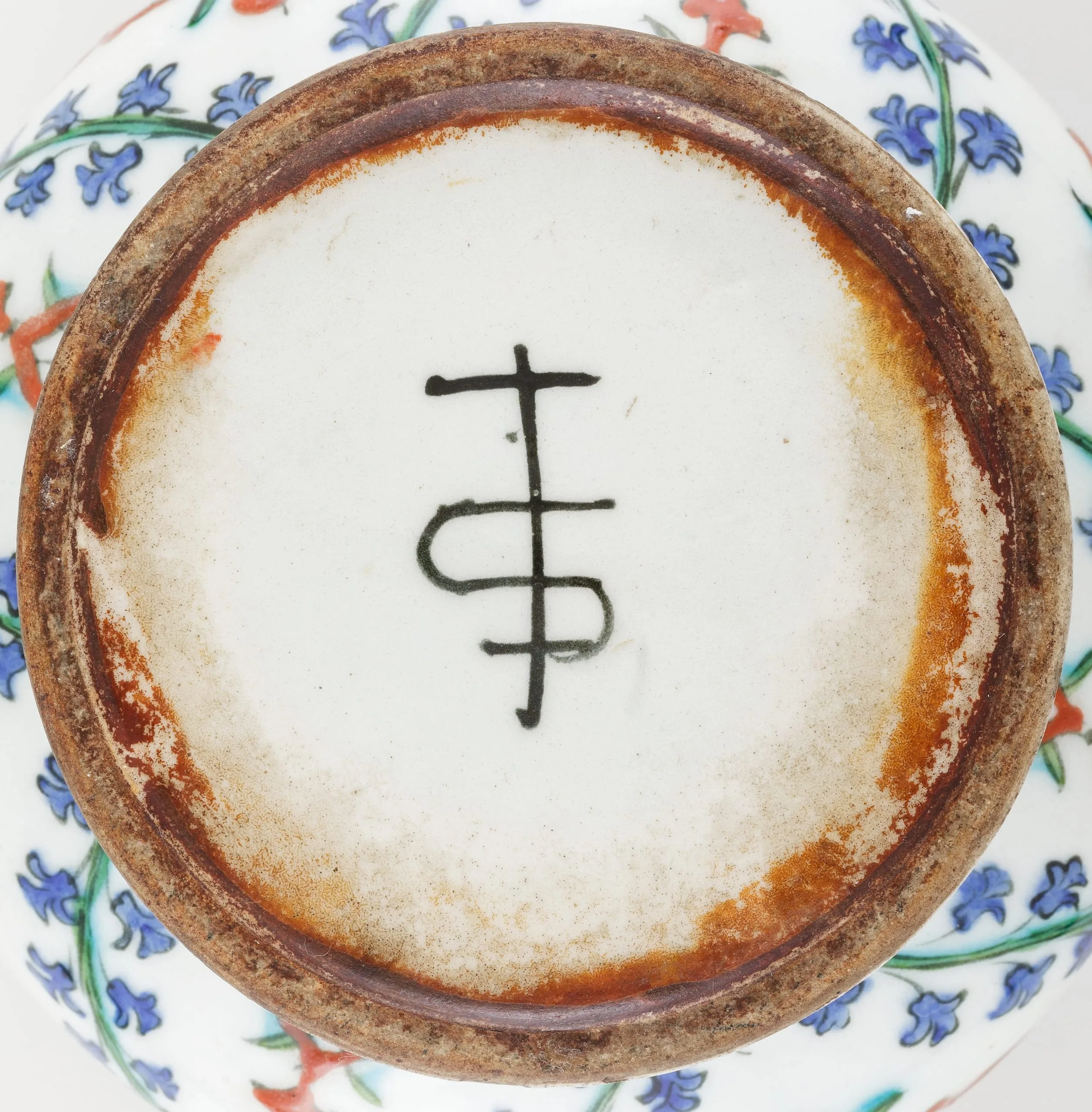
Porcelain bowl viewed from below, showing unglazed foot rim with iron-brown discoloration and a painted mark in black underglaze; rim of bowl decorated with blue floral sprays and red vine scrolls visible at edges.
Title
Pierced Flower-Vase
Place Made
Turkey, Iznik
Date Made
third quarter of 16th century
Medium
Fritware, underglaze-painted
Dimensions
5 1/4 x 6 in. (13.34 x 15.24 cm)
Credit Line
The Madina Collection of Islamic Art, gift of Camilla Chandler Frost
Accession Number
M.2002.1.16
Classification
Ceramics
Collecting Area
Art of the Middle East: Islamic
Curatorial Notes

Iznik pottery, one of the most renowned and influential arts of the Ottoman period, began to be commissioned for the European market by the 1570s. Table service could include European coats of arms, while there is a group of pierced flower vases, each of which bears a distinctive black insignia on its base in the form of a long-stemmed cross intersected by the capital letter "S." Similar marks occur on maiolica apothecary jars, suggesting that the flowerpots were perhaps made for an Italian customer; more specifically, this device has been related to the SP monogram of Stefano and Piero di Filippo, who had a maiolica factory at Cafaggiolo.

Selected Bibliography
  • Lo Terrenal y lo Divino: Arte Islámico siglos VII al XIX Colección del Museo de Arte del Condado de Los Ángeles. Santiago: Centro Cultural La Moneda, 2015.