- Title
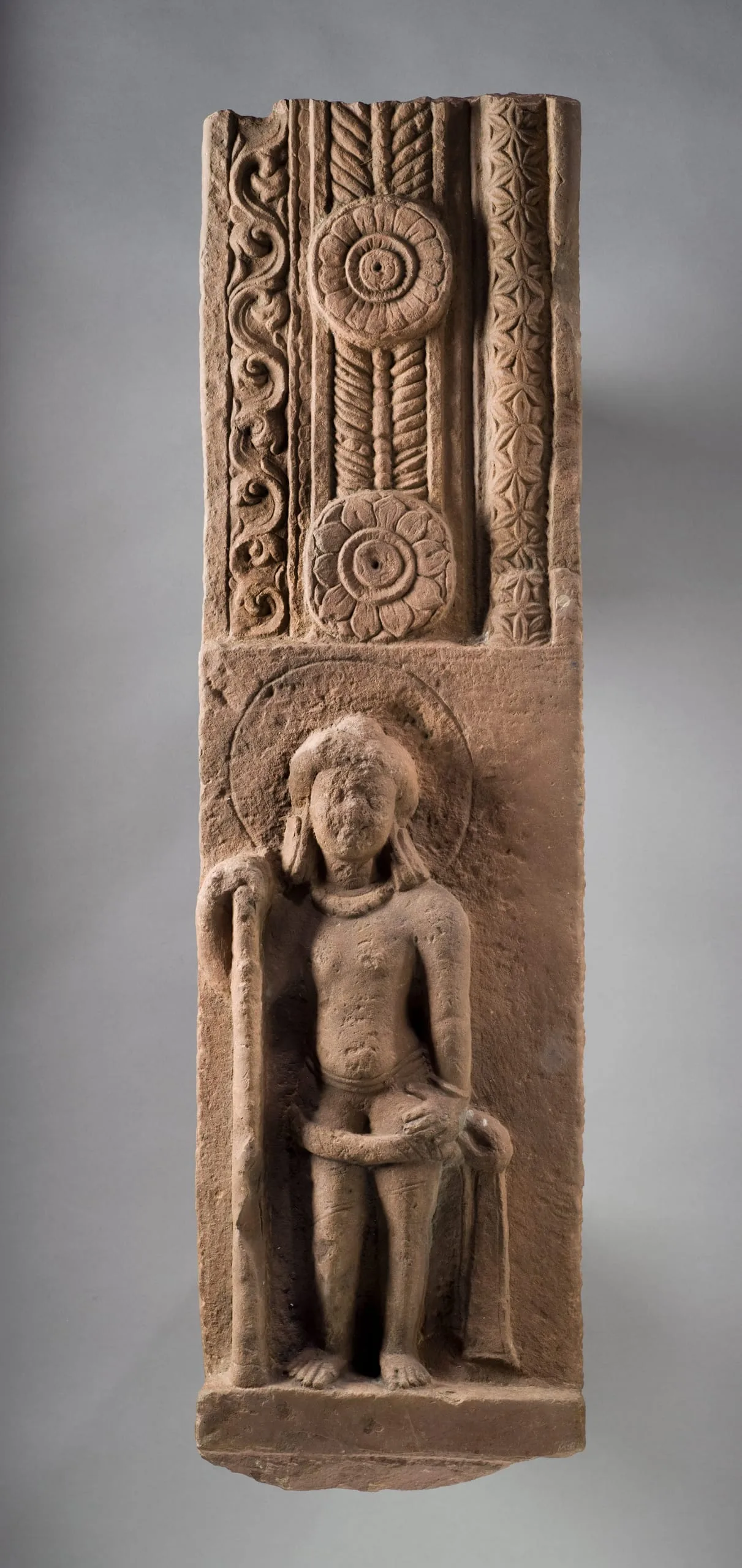
- Doorjamb with a Divine Guardian
- Date Made
- late 5th century
- Medium
- Red sandstone
- Dimensions
- 42 x 11 1/2 x 3 1/2 in. (106.68 x 29.21 x 8.89 cm)
- Accession Number
- M.77.153
- Curatorial Notes
In the temple architecture of the renowned Gupta Dynasty (319-467 CE) and continuing through the early medieval period (6th-13th century), the door jambs of northern and central Indian Hindu temples are typically safeguarded with a pair of divine guardian figures (dvarapala) to protect the holy sanctuary from mortal marauders and demonic forces. For temples devoted to Vishnu, the Hindu God of Preservation, as well as at the entrance to his celestial abode Vaikuntha, the door guardians are believed to be Jaya and Vijaya who had been cursed to be reborn three times as enemies of Vishnu. After being freed from the curse, they became Vishnu’s gatekeepers.
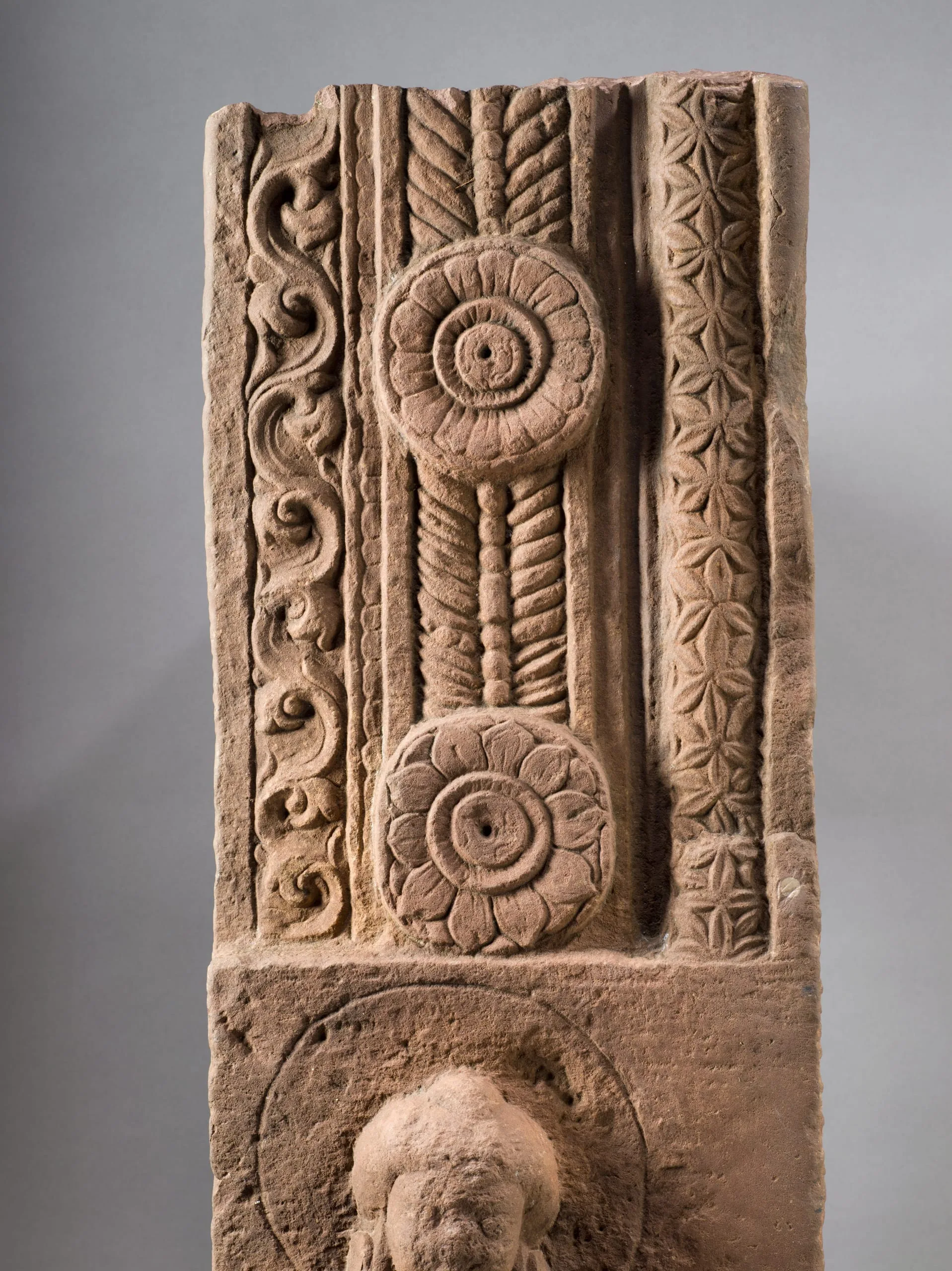
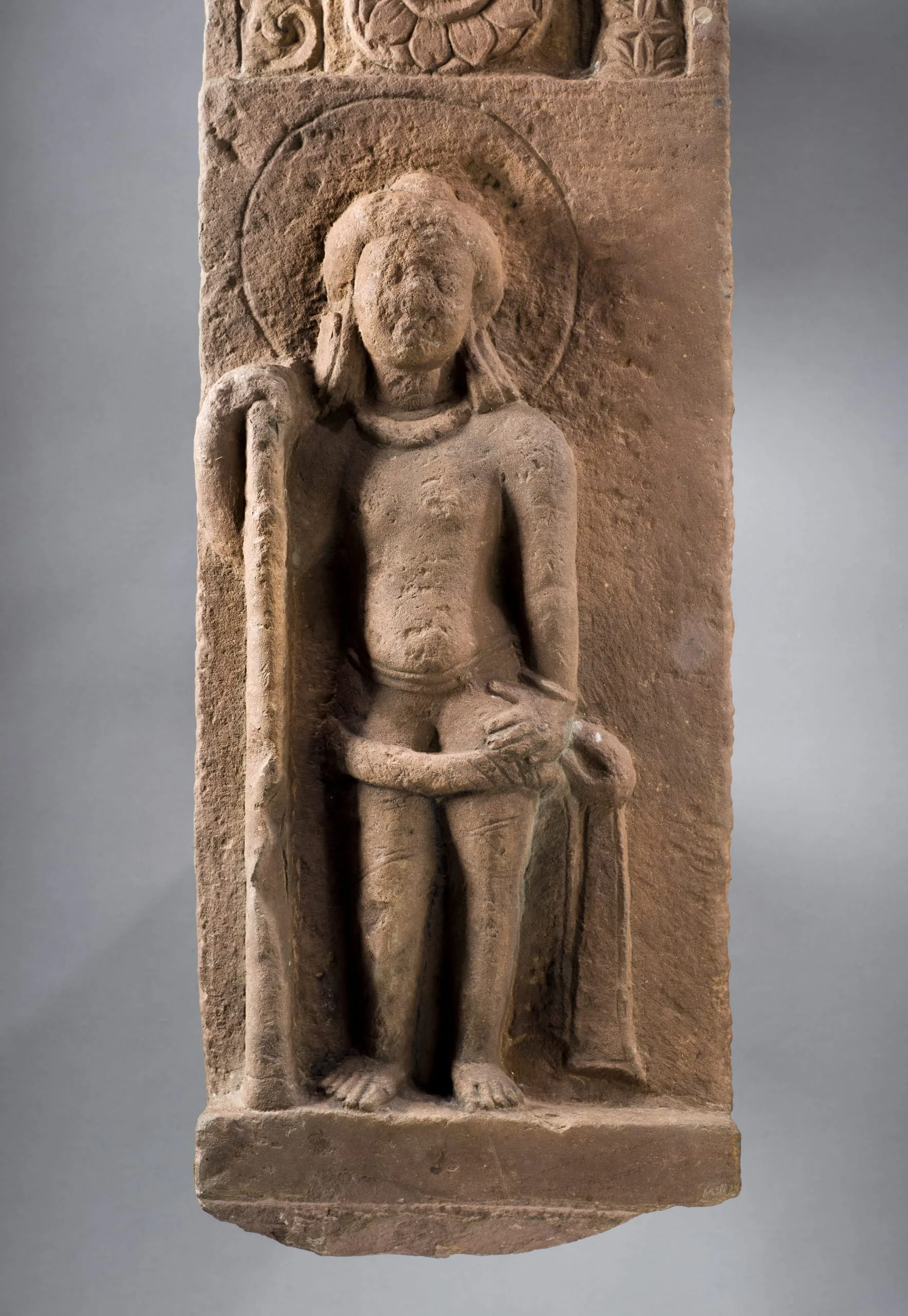
This door guardian is nimbate signifying his divinity. He has a Gupta-style hairstyle and wears heavy jewelry, a striped dhoti, and a thick waist sash. He stands in a mild contrapposto pose with his left hip thrust out, known in Sanskrit as the ‘three-bend’ posture (tribhanga). He holds a thick staff (danda) with his right hand while his left hand rests on his hip. The door jamb above the guardian has three vertical rows of vegetal decoration. In the center is a flaming column adorned with two large lotuses. It is flanked by bands of scrolling foliage and flowers with six petals (shad patra). See also M.73.119.14 and M.74.5.5.