LACMA

ShopMembershipMyLACMATickets
LACMA
Los Angeles County Museum of Art
5905 Wilshire Blvd.
Los Angeles, CA 90036
info@lacma.org
(323) 857-6000
Sign up to receive emails
Subscribe
© Museum Associates 2025

Museum Hours

Monday

11 am–6 pm

Tuesday

11 am–6 pm

Wednesday

Closed

Thursday

11 am–6 pm

Friday

11 am–8 pm

Saturday

10 am–7 pm

Sunday

10 am–7 pm


  • About LACMA
  • Jobs
  • Building LACMA
  • Host An Event
  • Unframed
  • Press
  • FAQs
  • Log in to MyLACMA
  • Privacy Policy
© Museum Associates 2025
Collections

Unknown
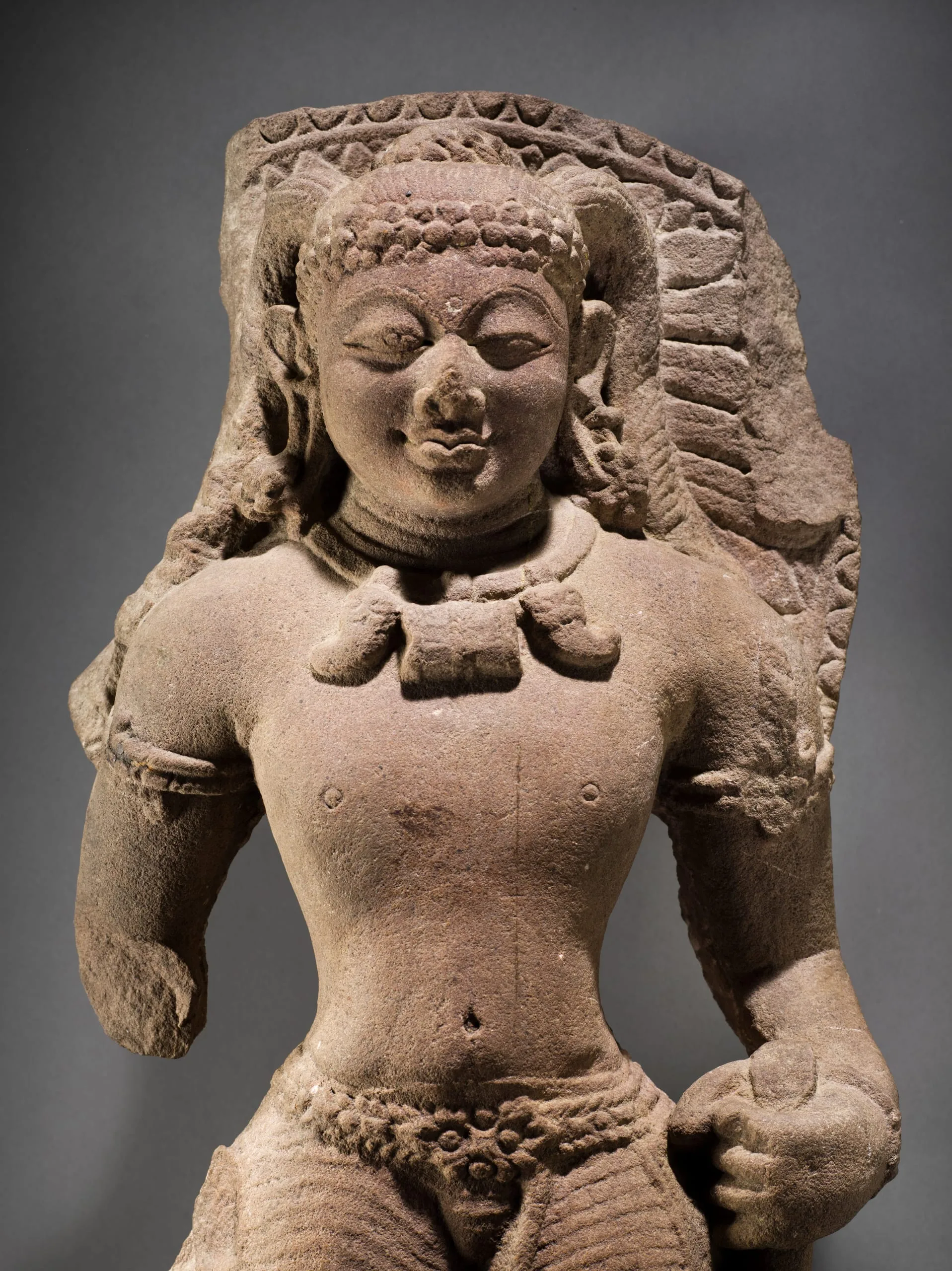
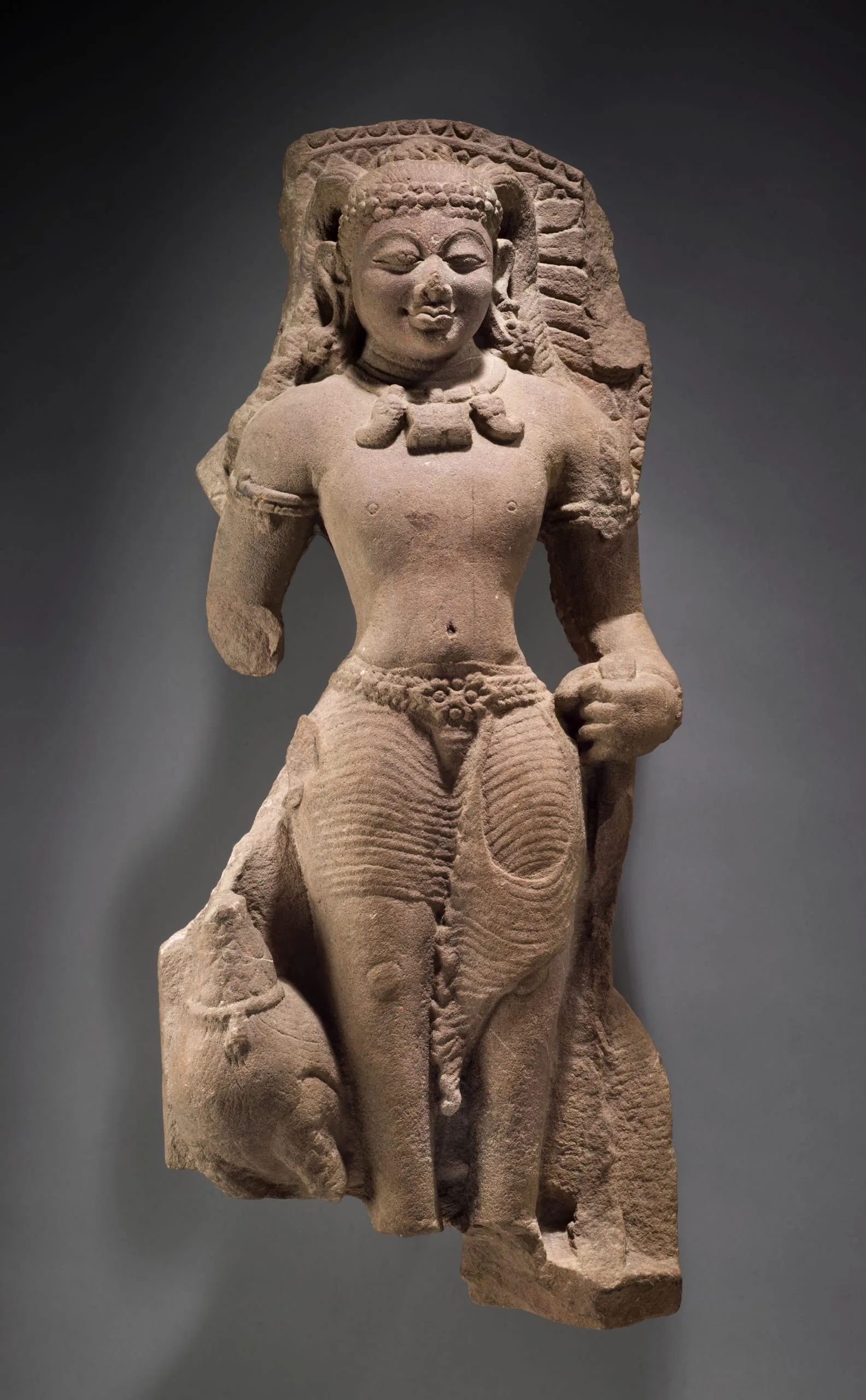
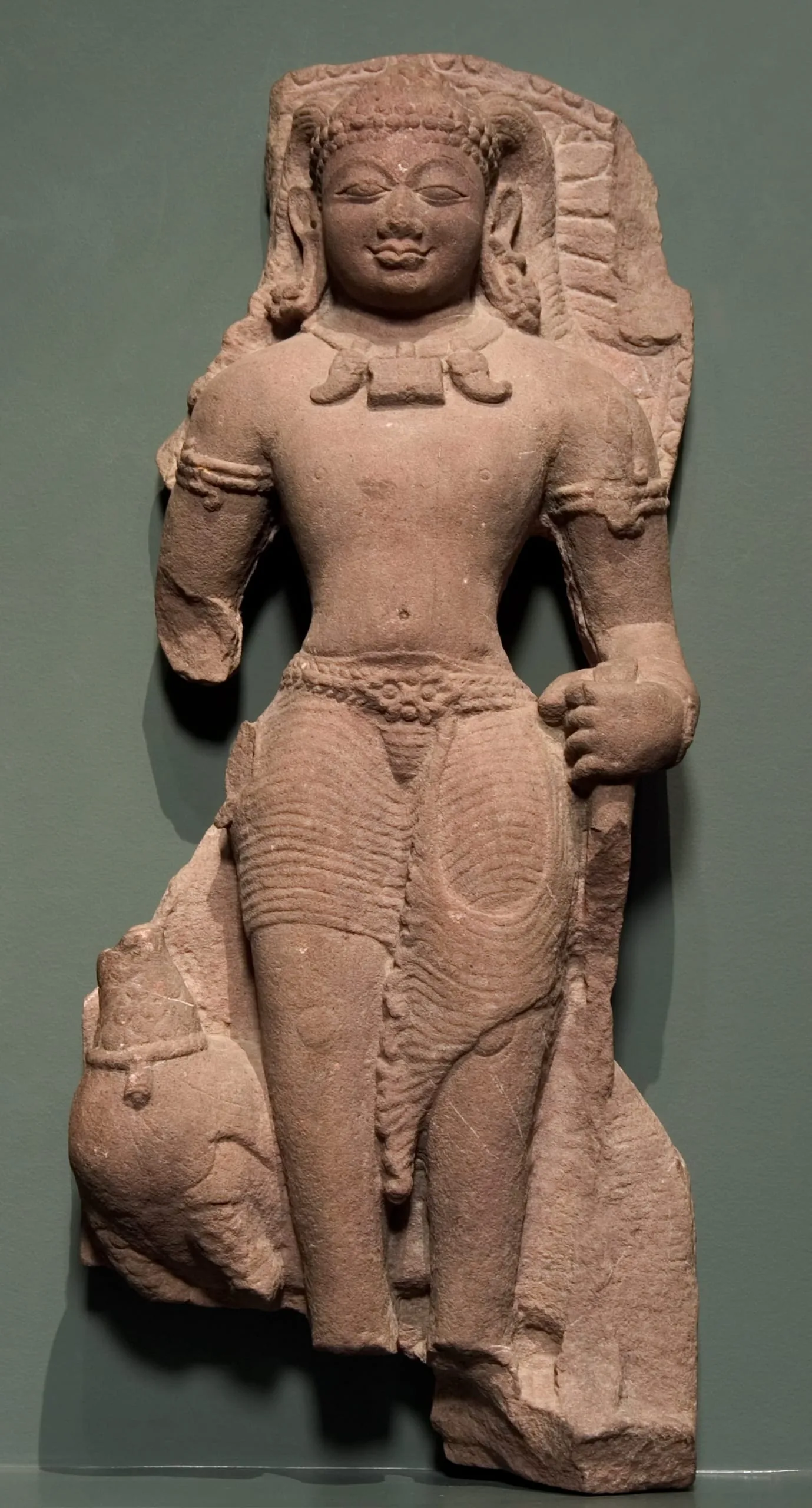
Kumara, The Divine General7th century

Not on view
Sandstone sculpture of a standing figure in partial relief, with ornate headdress, multi-strand necklace, bare torso, and pleated lower garment, surface worn and partially broken
Red sandstone relief sculpture of a standing male deity with an elaborate headdress, bare torso adorned with a necklace, and draped lower garment with carved pleating; one hand holds a staff-like object, with a small animal figure at lower left.
Sandstone sculpture, upper torso of a standing female deity with curled hair, elaborate prabhavali halo, beaded necklace, and ornamental hip belt with floral motifs; fine carved detail on weathered reddish-brown stone.
Artist or Maker
Unknown
Title
Kumara, The Divine General
Place Made
India, Madhya Pradesh
Date Made
7th century
Medium
Reddish brown sandstone
Dimensions
28 1/2 x 8 1/2 x 4 1/2 in. (72.39 x 21.59 x 11.43 cm)
Credit Line
Gift of Mr. and Mrs. Harry Lenart
Accession Number
M.77.4
Classification
Sculpture
Collecting Area
South and Southeast Asian Art
Curatorial Notes

Kumara, also known as Skanda or Karttikeya in northern South Asia and Subrahmanyam or Murugan in the south, is the youthful Hindu god of war. He is the son of Shiva and Parvati. Although varying origin stories are presented in different textual sources, perhaps the most familiar is that Kumara was born when Shiva and Parvati were interrupted while having sex. This caused Shiva to ejaculate accidentally into a fire. As the god of fire, Agni, was unable to bear the heat of Shiva’s seed, he threw it into a thicket of reeds on the bank of the Ganges River. The embryo was found and nursed by the wives of sages known as the Krittikas (personifications of the Pleiades constellation cluster). He eventually grew into a handsome warrior boy who was destined to destroy the demon Taraka.

In this representation, the nimbate Kumara stands in a stiff, frontal pose (samapada sthanaka). His hair is gathered into three braids (trishikha) and he wears a necklace of tiger claws (vyaghra nakha). His dhoti has a flamboyant fanlike fold across his left thigh. In his left hand, he holds the upright shaft of his now-broken spear, which was made from the Sun by Vishvakarman, the architect and artificer of the gods. His now-missing right hand was likely held in the gesture of charity (varada mudra) or was feeding his peacock mount standing behind him with its now-lost head turned upward.

See also M.82.167, M.84.40, M.85.212.2, M.85.213.1, M.85.279.3, M.87.272.11, AC1993.151.1, AC1994.130.1, and AC1994.183.1.
Selected Bibliography
  • Newman, Richard. The Stone Sculpture of India: a Study of the Materials Used by Indian Sculptors from ca. 2nd Century B.C. to the 16th Century. Cambridge, MA: Center for Conservation and Technical Studies, Harvard University Art Museums, 1984.
  • El Universo de la India: Obras Maestras del Museo de Arte del Condado de Los Angeles. Santiago: Centro Cultural Palacio La Moneda, 2012.