- Title
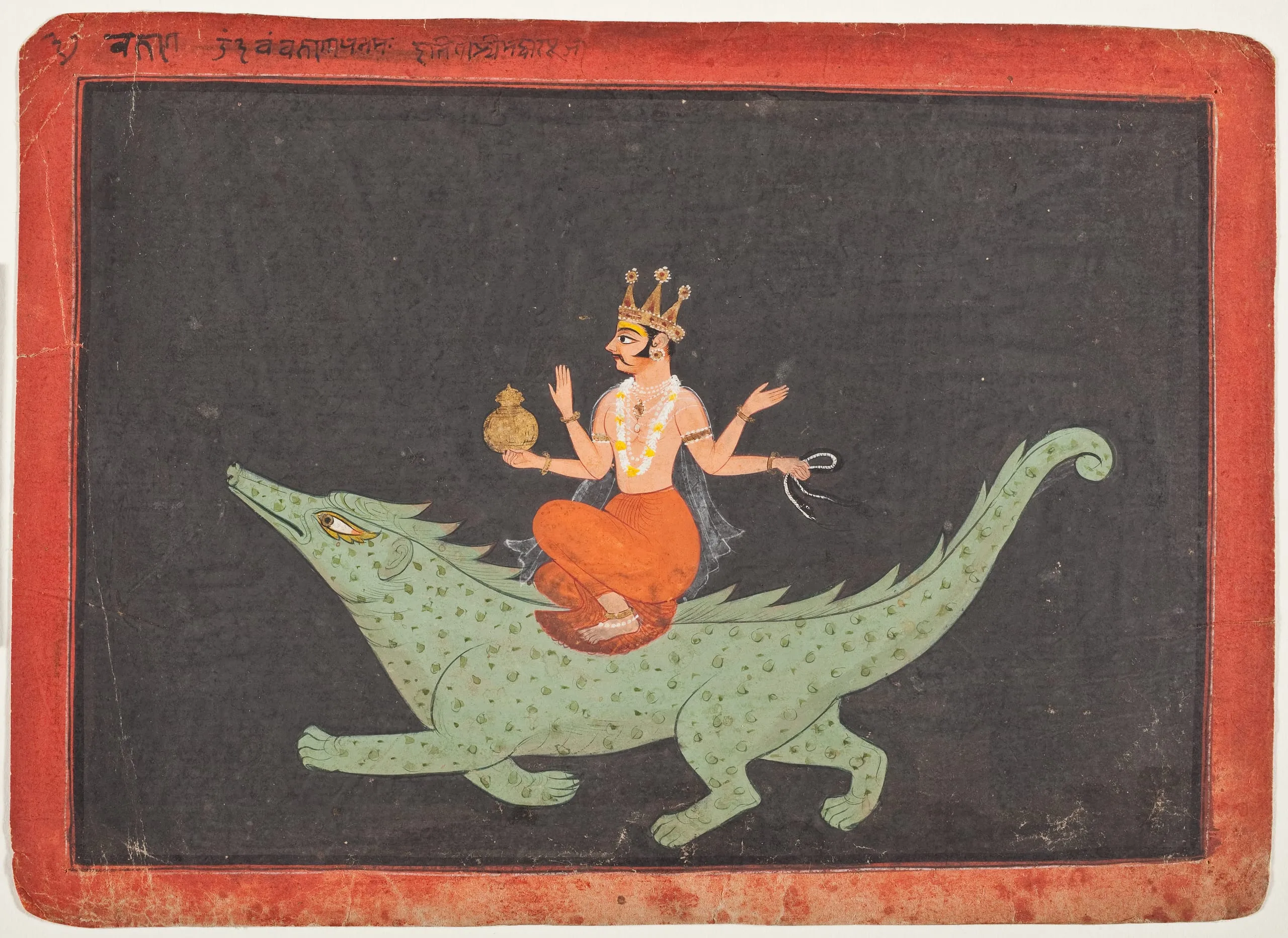
- Varuna, God of Waters
- Date Made
- circa 1675-1700
- Medium
- Opaque watercolor, gold, and ink on paper
- Dimensions
- Sheet: 7 3/4 x 10 3/4 in. (19.69 x 27.31 cm); Image: 6 1/2 x 9 1/2 in. (16.51 x 24.13 cm)
- Accession Number
- M.72.4.2
- Curatorial Notes
Varuna, the Hindu God of Waters, is one of the earliest and most important Vedic deities. He ruled over waters (oceans and rain), demons, and the laws of nature and man. He is also the leader of the (generally) twelve solar deities known as the Adityas (sons of Aditi, the mother goddess of infinity). In later Hinduism, Varuna is principally the guardian of the direction (dikpala) of the West.
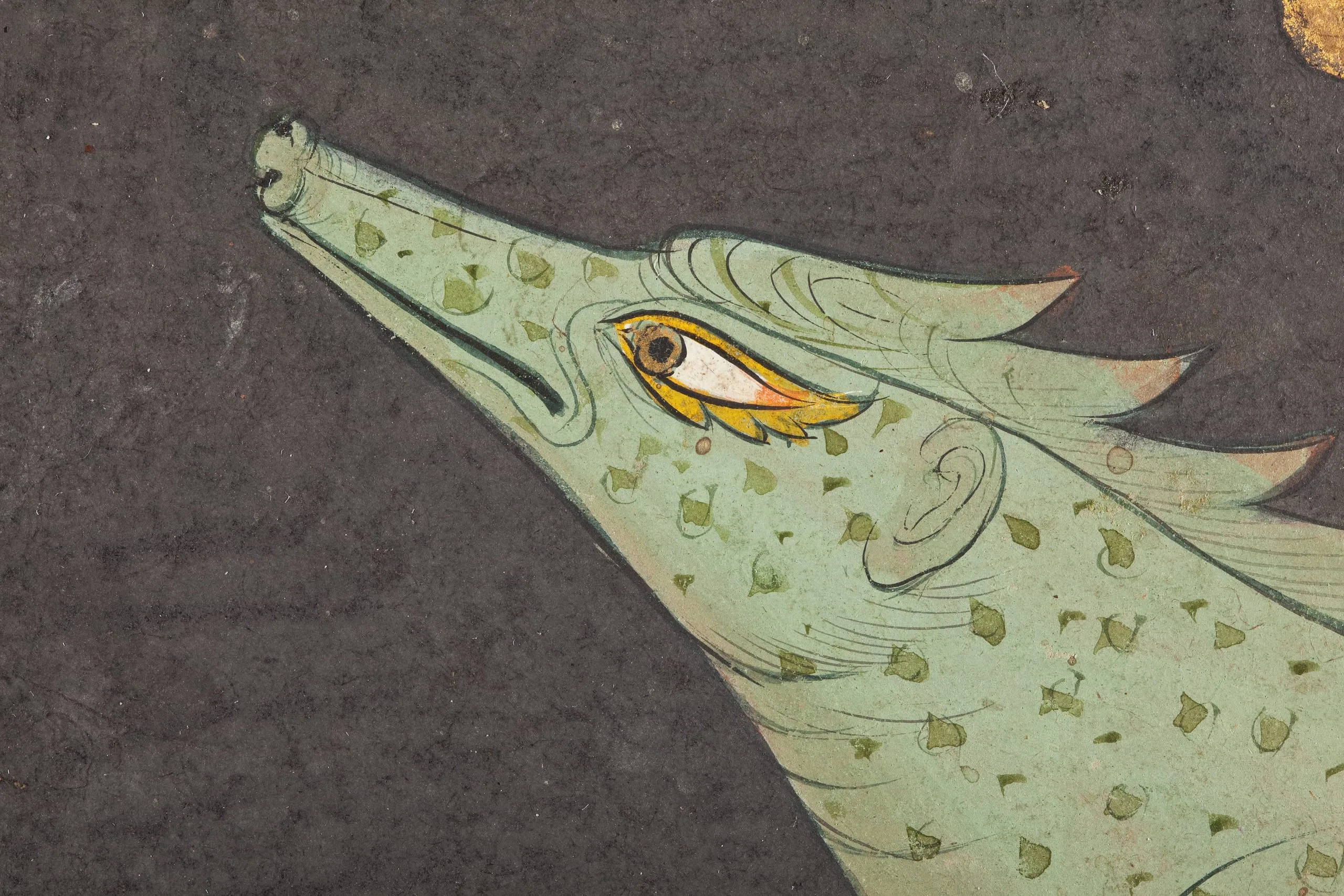
This folio [#37] is likely from a series of propitiatory divinities. The inscription along the top identifies the figure as Varuna, regent of the West. He is crowned and wears golden jewelry, a floral garland, an orange dhoti, and a transparent shawl. He has four arms and carries a golden waterpot (kamandalu) and a snake-noose (naga-pasha). His hands are held in the symbolic gestures of ‘fear-not’ (abhaya mudra) and ‘gift-giving’ (varada mudra). He rides on a mythical aquatic creature (makara).