LACMA

ShopMembershipMyLACMATickets
LACMA
Los Angeles County Museum of Art
5905 Wilshire Blvd.
Los Angeles, CA 90036
info@lacma.org
(323) 857-6000
Sign up to receive emails
Subscribe
© Museum Associates 2025

Museum Hours

Monday

11 am–6 pm

Tuesday

11 am–6 pm

Wednesday

Closed

Thursday

11 am–6 pm

Friday

11 am–8 pm

Saturday

10 am–7 pm

Sunday

10 am–7 pm


  • About LACMA
  • Jobs
  • Building LACMA
  • Host An Event
  • Unframed
  • Press
  • FAQs
  • Log in to MyLACMA
  • Privacy Policy
© Museum Associates 2025
Collections

Adrien-Jean Maximilien Vachette
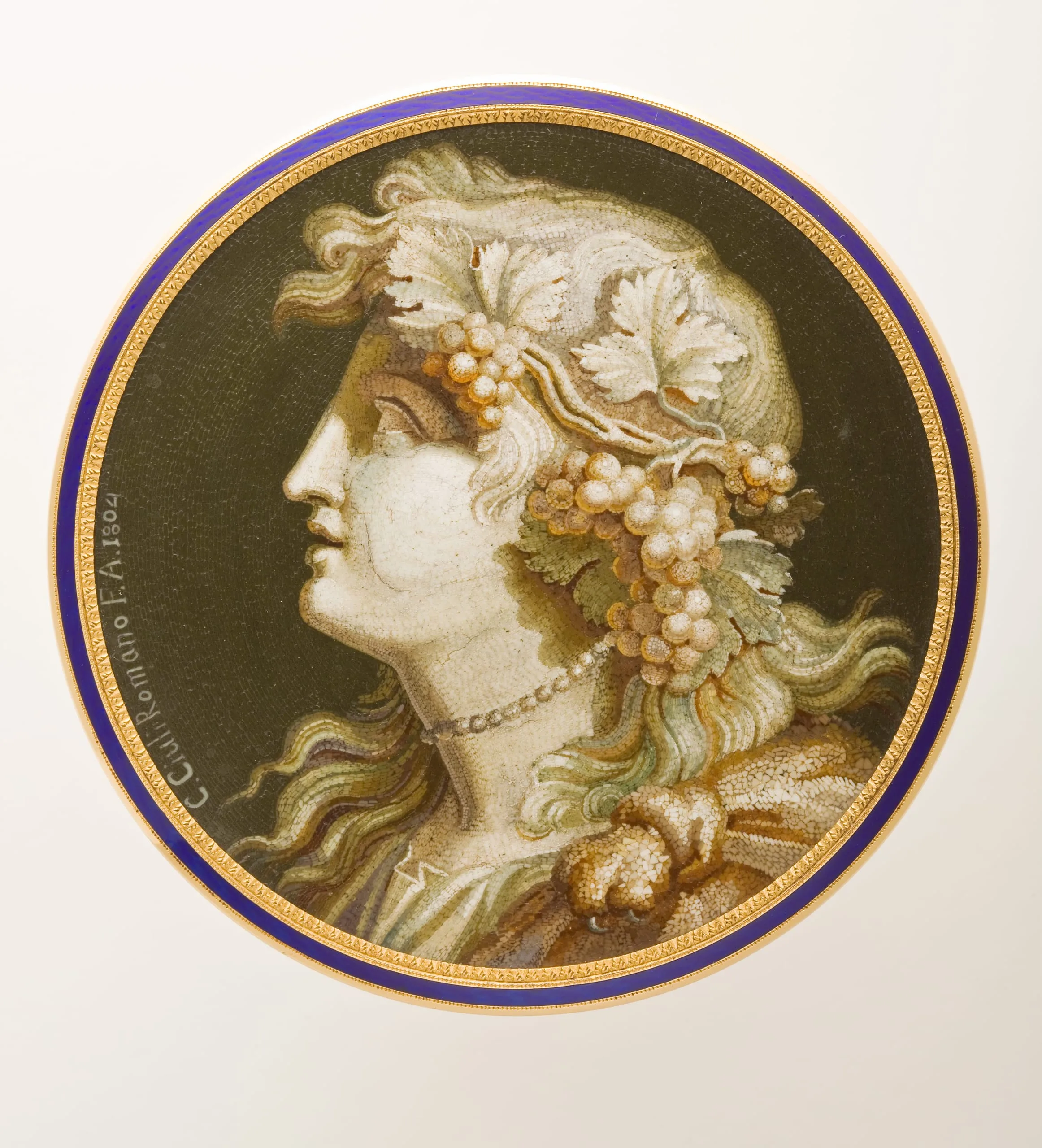
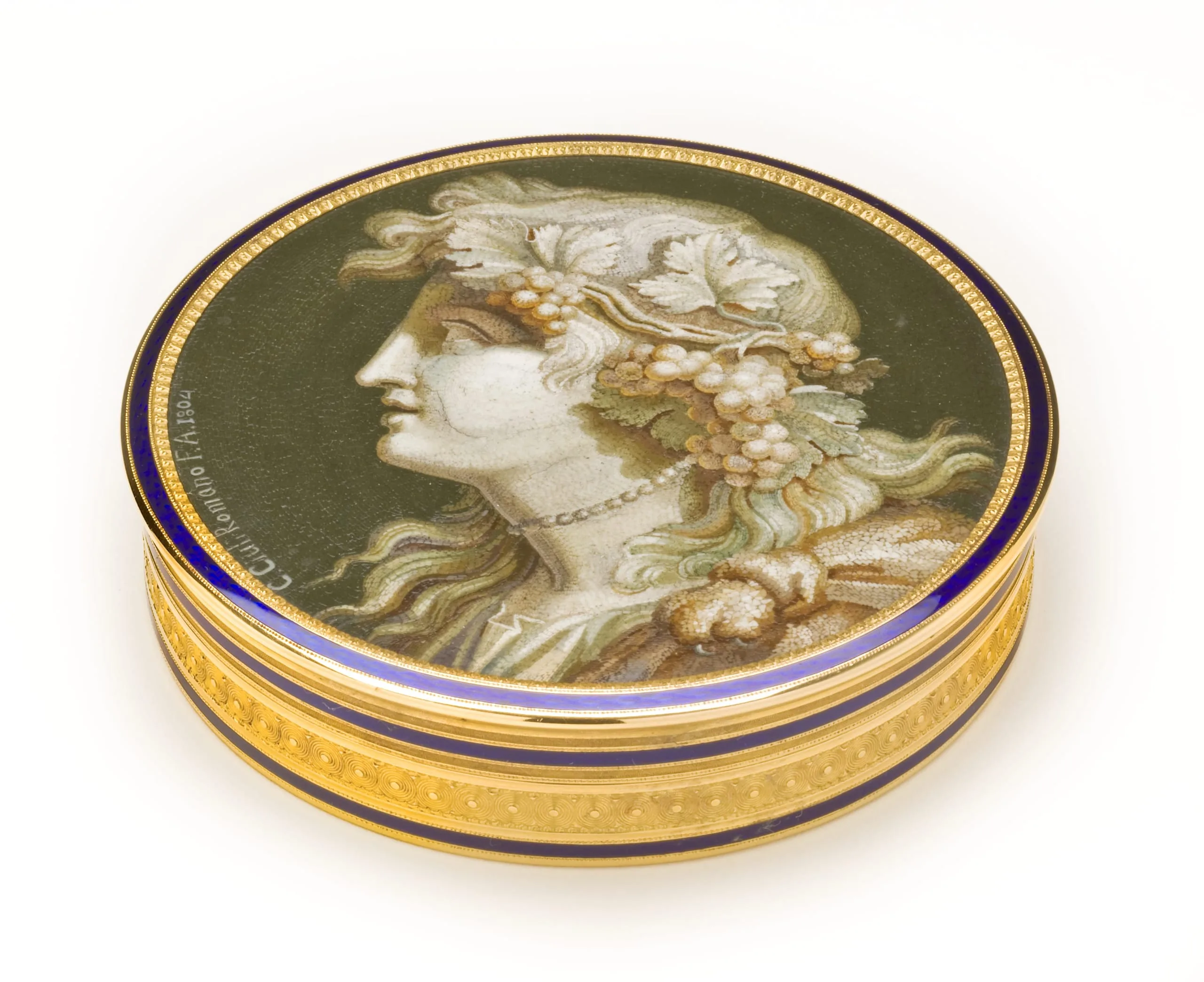
Snuffbox with Head of BacchusMicromosaic 1804, box 1809-1819

Not on view
Circular micromosaic plaque in cobalt blue and gold frame, depicting a pale-skinned figure in left profile with grapevine and leaf garland in hair, dated 1804
Circular gold and cobalt blue enamel snuff box with a miniature portrait on the lid depicting a figure in profile with flowing hair adorned with grape clusters and vine leaves, rendered on a dark olive ground; finely textured gold body with blue enamel bands.
Mosaic portrait in strict profile, pale-toned face with curling hair adorned with grape clusters and vine leaves, pearl necklace visible at neck, set against a dark olive-brown background, composed of finely graded tesserae.
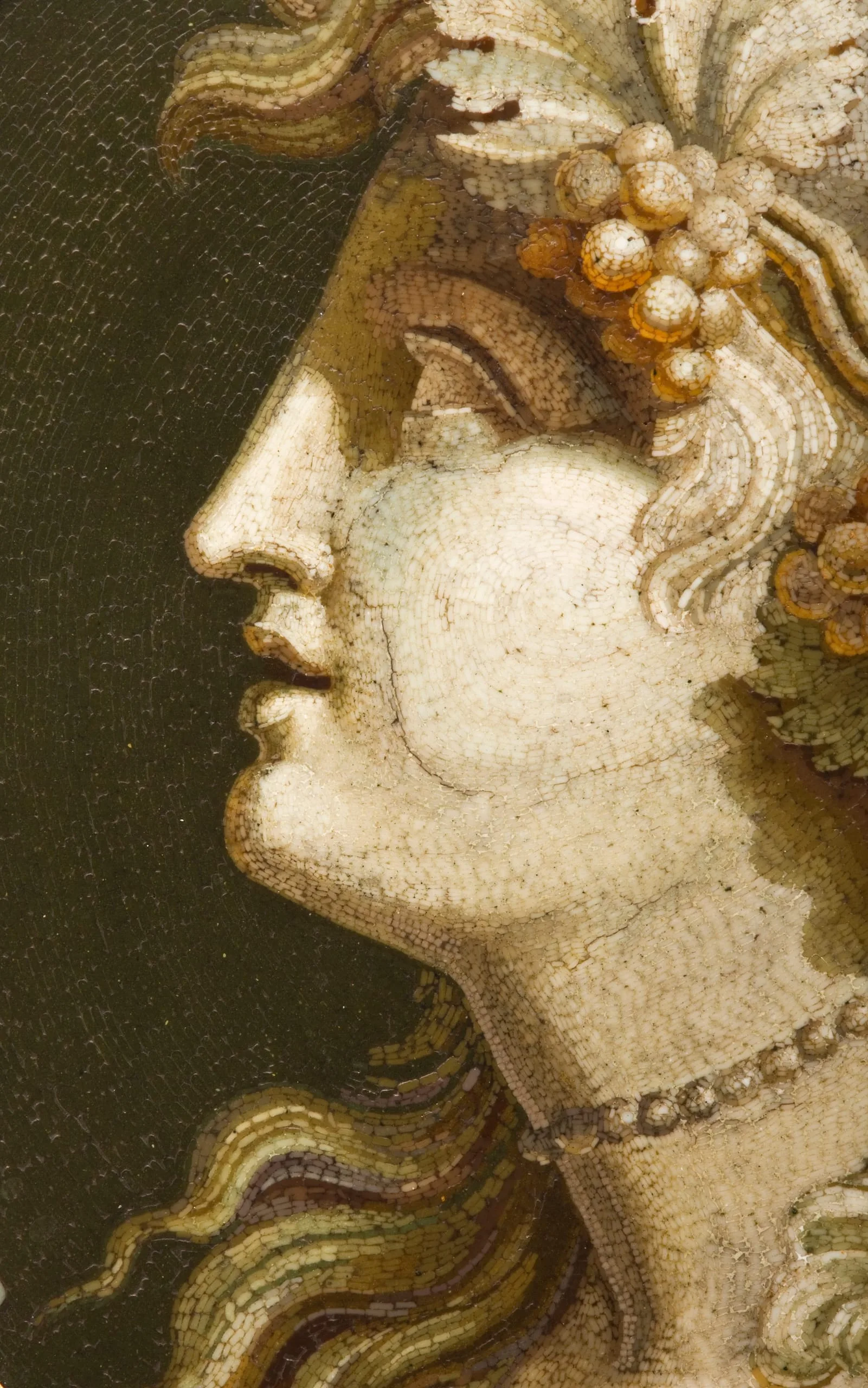
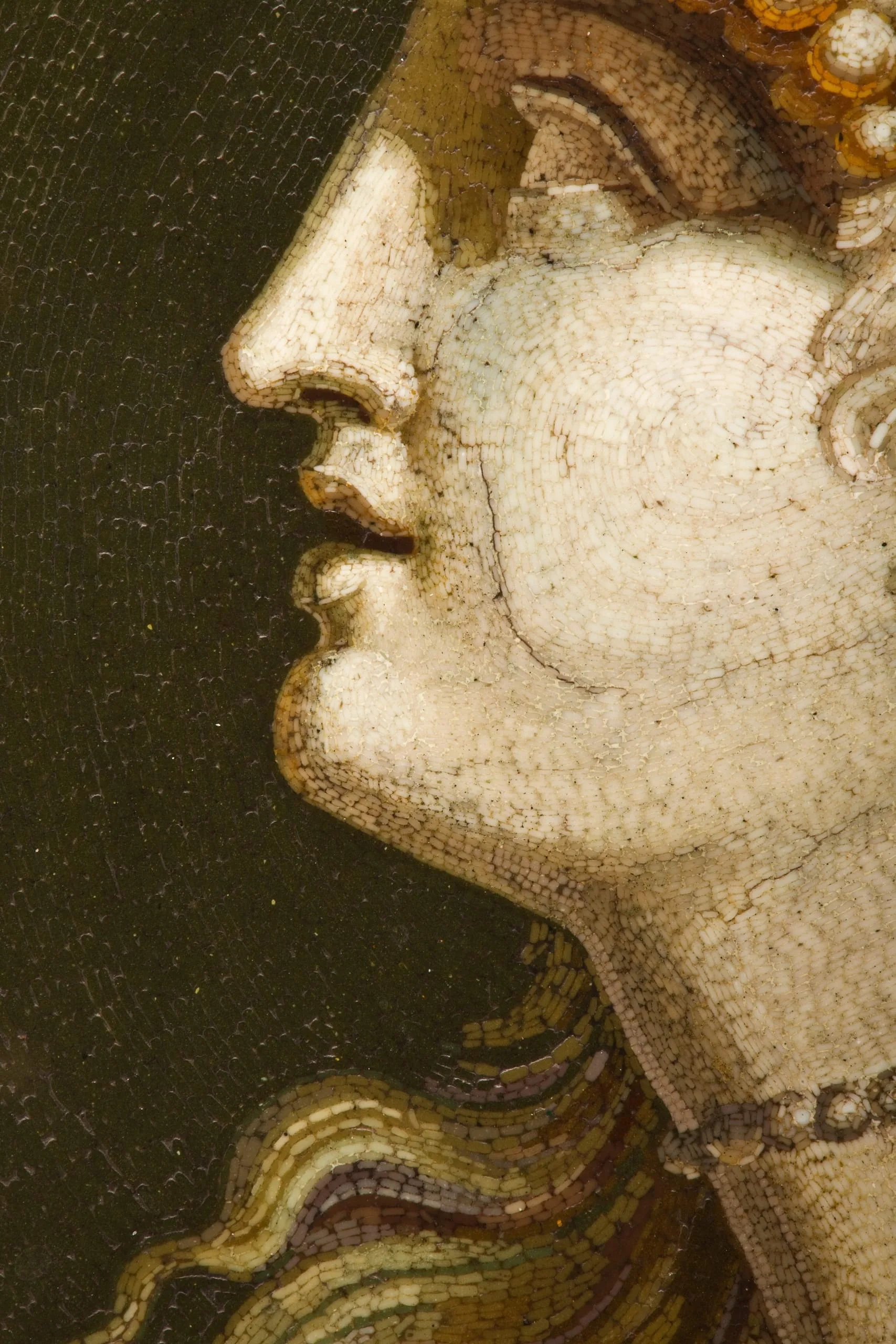
Close-up detail of a mosaic portrait, profile view of a figure with pale tessellated face, auburn hair, and layered drapery in muted earth tones against a dark background, with fine crackled surface visible throughout.
Goldsmith
Adrien-Jean Maximilien Vachette
France, 1753-1839
Mosaicist
Clemente Ciuli
Title
Snuffbox with Head of Bacchus
Place Made
Micromosaic made in Rome, gold box made in Paris
Date Made
Micromosaic 1804, box 1809-1819
Medium
Glass micromosaic, gold and enamel
Dimensions
a) Lid height: 3/8 in. (0.95 cm); b) Box height: 1/2 in. (1.27 cm); a-b) Height: 3/4 in. (1.91 cm); a-b) Diameter: 3 1/4 in. (8.26 cm)
Credit Line
Gift from Lady Marjorie W. Gilbert in honor of Sir Arthur Gilbert
Accession Number
M.2010.55a-b
Classification
Tools and Equipment
Collecting Area
Decorative Arts and Design
Curatorial Notes
Traditionally hailed as one of the finest extant examples of micromosaic, this bonbonnière features the virtuoso work of mosaicist Clemente Ciuli, mounted in a gold box by renowned French goldsmith Adrien-Jean-Maximilien Vachette. Part of the Gilbert Collection of decorative arts, the bonbonnière is a gift to LACMA from Lady Marjorie Gilbert, wife of Sir Arthur Gilbert, in honor of Arthur's birthday, May 16th. This is one of two micromosaics from the Gilbert Collection believed to have been selected by sculptor Antonio Canova for presentation to Napoleon from Pope Pius VII during his attendance at Napoleon's coronation in 1804. While visiting London in 1971, Sir Arthur saw the bonbonnière at Garrards & Co., the Crown Jewelers. Thinking it was a miniature enamel portrait, Gilbert was astonished to discover that it was a micromosaic, composed of an estimated 1,500 tiny glass tesserae per square inch. Sir Arthur himself coined the name "micromosaic" and amassed one of the largest collections of these objects during his lifetime. The bonbonnière was one of Gilbert's most treasured acquisitions, kept in his possession until his death.
While the invention of micromosaics dates to 1775, the technique derives from the ancient Roman mosaics used for floors and walls. While earlier mosaics were made of larger pieces of stone or glass, the infinitesimal pieces used for intricate micromosaics are achieved by creating thin strips or threads of glass, known as smalti filati, which are cut into tesserae. The bonbonnière, featuring a profile bust of Bacchus, the Roman god of wine, is an exquisitely rendered masterpiece belonging to a rare group of micromosaics that endeavor to emulate the appearance of marble sculptures. Similar to composing a grisaille drawing, Ciuli used dark tesserae to delineate the contours and graded tones of tesserae to evoke contrasting shadows and highlights. The bonbonnière will soon be on display in the European galleries, along with other works from the Gilbert Colleciton.