LACMA

ShopMembershipMyLACMATickets
LACMA
Los Angeles County Museum of Art
5905 Wilshire Blvd.
Los Angeles, CA 90036
info@lacma.org
(323) 857-6000
Sign up to receive emails
Subscribe
© Museum Associates 2025

Museum Hours

Monday

11 am–6 pm

Tuesday

11 am–6 pm

Wednesday

Closed

Thursday

11 am–6 pm

Friday

11 am–8 pm

Saturday

10 am–7 pm

Sunday

10 am–7 pm


  • About LACMA
  • Jobs
  • Building LACMA
  • Host An Event
  • Unframed
  • Press
  • FAQs
  • Log in to MyLACMA
  • Privacy Policy
© Museum Associates 2025
Collections

Unknown
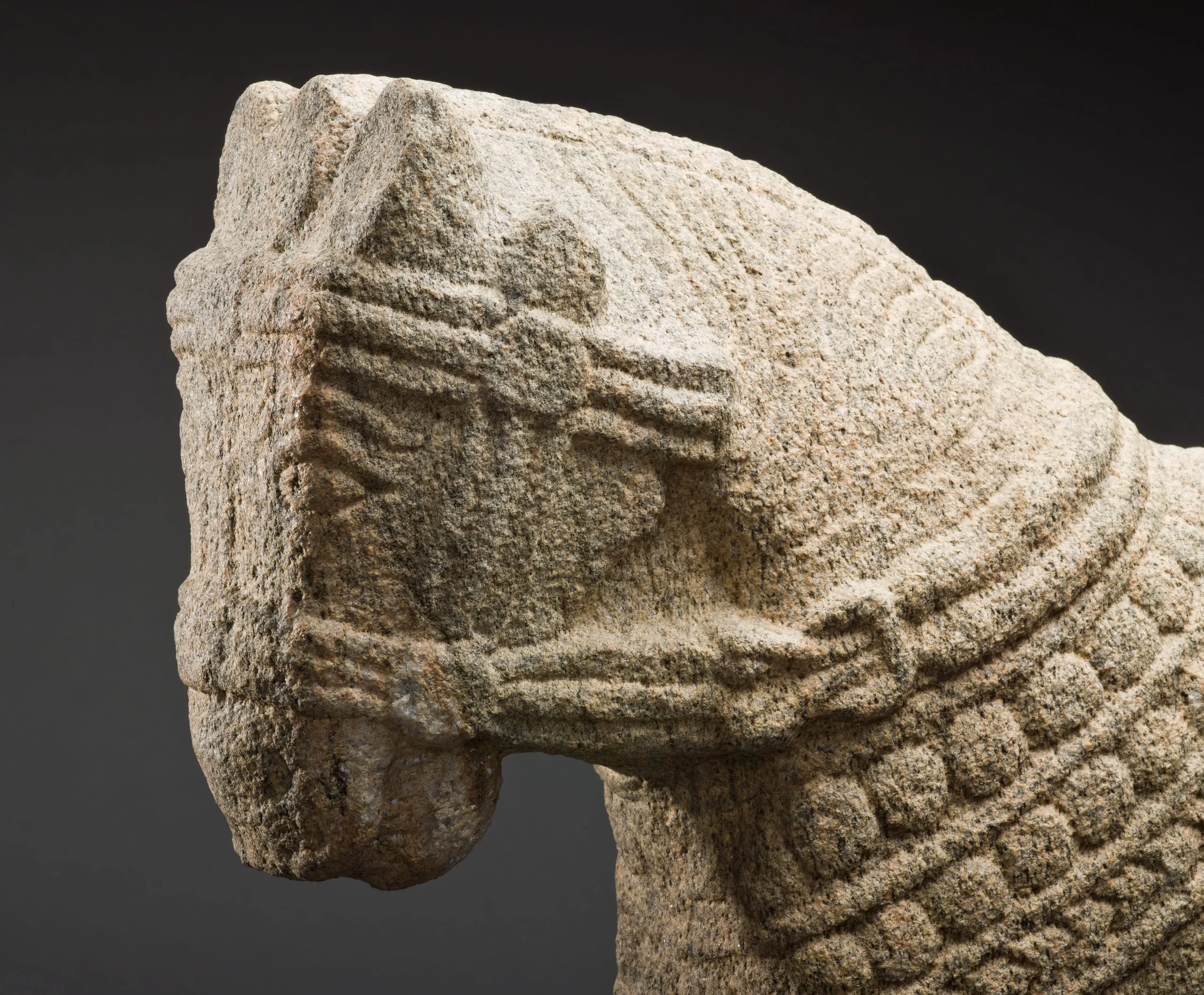
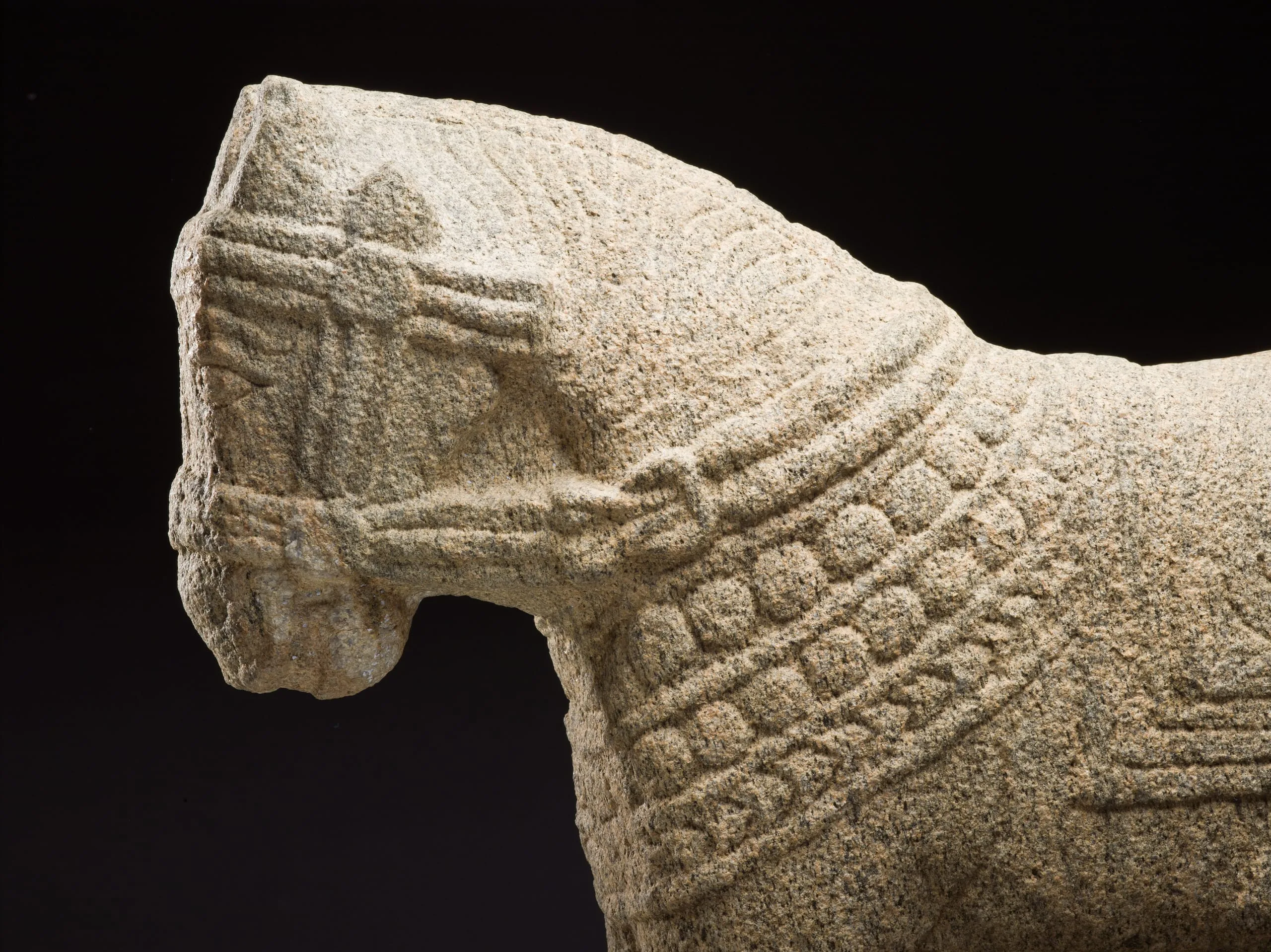
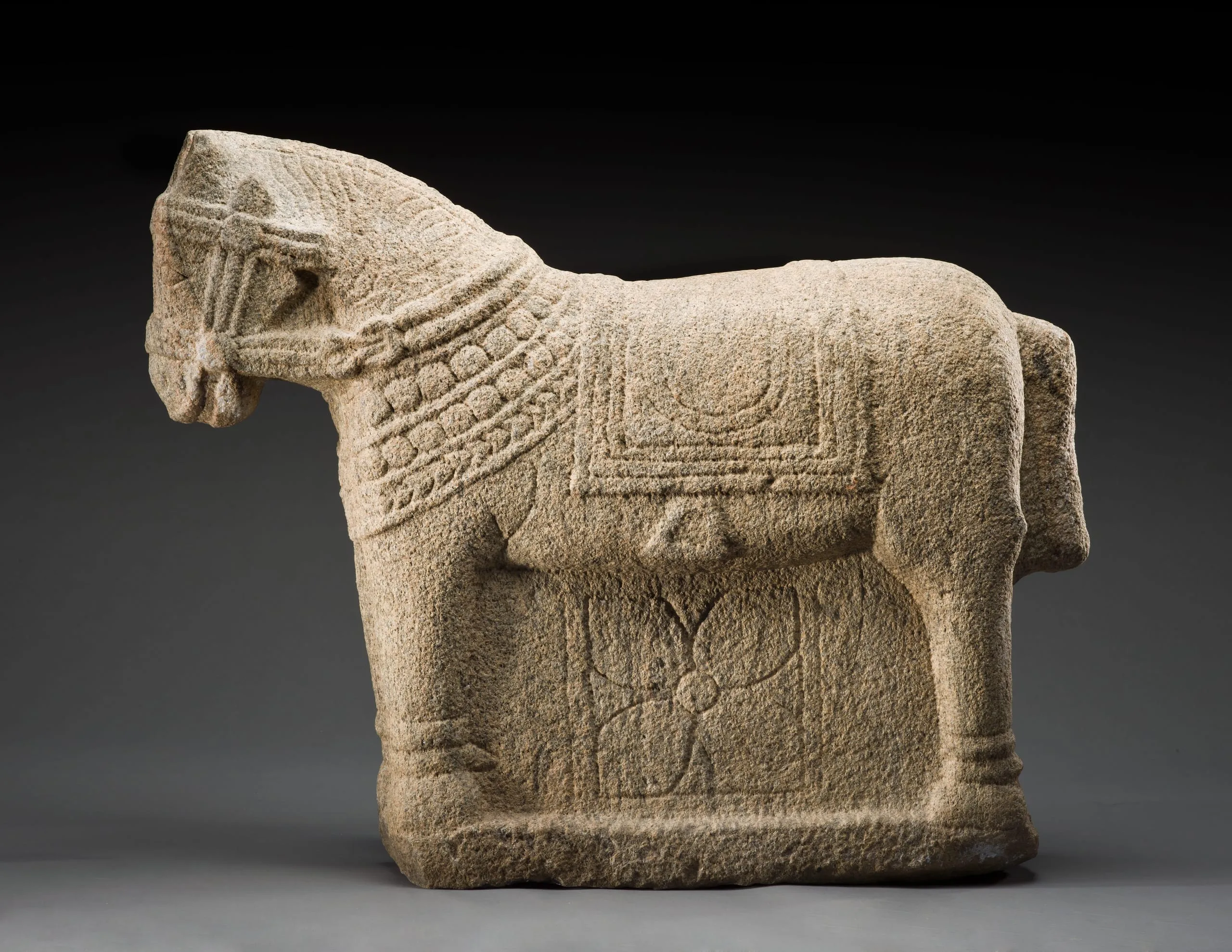
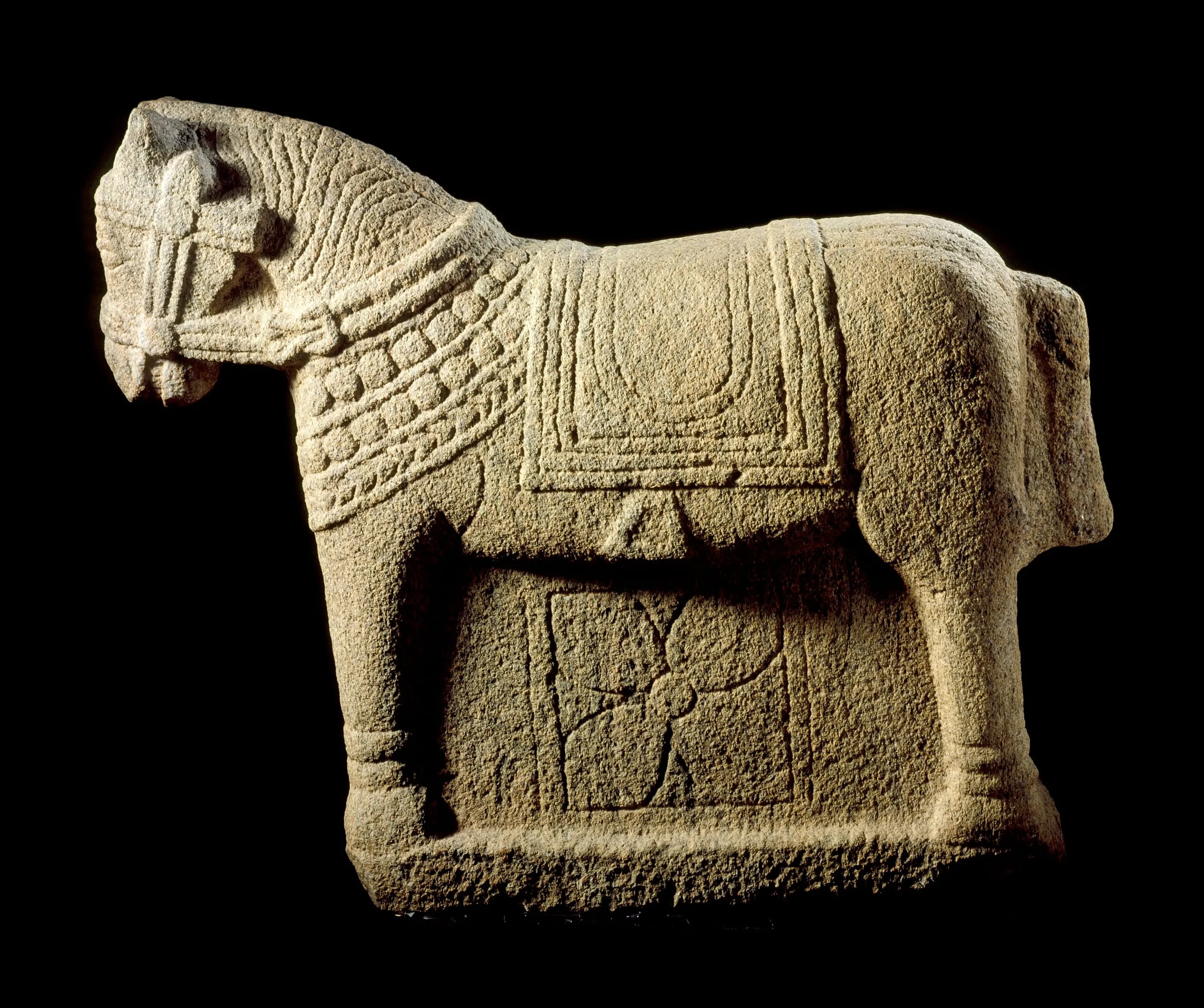
Horsecirca late 14th-15th century

Not on view
Stone sculpture of a standing horse with carved bridle, bead collar, and decorated saddle cloth, on a rectangular base, rough granular surface
Stone sculpture of a standing horse in profile, carved with incised decorative trappings including a beaded collar and layered saddle blanket with concentric border lines; a relief panel on the flank depicts a small figure; rough-textured granite surface against a black background.
Stone sculpture, close-up of a horse's head and neck with incised decorative harness details, including geometric and repeating patterns carved into the coarse-grained pale stone surface.
Granite sculpture of a horse, shown from the neck and chest, with deeply carved geometric patterning across a decorated bridle and breast collar featuring a grid of raised squares, against a black background.
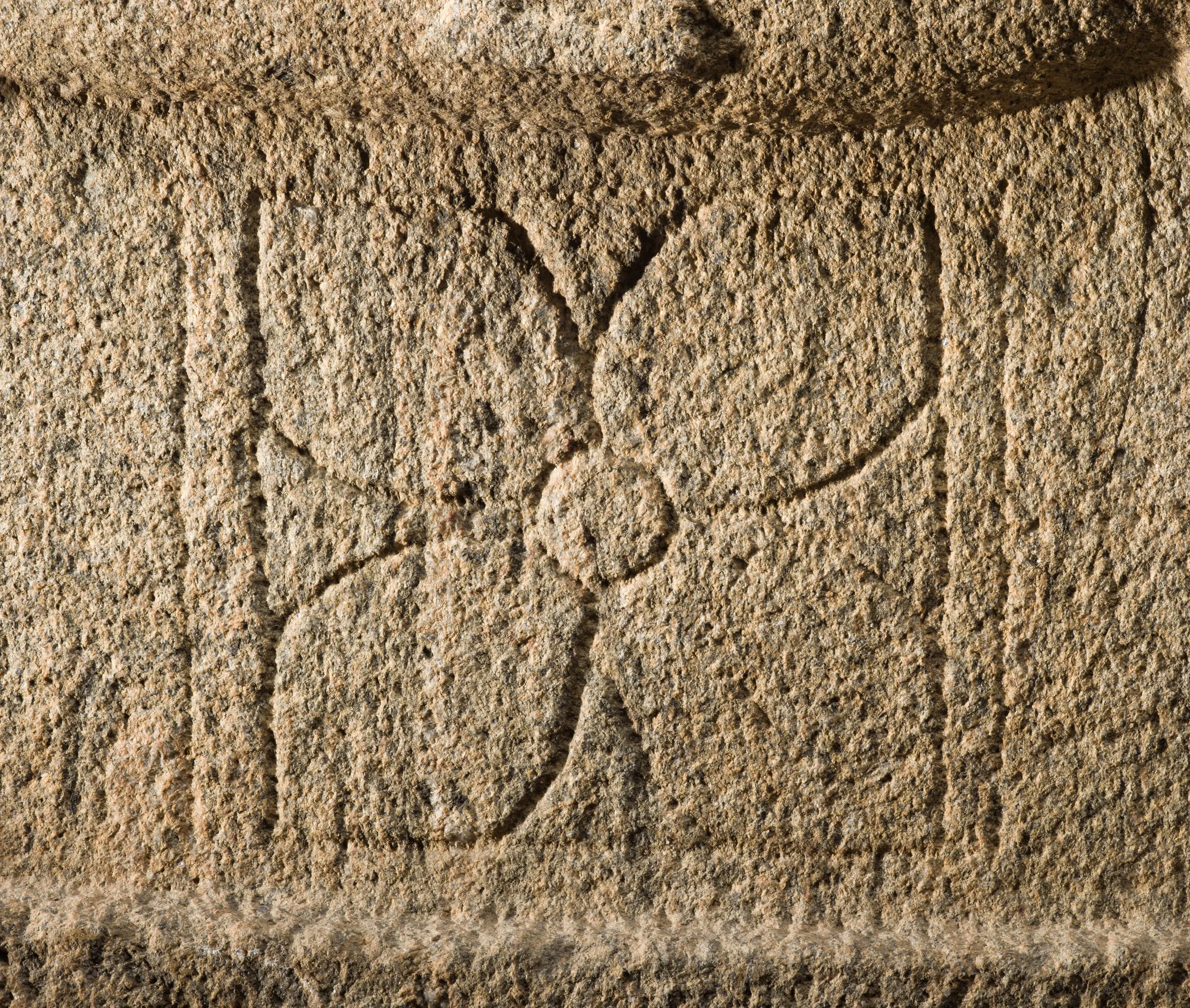
Stone relief with incised four-petaled rosette centered within a rectangular border of carved vertical lines, rendered in coarse tan-colored sandstone.
Artist or Maker
Unknown
Title
Horse
Place Made
India, Tamil Nadu, Madurai region (?)
Date Made
circa late 14th-15th century
Medium
Granite
Dimensions
30 3/4 x 41 x 9 in. (78.1 x 104.14 x 22.86 cm)
Credit Line
Gift of the Jaipaul Family
Accession Number
AC1999.97.1
Classification
Sculpture
Collecting Area
South and Southeast Asian Art
Curatorial Notes

Animals have been depicted in Indian art since the prehistoric period. The great emperor Ashoka Maurya (reigned c. 272–c. 231 BCE) appropriated the regal power and majesty of the bull, elephant, horse, and lion to embellish the capitals of numerous symbolic stone pillars erected across South Asia. The buffalo was also accorded great reverence. It was originally worshipped by totemistic cults and later glorified in religious literature and art. Cows were also adulated, especially for their association with the cowherd Krishna (Vishnu’s avatar) and the major devotional movement of Hinduism. Serpents may have been worshipped with the most fervor because they were believed to rule the underworld and to be imbued with supernatural powers. They were propitiated as protective entities and also received offerings from women to enhance their fertility.

Horses have long been particularly venerated in the distinctive culture of south India. This is primarily because the horse is the sacred mount of one of the major gods of south India, Aiyanar, who is the chief guardian deity of almost all south Indian Hindus. Consequently, images of horses are often erected at the boundaries of temples, palaces, and villages to represent Aiyanar, and thereby protect the sacred space and community within. Horses, along with elephants, are also prominently featured in many south Indian religious festival processions, both living animals and their life-size images. See also M.88.223.
Selected Bibliography
  • El Universo de la India: Obras Maestras del Museo de Arte del Condado de Los Angeles. Santiago: Centro Cultural Palacio La Moneda, 2012.