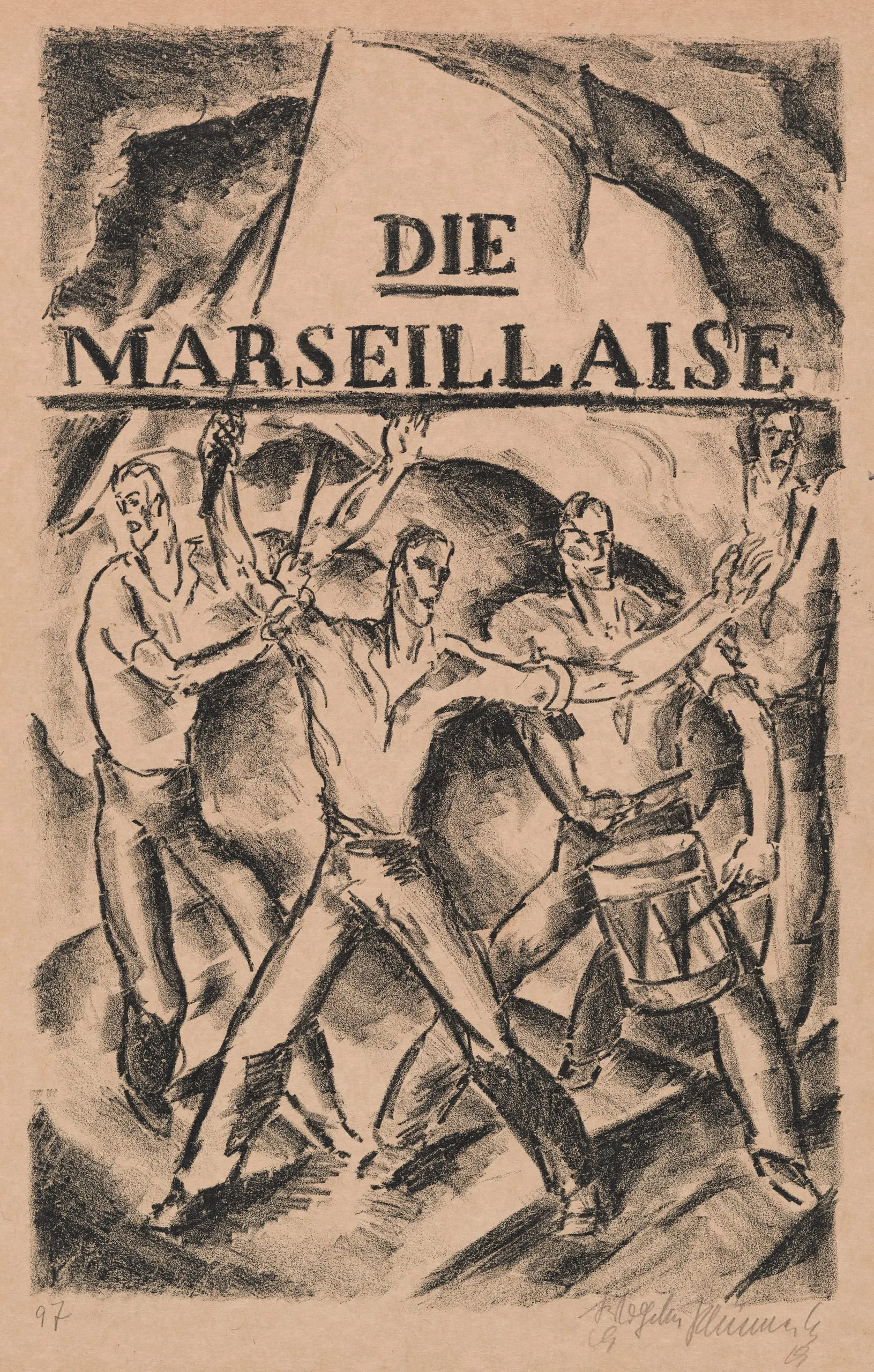
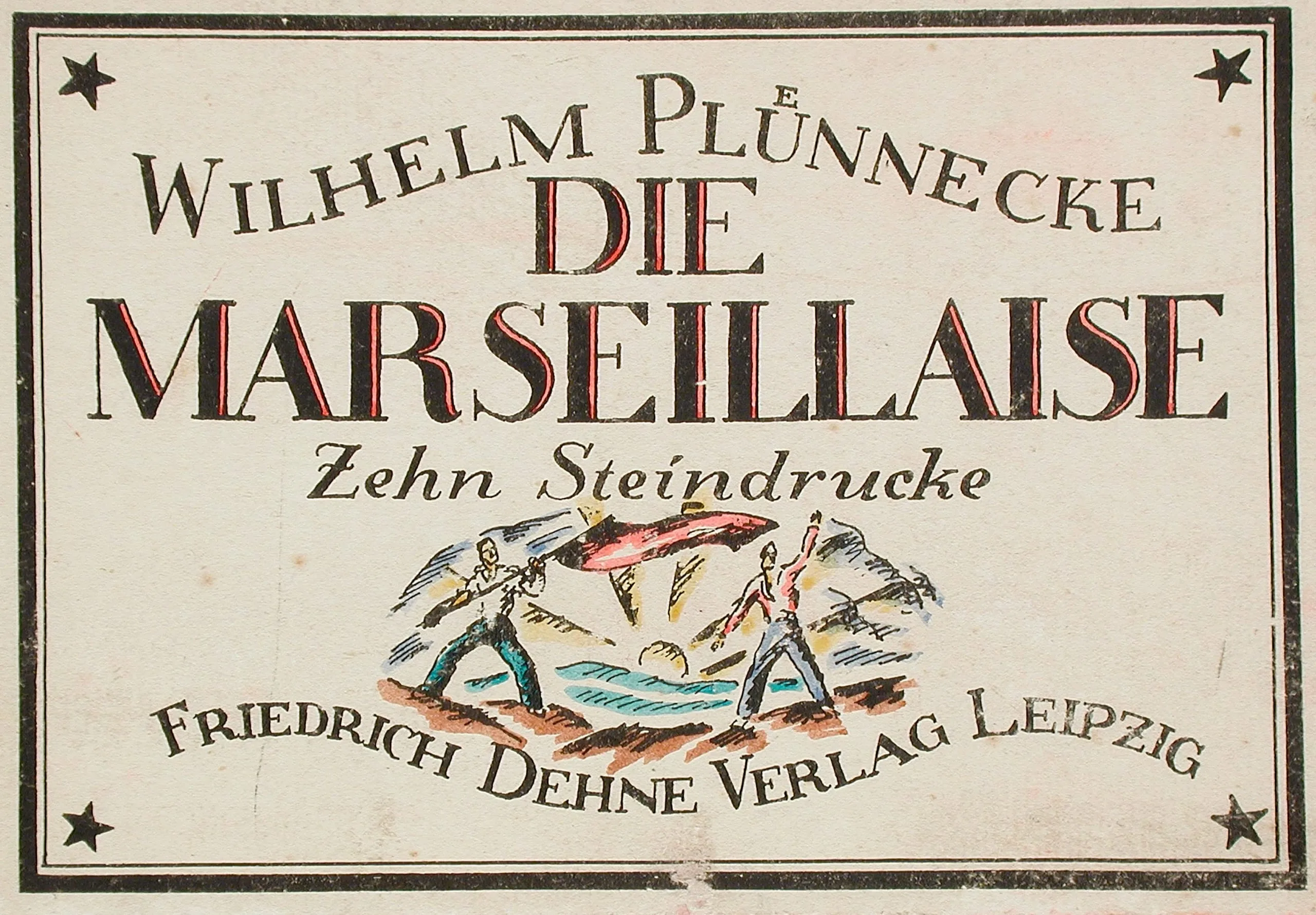
In his portfolio The Marseillaise (Die Marseillaise), Wilhelm Plünnecke demonstrates how symbols from past revolutions can be appropriated to reframe events in the present. The ten-sheet series is named after the French national anthem, a song that has become synonymous with revolution itself. In the title sheet, a man holds a large flag at center as the person next to him bangs a drum. The central figure’s expansive pose is suggestive of Eugène Delacroix’s Liberty Leading the People (1830) and evokes the chorus of “The Marseillaise”: “To arms, citizens / Form your battalions, / March! March! / That their impure blood should water our fields!”
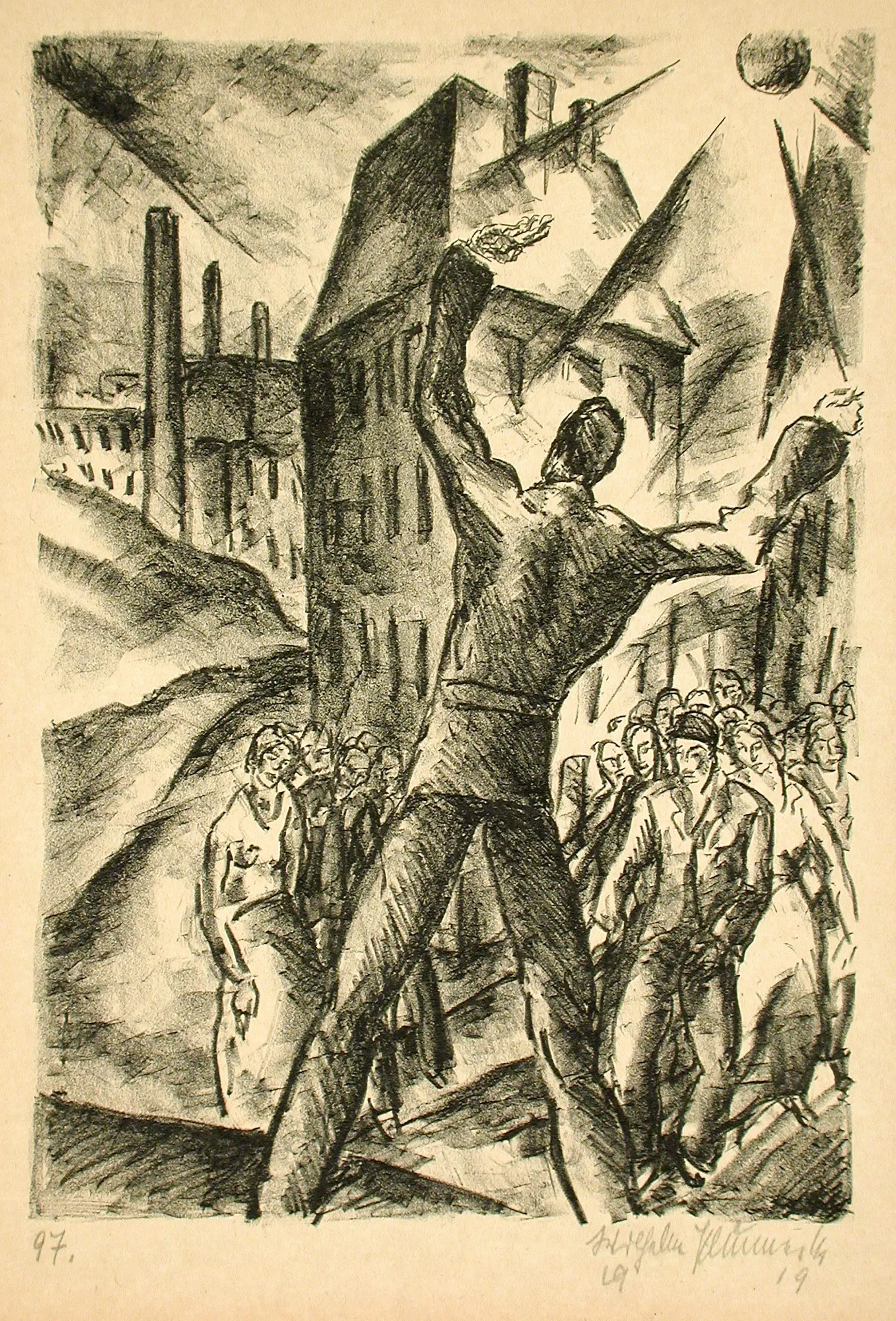
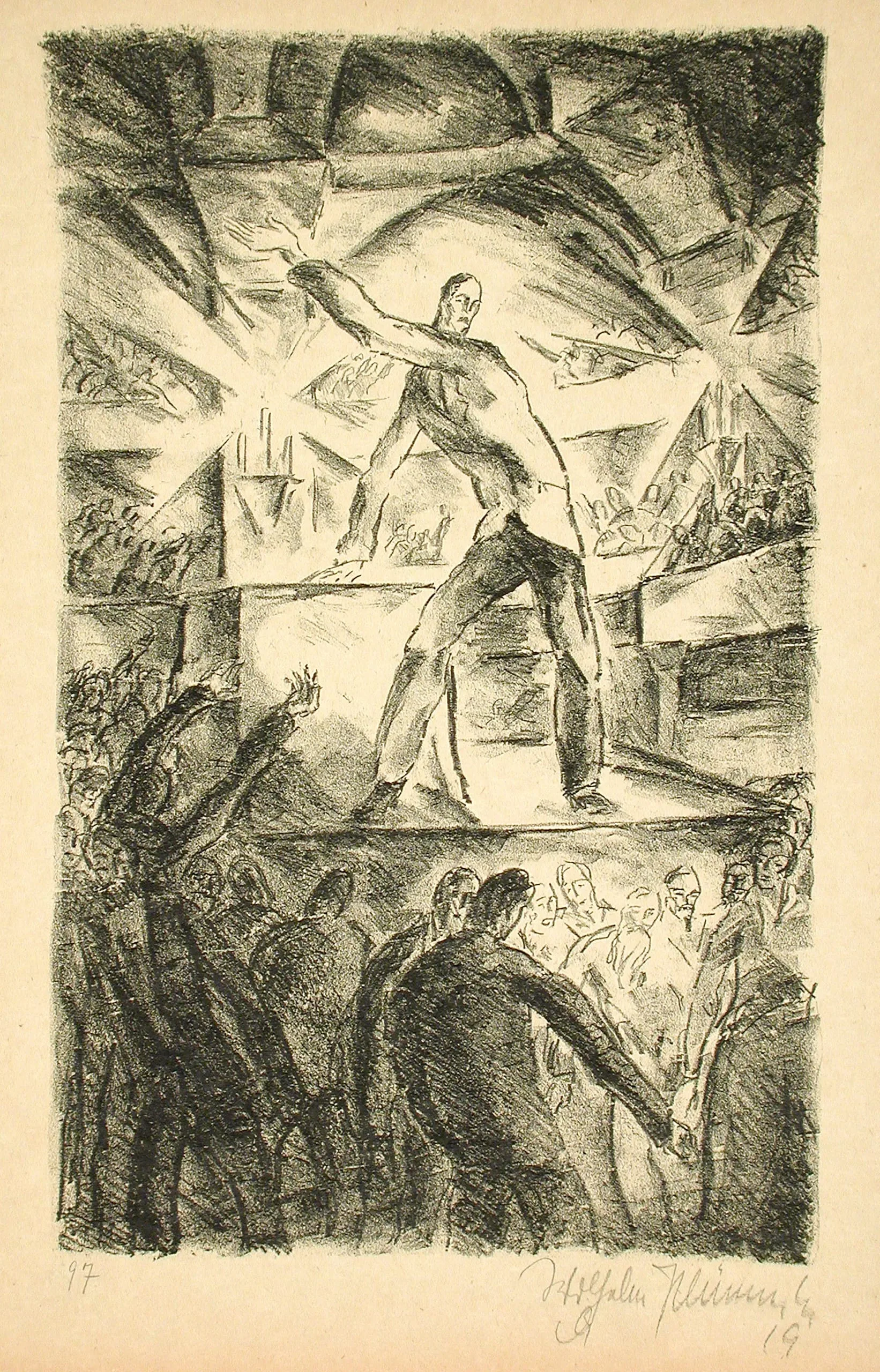
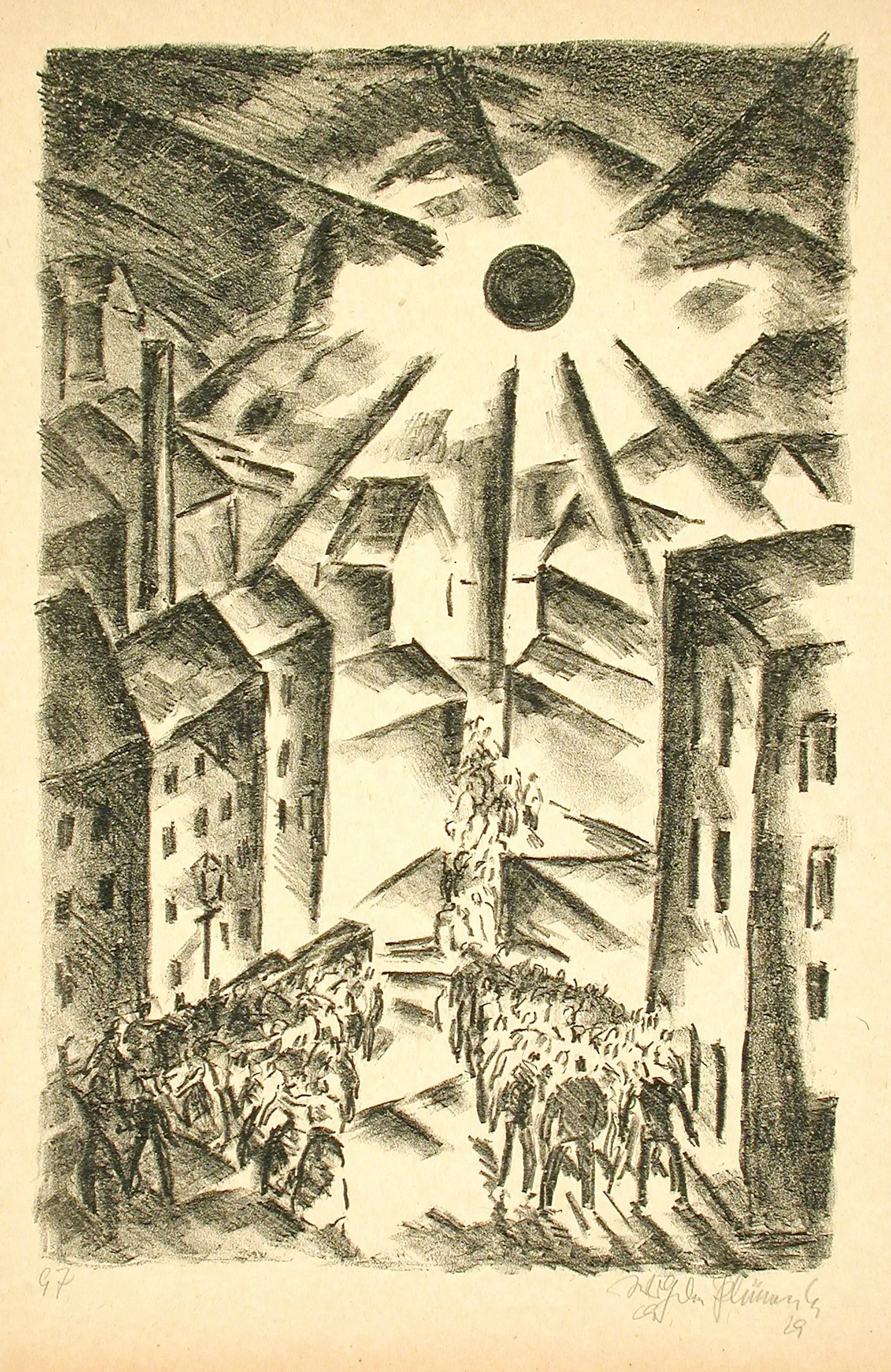
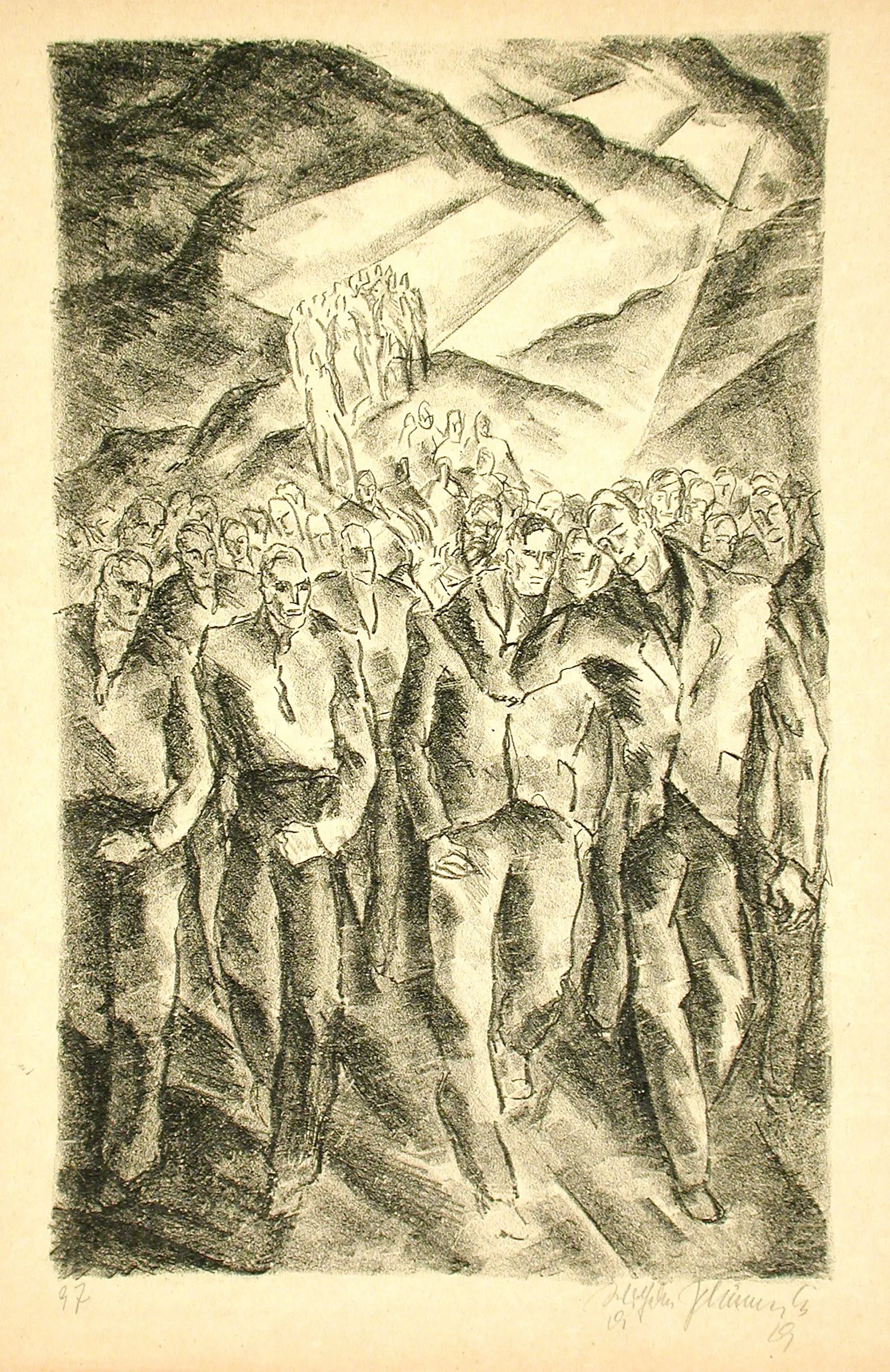
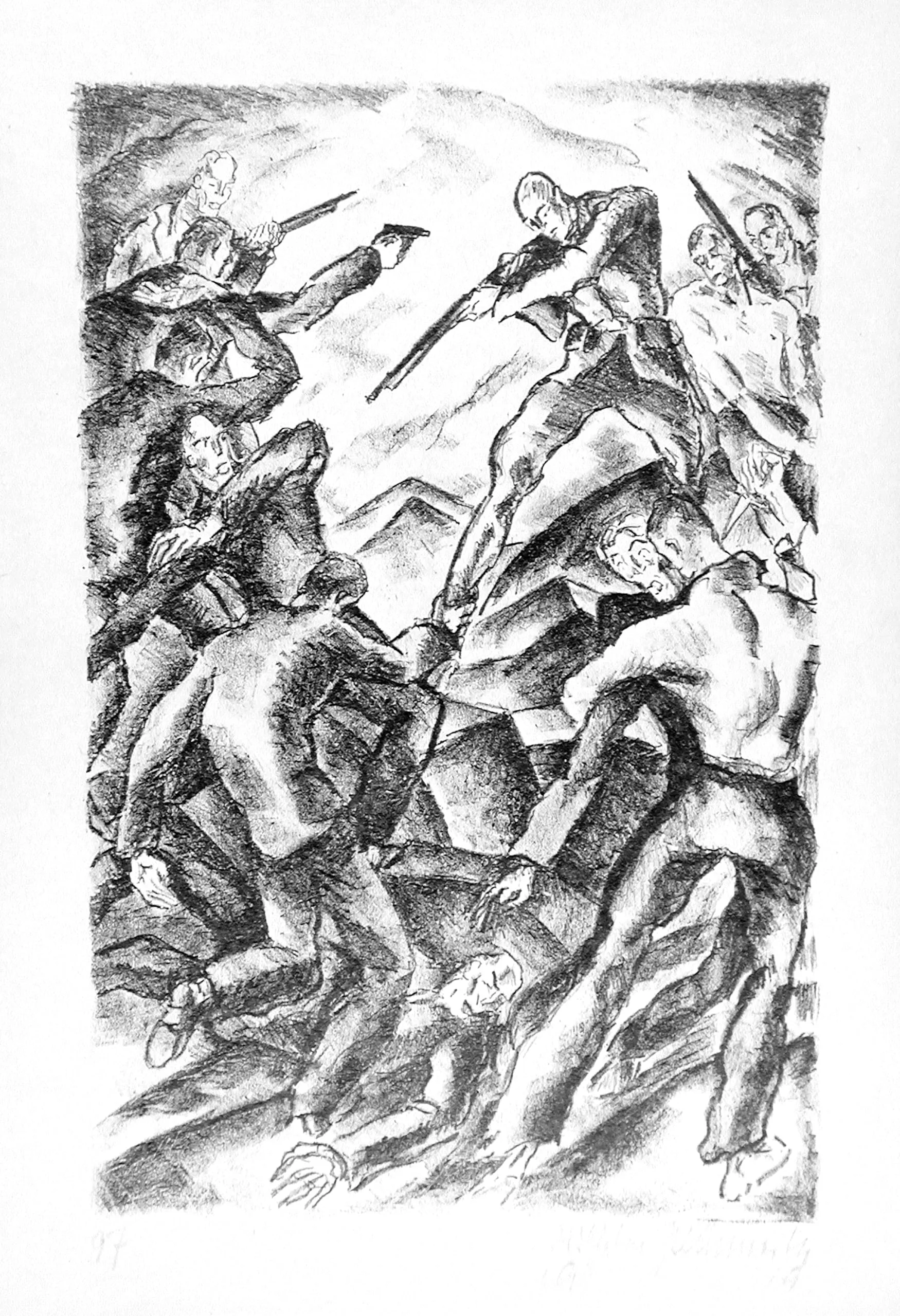
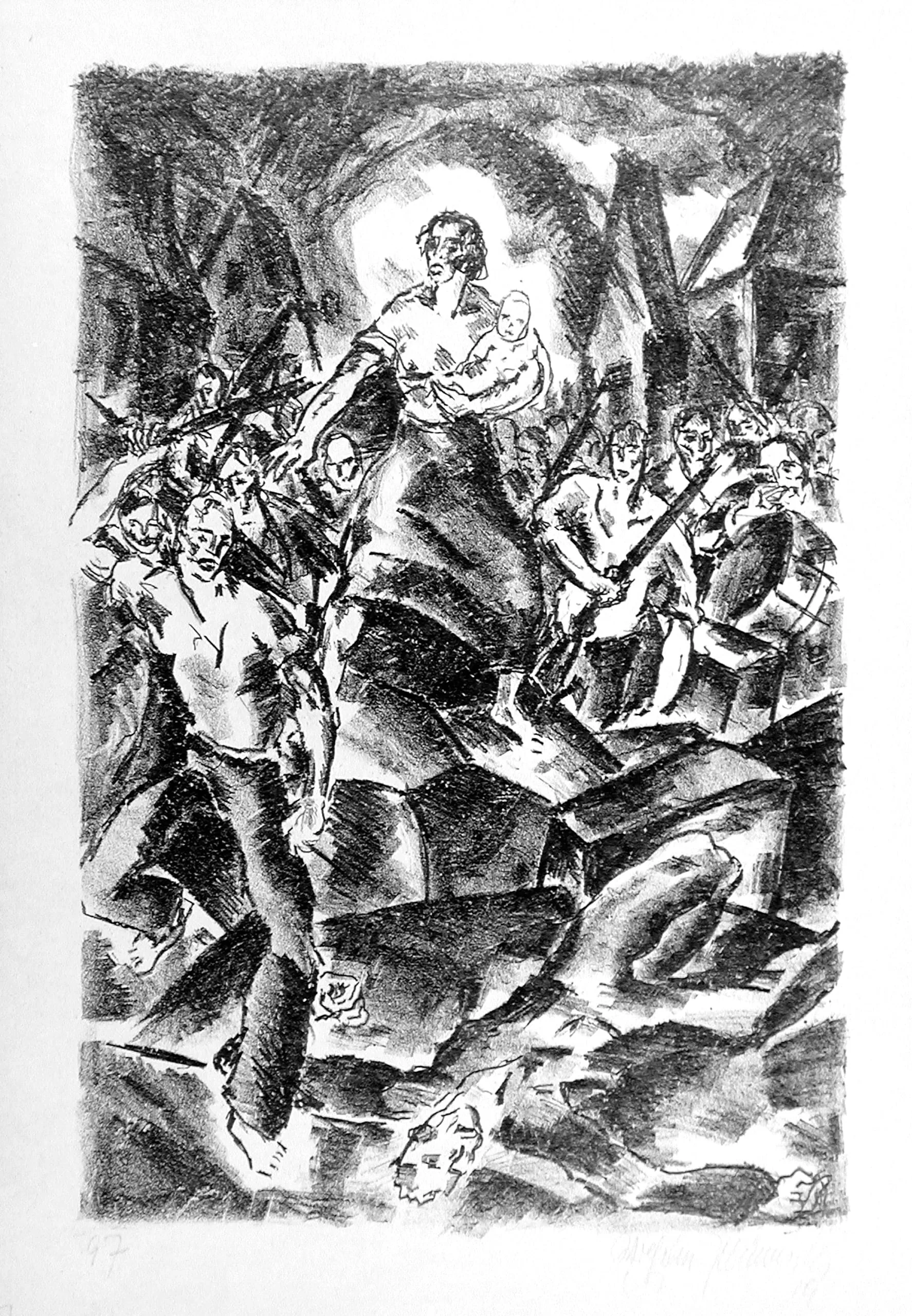
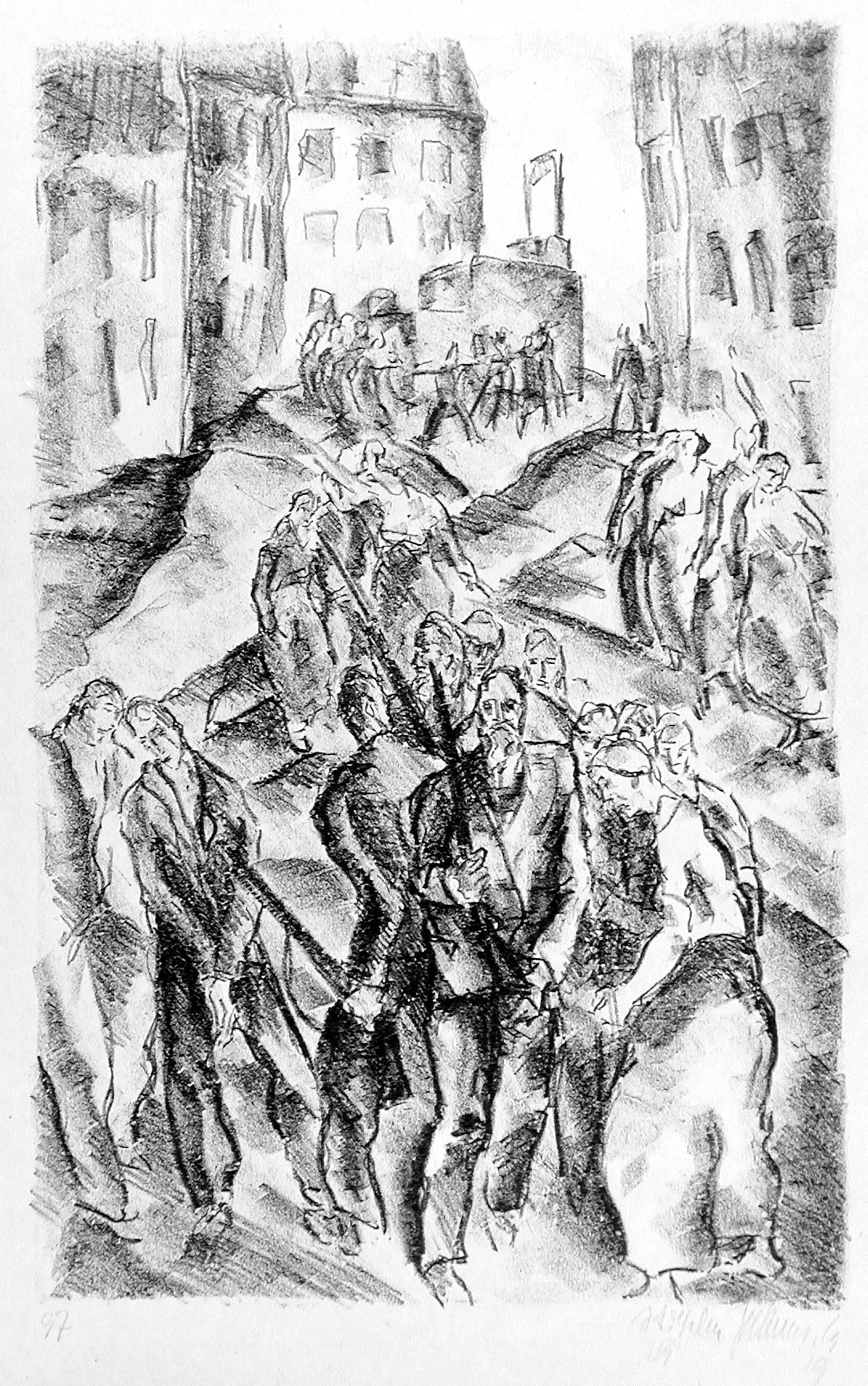
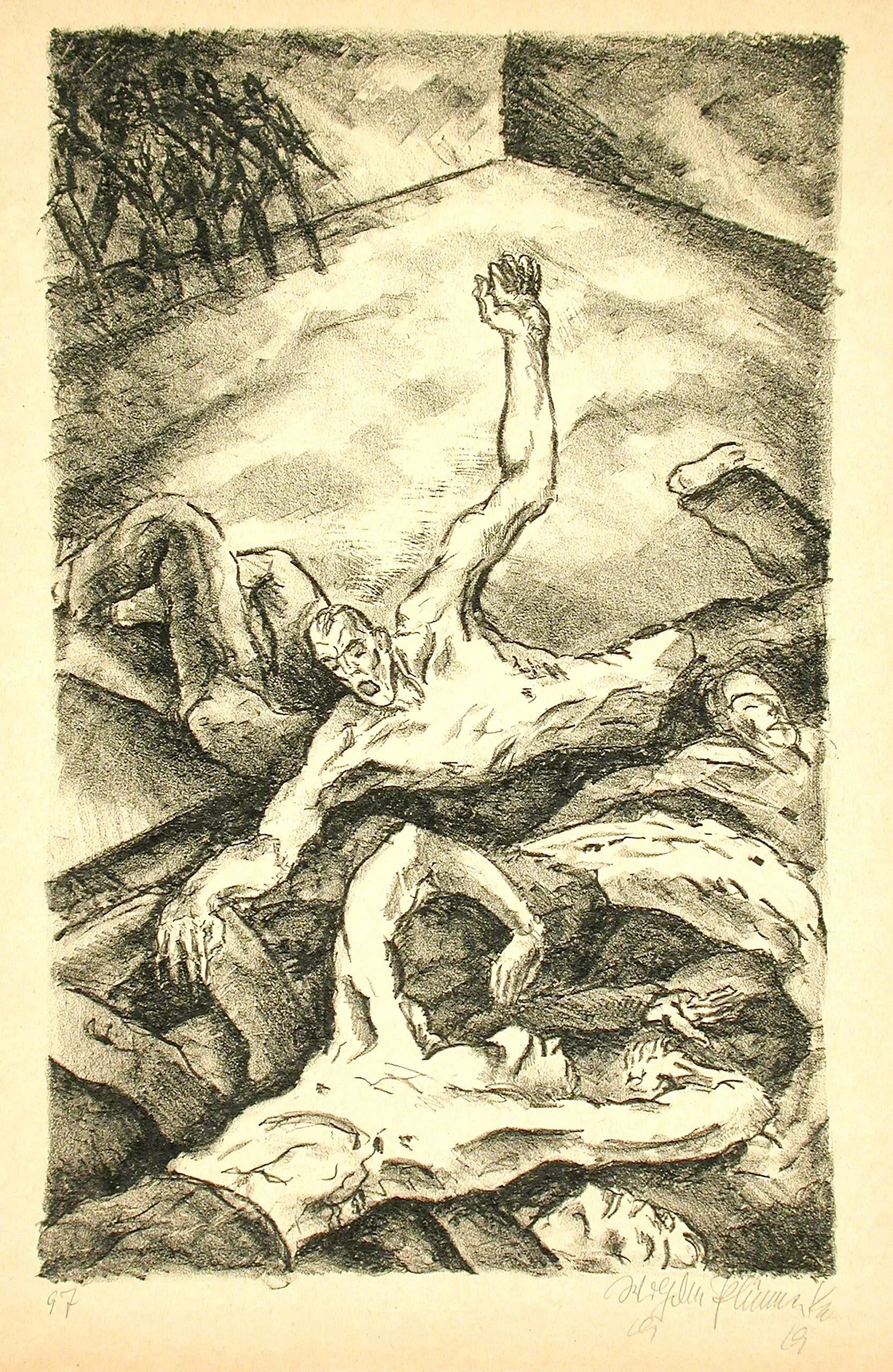
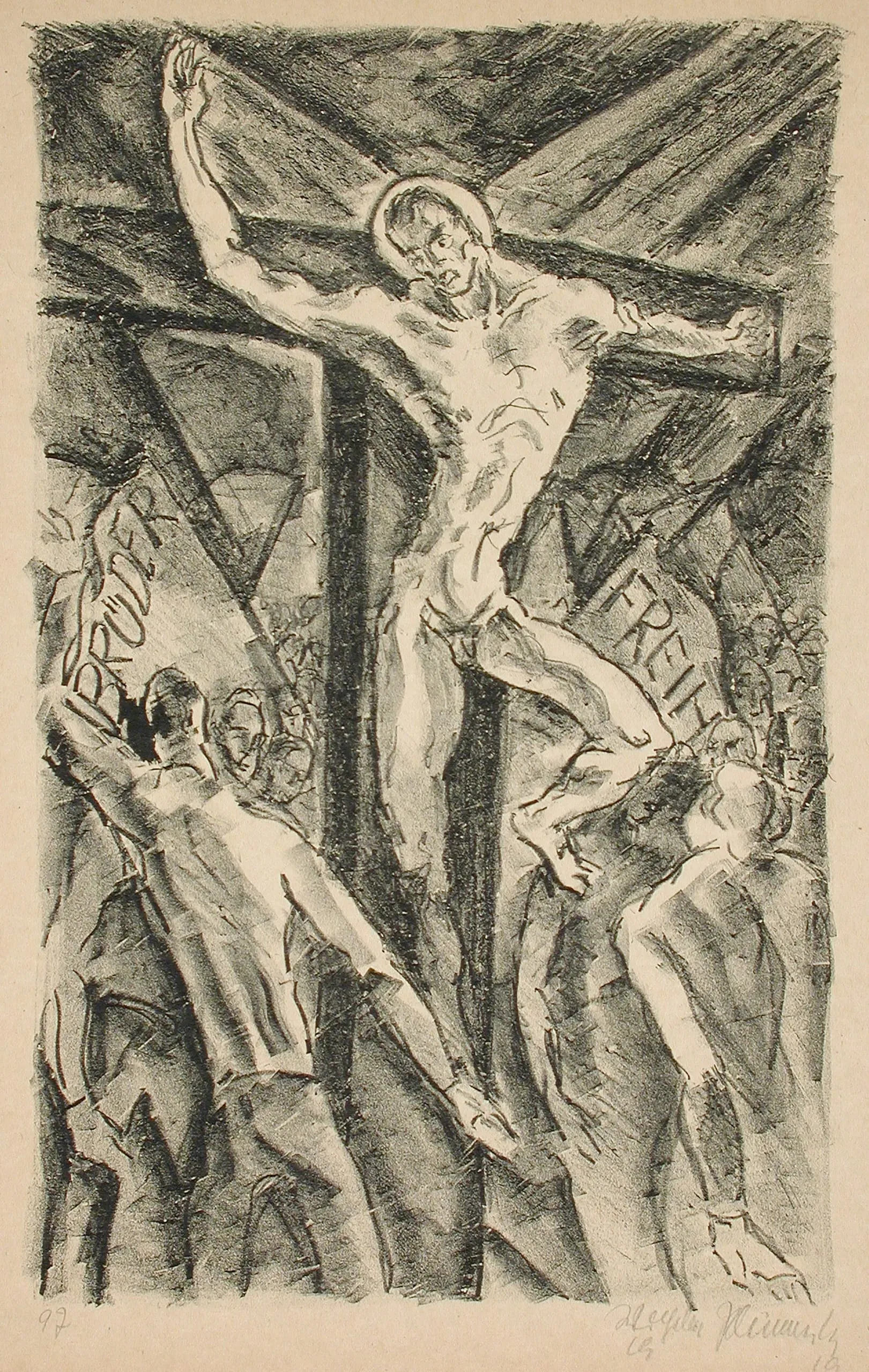
The portfolio traces the trajectory of revolution. The first few sheets depict a charismatic man rallying workers to the cause. In the third sheet, the man preaches to an inspired crowd, and in the fourth sheet, a galvanized mass gathers in greater numbers in the street. By the sixth sheet, the revolutionaries and counterrevolutionary forces are engaged in hand-to-hand combat with guns and knives. The final sheets detail the punishments meted out to the defeated: guillotine, firing squad, and, in the last sheet, the crucifixion of the orator. The religious subtext thus becomes text as Plünnecke portrays the revolutionary hero as martyr and savior. The words “Brüder” (brother) and “Freiheit” (freedom) appear in this final image, connecting back to the title of the series and the motto of the French Revolution: “Liberty, Equality, and Fraternity.” Although Plünnecke’s personal politics are unclear, the portfolio does suggest a call to arms and the righteousness of dying for a cause, a message very different from the one communicated in Käthe Kollwitz’s Memorial Sheet for Karl Liebknecht (M.82.287.35).
Erin Sullivan Maynes
2022 (adapted from Pressing Politics: Revolutionary Graphics from Mexico and Germany, 36)