Ottoman productions of erotic literature and paintings flourished during the eighteenth century.
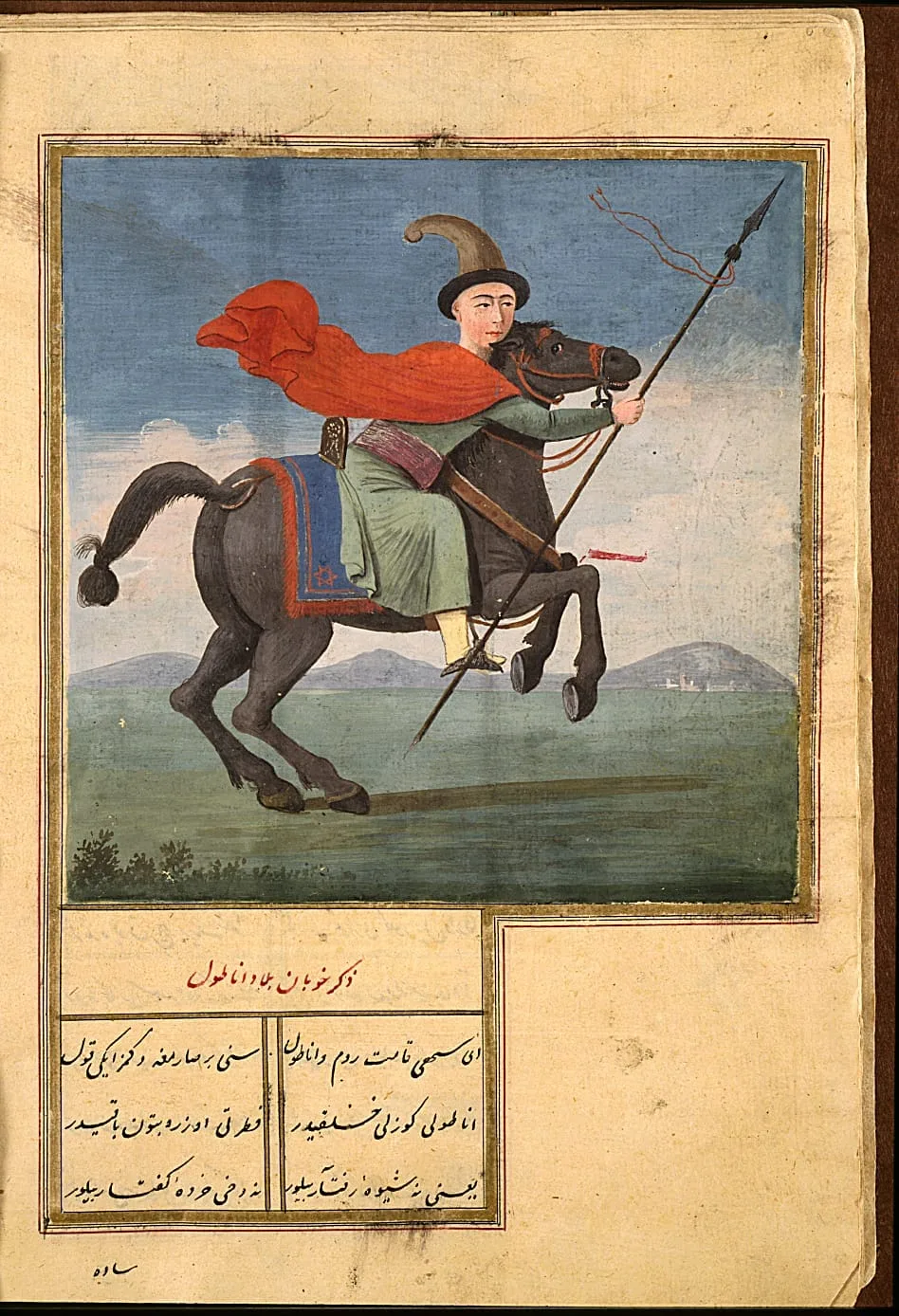
This manuscript in nasta‘liq script ingeniously pairs a risqué text with almost innocuous portraits.
It is a copy of the Hubanname or the “Book of Beautiful Young Men,” Enderuni Fazıl’s (d. 1810)
best-known work. The versified text relates the amorous qualities of men from around the world.
Following an illuminated header (‘unwan) and a map of the globe to situate the reader, most
sections feature a generic portrait of a youth dressed in fashions of his home as he poses
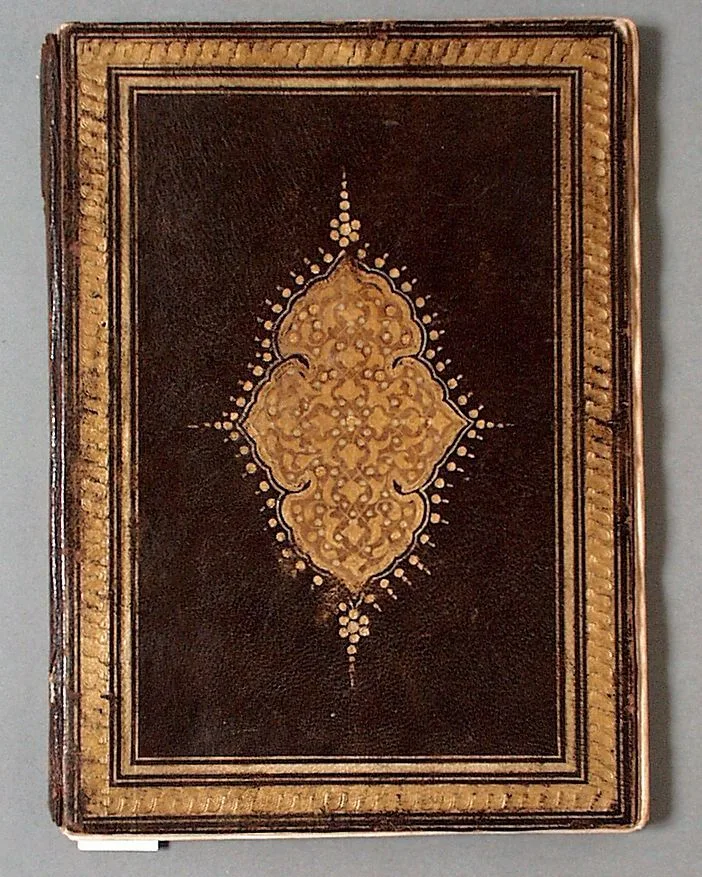
before a background befitting his geographic origins. A brown leather binding covers the
manuscript with gold-stamped designs of a twisting border and multilobed shamsa.
The text is the earlier of the two major works in verse penned during the late eighteenth century
by Enderuni Fazıl, an Ottoman divan poet educated in the palace before his expulsion for an
unspecified scandal. The Hubanname elaborates on the 'true' love enjoyed between men by
exploring regional attributes and tales. Its counterpart, the Zenanname (Book of Women),
concerns relations with women and further emphasizes the adverse effects of sexuality. The
geographic framework of both texts situates Istanbul at the center of a region spanning India to
the New World. The sections on Istanbul praise the city as a land of boundless plenty.
Depictions of religious and ethnic groups living in the Ottoman capital offer the most elaborate
passages in each book. The concept of these texts developed from the earlier Ottoman genre of
city thrillers (sehrengiz), which described urban landscapes through their beautiful beloveds.
Although Fazıl composed the Hubanname as a single work covering the globe, the individual
sections on the men of each locale could be enjoyed as standalone readings.
This type of composition with a stock figure representing a regional or confessional dress
appears in contemporaneous costume albums that were popular among travelers. Here,
however, figures from all around the globe are organized into a compendium for Ottoman
audiences to peruse. The hybrid style of the illustrations highlights the growing appeal of
European portraiture in the Ottoman world during the latter part of the eighteenth century. Each
stock portrait borrows elements from European prints and painting, including the distant
cityscape or natural setting on the horizon that contextualizes each figure.