- Title
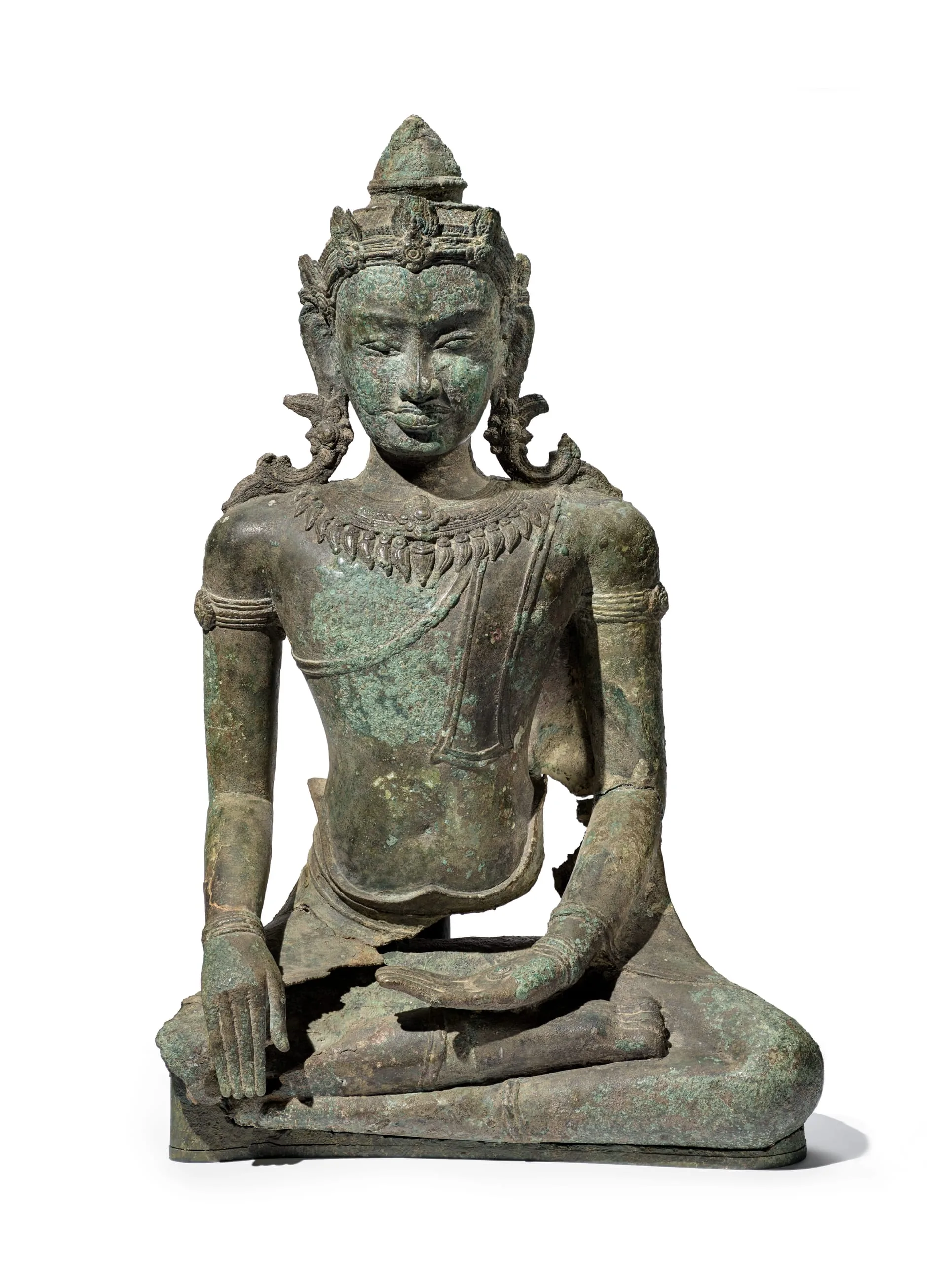
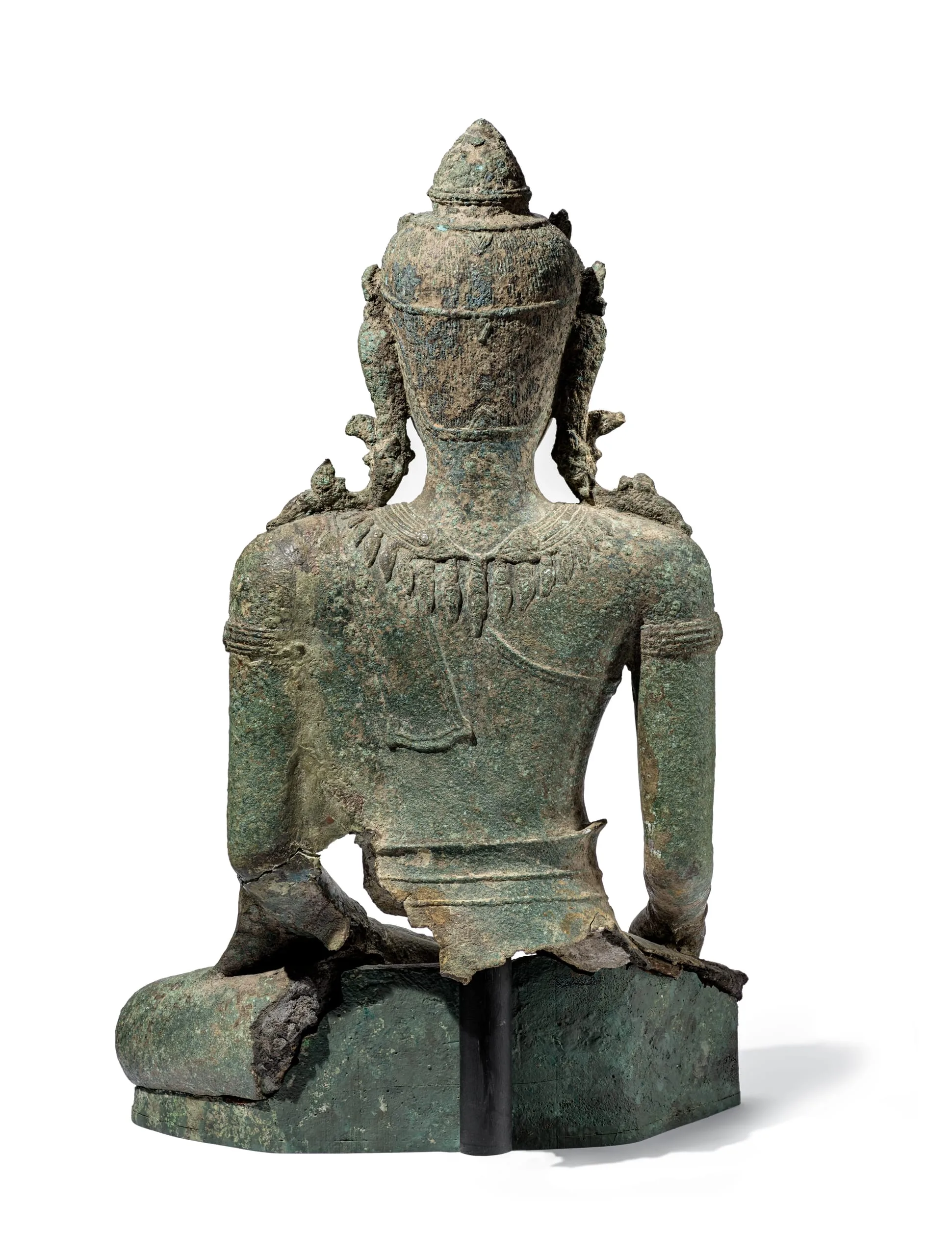
- Crowned Buddha
- Date Made
- circa 1250-1300
- Medium
- Copper alloy
- Dimensions
- 19 5/8 x 12 5/8 x 8 in. (49.8 x 32.1 x 20.3 cm)
- Accession Number
- AC1994.232.1
- Curatorial Notes
This impressive Crowned Buddha exemplifies the hybrid stylistic imagery of the Lopburi art of Thailand during the 13th and 14th centuries. A former principality of the Khmer kingdom in present-day Cambodia, Lopburi became independent early in the 13th century and remained so until being incorporated into the domains of Ayutthaya founded in 1350. Lopburi art of this period blends established Khmer and Mon-Burmese stylistic features with indigenous Thai artistic advancements and imported influences from the eastern Indian art of the Pala dynasty (8th-12th centuries). This is most noticeable in the Khmer style headdress, necklace and armlets, Pala Indian crown and earrings, Thai treatment of the hands and monastic robe, and Mon-Burmese facial features. The Buddha’s right hand is extended in the gesture of calling upon the earth to witness his right to achieve Enlightenment after his many lifetimes (bhumisparsha mudra).
- Selected Bibliography
- Little, Stephen, Tushara Bindu Gude, Karina Romero Blanco, Silvia Seligson, Marco Antonio Karam. Las Huellas de Buda. Ciudad de México : Instituto Nacional de Antropología e Historia, 2018.
- Little, Stephen, and Tushara Bindu Gude. Realms of the Dharma: Buddhist Art across Asia. Los Angeles: Los Angeles County Museum of Art, 2025.