- Title
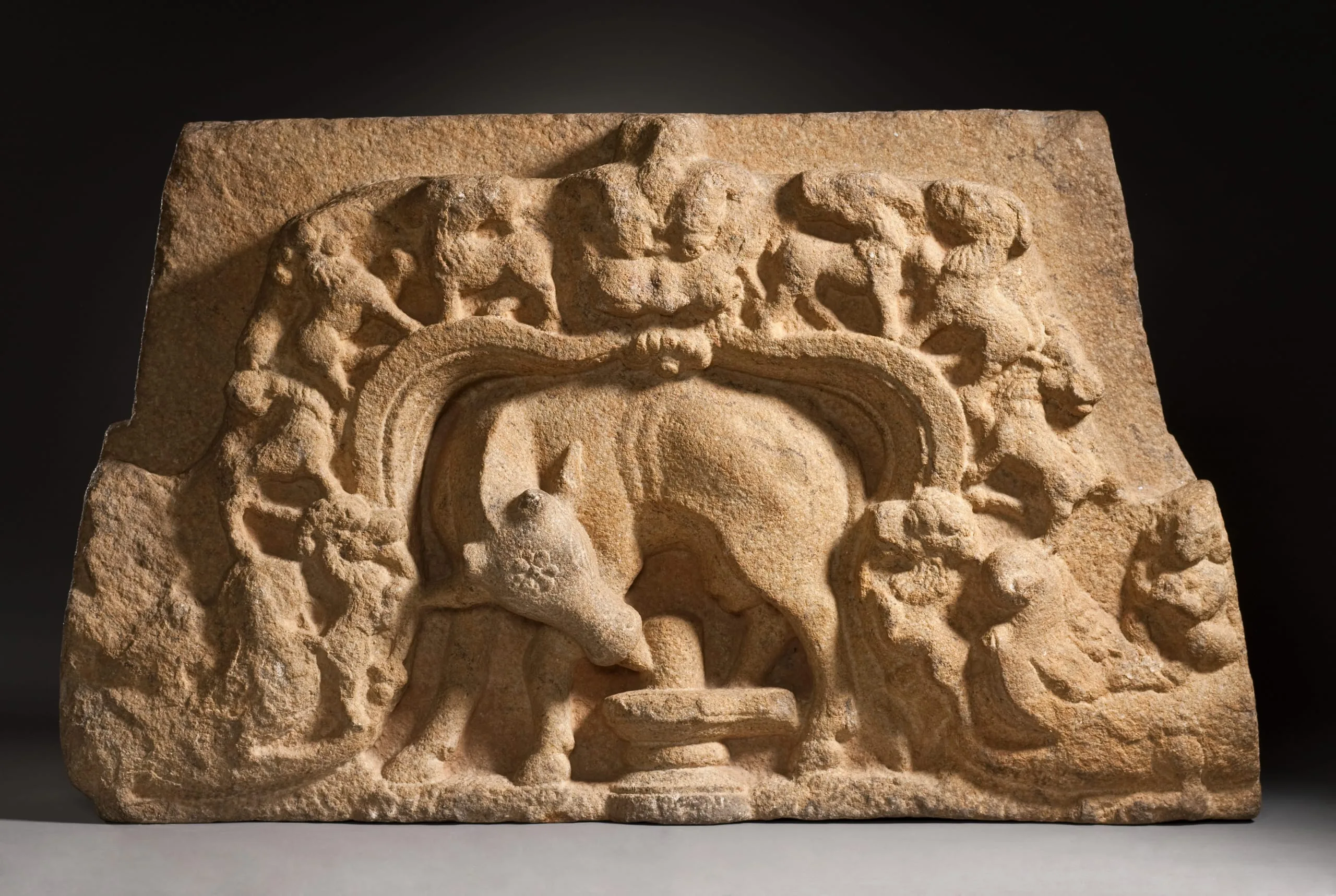
- Cow Adoring a Shivalinga
- Date Made
- circa 800
- Medium
- Granite
- Dimensions
- 21 1/4 x 36 1/2 x 5 1/2 in. (53.97 x 92.71 x 13.97 cm)
- Accession Number
- M.76.48.1
- Curatorial Notes
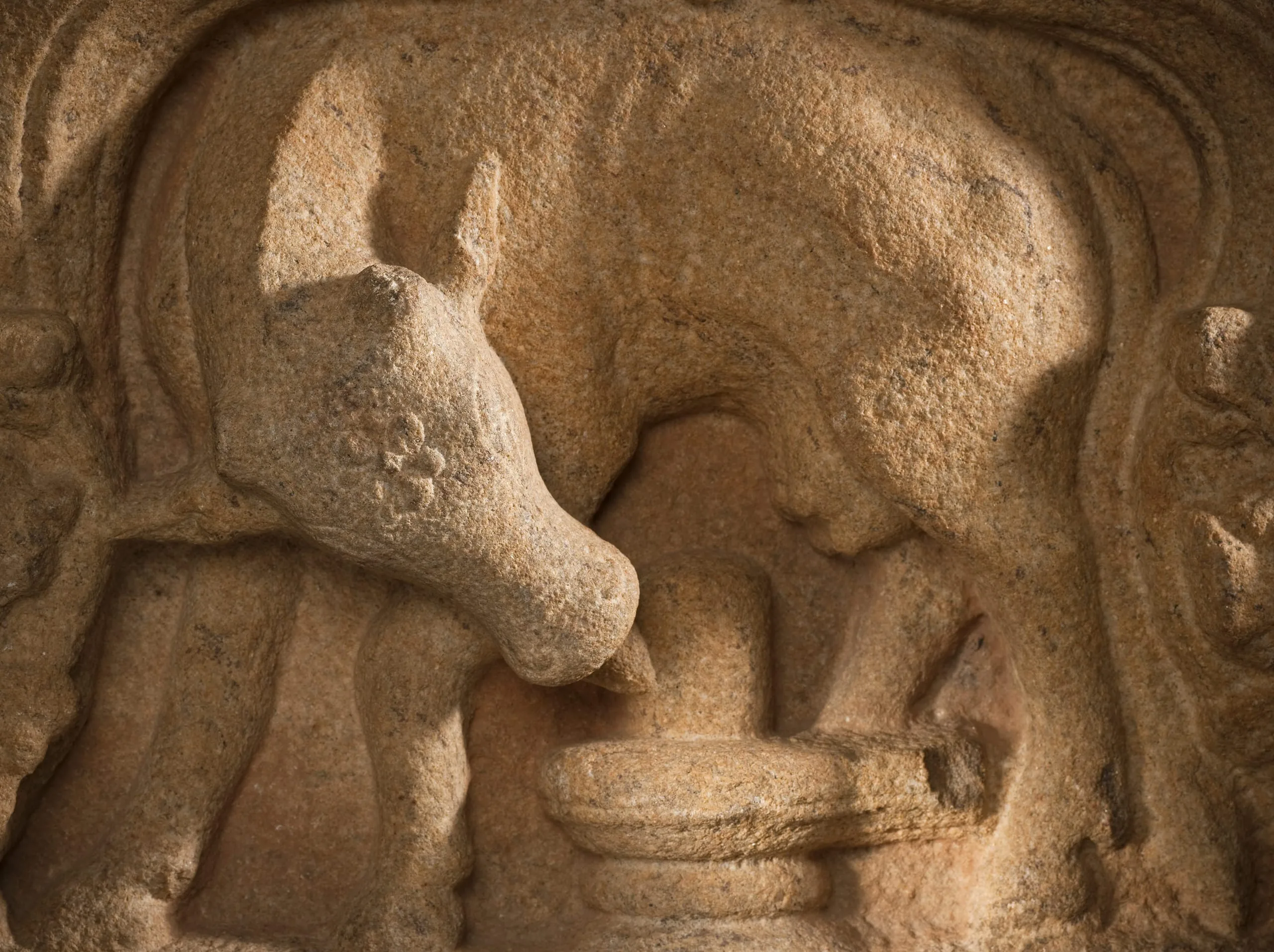
This architectural relief was likely originally a false dormer window on the cornice molding of a Shiva temple erected during the Pandya Dynasty (400 BCE–1618 CE) in southern India. It represents a local legend of a cow that attained salvation in the 7th century by worshiping a Shivalinga (aniconic symbol of Shiva) in the Tiruvijayamangai Temple located in the village of Govindaputtur (‘the cow’s salvation place’) on the bank of the Kollidam (formerly Coleroon) River in Tamil Nadu. The site was visited by the revered south Indian Shaiva saints Appar (570-650) and Sambandar (7th century; see 56.8), both of whom recorded the tale of the devout cow.
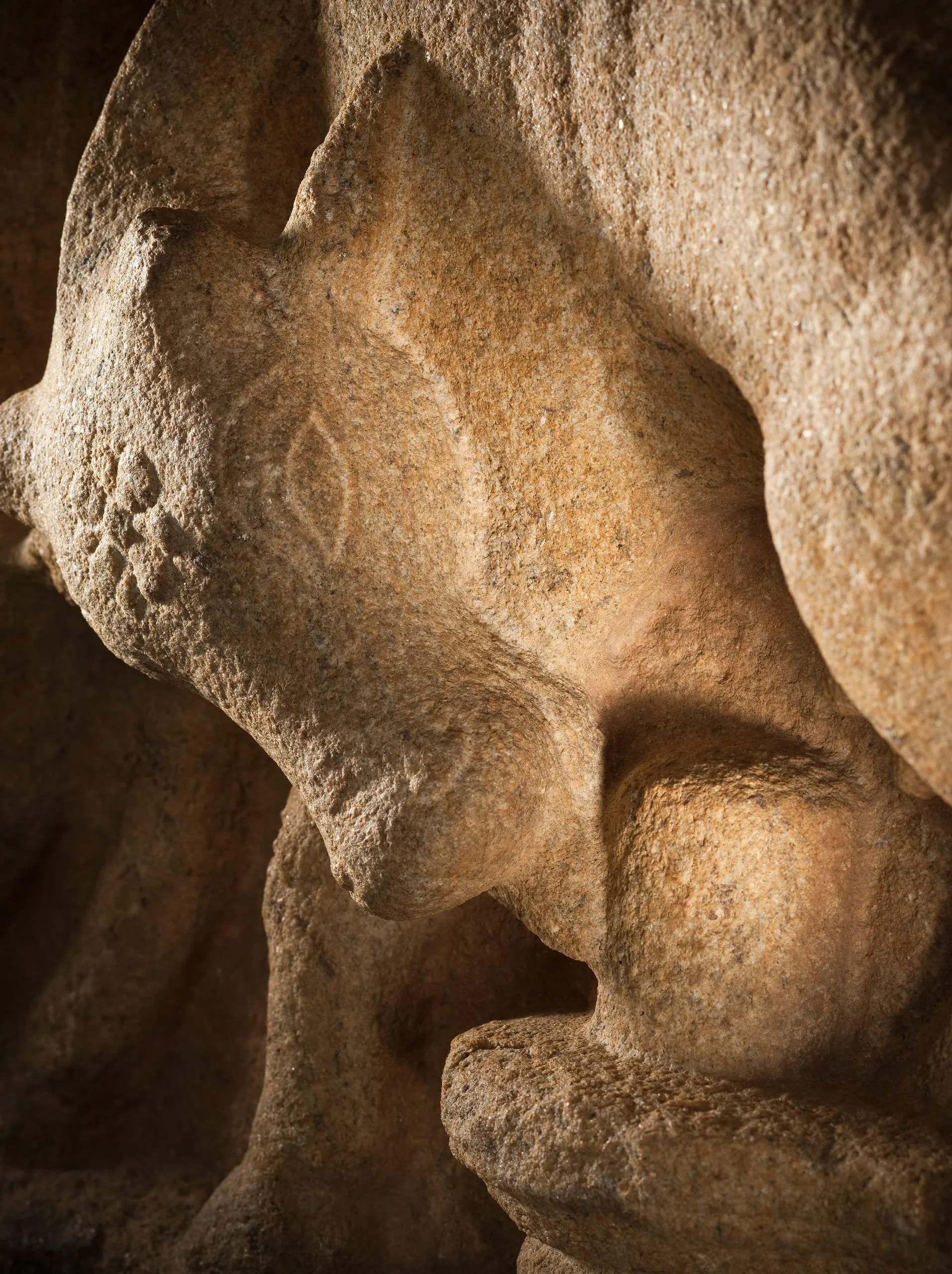
The cow stands over a Shivalinga with its head craned to the side and licking it like it would its calf. The cow is under an arch issued by mythical aquatic animals (makara-torana) with a "Face of Glory" (kirttimukha) at the apex and rearing leonine beasts (shardulas) at the base. Three parading lions adorn each exterior side of the arch. In the bottom right corner, one of Shiva’s dwarf attendants (ganas; see M.69.13.10) rides the makara with his hands held in the gesture of adoration (anjali mudra). Another dwarf, now damaged, presumably occupied the corresponding left corner.
- Selected Bibliography
Pal, Pratapaditya. The Divine Presence: Asian Sculptures from the Collection of Mr. and Mrs. Harry Lenart. Los Angeles: Los Angeles County Museum of Art, 1978.
- Pal, Pratapaditya. Indian Sculpture, vol.2. Los Angeles: Los Angeles County Museum of Art; University of California Press, 1988.
- Kramrisch, Stella. Manifestations of Shiva. Philadelphia: Philadelphia Museum of Art, 1981.
- Pal, Pratapaditya; Dehejia, Vidya; Slusser, Mary Shepherd; Fisher, Robert E.; Brown, Robert L. Arts of Asia 15 (6): 68-125 (November- December 1985).
El Universo de la India: Obras Maestras del Museo de Arte del Condado de Los Angeles. Santiago: Centro Cultural Palacio La Moneda, 2012.