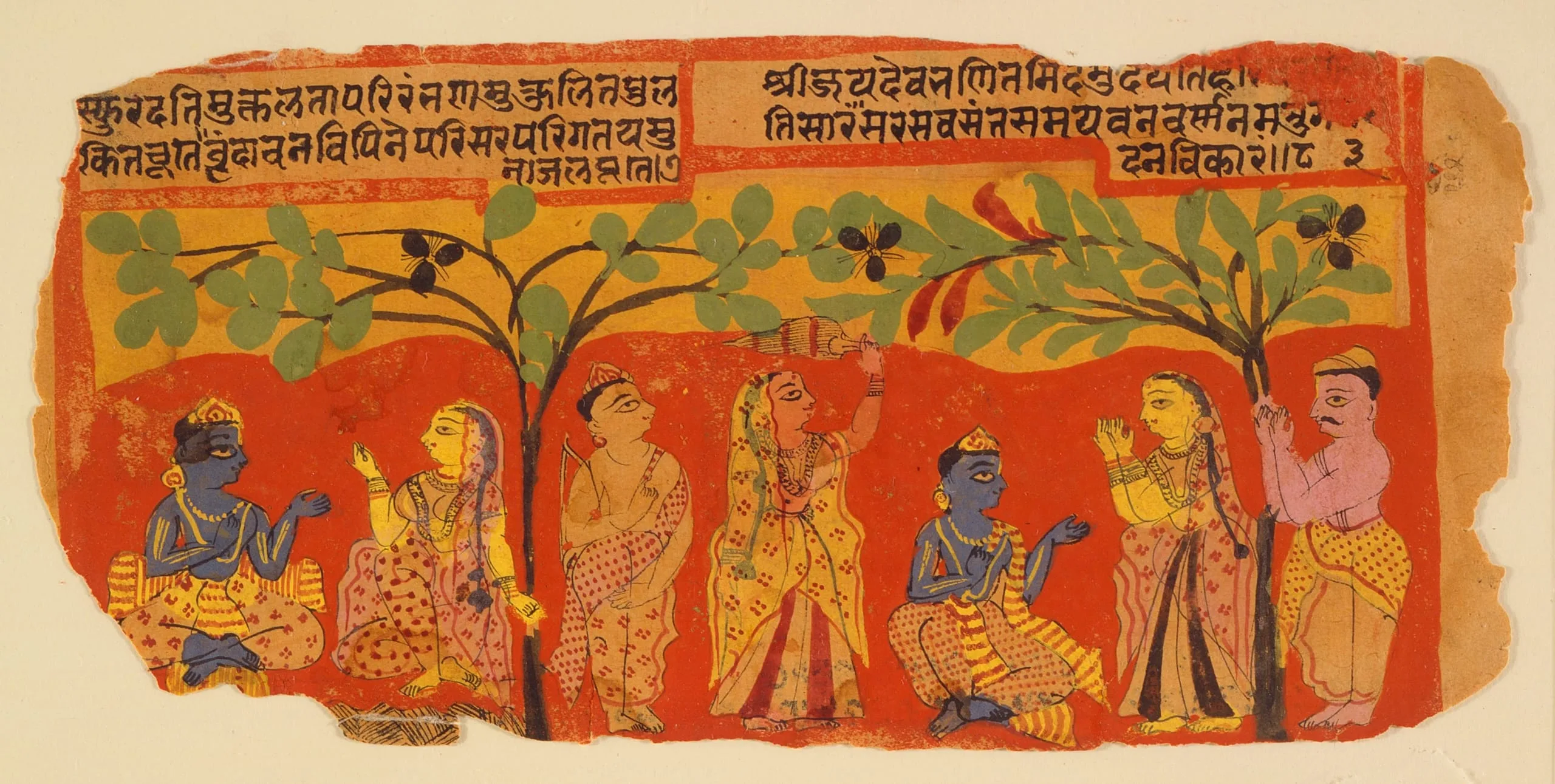
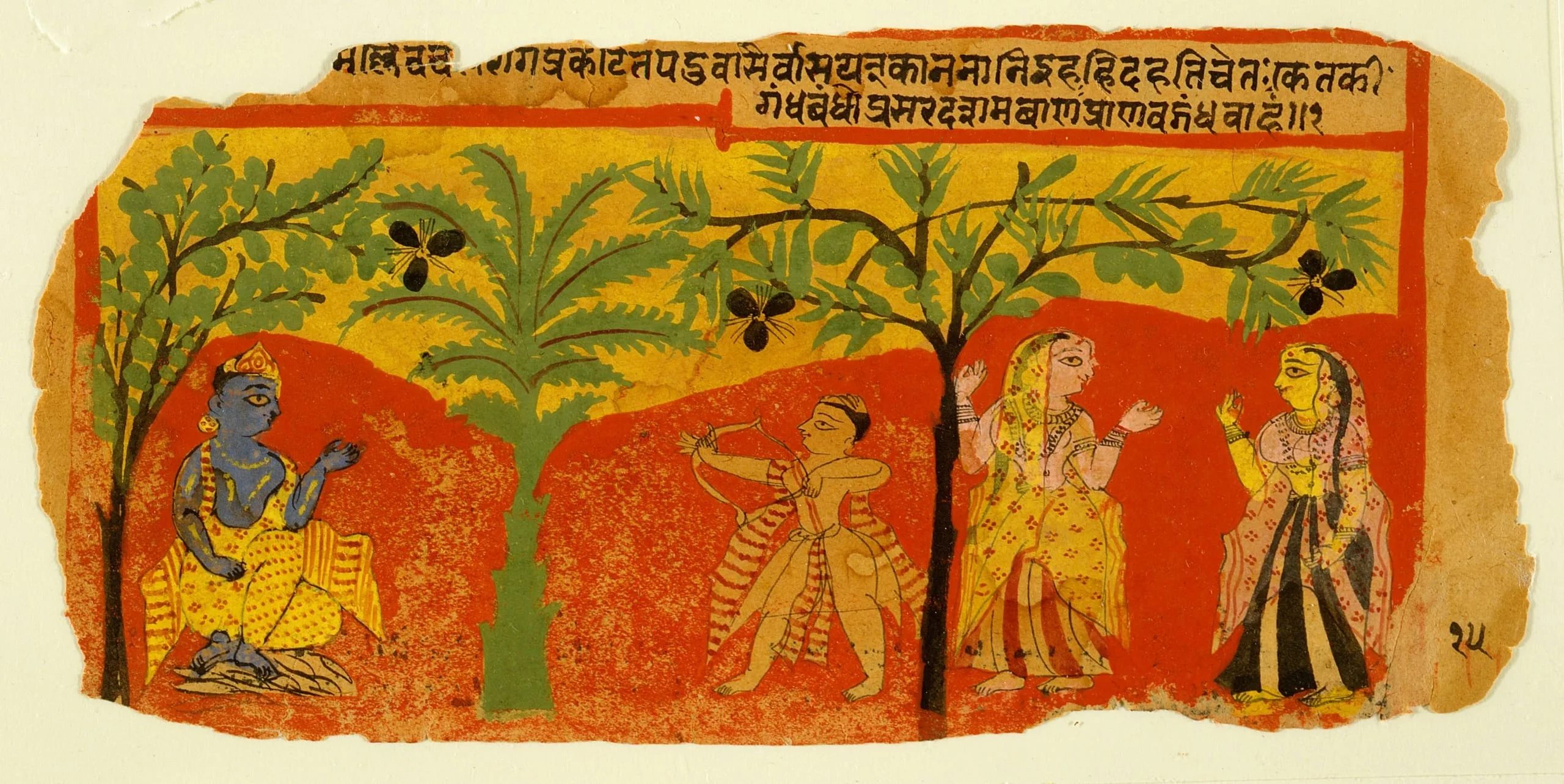
The Gita Govinda (Song of the Cowherd) was composed by the Sanskrit poet Jayadeva (eastern India, circa 1170-1245). The celebrated poem marks the debut of Krishna’s paramour Radha. She is absent from the major early texts in which the life of Krishna is related: the Harivamsha (Lineage of Hari [Vishnu]), 1st century; Vishnu Purana (Ancient Stories of Vishnu), circa 450; and Bhagavata Purana (Ancient Stories of the Lord), 8th-10th century. It describes the initial passion of Radha and Krishna, their temporary estrangement over Radha's jealousy of Krishna sharing his love with other cow-herdswomen, and their ecstatic reconciliation in Krishna's nocturnal bower of delight.
The text verses are in the header, but the imagery corresponds loosely:
Recto: “Budding mango trees tremble from the embrace of rising vines. Vrindavan forest is washed by meandering Jumna river waters. When spring’s mood is rich, Hari [Vishnu] roams here to dance with young women, friend. A cruel time for deserted lovers.” (Gita Govinda 1:33)
Verso: “Jayadeva’s song evokes the potent memory of Hari’s feet, coloring the forest in springtime mood heightened by Love’s presence. When spring’s mood is rich, Hari roams here to dance with young women, friend. A cruel time for deserted lovers.” (Gita Govinda 1:34)
Additional folios from this dispersed series are in the Norton Simon Museum, Pasadena (P.2002.2.6), Maharaja Sawai Man Singh II Museum, Jaipur (18 folios), and formerly the N. C. Mehta Collection, Mumbai.