LACMA

ShopMembershipMyLACMATickets
LACMA
Los Angeles County Museum of Art
5905 Wilshire Blvd.
Los Angeles, CA 90036
info@lacma.org
(323) 857-6000
Sign up to receive emails
Subscribe
© Museum Associates 2026
  • About LACMA
  • Jobs
  • Building LACMA
  • Host An Event
  • Unframed
  • Press
  • FAQs
  • Log in to MyLACMA
  • Privacy Policy
© Museum Associates 2026
Collections

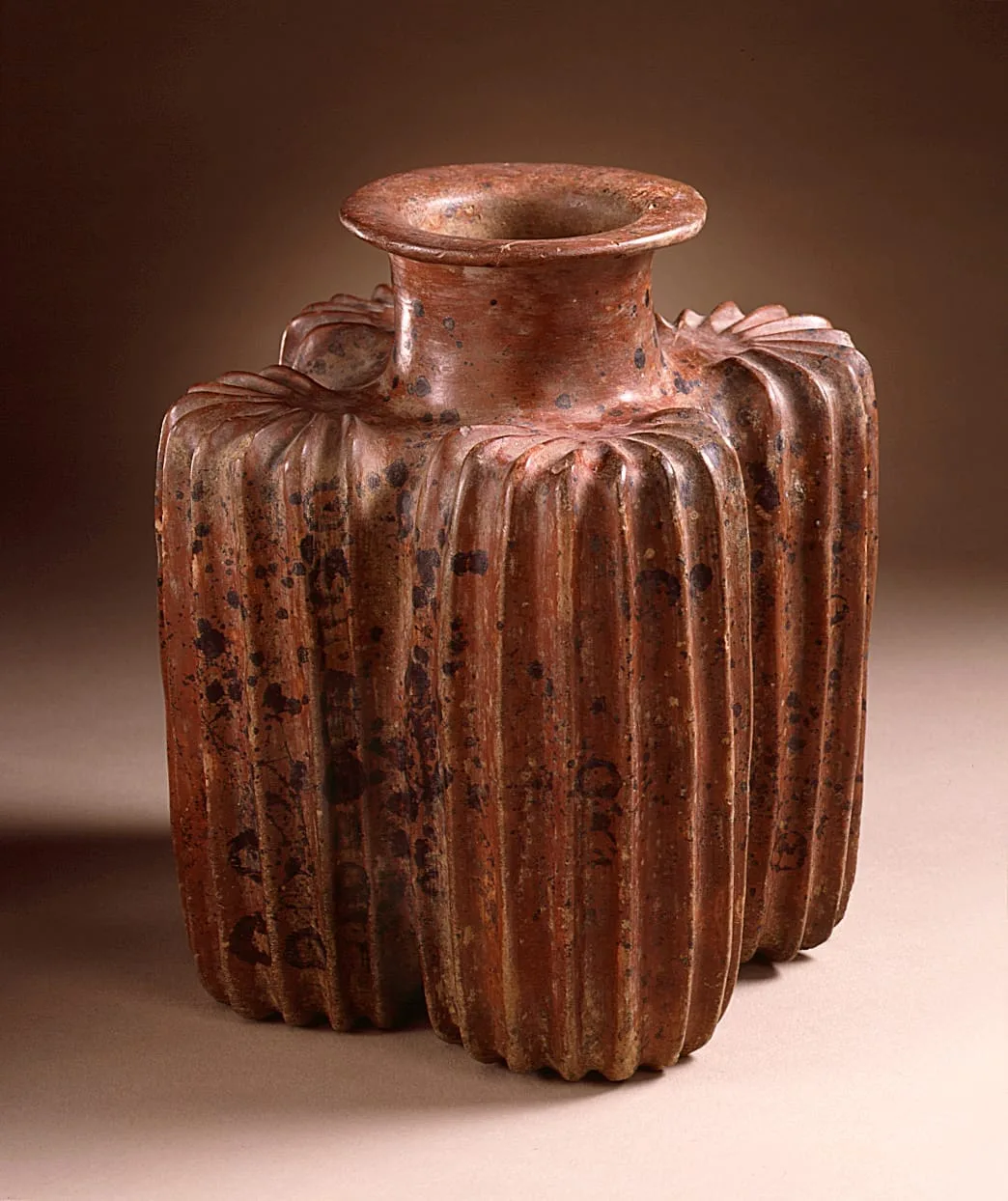
Organ Cactus Vessel200 BCE–500 CE

Not on view
Terracotta ceramic vessel with deeply ridged, square body, cylindrical flared neck, and burnished red-brown surface mottled with dark fire-clouding marks

Unknown, Organ Cactus Vessel, 200 BCE–500 CE, Los Angeles County Museum of Art, The Proctor Stafford Collection, purchased with funds provided by Mr. and Mrs. Allan C. Balch, photo © Museum Associates/LACMA

Title
Organ Cactus Vessel
Culture
Colima
Place Made
Mexico, Colima
Date Made
200 BCE–500 CE
Medium
Slip-painted earthenware
Dimensions
10 x 9 1/2 in. (25.4 x 24.13 cm)
Credit Line
The Proctor Stafford Collection, purchased with funds provided by Mr. and Mrs. Allan C. Balch
Accession Number
M.86.296.178
Classification
Ceramics
Collecting Area
Art of the Ancient Americas
Curatorial Notes

Hand-modeled into the shape of an idealized organ pipe cactus, both the artistry and symbolism of this vessel are complex. One of the few large plants to thrive in rocky desert environments of the southwestern United States and northwestern Mexico, this species of cactus can grow to 15 feet tall and live 150 years or more. Its English common name is derived from its resemblance to a pipe organ. It is locally known as pitaya dulce, Spanish for “sweet pitaya” or “sweet cactus fruit,” and to the O’odham people of southern Arizona as chuhuis.

Mature plants produce huge, funnel-shaped white flowers that open only at night and are pollinated by bats. In the early summer, it produces a sweet, edible fruit, a valuable source of food and moisture in desert places. The choice to depict this particular plant by the artist who made it, and/or by the patron who commissioned it, was deliberate and no doubt based on full knowledge of the plant’s characteristics and the surrounding ecology.

Julia Burtenshaw

2024
Selected Bibliography
  • Kan, Michael, Meighan, Clement, Nicholson, H.B. and Rexford Stead. Sculpture of Ancient West Mexico: Nayarit, Jalisco, Colima. Los Angeles: Los Angeles County Museum of Art, 1970.
  • Mexico en el Mundo de las Colecciones de Arte: Mesoamerica. Vol.2. Mexico: Secretaría de Relaciones Exteriores, 1994.
  • Los Angeles County Museum of Art. Transformation: the LACMA Campaign. Los Angeles: Museum Associates, 2008.