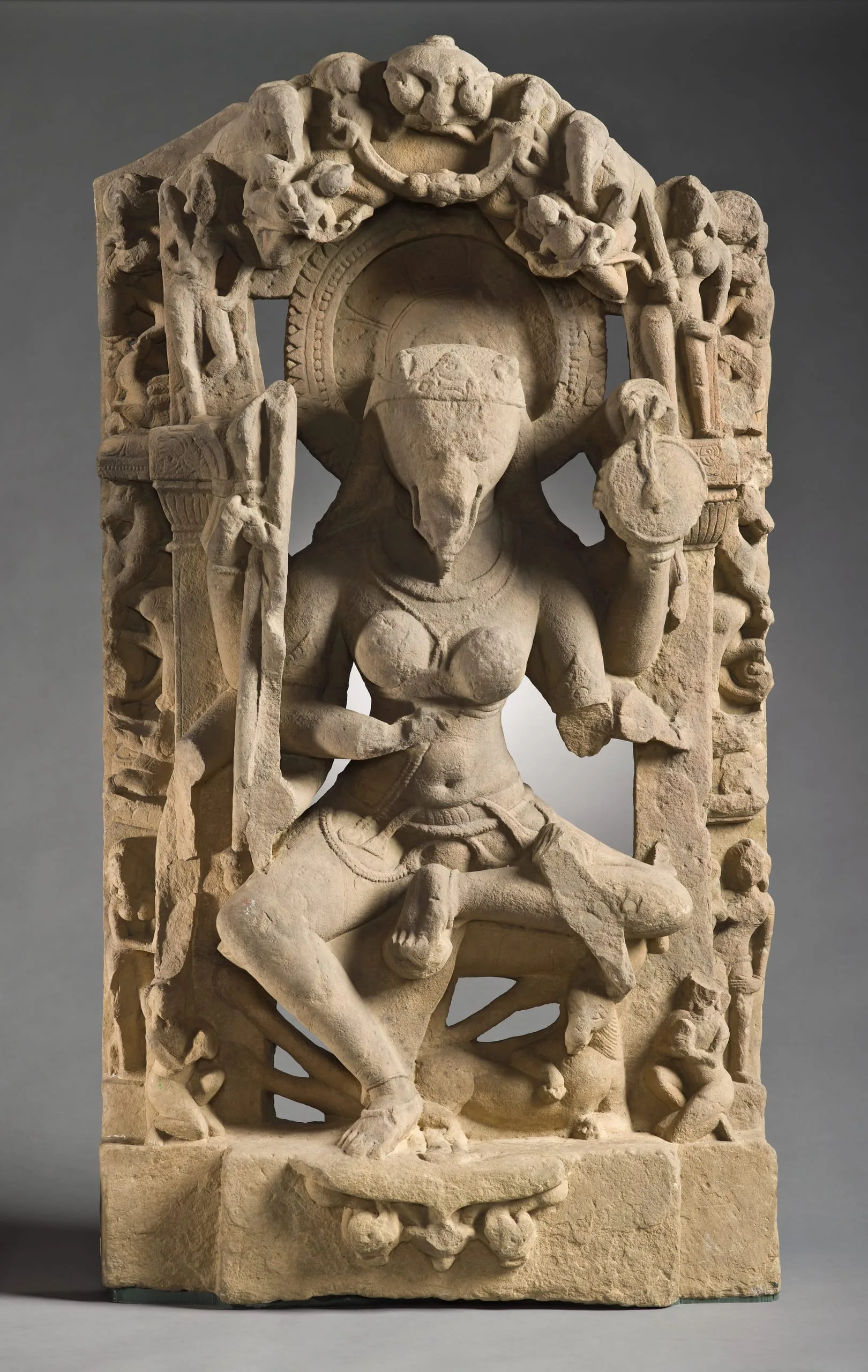
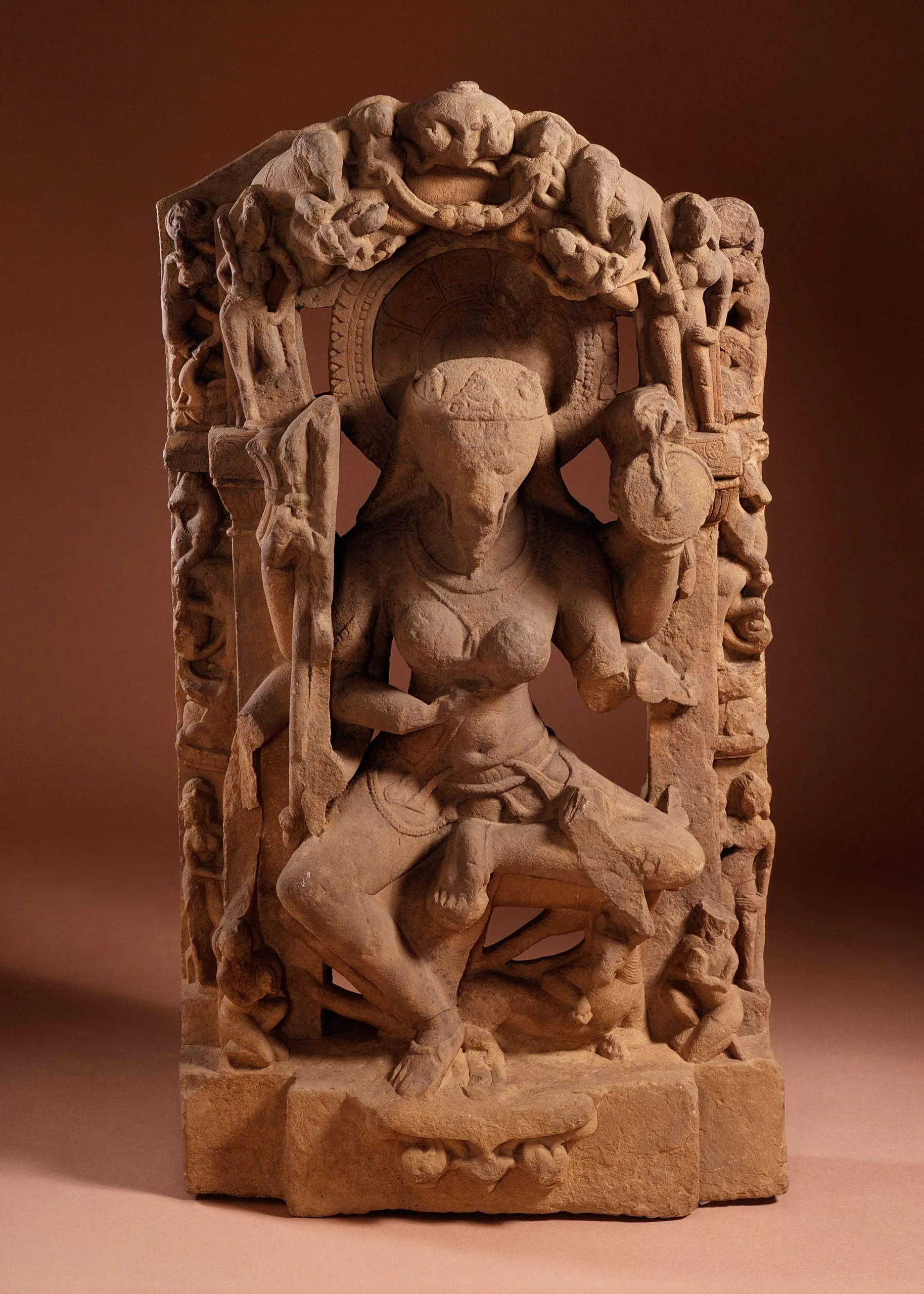
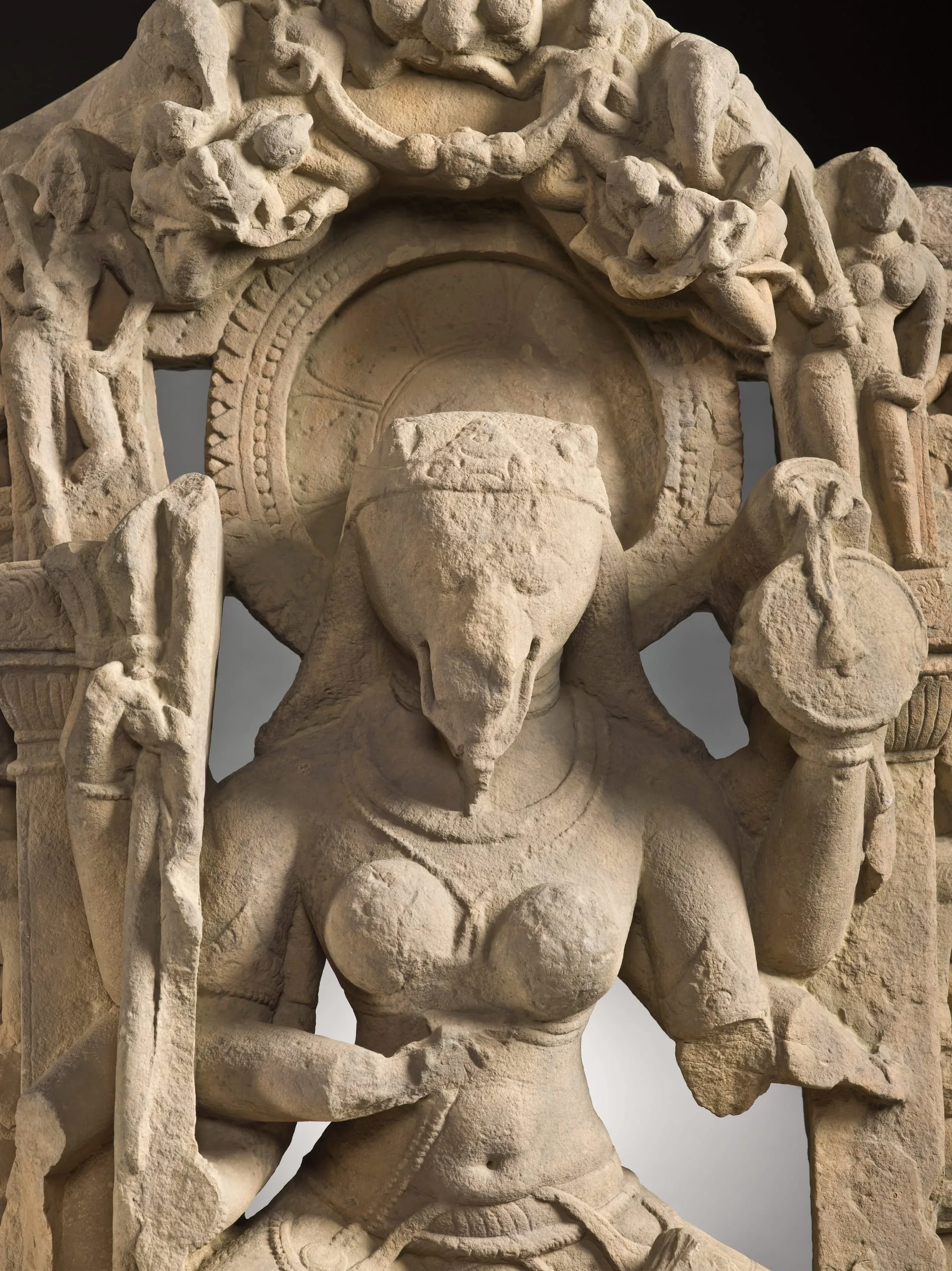
This horse-headed Yogini Hayagriva (or Hayanana) is one of the 64 (or sometimes 81) Yoginis (supernatural female ascetics) who represent cosmic feminine energy and esoteric knowledge. Their cult flourished in the 8th–12th centuries in Odisha, Madhya Pradesh, and Uttar Pradesh, as well as in southern India. They were worshipped in hypaethral temples (circular open-to-the-sky monuments), such as the well-known Chausathi Yogini Temple at Hirapur near Bhubaneswar, Odisha.
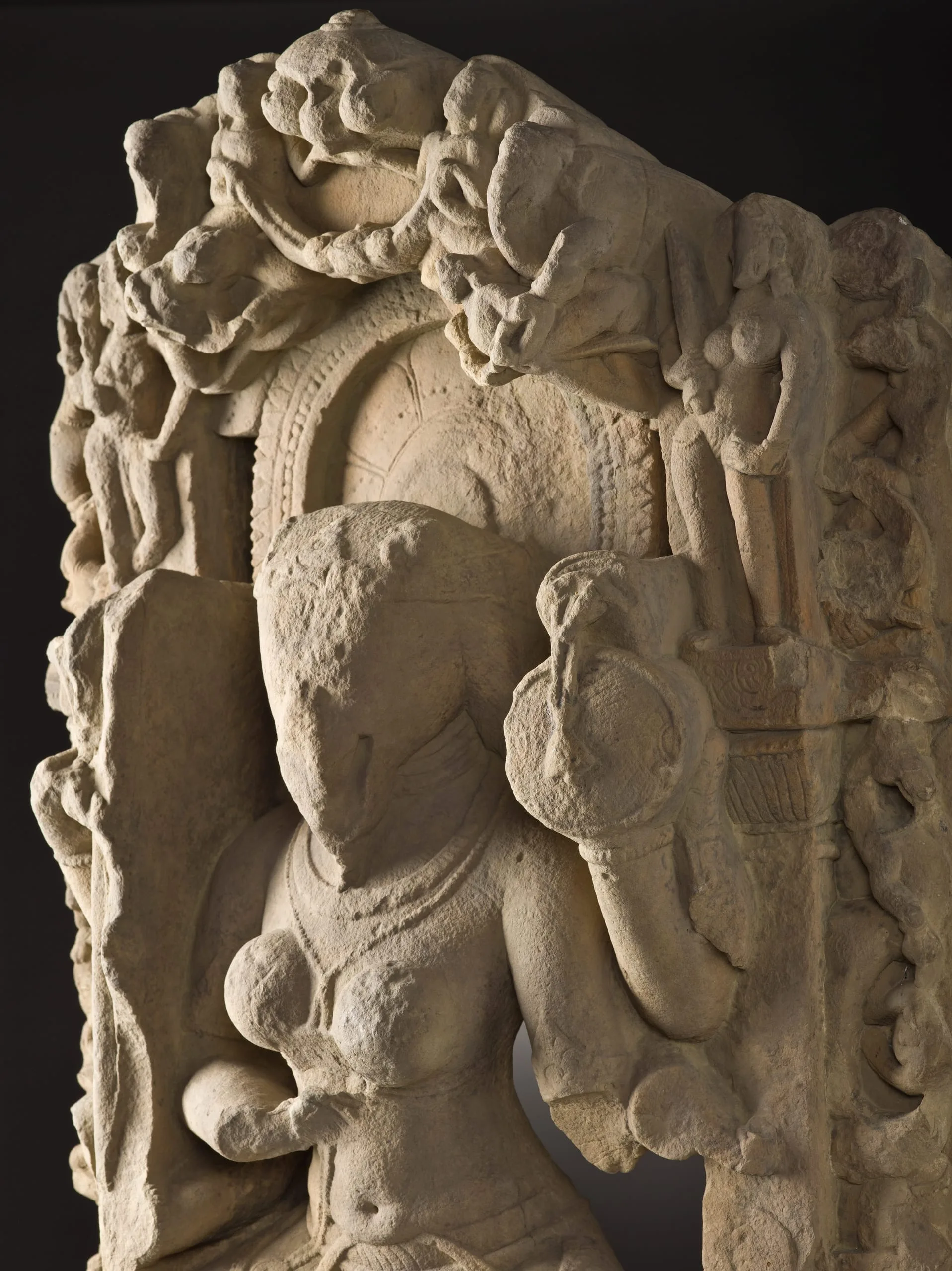
The nimbate Yogini Hayagriva originally held a now-missing child on her left knee symbolic of maternal and generative tantric creation. Most of the remaining hands of the eight-armed goddess are now lost except for those holding a sword or spear and a shield. She is framed by a pillared archway (torana) with celestial garland bearers (maladharas) at the apex. They are flanked by sword-bearing female attendants standing on pillars. Along the outer sides are scenes of animal subjugation, rearing leogryphs (shardula), and female attendants. A pair of donor figures kneel on the base with their hands held in the gesture of adoration (anjali mudra). Beneath Yogini Hayagriva is her horse mount (ashva vahana).
Comparable yoginis are in the Art Institute of Chicago (1997.708) and National Museum, New Delhi (M.13/20).