LACMA

ShopMembershipMyLACMATickets
LACMA
Los Angeles County Museum of Art
5905 Wilshire Blvd.
Los Angeles, CA 90036
info@lacma.org
(323) 857-6000
Sign up to receive emails
Subscribe
© Museum Associates 2026
  • About LACMA
  • Jobs
  • Host An Event
  • Unframed
  • Press
  • FAQs
  • Log in to MyLACMA
  • Privacy Policy
© Museum Associates 2026
Collections

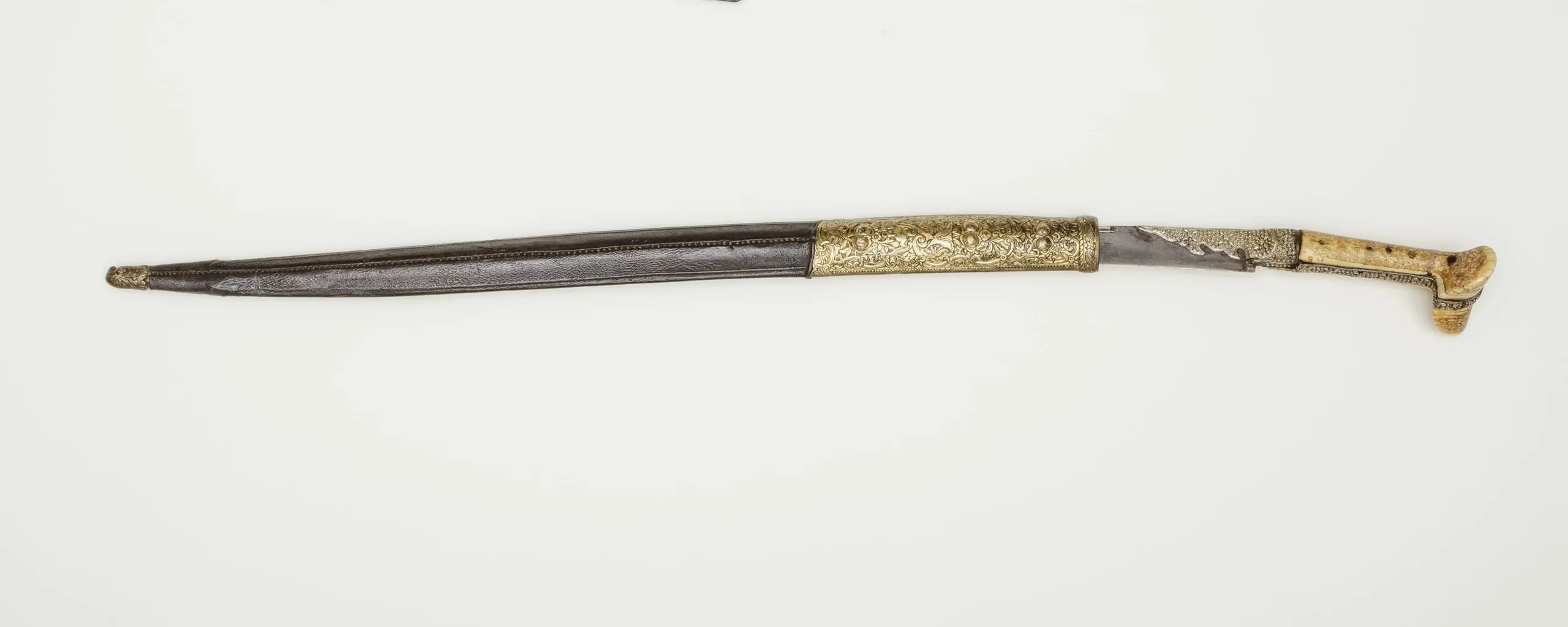
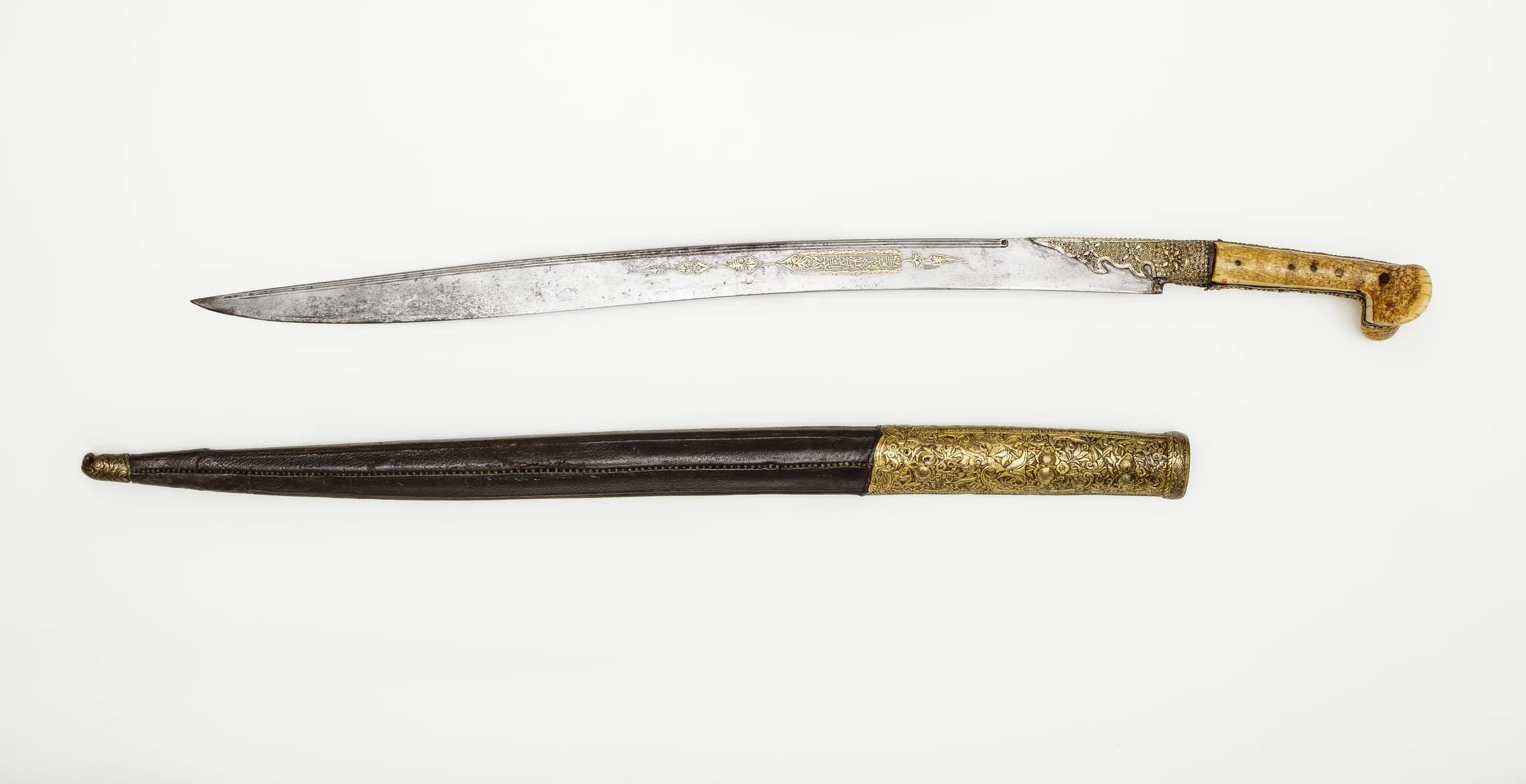
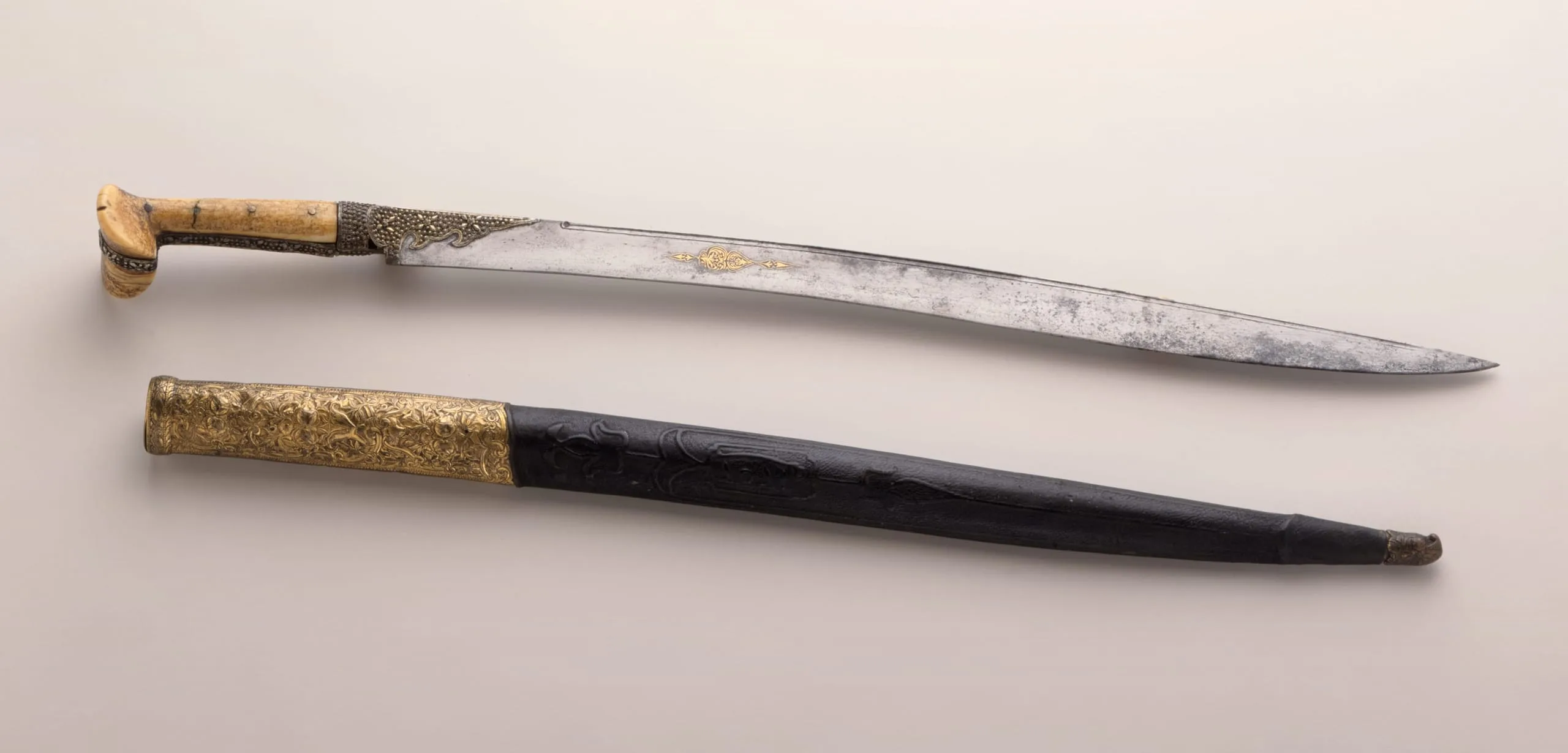
Yataghan (Sword) with Grip of Walrus Tusk Ivory1727-1728/A.H. 1140

Not on view
Single-edged sword with ivory handle, silver filigree collar, and long steel blade displayed above its black scabbard with gilded metal mount
Dagger with dark leather-covered scabbard, gold-inlaid ferrule with dense scrolling floral engraving, and a curved ivory or bone pistol-grip handle with carved zoomorphic terminal.
Dagger partially drawn from its scabbard, with a curved antler handle and a steel blade engraved with scrolling motifs; the scabbard covered in densely repoussé-worked gilt metal with foliate and figural decoration on a dark ground.

Unknown, Yataghan (Sword) with Grip of Walrus Tusk Ivory, 1727-1728/A.H. 1140, Los Angeles County Museum of Art, The Edwin Binney, 3rd, Collection of Turkish Art at the Los Angeles County Museum of Art, photo © Museum Associates/LACMA

Title
Yataghan (Sword) with Grip of Walrus Tusk Ivory
Place Made
Turkey
Date Made
1727-1728/A.H. 1140
Medium
Steel with walrus tusk ivory, inlaid in gold (sword); leather, incised and stamped gold (scabbard)
Dimensions
unspecified (unspecified): 21 1/4 × 1 1/4 in. (53.98 × 3.18 cm)
Credit Line
The Edwin Binney, 3rd, Collection of Turkish Art at the Los Angeles County Museum of Art
Accession Number
M.85.237.92a-b
Classification
Arms and Armor
Collecting Area
Art of the Middle East: Islamic
Curatorial Notes

Weaponry was as much a part of courtly life as it was a part of combat, and many weapons were made as presentation pieces rather than for use on the battlefield. This sword, known in Turkish as a yataghan, was likely a showpiece carried by a Janissary, a member of the elite Ottoman troops. Embellished with gold and paired with an impressed leather scabbard, the sword features a bifurcated handle made of walrus tusk, an uncommon material in the Islamic world that may have come from Russia, which borders walrus habitats in the Arctic Ocean. The blade of this sword is is inscribed as follows: "made by al-Hajji Sharif; its owner is ‘Ali-Agha in 1140 [AH/ 1727-8]."
Selected Bibliography
  • Denny, Walter B. Turkish Treasures from the Collection of Edward Binney, 3rd. Portland, OR: Portland Art Museum, 1979.
  • Lo Terrenal y lo Divino: Arte Islámico siglos VII al XIX Colección del Museo de Arte del Condado de Los Ángeles. Santiago: Centro Cultural La Moneda, 2015.