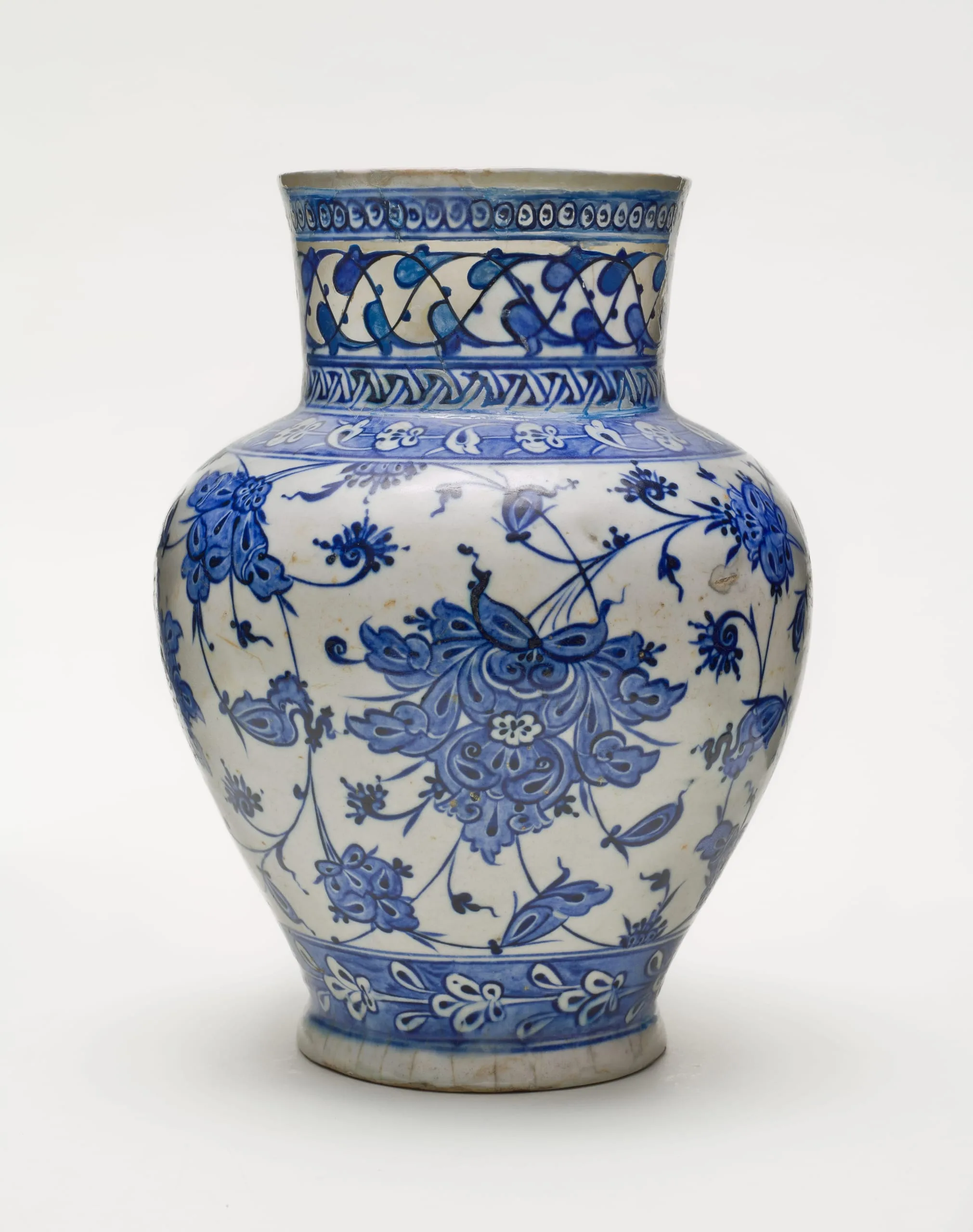
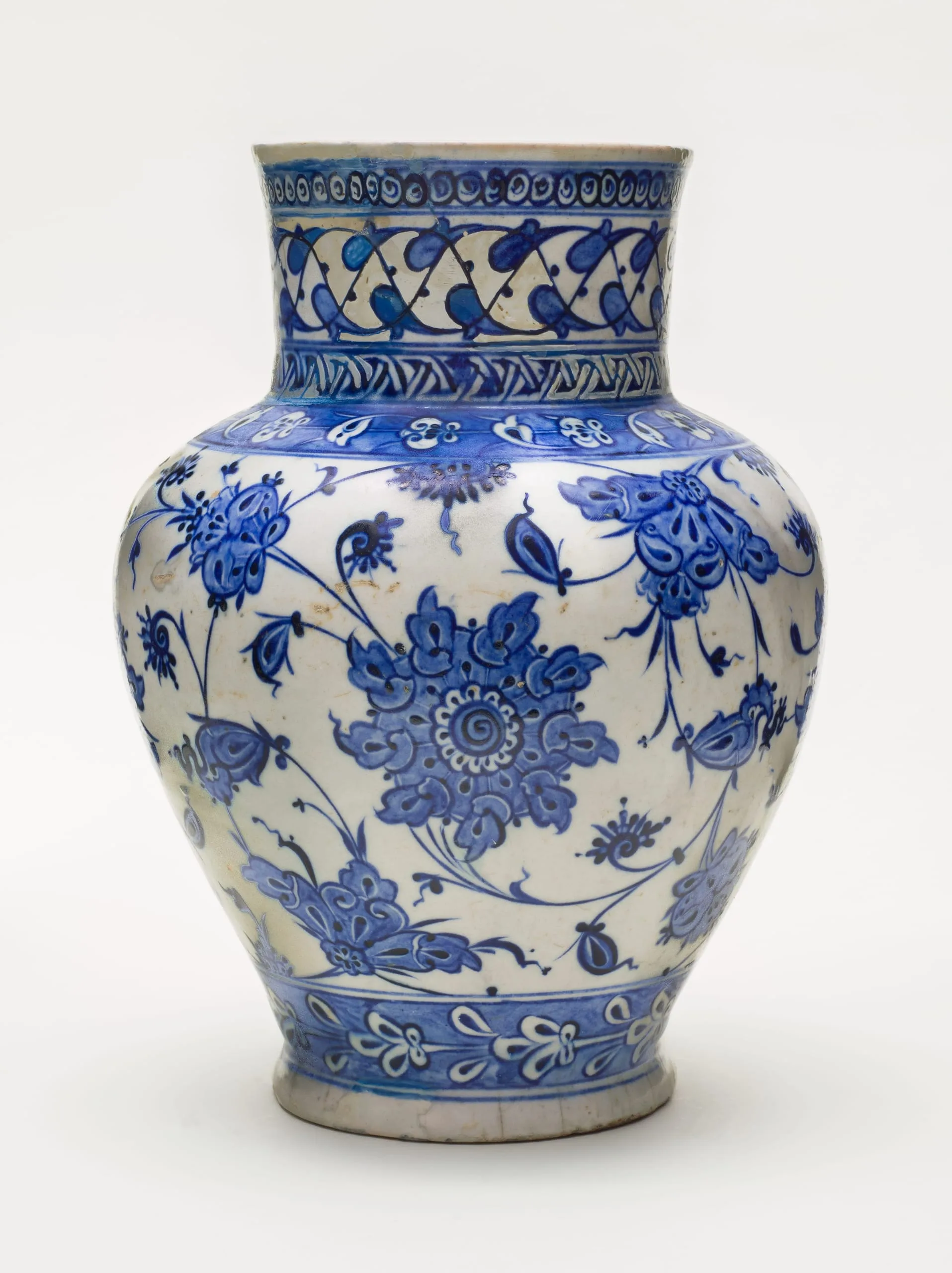
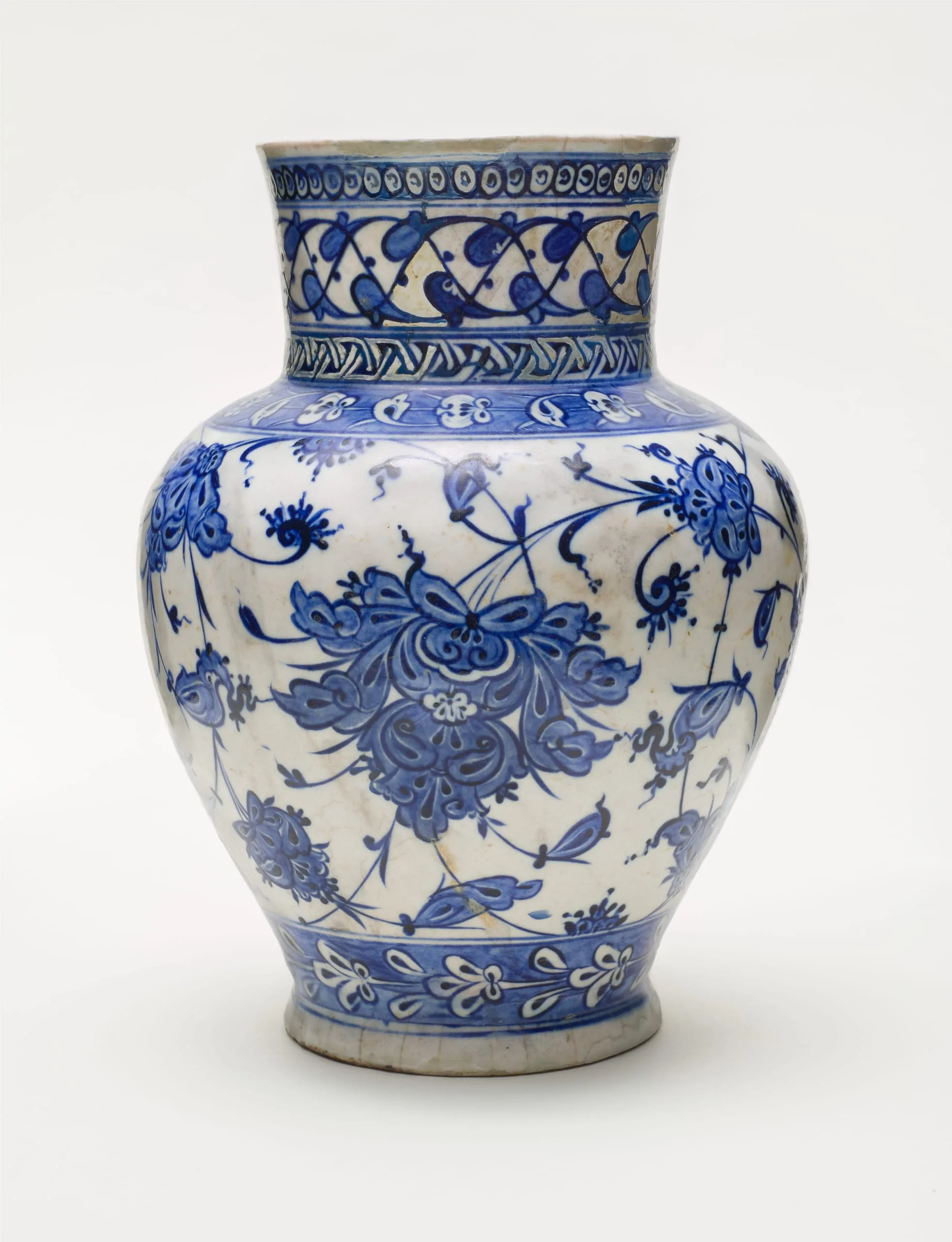
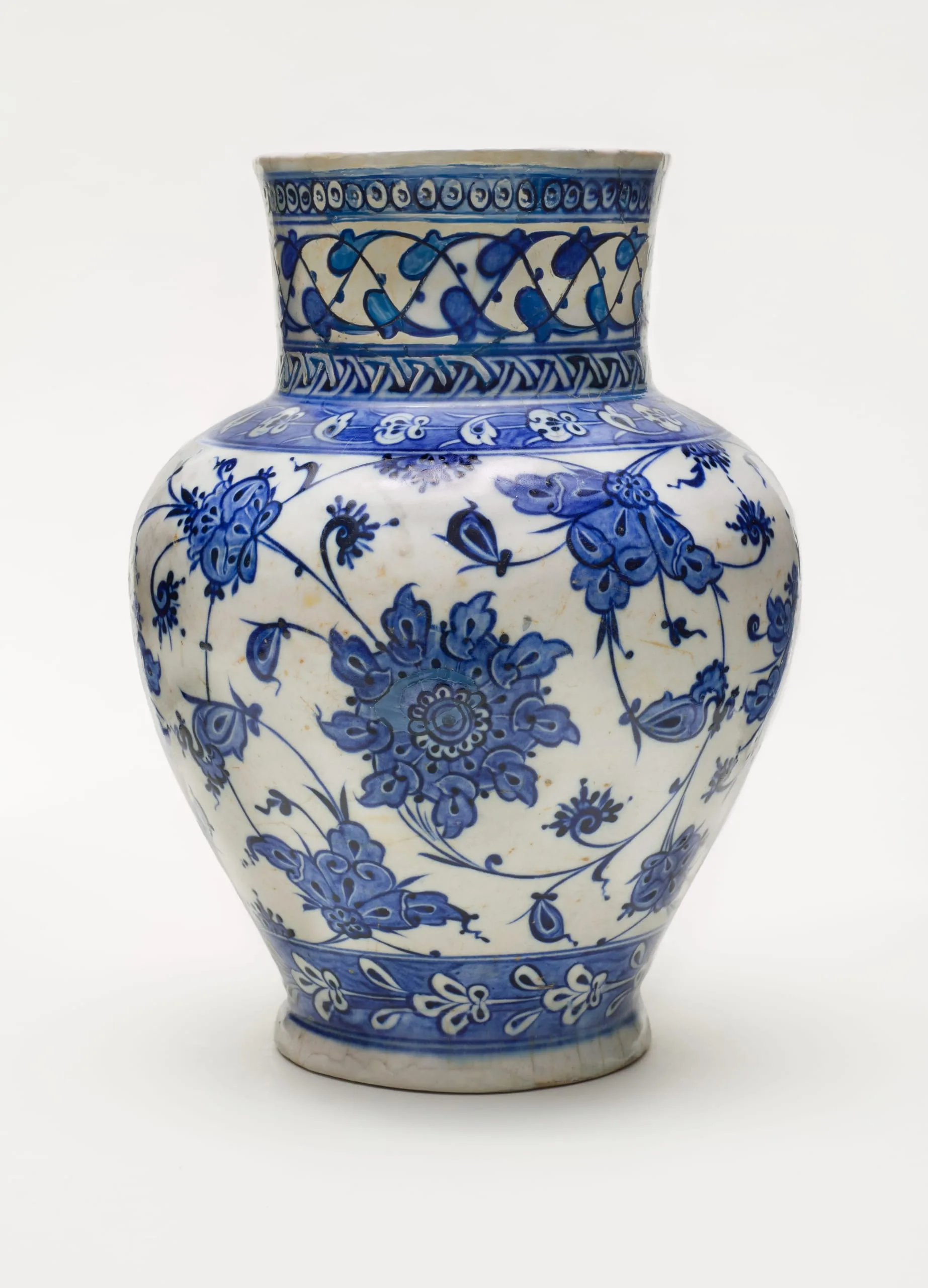
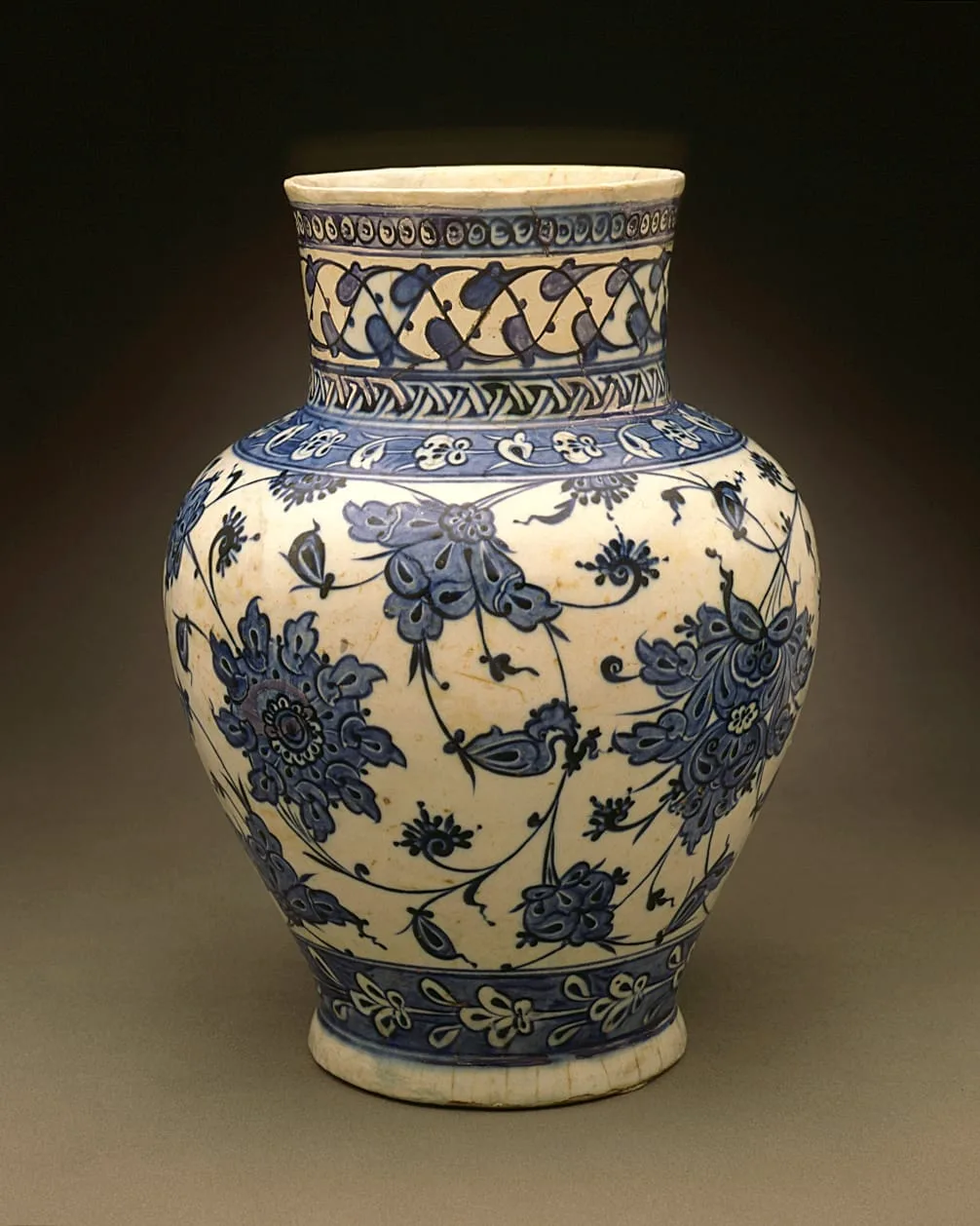
Iznik pottery, which takes its name from the northwestern Anatolian city where it was made, is one of the most notable and renowned arts of the Ottoman period. Sometime in the late fifteenth century, to approximate the imported Chinese blue-and-white porcelain that was then prevalent as elite tableware, Iznik potters began to produce blue-and-white wares of a type virtually unrivaled in Islamic ceramics. Without duplicating actual porcelain, they nonetheless replicated a dense, hard, light-bodied ware (fritware) covered with a white slip. Onto this dazzling white surface, they painted Chinese-inspired floral designs and scrolling Islamic arabesques in deep cobalt blue, as on this petite vessel.
The jar belongs to a particular phase in the development of Ottoman pottery, possibly the second decade of the sixteenth century, when potters had begun to use two values of blue on a white ground. Here, a lighter shade of blue, along with a deep cobalt blue, is employed for the dynamic floral decoration inspired by Chinese designs. The flowers are boldly painted on the white ground, or else, as on the foot and the shoulder, they are reserved in white against blue. Jars of this type, which most likely served as storage containers, testify to the high aesthetic standards of the day.