- Artist or Maker
- Bhimsen
(India, active circa 1750-1775) - Title
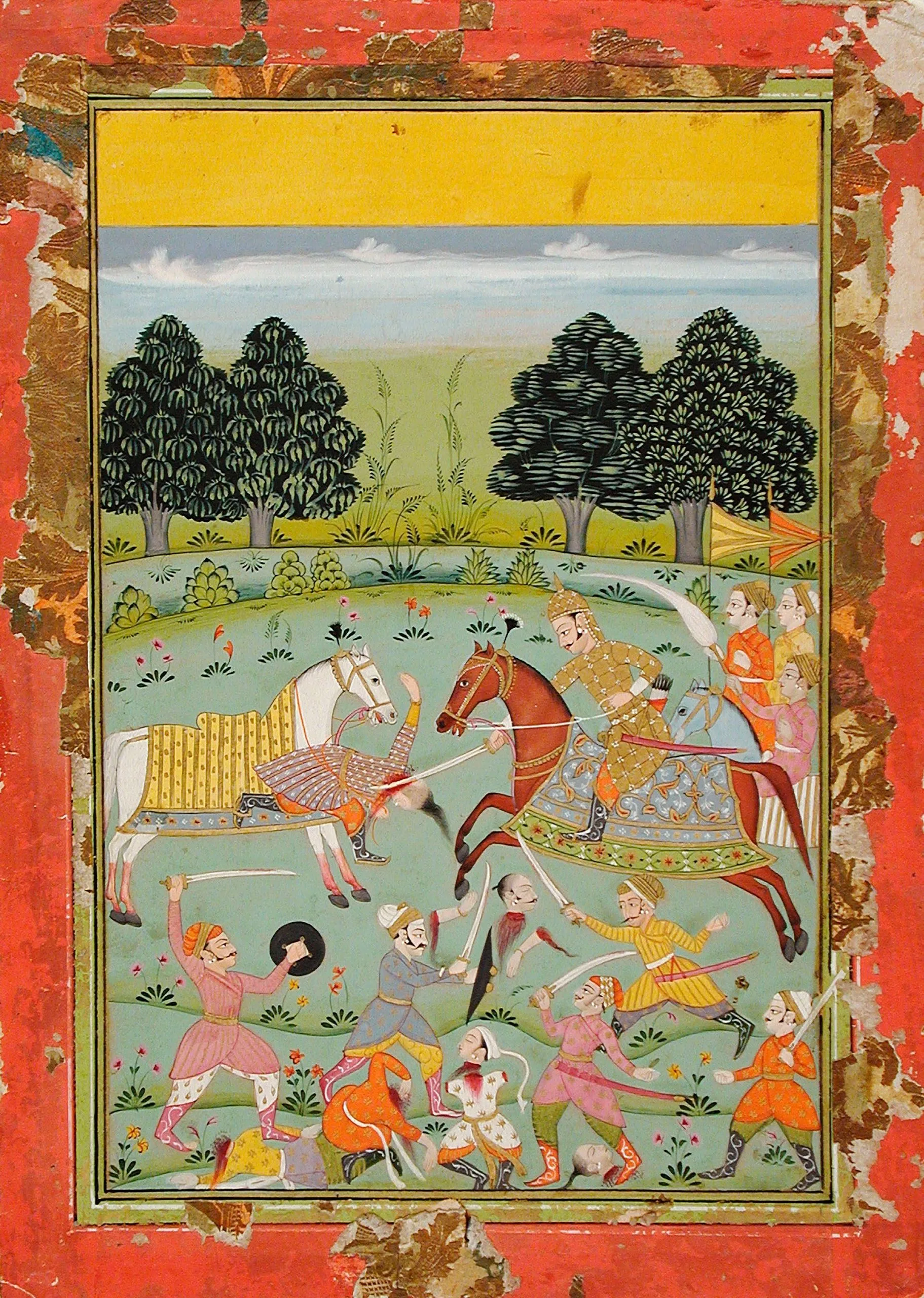
- Nata Ragini, Second Wife of Bhairava Raga, Folio from a Ragamala (Garland of Melodies)
- Date Made
- 1762
- Medium
- Opaque watercolor, gold, and ink on paper
- Dimensions
- Image: 10 x 6 7/8 in. (25.4 x 17.46 cm); Sheet: 12 1/16 x 8 5/8 in. (30.63 x 21.91 cm)
- Accession Number
- M.84.222.2
- Curatorial Notes
An inscription on the reverse states this painting was made in 1762 by the otherwise unknown artist Bhimsen. A rubber stamp impression documents that it was formerly in the Bikaner state collection.
Nata Ragini is the second wife of Bhairava Raga in the predominant ragamala (garland of melodies) classification system generally known as the Rajasthani system. It is a heroic melody evoking a martial spirit, hence its common imagery of a battling warrior or warriors. It is associated with late afternoon or early evening and Summer (May–July). The ostensive gender disparity between a feminine melody (ragini) and male combatants resulted in some pictorial traditions depicting the warrior as female. (For example, see Nata Raginis in the Philadelphia Museum of Art, 1987-52-3, and National Museum, New Delhi, 60.811).
Here, a male Rajput warrior on a chestnut stallion is in the act of decapitating his mounted opponent with a sword. He wears a suit of chain mail armor and a helmet with an aventail or hood of chain mail. Behind him, attendants hold standards and an honorific fly whisk made of the white tail-hairs of a yak (cauri or chowri). In the foreground, foot soldiers attack each other with several being decapitated and delimbed. The battle takes place in a forest glen on a partly cloudy day. The blind header would have been reserved for the poetic description of the melody. There are remnants of an overlaid marbled paper border over the outer red border and inner margins.