- Title
- Shiva as the Lord of Dance
- Date Made
- circa 800
- Medium
- Red sandstone
- Dimensions
- 29 1/2 x 16 x 6 1/2 in. (74.93 x 40.64 x 16.51 cm)
- Accession Number
- M.82.42.4
- Curatorial Notes
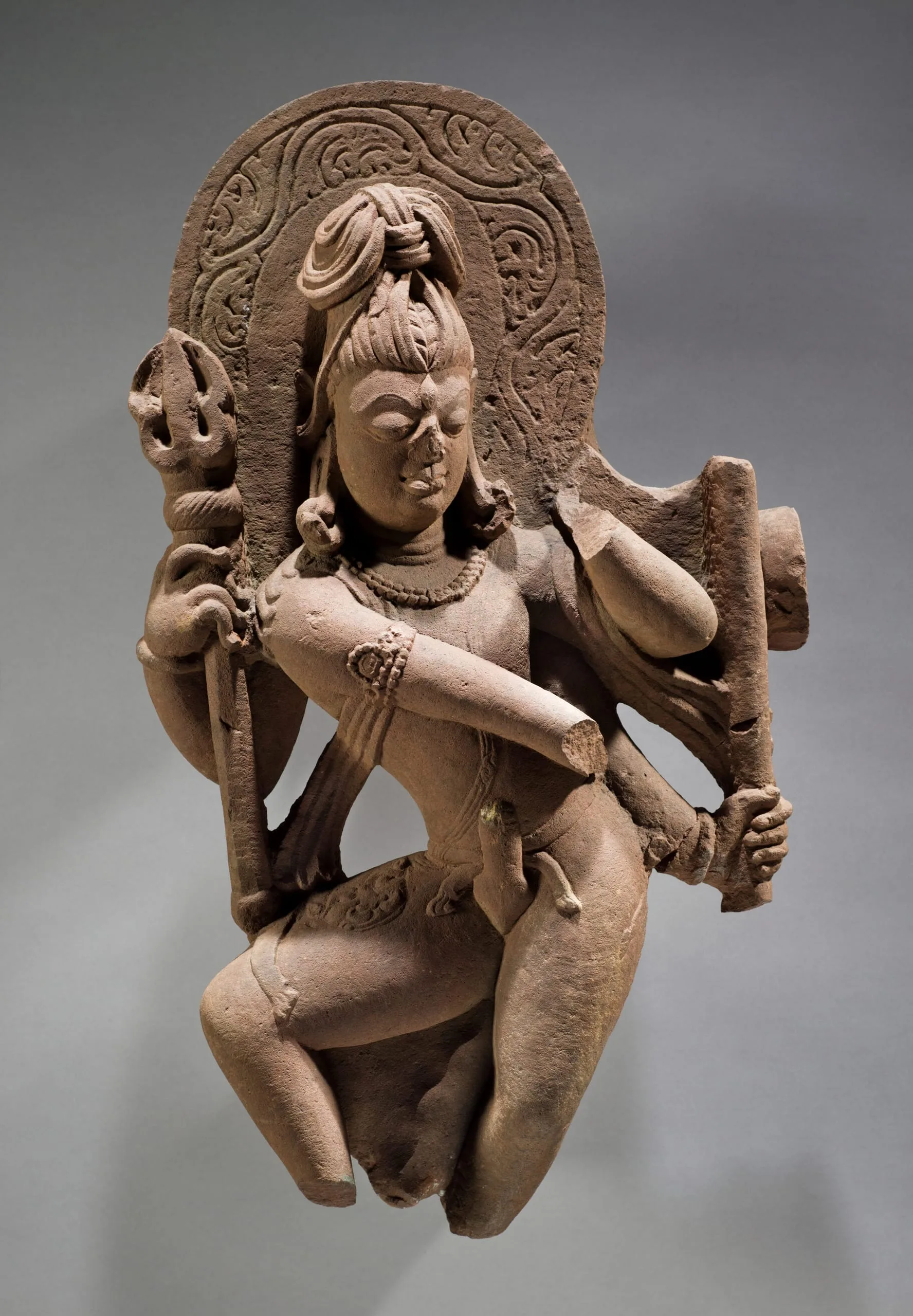
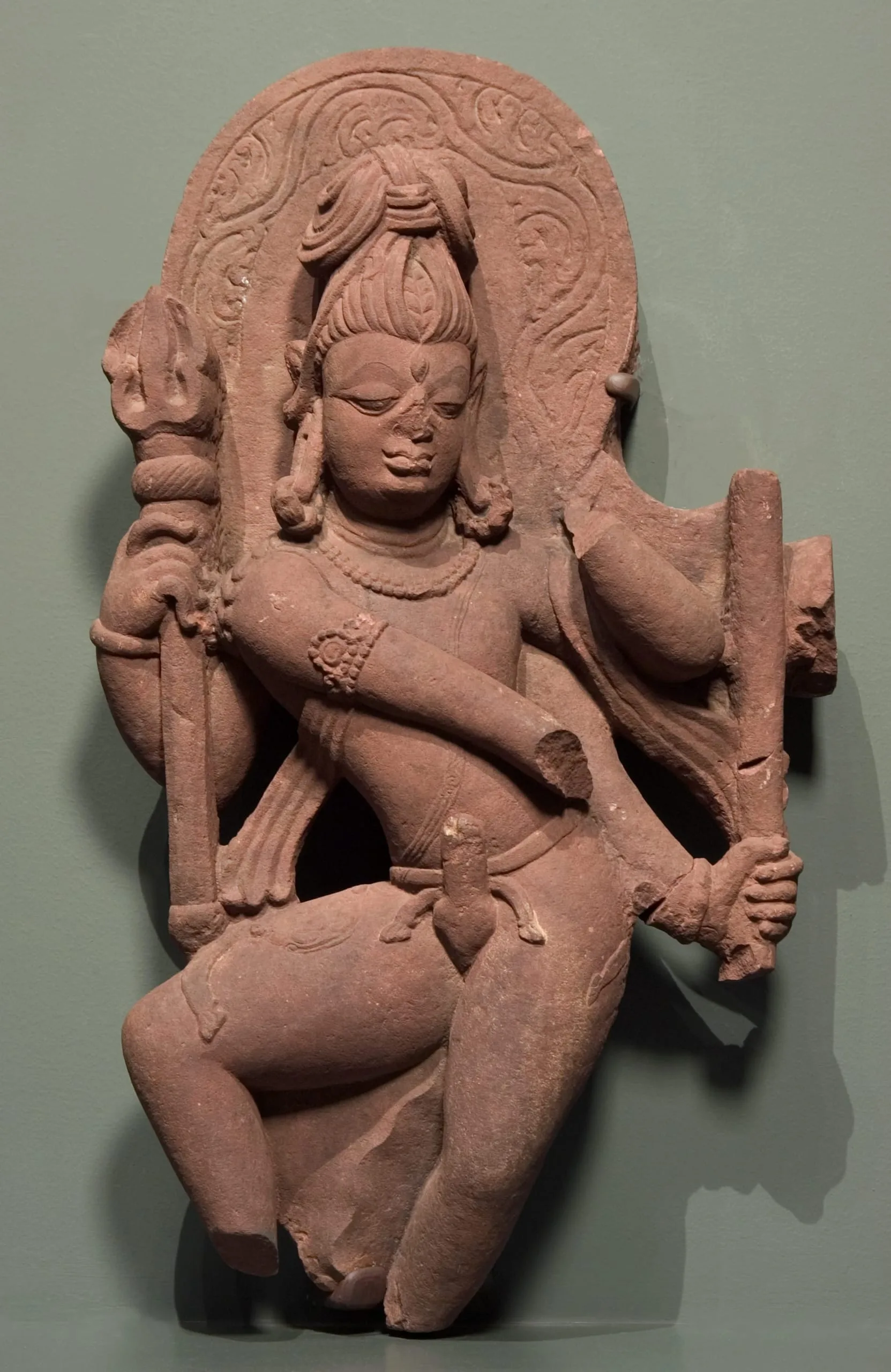
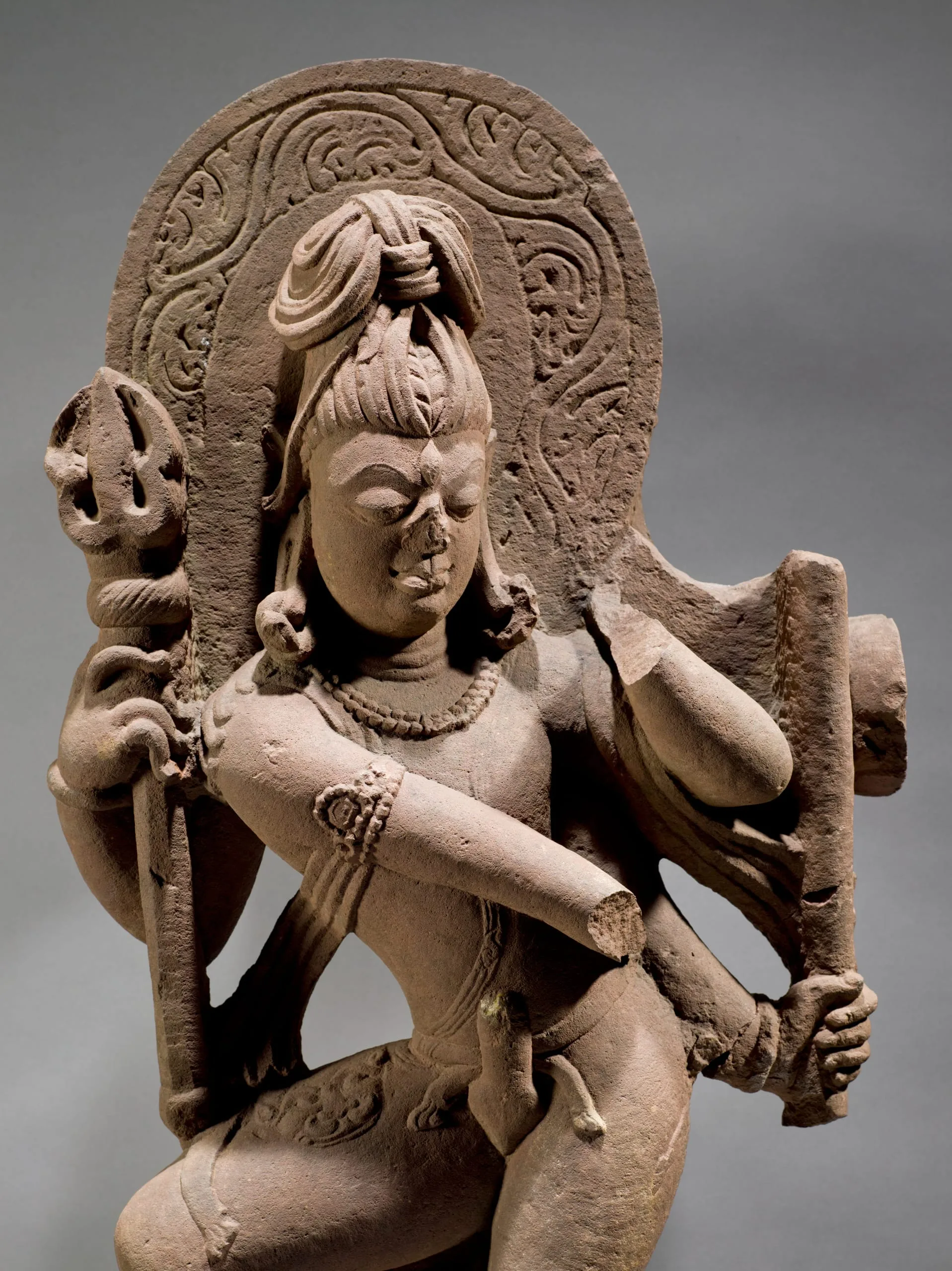
The Hindu god Shiva is represented here as the cosmic dancer whose dance engenders the creation of the universe. Shiva performs in the charming (lalita) dance posture with his hip thrust to the left. He stands on his left leg with his right leg raised. The lalita dance is one of the 108 dance postures described in texts such as the Natyashastra (200 BCE-200 CE) and the south Indian agamas (religious scriptures that have come down as tradition).
Shiva is nimbate and has an ascetic’s piled hair (jata mukuta) and a third eye of wisdom (jñana netra). He wears an ascetic’s sash (yoga patta) worn across his left shoulder and a tiger skin over his right thigh. He has four arms. In his upper right hand, he holds a trident (trishula). It is upper left hand, he holds a now-broken ‘cot’s leg’ ritual staff once topped with a skull (khatvanga). His lower right arm extends across his body. It’s now-missing hand likely displayed the ring gesture (kataka mudra) often used to hold a flower. It also grants fearlessness to his devotees. His now-lost lower left hand raised to the shoulder probably once displayed the gesture of exposition (chin mudra). Shiva is ithyphallic (urdhva linga) symbolizing the generative energy of the universe.