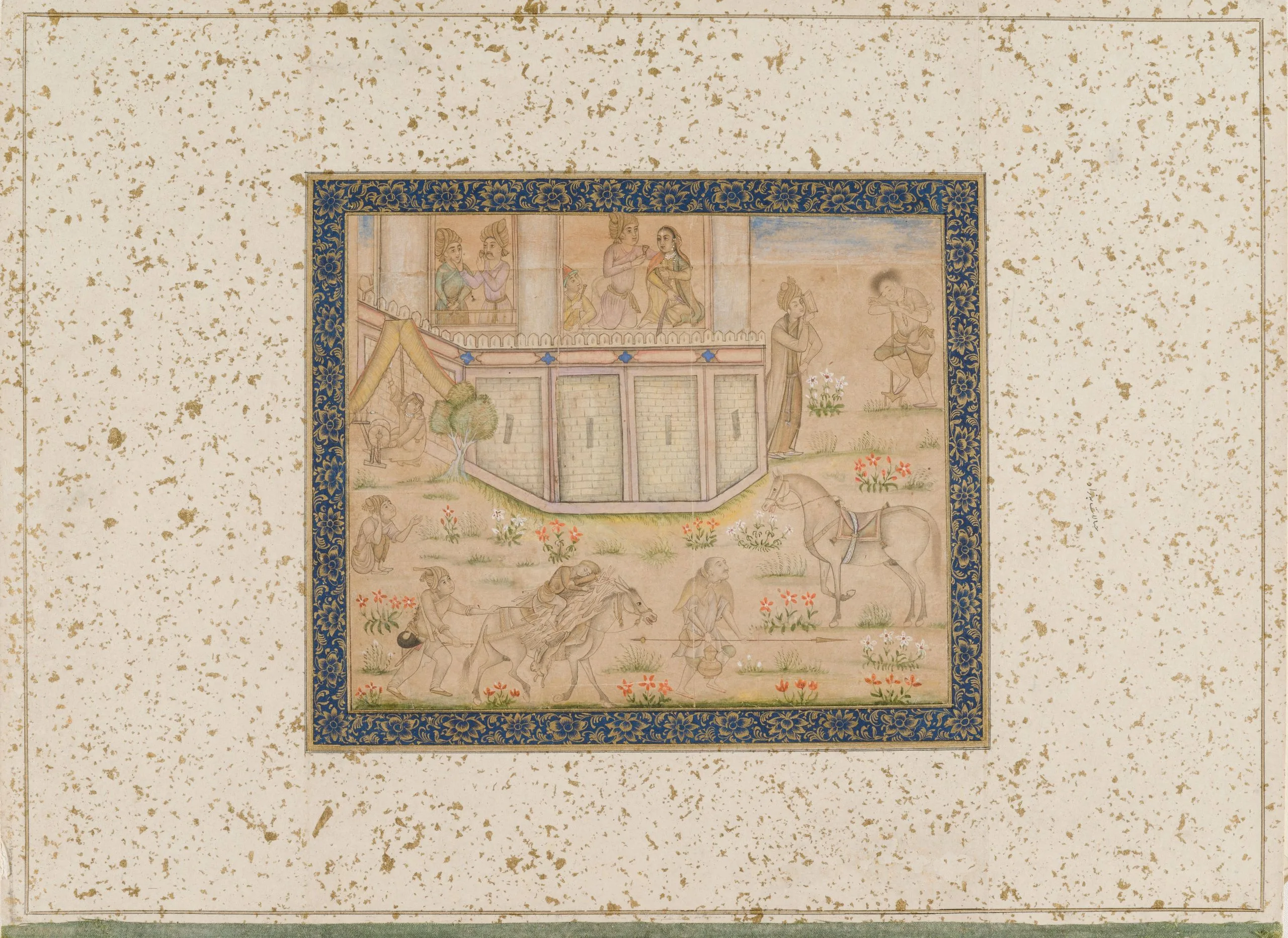
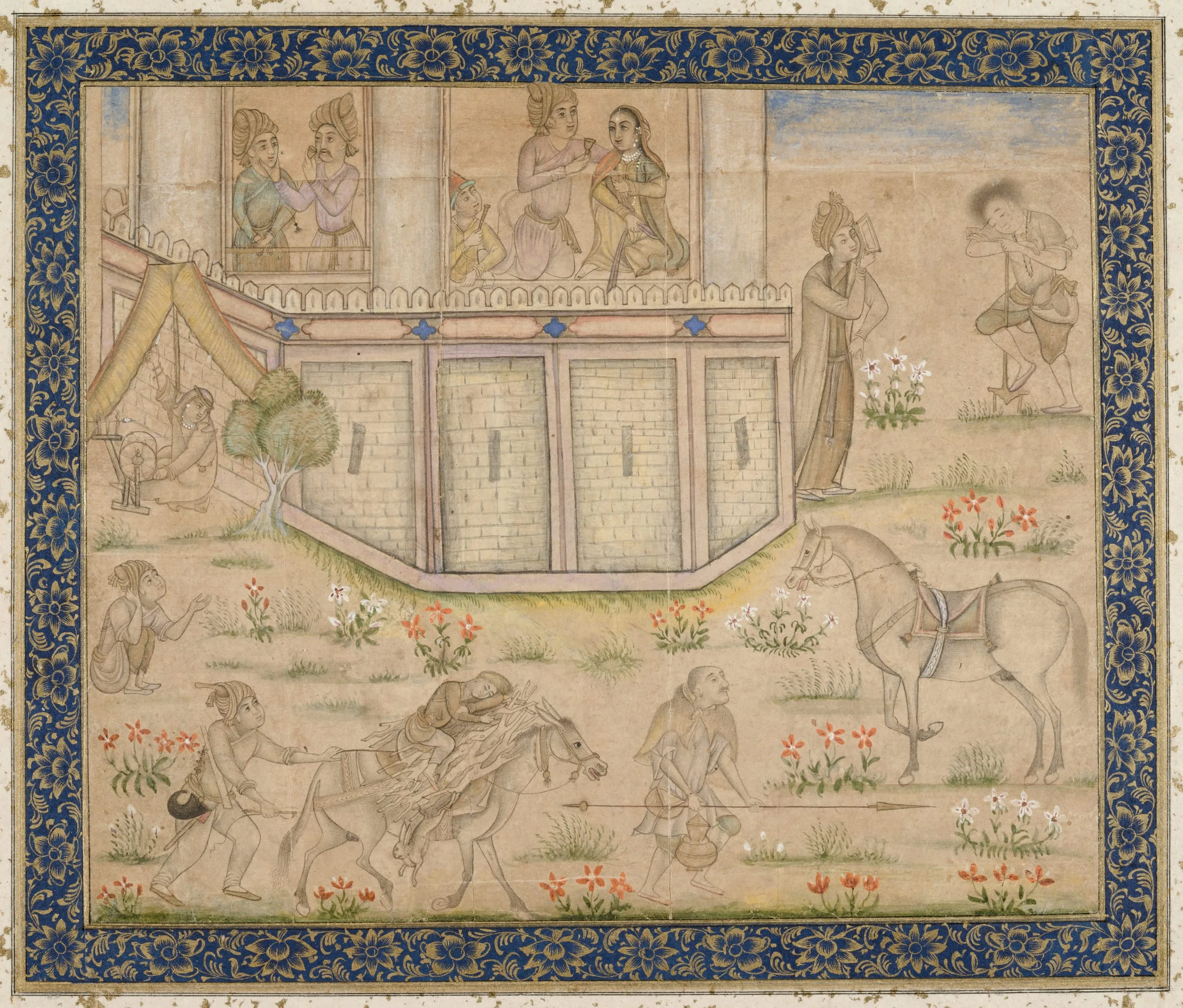
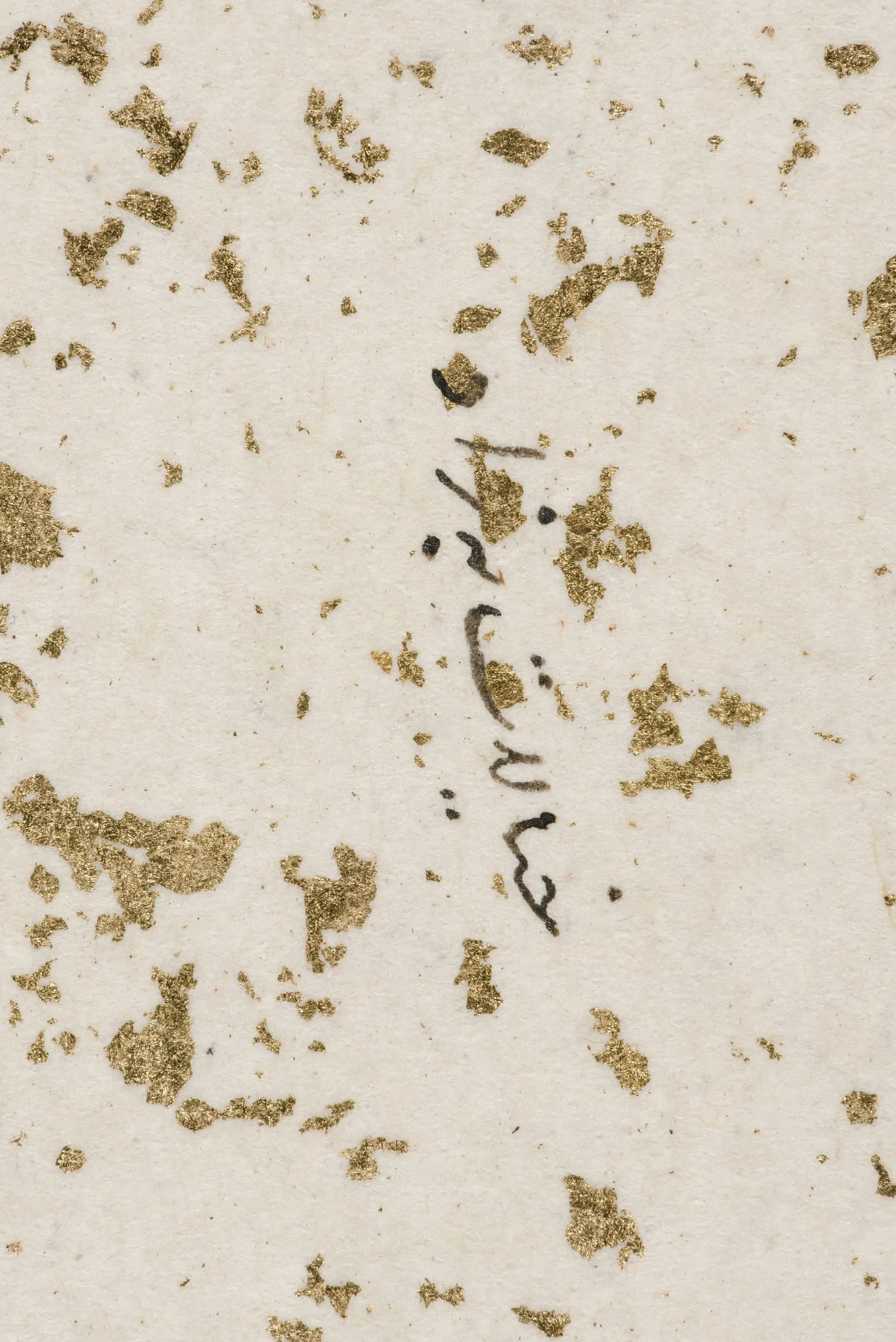
The previously untranslated minuscule inscription in the right-hand border provides the necessary clue for interpreting this exquisite tinted drawing of amorous scenes inside a polygonal pavilion and studies of figural types engaged in mundane pursuits in the surrounding landscape. The inscription, khayālāt-i Bihzād, reads “images (or imaginary scenes) [inspired] by Bihzad.” (Translation by Wheeler Thackston.)
Ustad Kamaluddin Bihzad (c. 1460–1535) is the most celebrated of all Persianate painters because of his accomplished compositions and his influential role as the head of the royal ateliers in Herat, Afghanistan and Tabriz, Iran under the Timurid dynasty (1370–1507) and the Safavid dynasty (1501–1732). Bihzad and his followers are credited with developing, among other stylistic innovations, an interest in the depiction of everyday activities.
Inspired by the oeuvre of Bihzad and his followers, the Deccani artist of this work has replicated various genre figures that were stock motifs in late Timurid and early Safavid painting. Source models for several of the figure types have been found to date. Specifically, the woman spinning thread, the mule carrying firewood, the dervish, the horse, the digger, and the woman holding a handkerchief. Amorous couples, both heterosexual and possibly homosexual, can also be found in Timurid and Safavid painting, as well as polygonal pavilions.