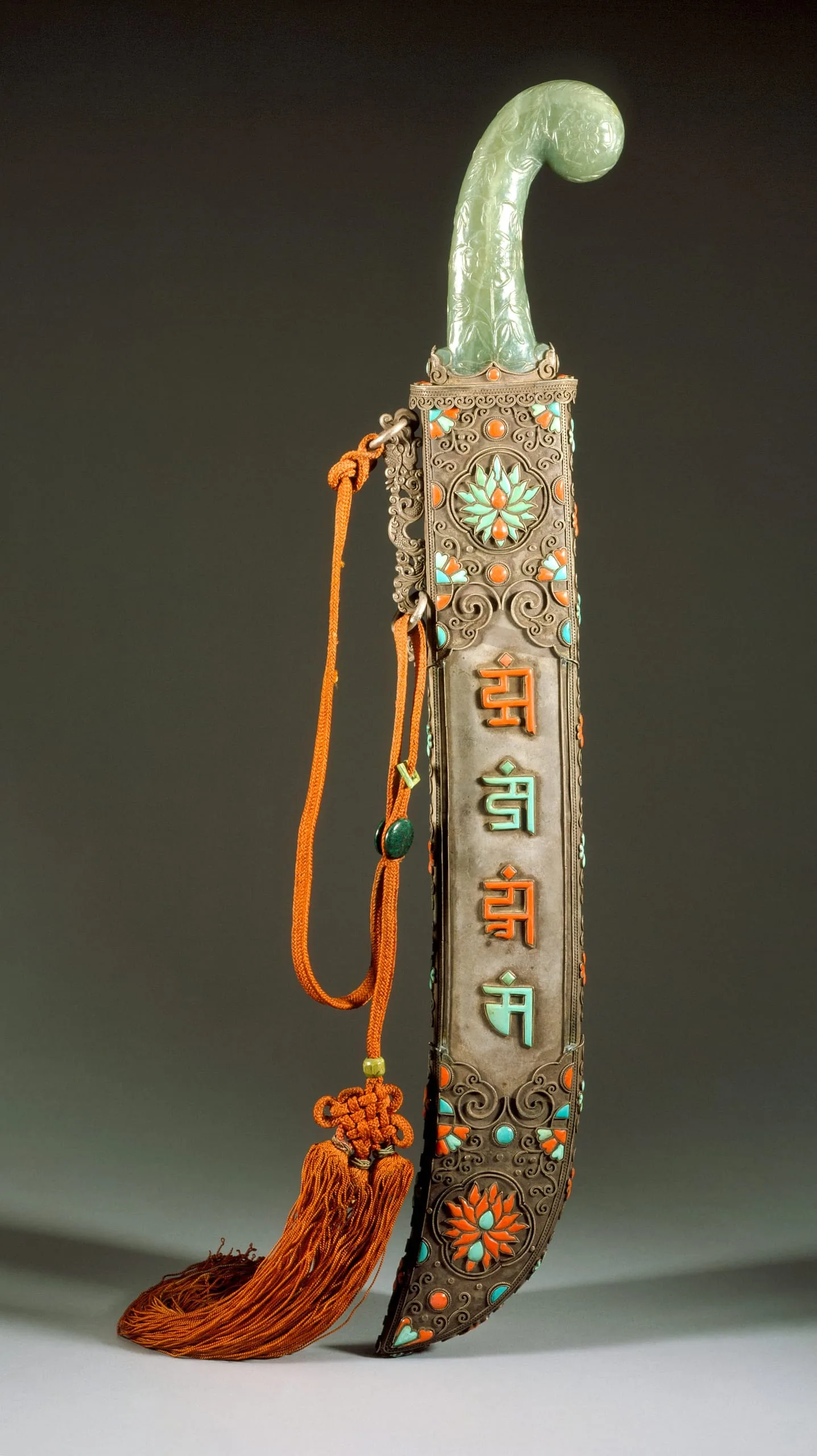
Previously catalogued as Central Tibetan (Pal, 1983 & 1990, pp. 247-248, no. R10), this ceremonial sword and scabbard is more likely Mongolian based on its style of decoration. Ornate swords were indicators of rank and status of male warriors in Tibet and Mongolia, but this sword was probably brandished by priests in Vajrayana Buddhist exorcism rituals to ward off negative forces and attitudes.
The sword has a single edge with an oblique point. The light green nephrite jade hilt with floral motifs executed in shallow relief is from Mughal India (see M.68.65.26). It is fashioned in the form of a pistol grip with a rounded pommel. This hilt form was often used on khanjar daggers (see M.71.1.35a-b, M.76.2.16a-b, and M.76.2.18). The mouth of the hilt has plain scrolling quillons (cross guards) embellished with split acanthus leaves and a flowering iris rising from the center. The central motif on the hilt is an open dianthus flower, which is repeated on the hilt butt. The elaborate scabbard has a locket and chape made of silver and silver filigree inlaid with coral and turquoise lotus blossoms. The sides of the scabbard are embellished with four seed symbols (Sanskrit: bija or bijakshara) inlaid with coral and turquoise in a devanagari script variant. Seed symbols are the quintessence of a mantra in a single syllable or sound. They may also symbolize a theological principle or deity. The decorative silk tassels with an endless knot are attached to an undulating dragon mount.
See also M.77.111.2 and M.84.31.513a-b. A comparable Mongolian sword and scabbard with the same seed syllables was sold at Abington Auction Gallery, Fort Lauderdale, June 28, 2023, https://www.invaluable.com/auction-lot/tibetan-antique-silver-sword-scabbard-143-c-e0d4f309df