Shri Devi (or Shri) is a sobriquet for Lakshmi, the Hindu goddess of wealth and prosperity. Its usage dates to the late Vedic (proto-Hindu) era in circa 1000–500 BCE.
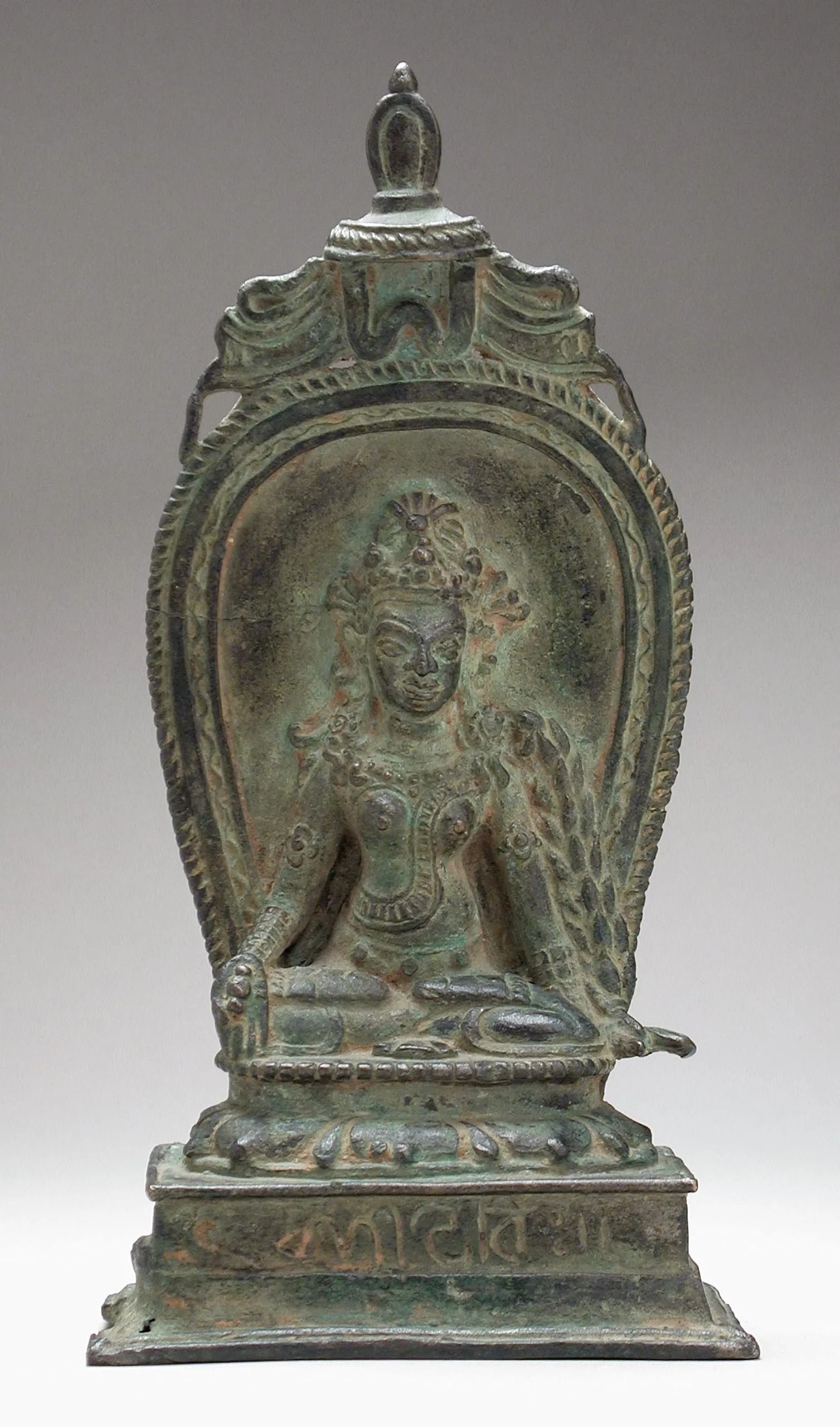
The beatific goddess is enthroned on a lotus base with a flaming aureola (prabhavali) topped by a jeweled finial with cascading streamers. She wears a floral crown and copious jewelry, including a banded Brahmanical sacred thread (yajñopavita) over her left shoulder. In her left hand she holds a stalk of rice to signify her role as a goddess of agricultural abundance. Her right hand is extended in the gesture of charity (varada mudra) and holds a tripartite jewel or symbol (lakshana). She sits in the lotus posture (padma asana). A thunderbolt (vajra) is in front of her on the lotus base. On the proper right side of the rectangular base is a lizard (godhika), the mount (vahana) of the goddess Gauri who is related to Shri Devi.
A devanagari inscription on the front of the image base identifies the goddess as Shri Devi.
Perhaps added retrospectively, the Buddhist creed is inscribed on the back of the image: The Buddha has explained the cause of all things that arise from a cause. He, the great monk, has also explained their cessation.
See also M.70.5.2, M.78.10.4 and M.90.150.