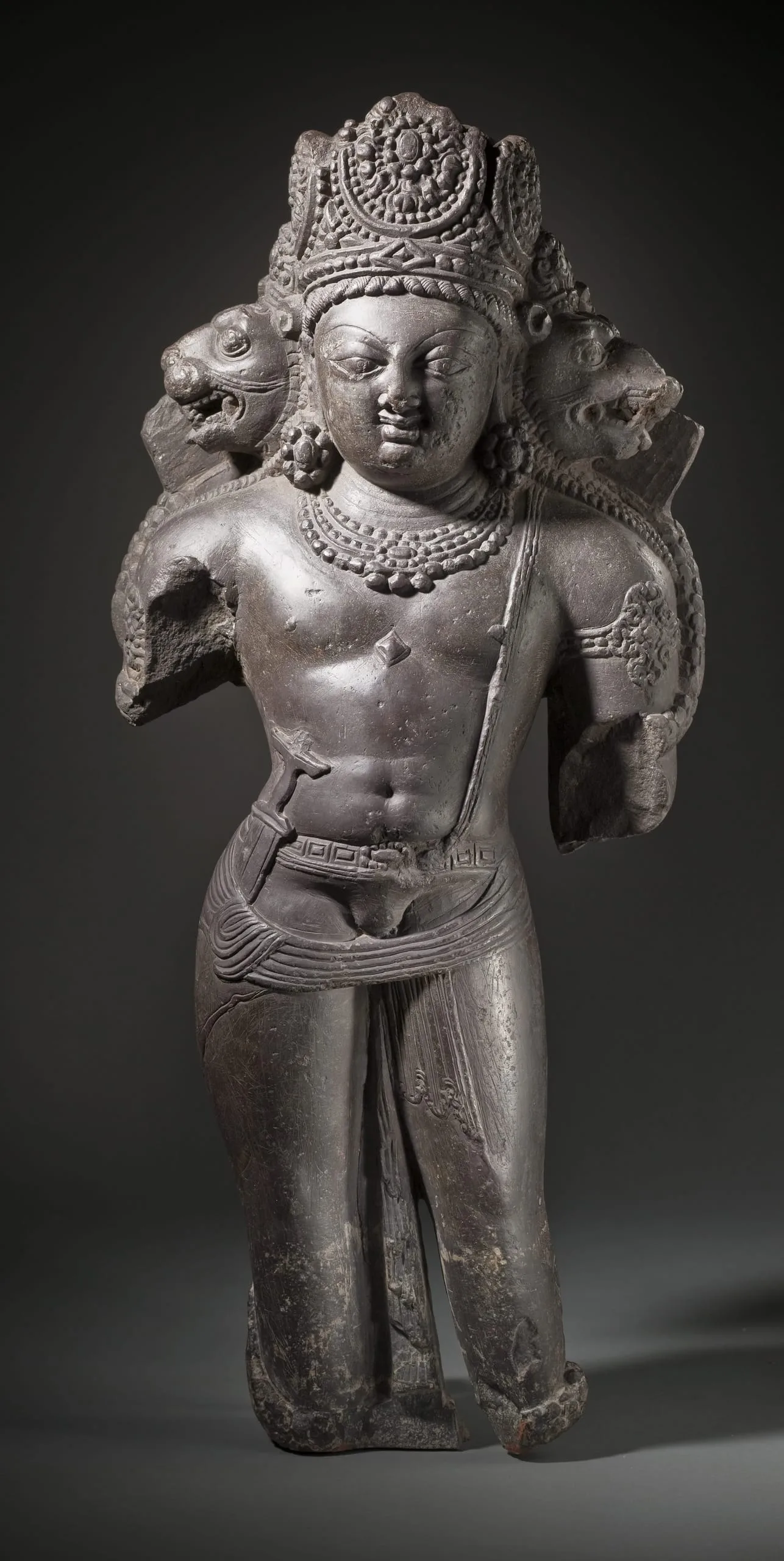
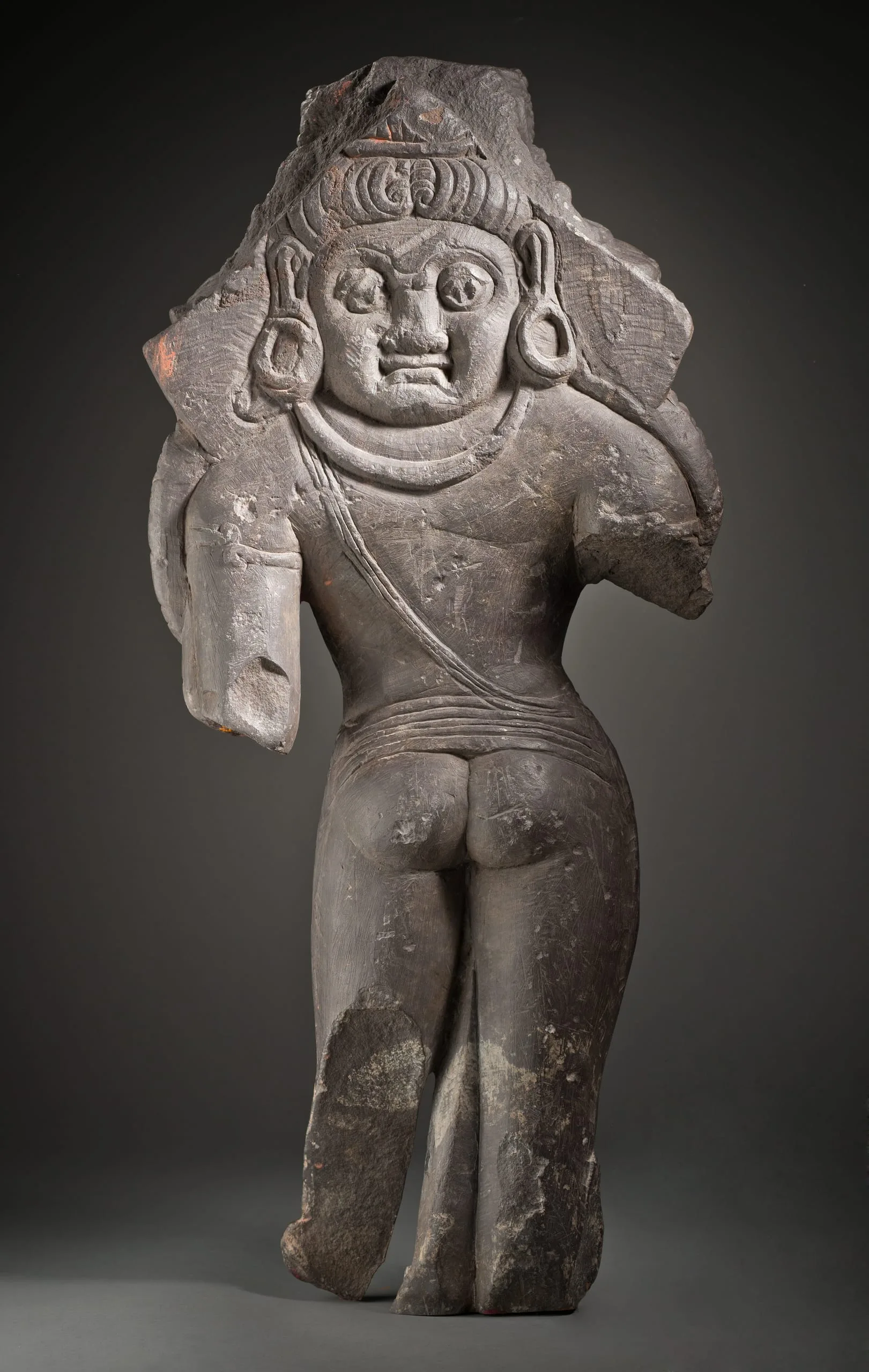
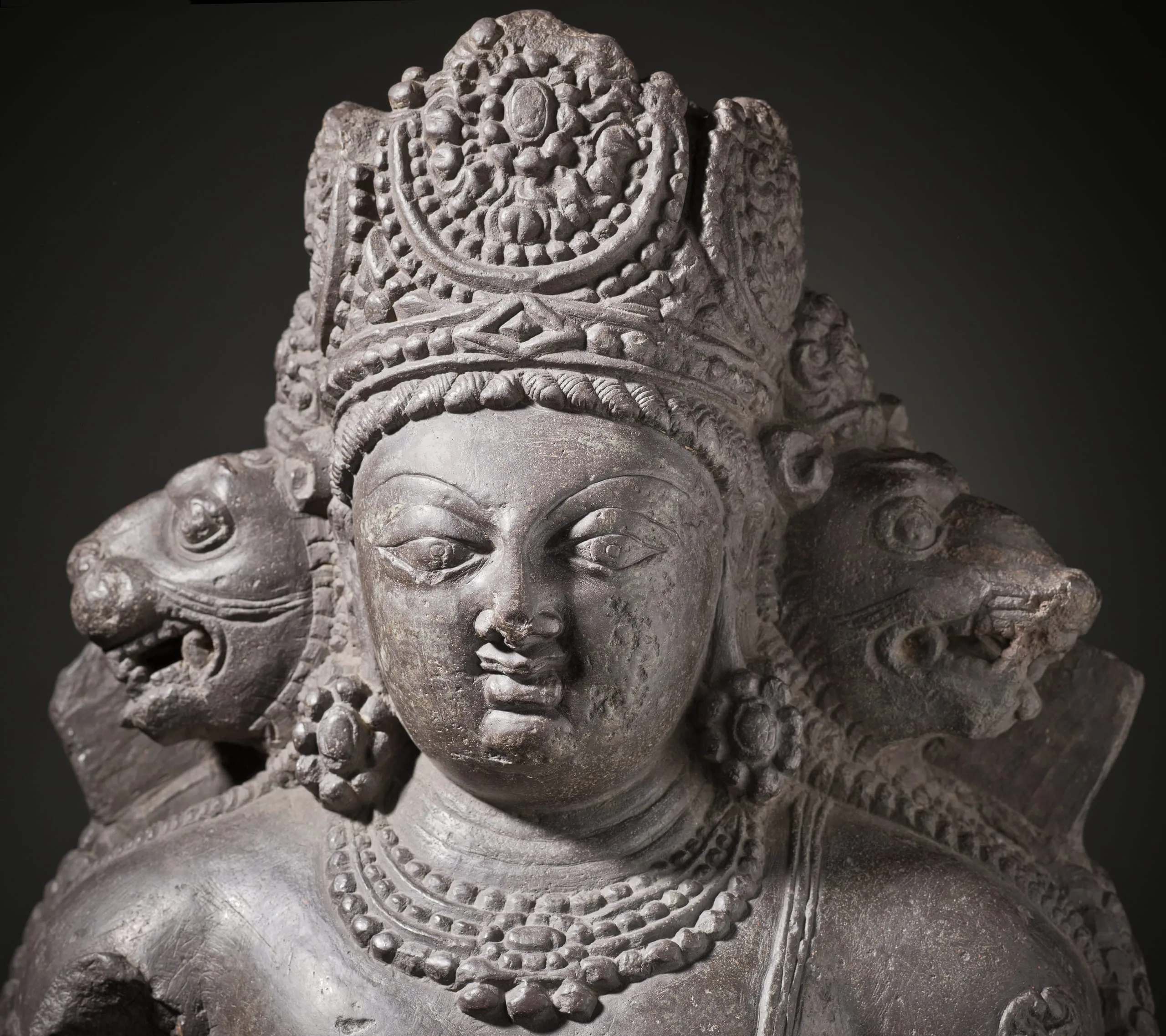
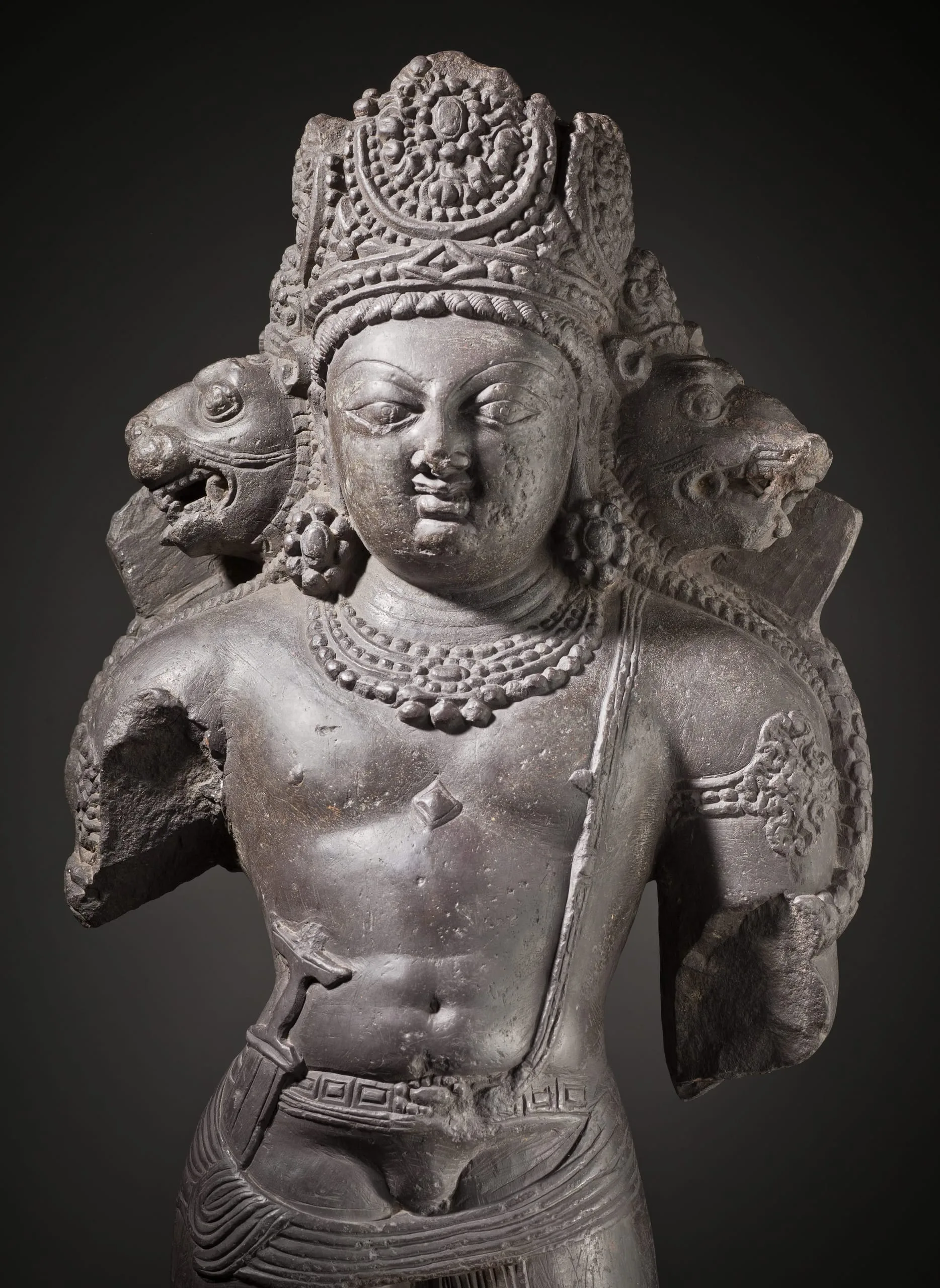
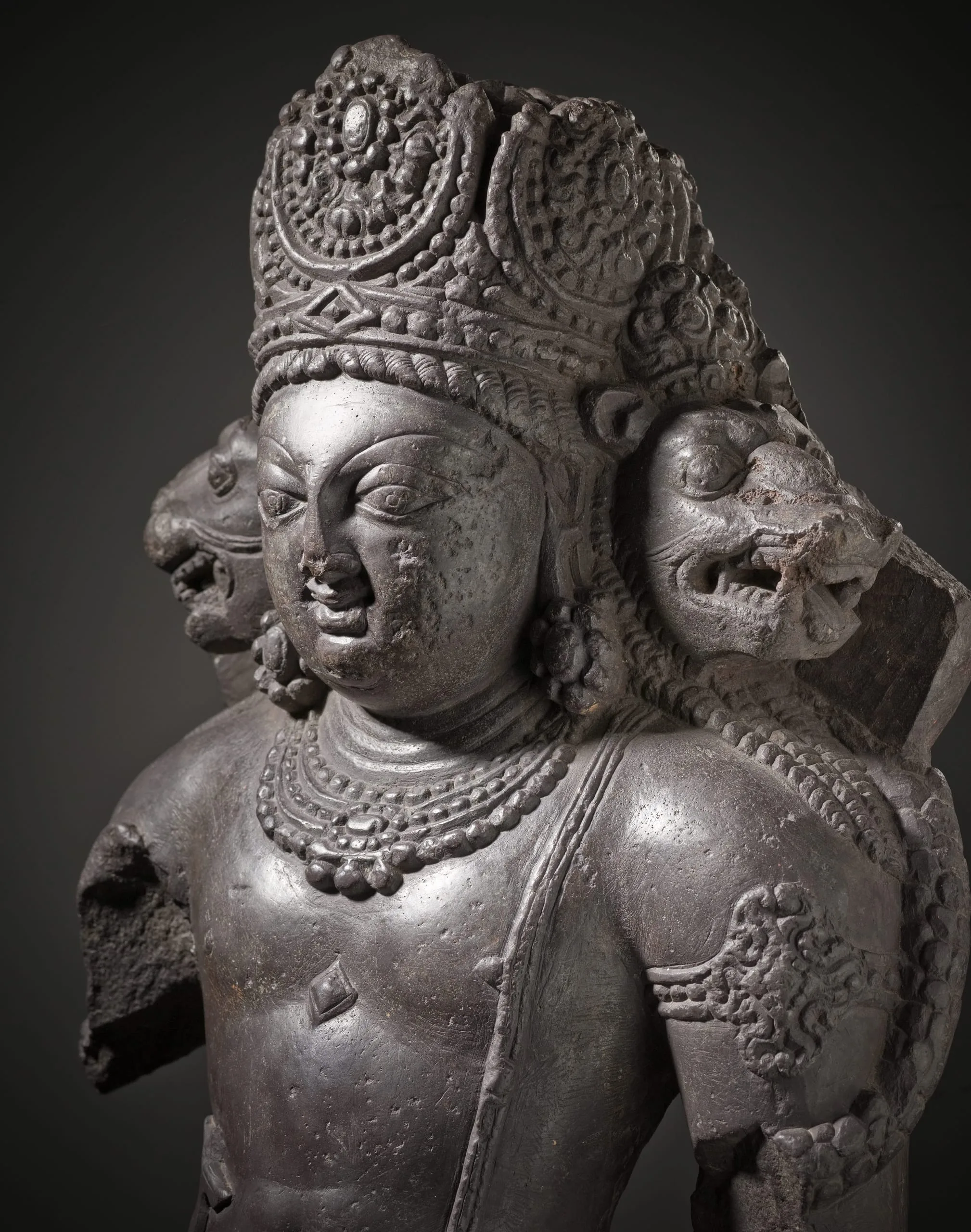
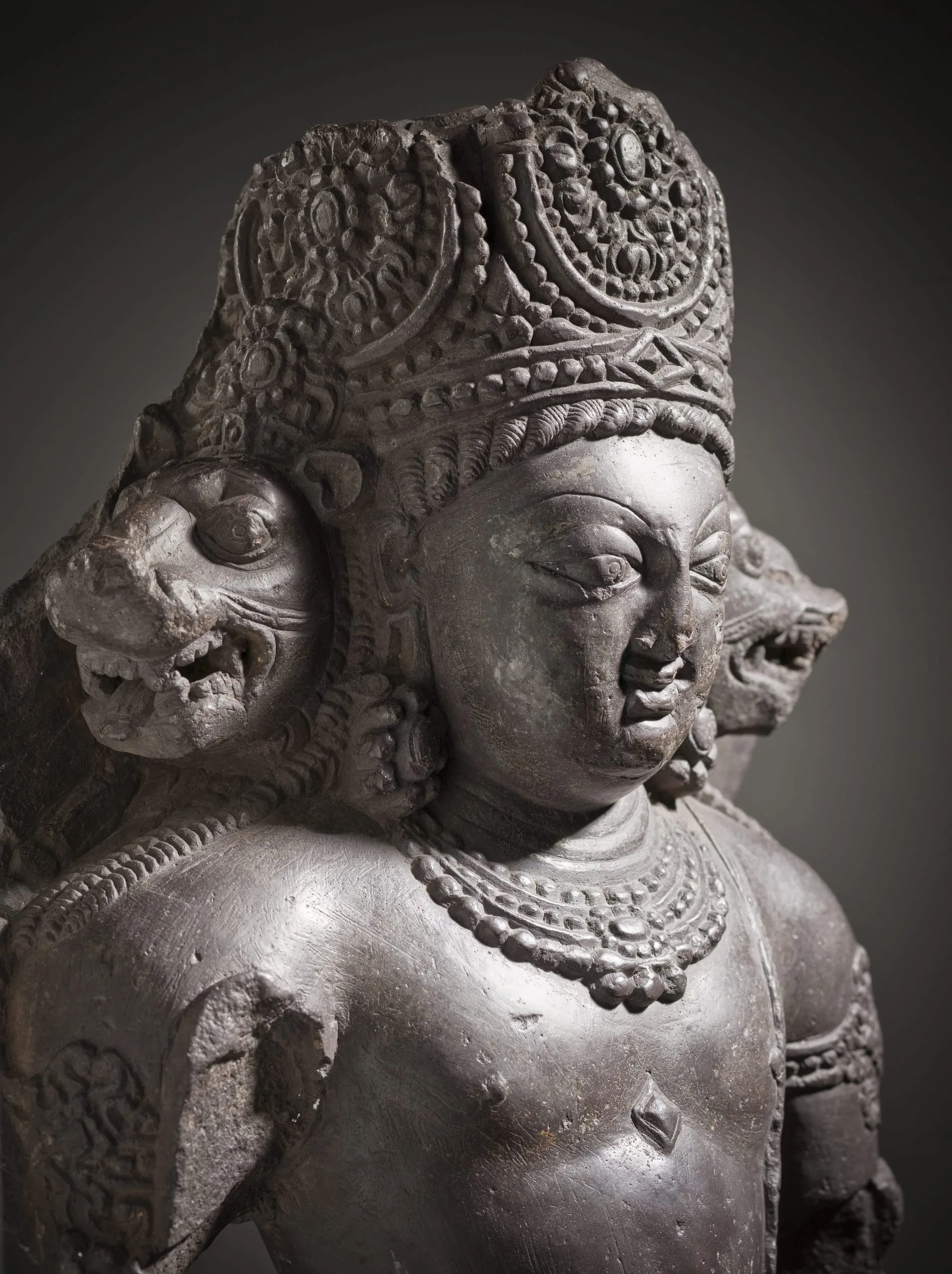
In Kashmiri sculpture the Hindu god Vishnu is typically represented in his four-faced aspect (chaturana), with a central human face, the profile heads of a boar and a lion flanking it, and the face of a demon on the back of his head. Various interpretations were postulated by different religious and philosophical sects devoted to Vishnu and his preeminent avatar, Krishna. The Pancharatra sect considered the lion, boar, and demon faces to be emanations of Vishnu that respectively symbolize his divine power, sovereignty, and cosmic energy. Another interpretation purports that Vishnu’s lion and boar faces also refer to his Narasimha and Varaha avatars (see M.81.90.20 and M.72.53.8 respectively).
In this superb quality but unfortunately damaged representation of Vishnu, he is depicted as a regal figure with a tall crown surmounting his four heads, an auspicious ornament (shrivasta mangala) on his chest, and a long garland of flowers (vana mala) that is visible at the base of his now truncated legs. He wears the Brahmanical sacred thread (yajnopavita) over his left shoulder. He has a short dagger tucked into his waist sash. His four arms are now missing, but the upper hands would have originally held a long-stemmed lotus (padma) and a conch shell (shankha). His lower hands would have rested upon his personified weapons, the discus (chakra) and club (gada; see M.87.62). For a complete representation of this iconographic type, see M.80.6.2.