LACMA

ShopMembershipMyLACMATickets
LACMA
Los Angeles County Museum of Art
5905 Wilshire Blvd.
Los Angeles, CA 90036
info@lacma.org
(323) 857-6000
Sign up to receive emails
Subscribe
© Museum Associates 2026
  • About LACMA
  • Jobs
  • Building LACMA
  • Host An Event
  • Unframed
  • Press
  • FAQs
  • Log in to MyLACMA
  • Privacy Policy
© Museum Associates 2026
Collections

Jaguar Vessel600–900 CE

On view:
Geffen Galleries
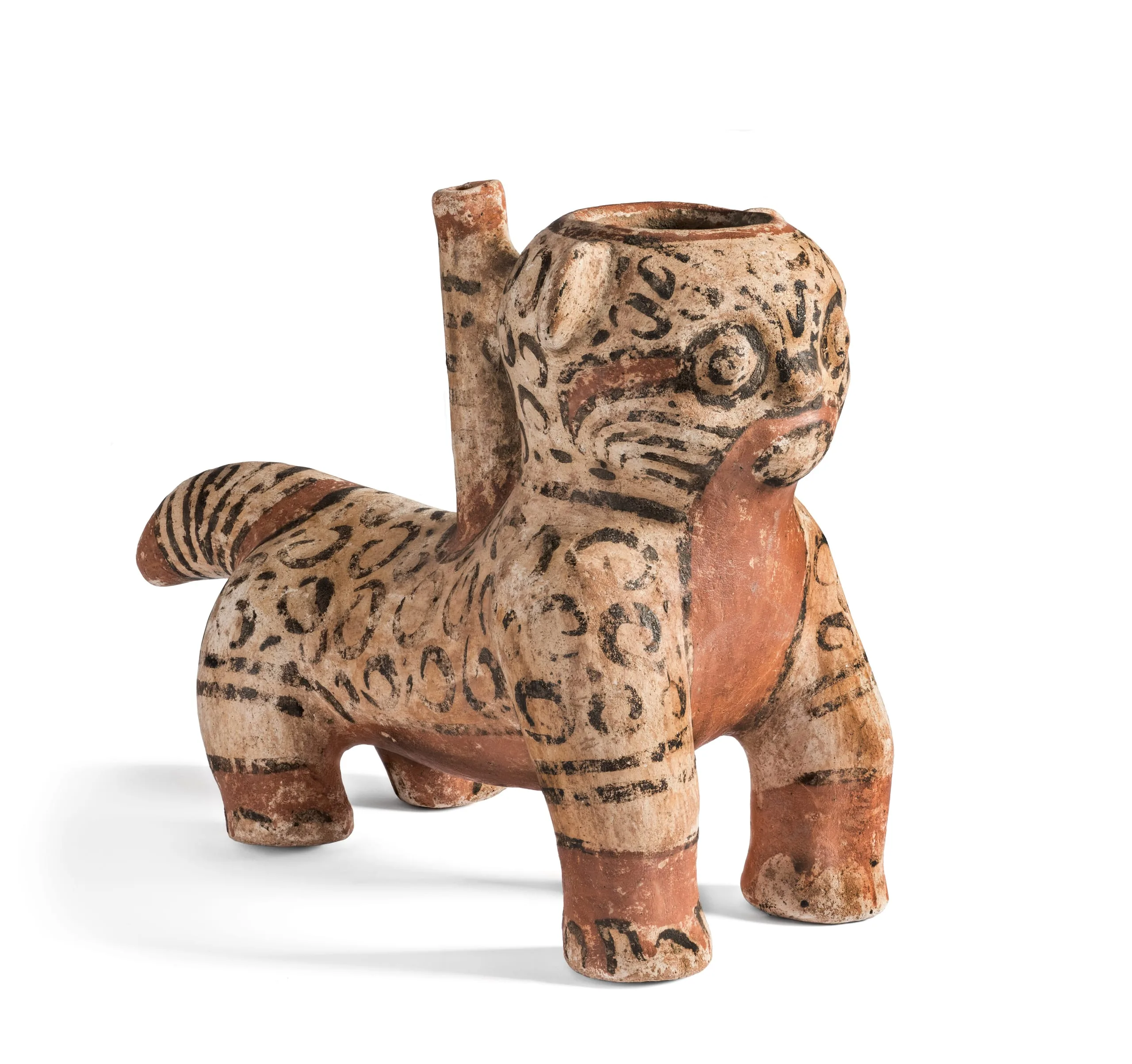
Ceramic effigy vessel in the form of a spotted feline, terracotta with cream slip and black painted markings, standing on four legs with a tubular spout rising from the back
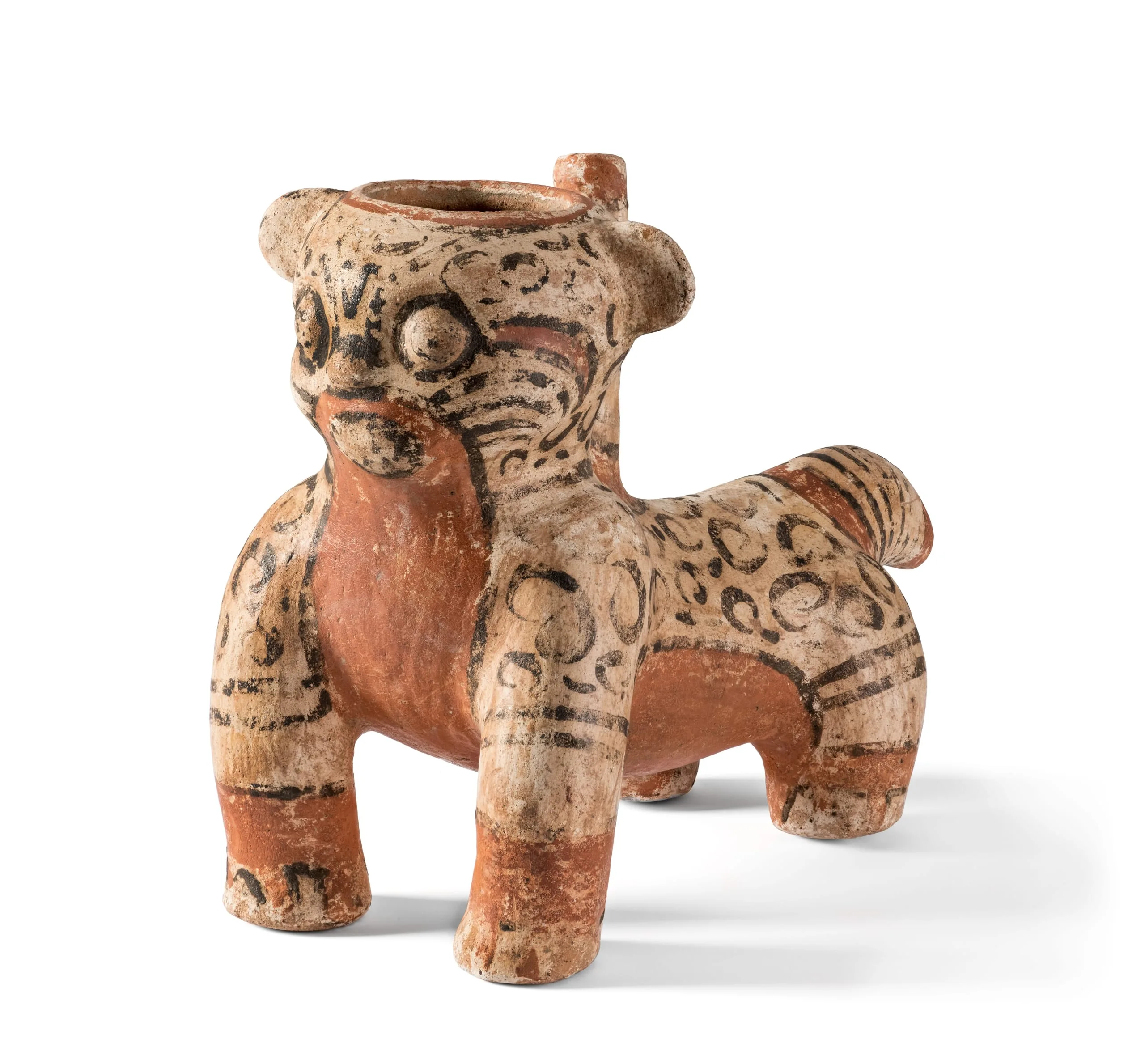
Ceramic effigy vessel in the form of a standing quadruped with an upturned tubular spout at the neck. Cream slip decorated with painted black spiral and rosette patterns suggesting spotted feline markings, over a red-orange clay body visible at the legs and torso.
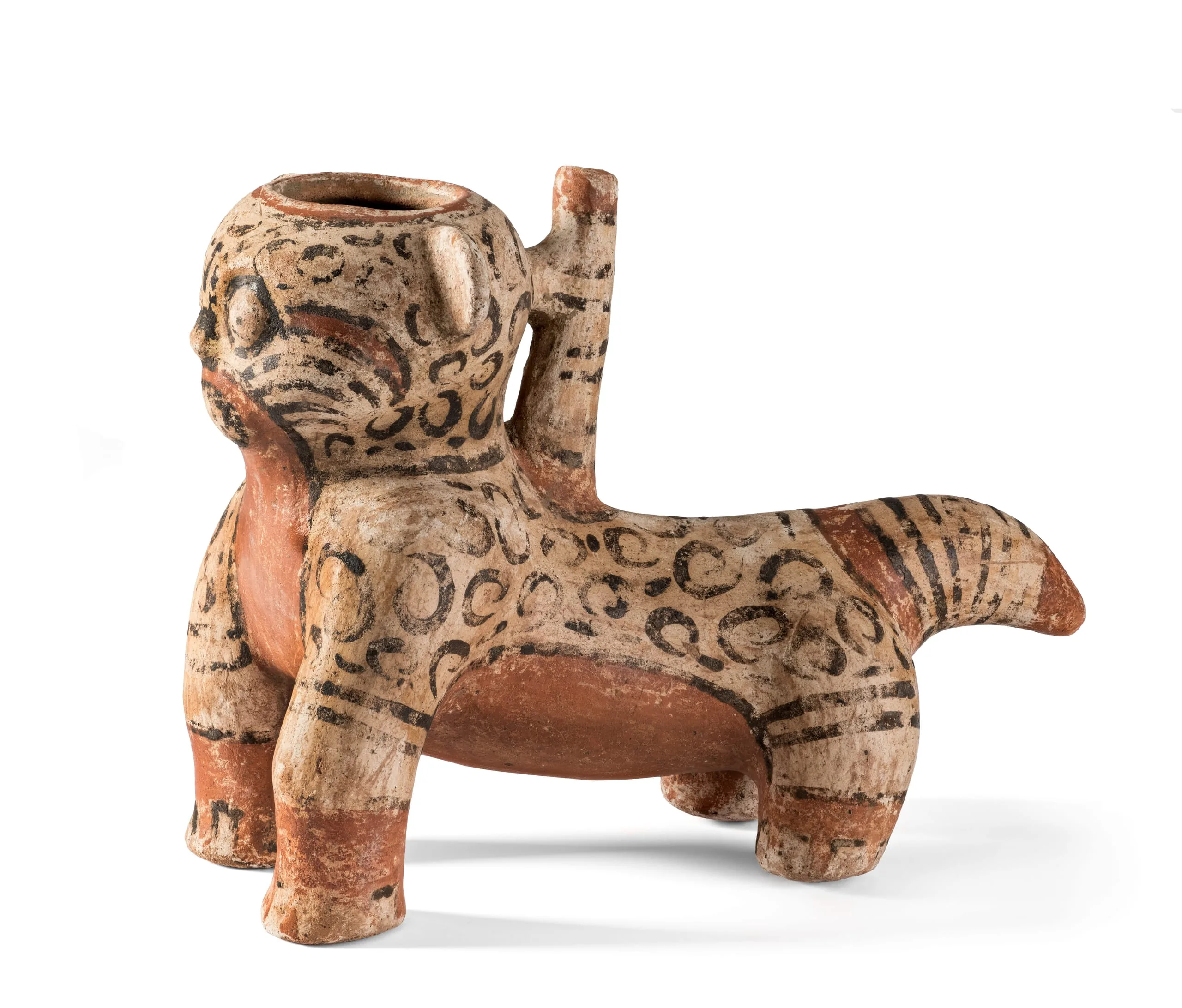
Ceramic effigy vessel in the form of a reclining feline figure with four legs and an upright spout at the neck; cream slip decorated with dark brown painted spiral and crescent motifs across the body, with reddish-orange showing through on the legs and underside.
Title
Jaguar Vessel
Culture
Greater Coclé
Place Made
Panama, Coclé Province
Date Made
600–900 CE
Style
Conte
Medium
Engobe-painted earthenware
Dimensions
6 1/2 × 9 1/2 × 4 in. (16.51 × 24.13 × 10.16 cm)
Credit Line
Gift of Drs. Alan Grinnell and Feelie Lee
Accession Number
M.2012.229.1
Classification
Ceramics
Collecting Area
Art of the Ancient Americas
Curatorial Notes

This little jaguar stands in a vigilant pose on all four feet, staring straight ahead through wide, circular eyes. A spout emerges from the animal’s back and is connected to the head by a short bridge handle. As is the case in many artistic traditions of the ancient Americas, ceramic sculptures are rarely just effigies of animals or humans but instead double as vessels or, indeed, are vessels modified to take figurative forms. What this vessel once contained is not known, but the elaborate, impractical form and decoration indicate it would only ever have been utilized for a few ceremonial or ritual purposes.

The jaguar is the most powerful land predator in the Americas, and many Indigenous groups, past and present, consider it to be the alter ego of powerful shamans and chiefs. The complex relationship between shamans and the spirits of other beings or forces, such as animals, plants, or ancestors, was recorded and reinforced through objects and the designs and creatures depicted on them. In many cultures of the region, jaguars were linked to the underworld and the cycle of life and death. This connection made them central to funerary rituals and burial practices, perhaps symbolizing protection and guidance for spirits in the afterlife. It is likely that this little jaguar, too, survived the centuries because it was at one point deposited in a tomb.

Julia Burtenshaw

2025