LACMA

ShopMembershipMyLACMATickets
LACMA
Los Angeles County Museum of Art
5905 Wilshire Blvd.
Los Angeles, CA 90036
info@lacma.org
(323) 857-6000
Sign up to receive emails
Subscribe
© Museum Associates 2025

Museum Hours

Monday

11 am–6 pm

Tuesday

11 am–6 pm

Wednesday

Closed

Thursday

11 am–6 pm

Friday

11 am–8 pm

Saturday

10 am–7 pm

Sunday

10 am–7 pm


  • About LACMA
  • Jobs
  • Building LACMA
  • Host An Event
  • Unframed
  • Press
  • FAQs
  • Log in to MyLACMA
  • Privacy Policy
© Museum Associates 2025
Collections

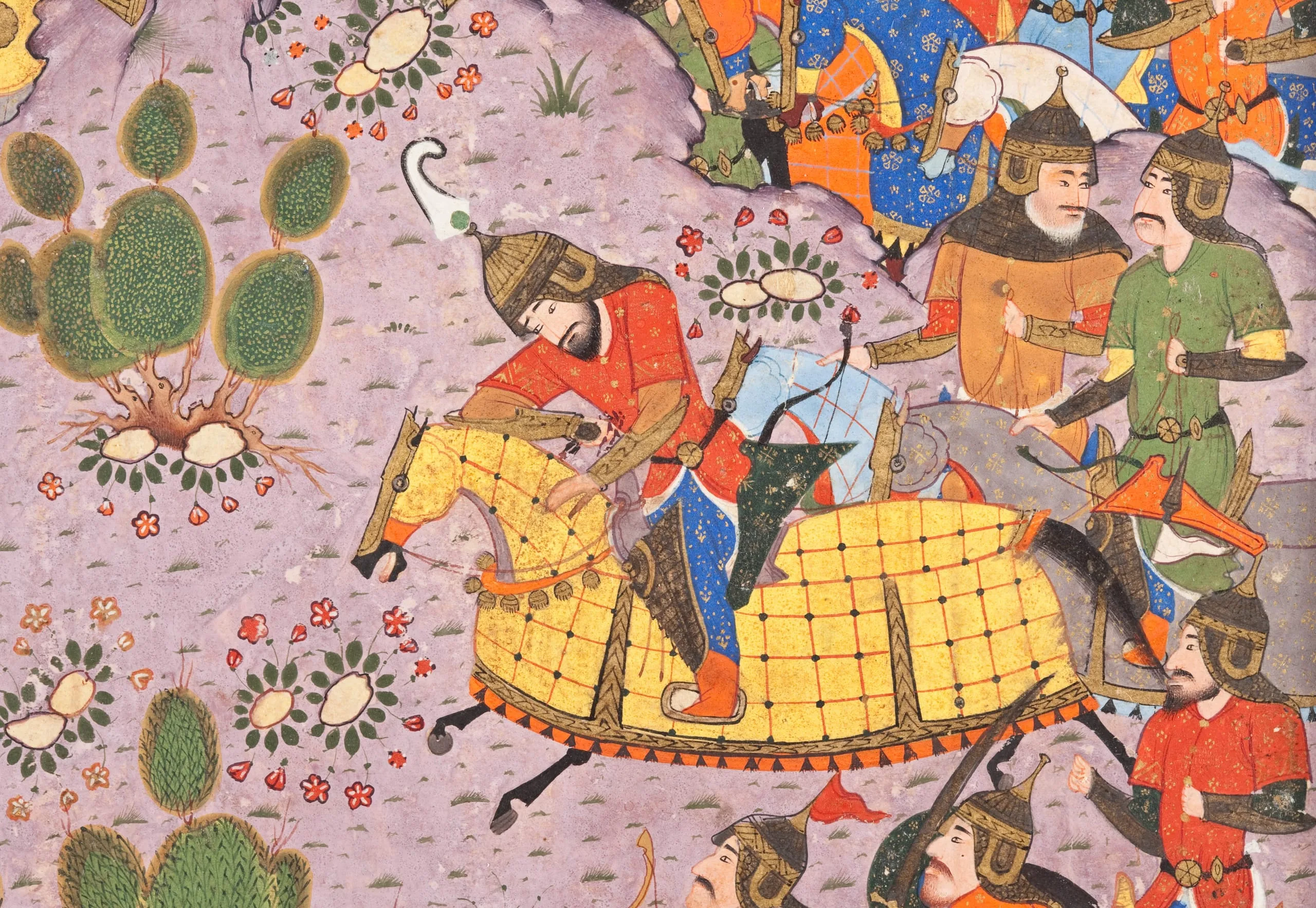
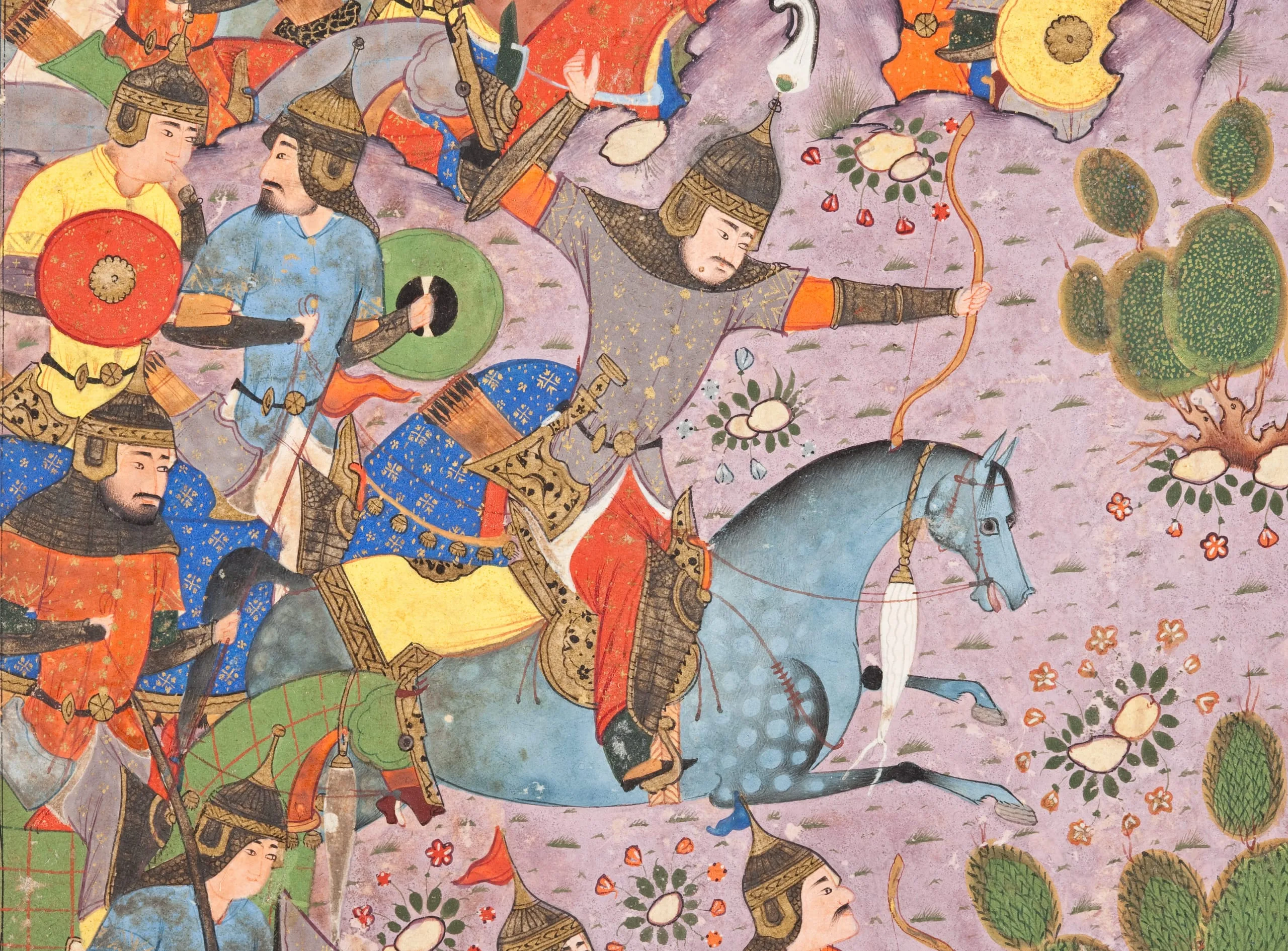
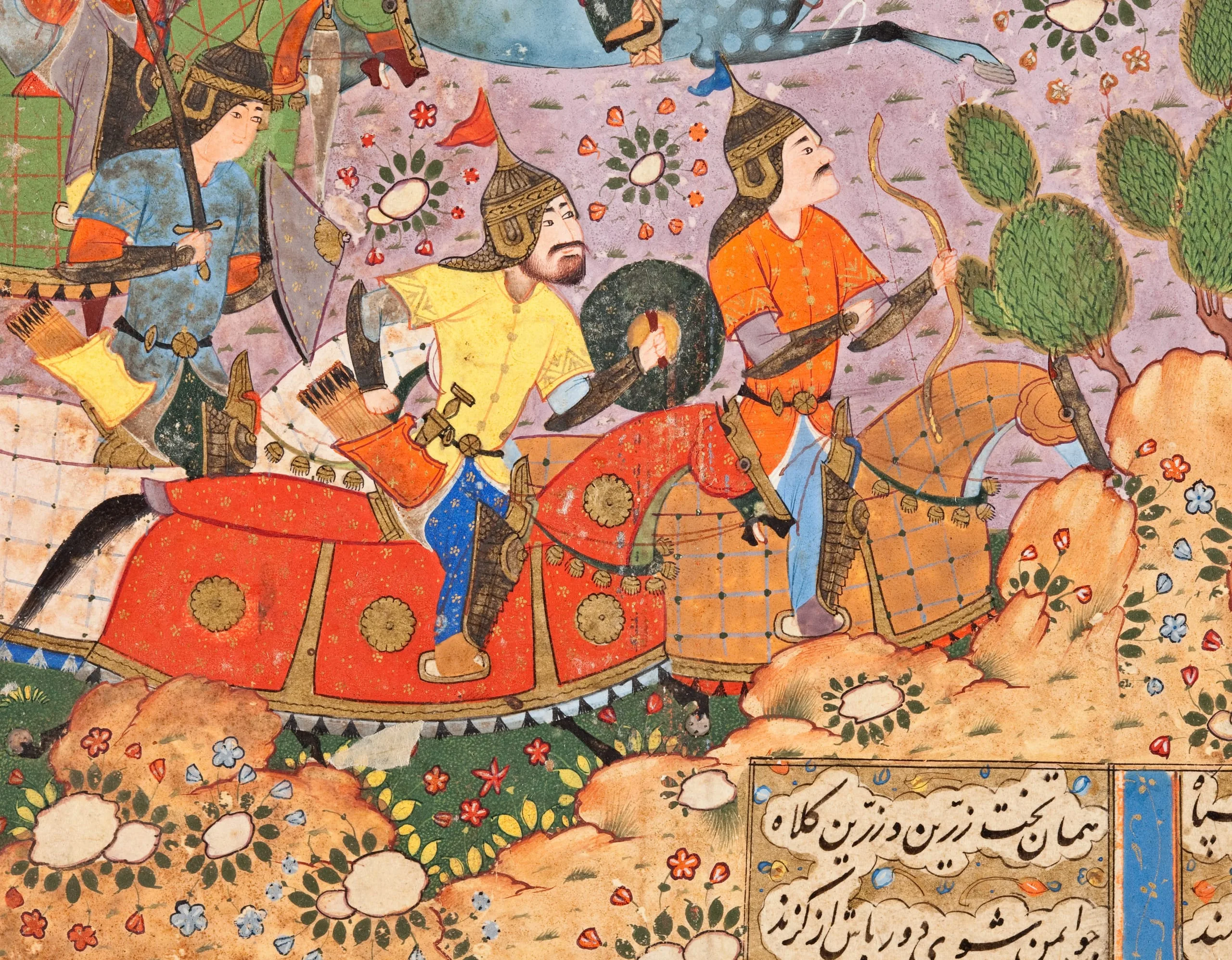
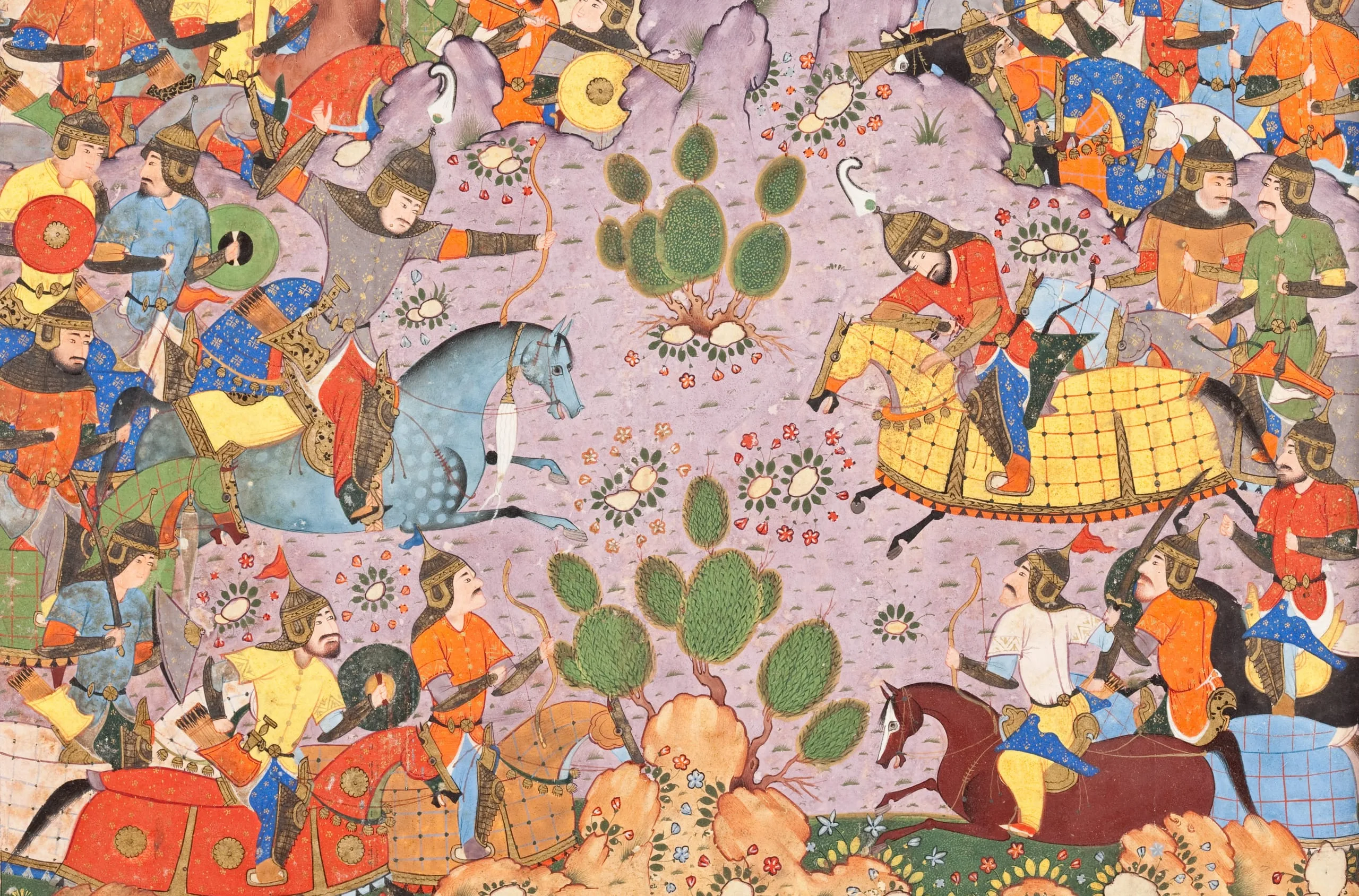
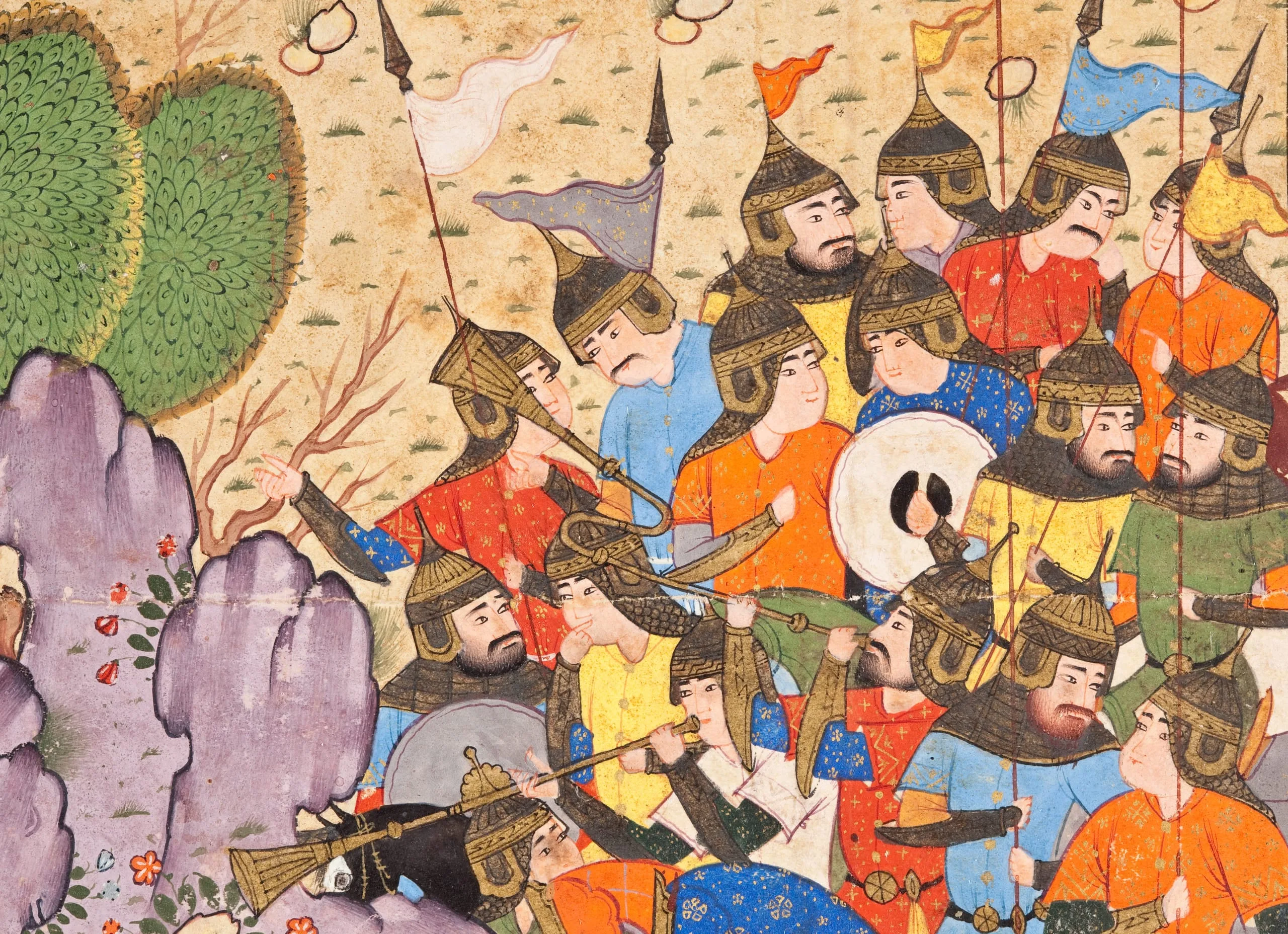
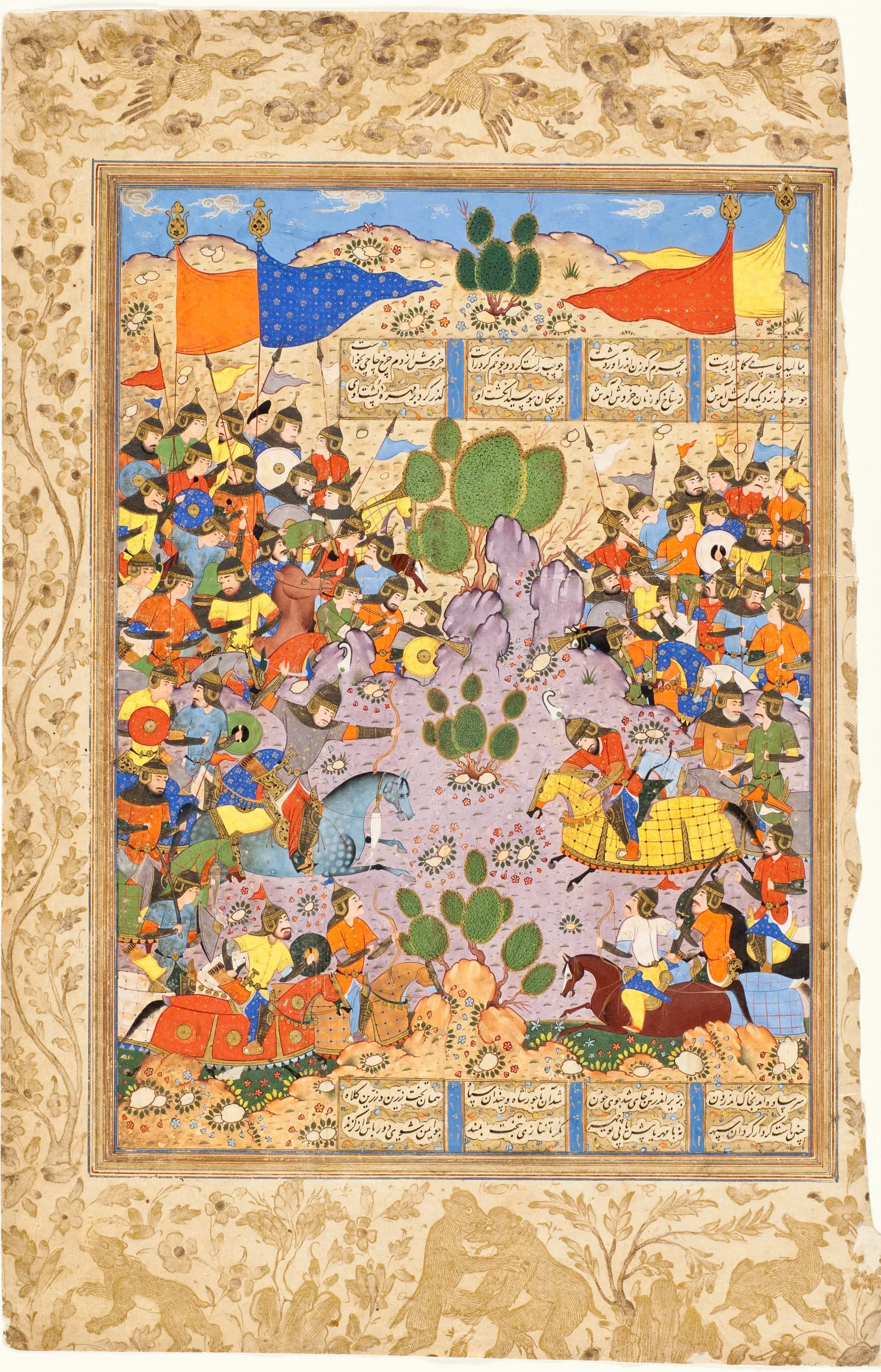
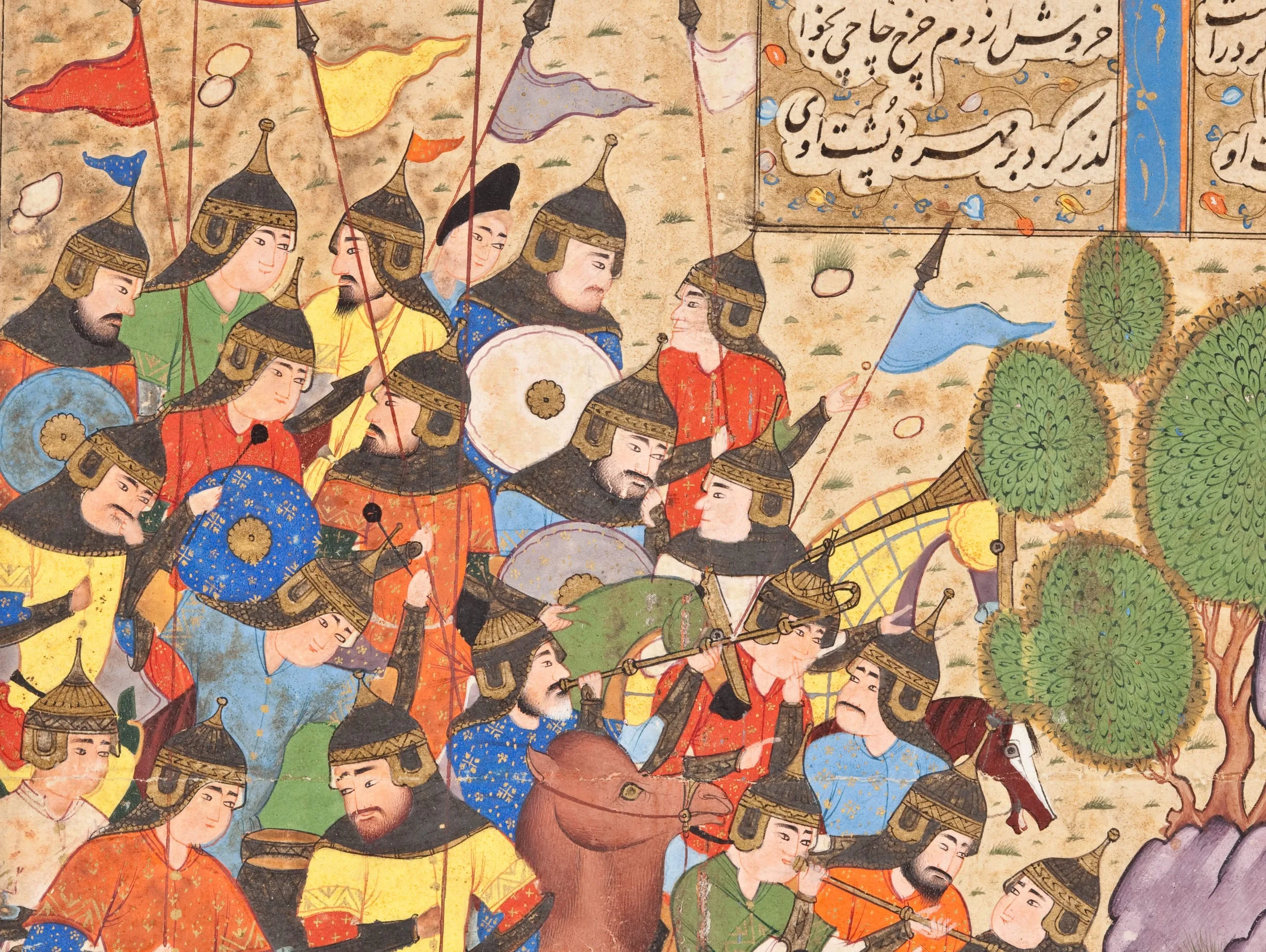
The Battle between Bahram Chubina and Sava Shah, Page from a Manuscript of the Shahnama (Book of Kings) of Firdawsicirca 1560

Not on view
Persian manuscript painting, battle scene with dozens of mounted warriors in colorful armor and turbans clashing around central trees, with Persian script panels above and below
Persian manuscript painting, densely packed group of armored soldiers in pointed helmets carrying spears, drums, and banners in red, blue, and yellow; rounded trees at right; panel of Nastaliq script in upper right corner.
Persian manuscript painting on a lavender ground, depicting a mounted archer in red robes leaning forward on a gold-caparisoned horse amid a battle scene, surrounded by armored warriors; stylized green shrubs and small red flowers in the foreground, with flat perspective and fine detail typical of Safavid-era miniature painting.
Persian manuscript illustration depicting a cavalry battle scene; armored warriors on horseback wield bows, swords, and shields in vibrant blue, yellow, and red; stylized green trees and scattered flowers on a lavender ground; fine opaque watercolor with gold details.
Persian manuscript painting with opaque watercolor and gold; three armored warriors on horseback in battle, wearing conical helmets, one in yellow drawing a bow, another in orange with a shield, amid a lavender rocky landscape with flowering plants; columns of Persian script in nasta'liq calligraphy at lower right.
Persian manuscript painting depicting a battle scene crowded with mounted warriors in helmets and vivid robes of red, orange, blue, and yellow, set against a lavender ground scattered with small flowers and green shrubs, rendered in fine opaque pigments with precise detail.
Persian manuscript painting depicting a battle scene with a densely packed group of armored warriors in pointed helmets, wearing robes in vivid orange, blue, red, and green. Figures carry spears, swords, flags, and a round shield, with stylized purple rocks and a green tree at left.
Title
The Battle between Bahram Chubina and Sava Shah, Page from a Manuscript of the Shahnama (Book of Kings) of Firdawsi
Place Made
Iran, Shiraz
Date Made
circa 1560
Medium
Opaque watercolor heightened with gold and silver on paper
Dimensions
16 3/4 × 11 in. (42.55 × 27.94 cm)
Credit Line
Purchased with funds provided by Camilla Chandler Frost and Karl H. Loring with additional funds provided by the Art Museum Council through the 2009 Collectors Committee
Accession Number
M.2009.44.1
Classification
Manuscripts
Collecting Area
Art of the Middle East: Islamic
Curatorial Notes

This remarkable painting and three additional examples (see M.2009.44.2, M.2009.44.3, and M.2009.44.4) once illustrated a manuscript of the Iranian national epic—the Shahnama, or Book of Kings—which tells of the pre-Islamic kings and heroes of Iran. As is typical of the best Persian miniatures, the paintings portray an idealized world, one that belies the impending violence at the heart of each composition. Here the richly burnished colors of the costumes, the complementary poses of the figures, and the carefully contrived landscapes, which include hues not found in nature, combine to create dramatic if unreal settings for combat. Scenes of epic proportions filled with minute detail, these pages demonstrate an essential characteristic of Persian miniature painting, in which the figural and landscape elements and other features can be repeated and recombined but with a new color scheme, to create each time a fresh composition.

The large size of the pages, with their elegant chinoiserie borders; the richness of the palette, including the lavish use of gold, silver, and lapis lazuli; and the specific style of painting suggest that these folios come from a manuscript produced around 1560 in Shiraz, a city renowned not only for its poets but also as an important center for the book arts. Like so many great Persian manuscripts, this one was likely broken up in modern times for the sake of its paintings.
Selected Bibliography
  • Komaroff, Linda. Gifts of the Sultan: the Arts of Giving at the Islamic Courts. Los Angeles: Los Angeles County Museum of Art, 2011.
  • Komaroff, Linda. Beauty and Identity: Islamic Art from the Los Angeles County Museum of Art. Los Angeles: Los Angeles County Museum of Art, 2016.