LACMA

ShopMembershipMyLACMATickets
LACMA
Los Angeles County Museum of Art
5905 Wilshire Blvd.
Los Angeles, CA 90036
info@lacma.org
(323) 857-6000
Sign up to receive emails
Subscribe
© Museum Associates 2025

Museum Hours

Monday

11 am–6 pm

Tuesday

11 am–6 pm

Wednesday

Closed

Thursday

11 am–6 pm

Friday

11 am–8 pm

Saturday

10 am–7 pm

Sunday

10 am–7 pm


  • About LACMA
  • Jobs
  • Building LACMA
  • Host An Event
  • Unframed
  • Press
  • FAQs
  • Log in to MyLACMA
  • Privacy Policy
© Museum Associates 2025
Collections

Lime Spatulano date

Not on view
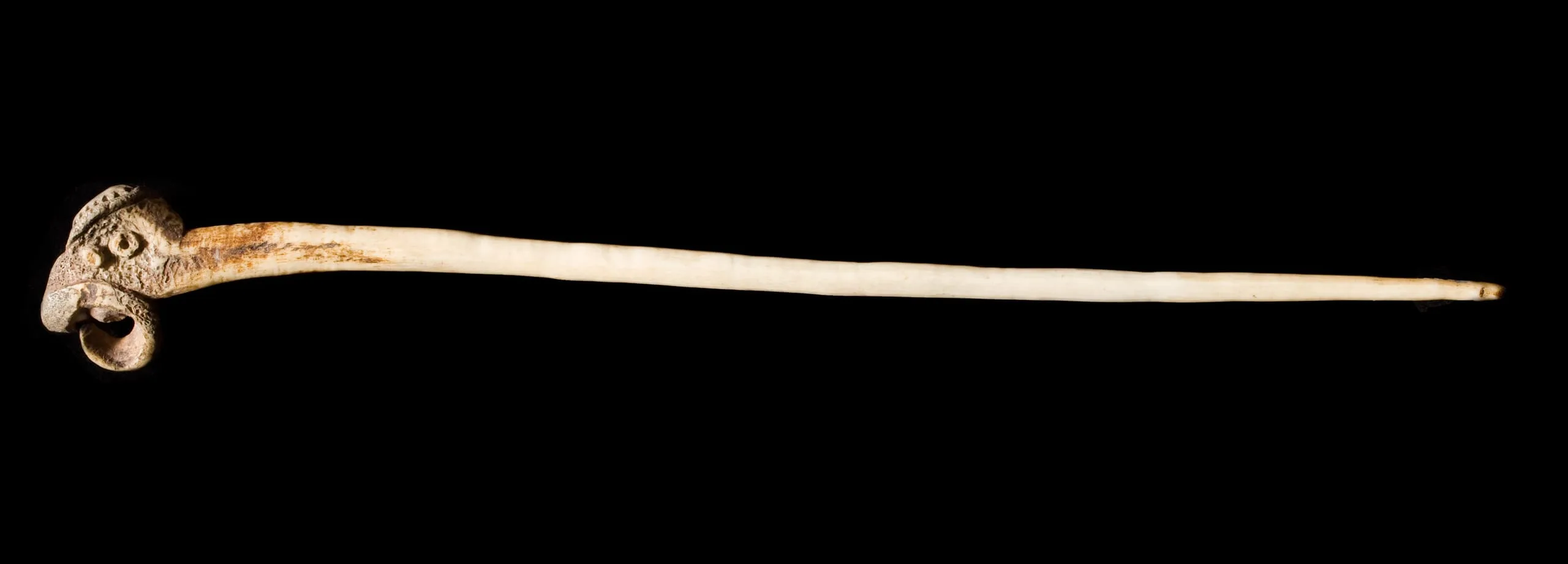
Bone or ivory pin with a long, smooth cream-colored shaft tapering to a point, topped by a small carved animal head with a curling beak or snout
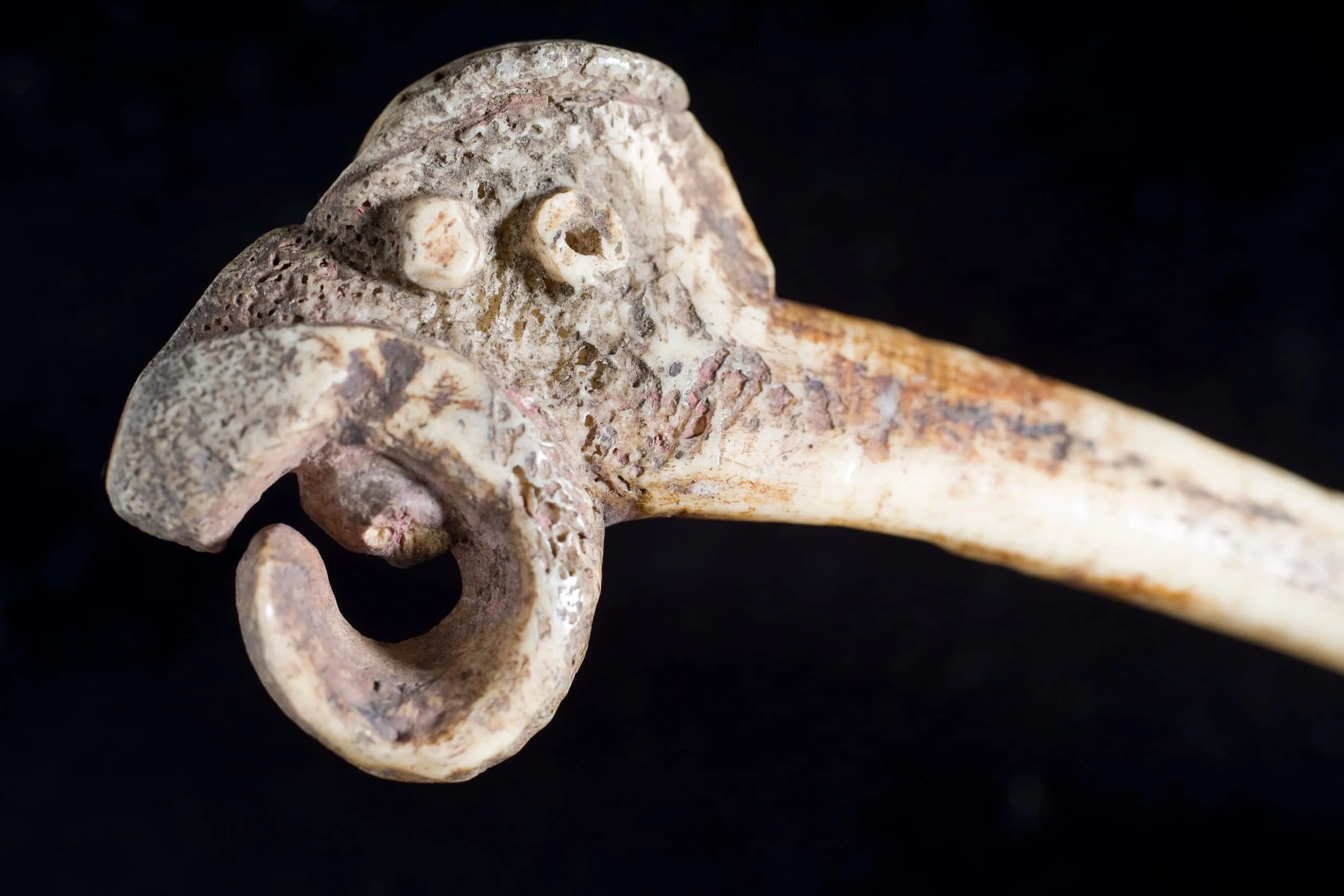
Small carved ivory or bone object with a zoomorphic head featuring raised circular eyes, a curling trunk, and scrolled lower element, heavily weathered with pitted surface texture, photographed against a black background.
Title
Lime Spatula
Culture
Abelam People
Place Made
Papua New Guinea
Date Made
no date
Medium
Cassowary bone
Dimensions
1 1/2 x 13 x 1 1/2 in. (3.81 x 33.02 x 3.81 cm)
Credit Line
Purchased with funds provided by the Eli and Edythe Broad Foundation with additional funding by Jane and Terry Semel, the David Bohnett Foundation, Camilla Chandler Frost, Gayle and Edward P. Roski, and The Ahmanson Foundation
Accession Number
M.2008.66.45
Classification
Tools and Equipment
Collecting Area
Art of the Pacific
Curatorial Notes

Gallery Label
Lime spatulas were made for various purposes in Lake Sentani society. The finely carved handle of the wooden example reflected the prestige of its owner, as did the quality of the carving on the gourd in which it was kept. This example’s two human figures are carved with the long faces and deep eyes common to the region’s art. The decorations carved on the handles of such spatulas were specific to gender, with different designs for male and female owners. The other examples of lime spatulas in LACMA’s collection are simply carved cassowary bird bone.

The spatula and gourd pair were used to dispense lime kept in the gourd. The lime was removed from its container with the spatula and mixed with ground betel nut to be chewed. Betel nut, also known as areca palm seed, were ground with a mortar and when mixed and chewed, provided a mildly intoxicating effect. The betel was chewed at ceremonial events, for general pleasure, and as a rite of passage. The spatula also was rattled against the gourd as musical accompaniment during ceremonial occasions, which left visible notches. The purpose of this spatula is the same as those from other areas of New Guinea, though the Lake Sentani style of balanced and symmetrical carving is known solely in that region.

The use of lime containers continues today, but the traditional gourds and spatulas have been replaced by metal containers.