Gallery Label
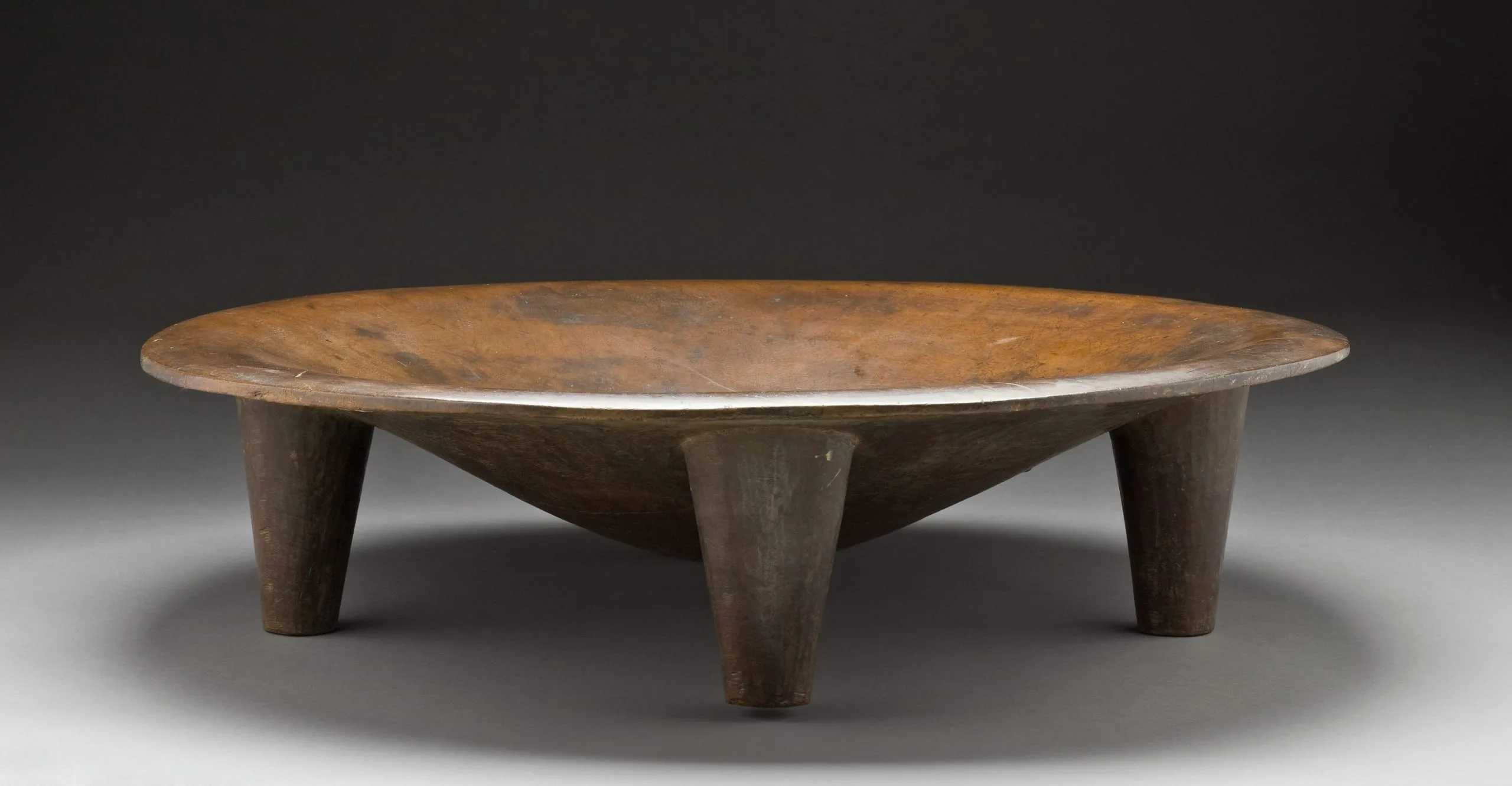
This ritual drinking bowl was used to hold what is popularly known as kava, a root ground and mixed with water to create a beverage with mildly intoxicating effects. Kava is called yaqona in Fiji, and drinking yaqona was an important part of the political and religious ceremonies that focused on the preparation and serving of this root beverage. For these Fijian rites, the chief was served first. He kneeled down to drink the liquid without touching the bowl, and was followed by the other men of rank within the yaqona circle. The aristocratic air of this process made it appealing to the colonial British, who allowed the ritual to continue.
The ritual process and bowls used in these ceremonies were adapted from Tongan to Fijian culture, and are now a cornerstone of Fijian ritual society. Bowls like this represent some of the finest examples of Fijian carving. They are carved into a clean form and have the dark patina of frequent use and care. The bowl is made from a single piece of fine wood to honor chiefly status and carved in a circular cross section; the legs are shallower and longer and taper more than those of its Tongan counterpart. The attached cord is meant to face the chief during the ritual, and also to hang up the bowl when not in use. The ritual itself was held to honor the chief and present gifts of rare whale bone.