LACMA

ShopMembershipMyLACMATickets
LACMA
Los Angeles County Museum of Art
5905 Wilshire Blvd.
Los Angeles, CA 90036
info@lacma.org
(323) 857-6000
Sign up to receive emails
Subscribe
© Museum Associates 2025

Museum Hours

Monday

11 am–6 pm

Tuesday

11 am–6 pm

Wednesday

Closed

Thursday

11 am–6 pm

Friday

11 am–8 pm

Saturday

10 am–7 pm

Sunday

10 am–7 pm


  • About LACMA
  • Jobs
  • Building LACMA
  • Host An Event
  • Unframed
  • Press
  • FAQs
  • Log in to MyLACMA
  • Privacy Policy
© Museum Associates 2025
Collections

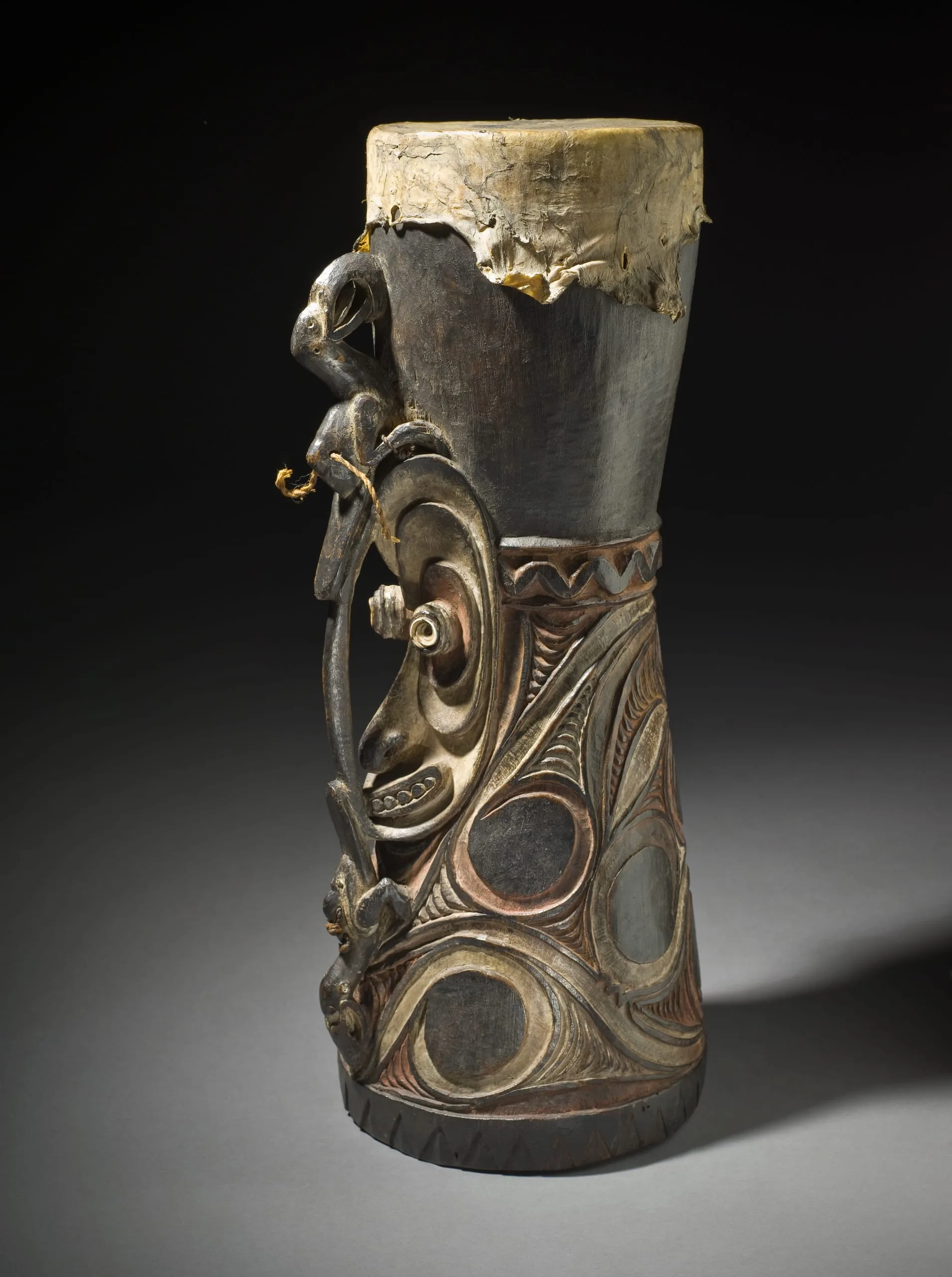
Hand Drumcirca 1909

Not on view
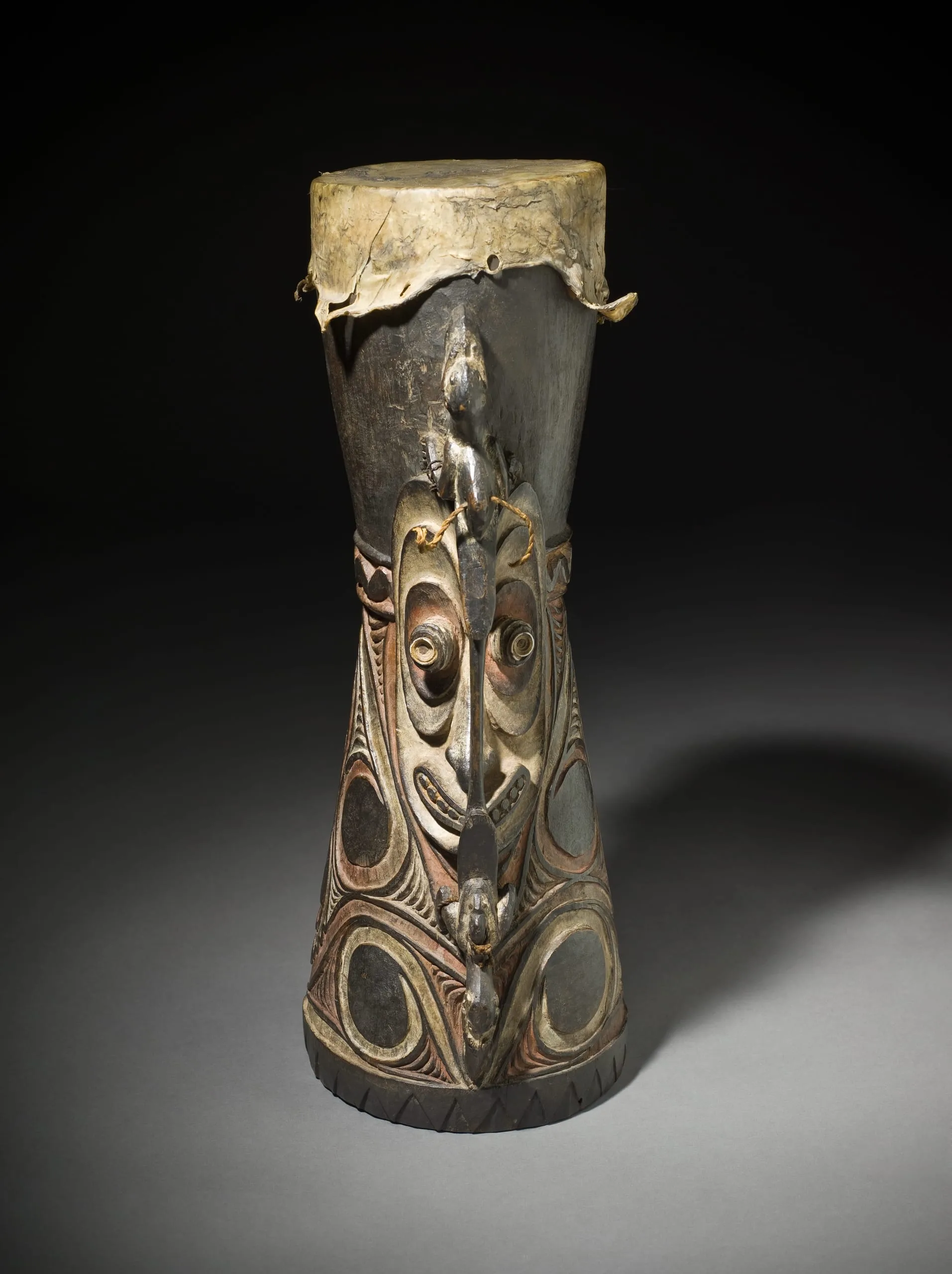
Carved wood hourglass drum with a ragged animal skin head, painted with rust red and cream spiral motifs and a stylized face in relief
Carved wooden slit drum, cylindrical form tapering toward the base, with a stretched animal-skin head at the top. Body densely carved with curvilinear relief patterns in dark brown and reddish tones, featuring a bird figure clinging to the upper left side and stylized face motifs integrated into the scrolling designs.
Title
Hand Drum
Culture
Eastern Iatmul People
Place Made
Papua New Guinea, East Sepik Province
Date Made
circa 1909
Medium
Wood, fiber, shell, animal hide, and pigment
Dimensions
Height: 23 3/4 in. (60.33 cm); Diameter: 9 in. (22.86 cm)
Credit Line
Purchased with funds provided by the Eli and Edythe Broad Foundation with additional funding by Jane and Terry Semel, the David Bohnett Foundation, Camilla Chandler Frost, Gayle and Edward P. Roski, and The Ahmanson Foundation
Accession Number
M.2008.66.22
Classification
Tools and Equipment
Collecting Area
Art of the Pacific
Curatorial Notes

Gallery Label
This hand drum is carved from a single log, and a mammal-skin tympanum is attached at one end on which to play it as an instrument. One of only three known of its type, this drum is believed to be Chambri culture in its origin. The drum would have been traded to the Iatmul, another Middle Sepik River people, and then decorated and used in their traditional ceremonies. Ornamented with a spiral motif on the lower half of the drum, a cassowary bird is carved into the handle above a grimacing face. The black patina of the drum is the result of age, use, and exposure to smoke during storage, which protected the wood from invading insects.

These drums provided dramatic audio accompaniment during special ceremonies. This drum was used for ceremonial purposes—including funeral and initiation rituals, dedications of new clan houses, and canoe launchings—but not in secret rites.


Selected Bibliography
  • Wardwell, Allen. Island Ancestors: Oceanic Art from the Masco Collection. [Seattle]: University of Washington Press, 1994.