LACMA

ShopMembershipMyLACMATickets
LACMA
Los Angeles County Museum of Art
5905 Wilshire Blvd.
Los Angeles, CA 90036
info@lacma.org
(323) 857-6000
Sign up to receive emails
Subscribe
© Museum Associates 2025

Museum Hours

Monday

11 am–6 pm

Tuesday

11 am–6 pm

Wednesday

Closed

Thursday

11 am–6 pm

Friday

11 am–8 pm

Saturday

10 am–7 pm

Sunday

10 am–7 pm


  • About LACMA
  • Jobs
  • Building LACMA
  • Host An Event
  • Unframed
  • Press
  • FAQs
  • Log in to MyLACMA
  • Privacy Policy
© Museum Associates 2025
Collections

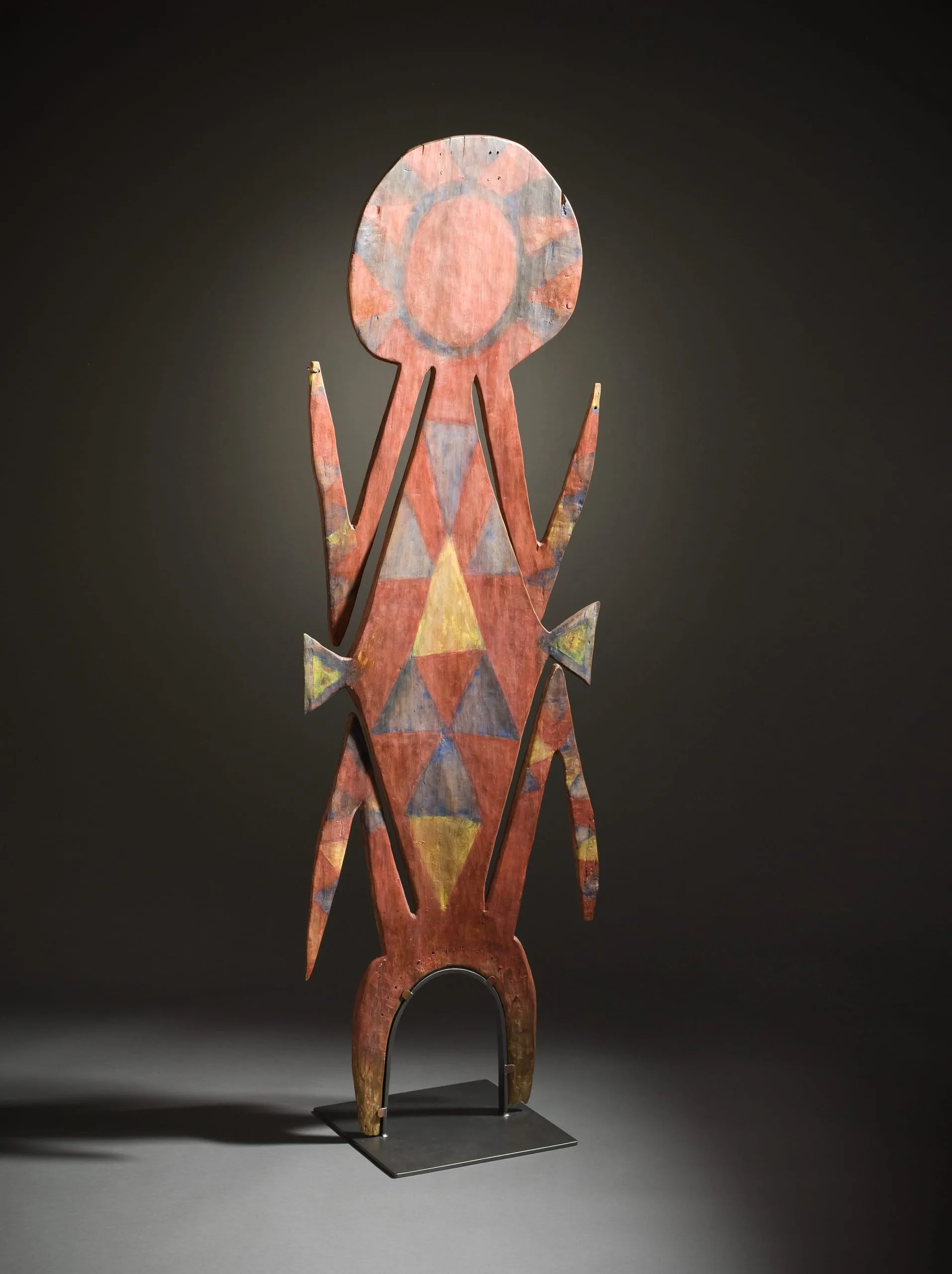
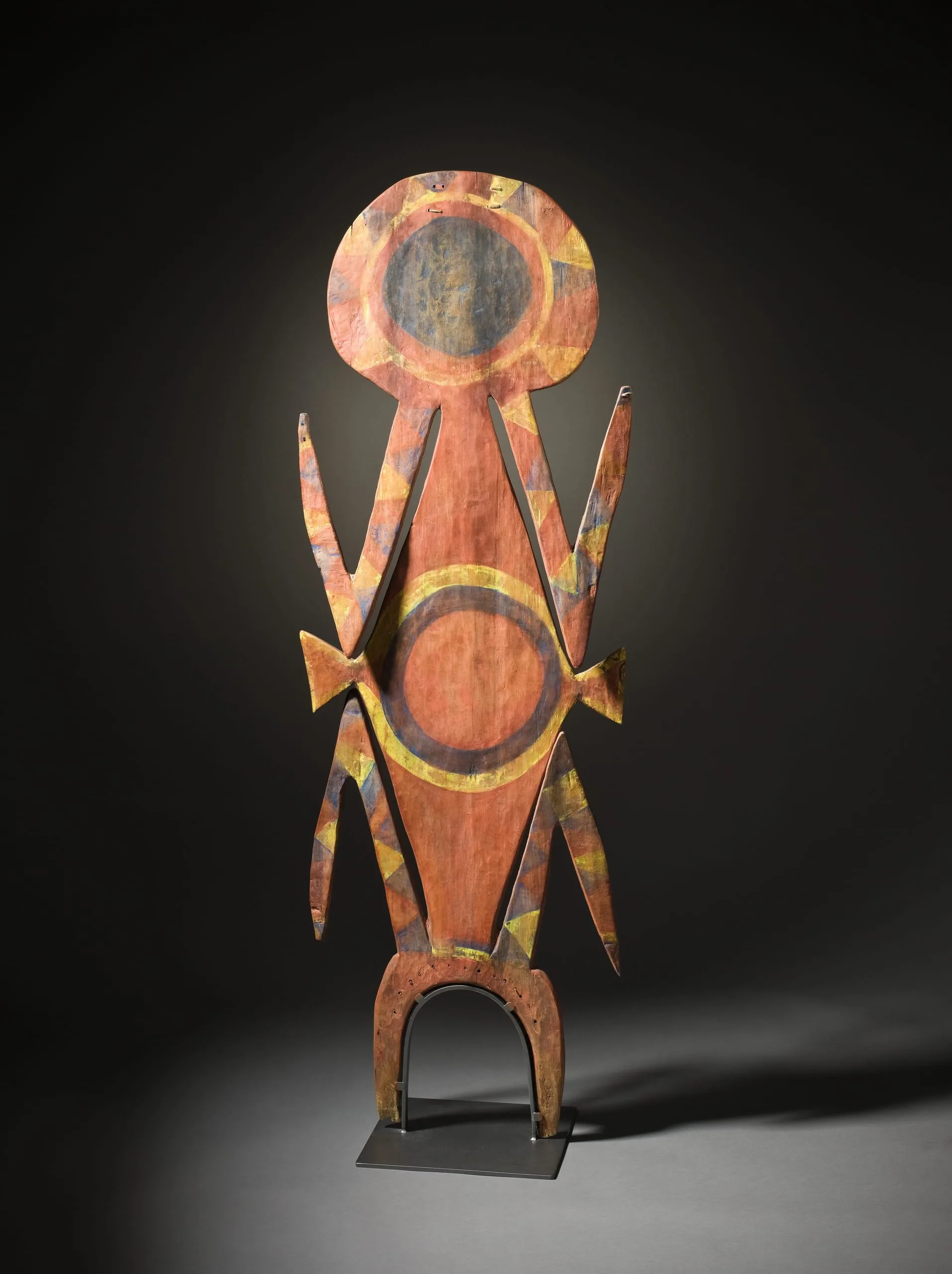
Ceremonial Board (gerua wenena)circa 1955

On view:
Geffen Galleries, Navigating Pacific Asia
Flat carved wood figure with anthropomorphic form, painted terracotta red with geometric triangle pattern in blue, yellow, and gray, circular disk head, and splayed pointed projections
Painted wooden ceremonial board with a figural form composed of geometric shapes: a circular head atop a tapering body, flanked by angular projecting elements. Decorated with concentric circles and bold outlines in red-orange, yellow, black, and gray pigments. Mounted on a metal museum stand.
Title
Ceremonial Board (gerua wenena)
Culture
Siane People
Place Made
Papua New Guinea, Eastern Highlands Province
Date Made
circa 1955
Medium
Wood and pigment
Dimensions
58 x 23 x 3 in. (147.32 x 58.42 x 7.62 cm)
Credit Line
Purchased with funds provided by the Eli and Edythe Broad Foundation with additional funding by Jane and Terry Semel, the David Bohnett Foundation, Camilla Chandler Frost, Gayle and Edward P. Roski, and The Ahmanson Foundation
Accession Number
M.2008.66.17
Classification
(not assigned)
Collecting Area
Art of the Pacific
Curatorial Notes

Gallery Label
This large humanlike form is actually the manifestation of a Siane creation myth and celestial symbol. The diamond-shaped body represents the moon, the round head, the sun, and the bent limbs, the road between them. The painted designs on the wenena gerua were specific to the family who created and owned the figure.

Wenena gerua were headdresses worn by the big-men of the Siane in ceremonies. The big-men were the chieflike nobles at the head of Siane society, the most important and powerful men in the group, who had multiple wives and large collections of pigs, symbols of their wealth. The headdresses were worn at Pig Festivals to honor the power of pigs, and the figure itself was intended to maintain the health, fertility, and protection of the pigs and children. Pigs were gathered together during such ceremonies as displays of power.

The Siane are people of the Papua New Guinea Highlands, an extremely isolated and mountainous region where most inhabitants avoid extensive contact with others. The art objects of the isolated Siane are some of the most complexly carved and highly decorative sculptures from a region where sculptural examples are few. The wenena gerua have simpler, smaller counterparts throughout the Highlands; these elegant figures, however, stand up to six feet tall and are more unique to the Siane.


Selected Bibliography
  • Wardwell, Allen. Island Ancestors: Oceanic Art from the Masco Collection. [Seattle]: University of Washington Press, 1994.