Gallery Label
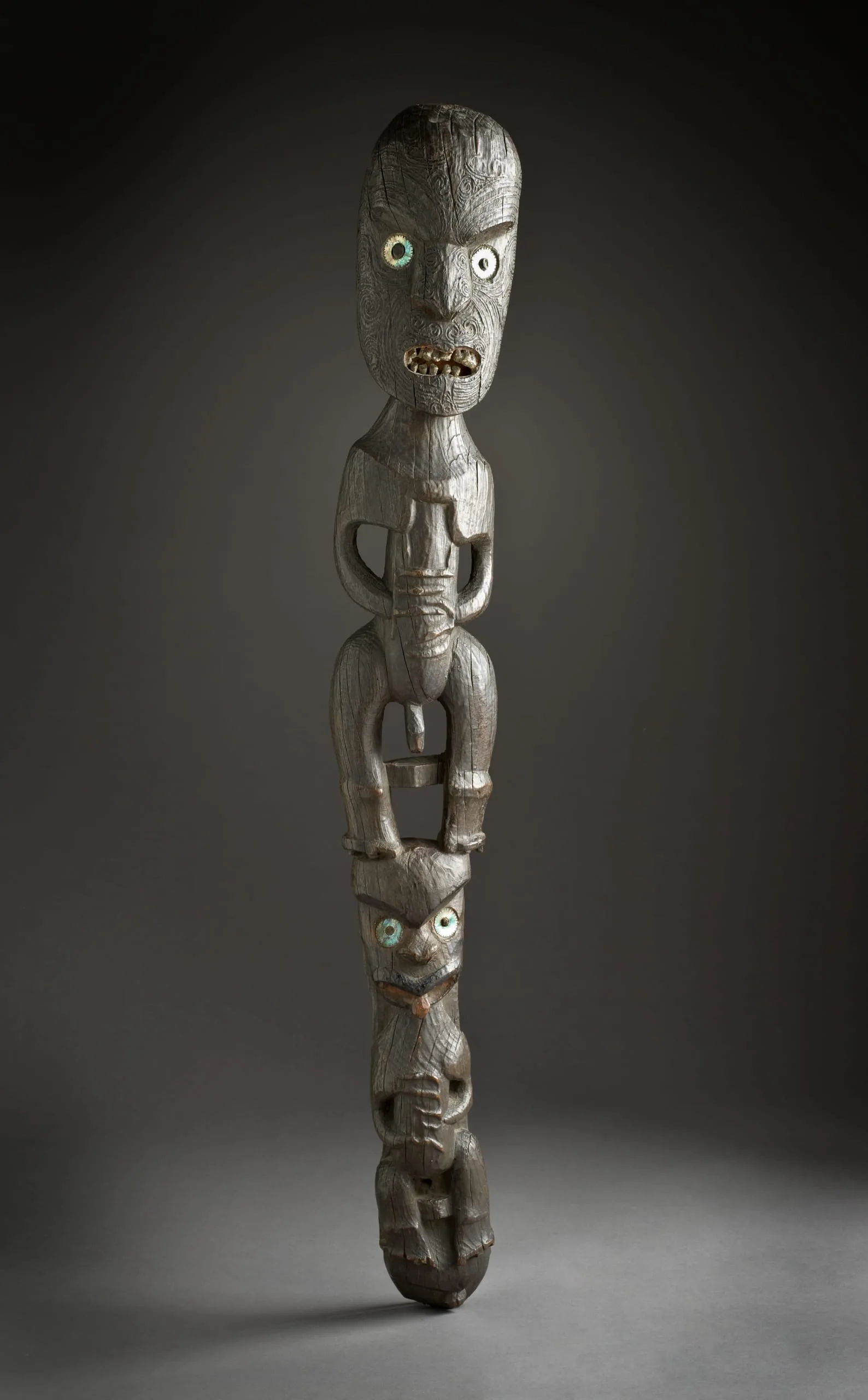
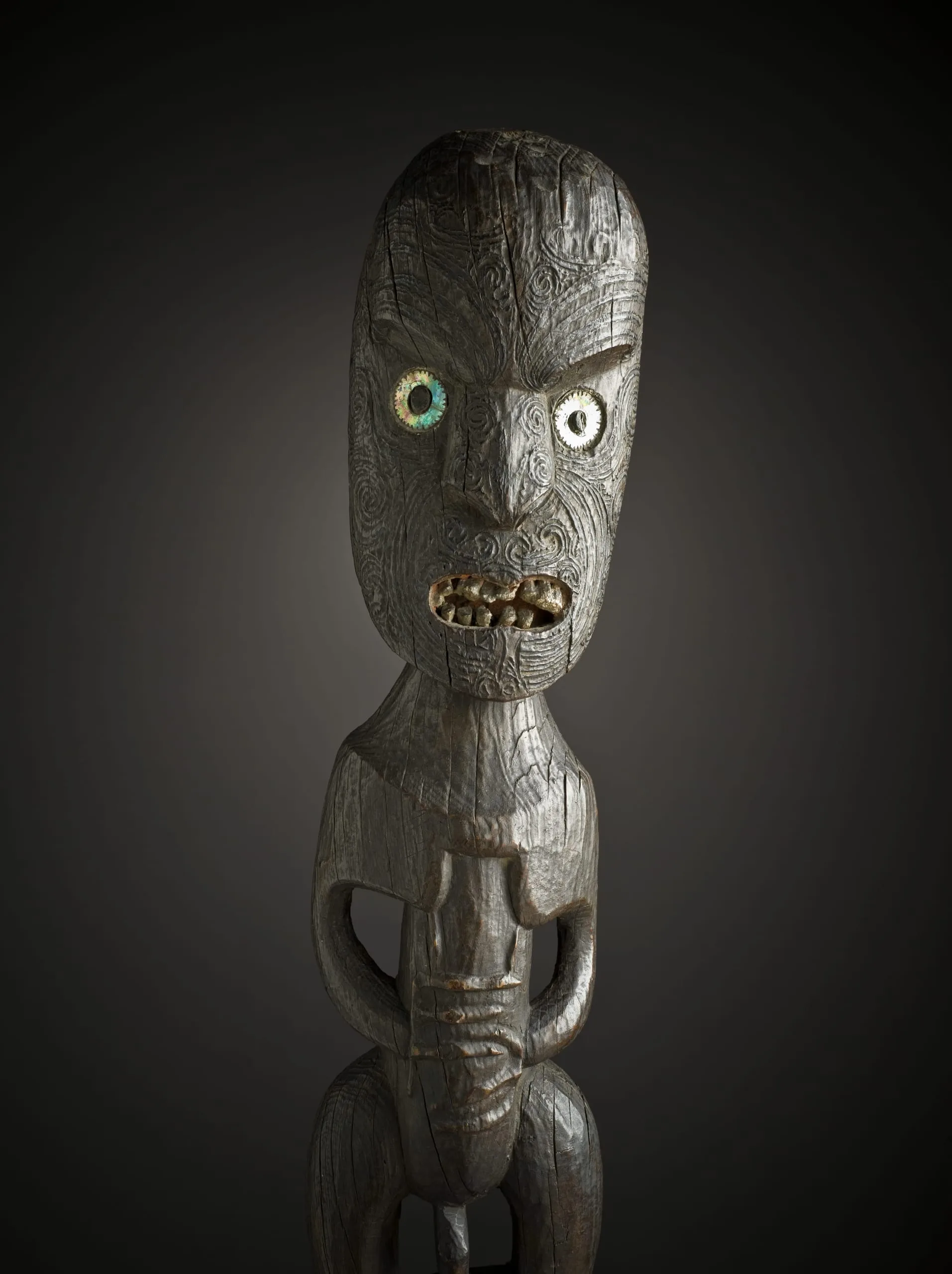
The tohunga, or high-status craftsmen, made this teko teko gable figure in the eighteenth-century classic Maori period. The commissioned work was typical of the many carved elements placed at the top of meeting houses and storehouses. These figures were meant to be seen from below, and proportions were carved accordingly. The two male figures are standing, one upon the other, the lower figure with a projecting tongue, and the upper with an open mouth containing human teeth. The eyes are shell inlay. These additions are quite prominent because of their lighter coloring against the darker wood of the carving. The figures, which are covered in carved bird symbols known to the Maori and common curvilinear tattoo motifs, represented protective ancestor spirits.
New Zealand wood carvings were carefully accomplished and often highly decorated. Many Maori society carved objects had strong symbolic motifs added to them; these curving designs enhanced the power of the object. The inclusion of human figures also denotes the importance of human design in Maori art and indicates the important place of ancestors. Maori society, like other closely related Polynesian cultures, is broken down into chiefly descent lines that are inherited and immobile. The chiefs often had full facial tattoos that expressed rank and powerful mana, or the energizing life force in Polynesia. Moko, the facial tattoo, is male-specific when covering the entire face, and the presence of the moko on gable figures shows the status of important males being represented as ancestral spirits, as well as the power of the owner to command such symbolism.