Gallery Label
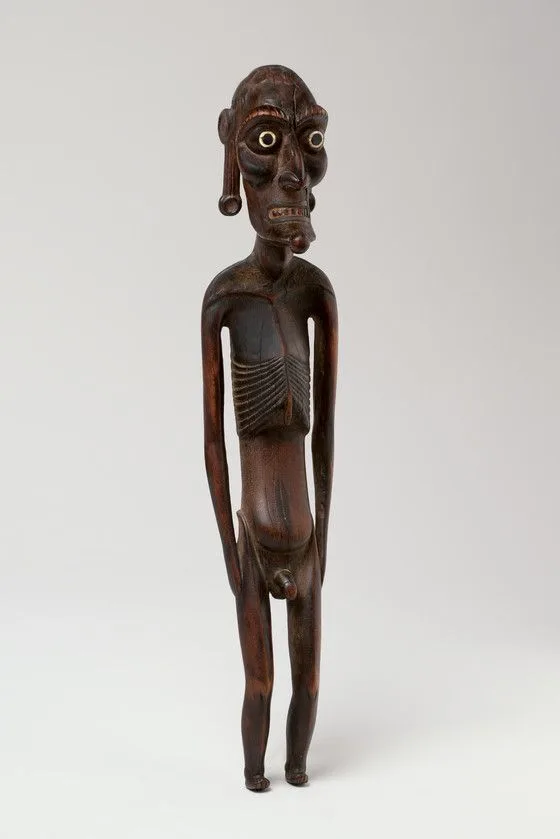
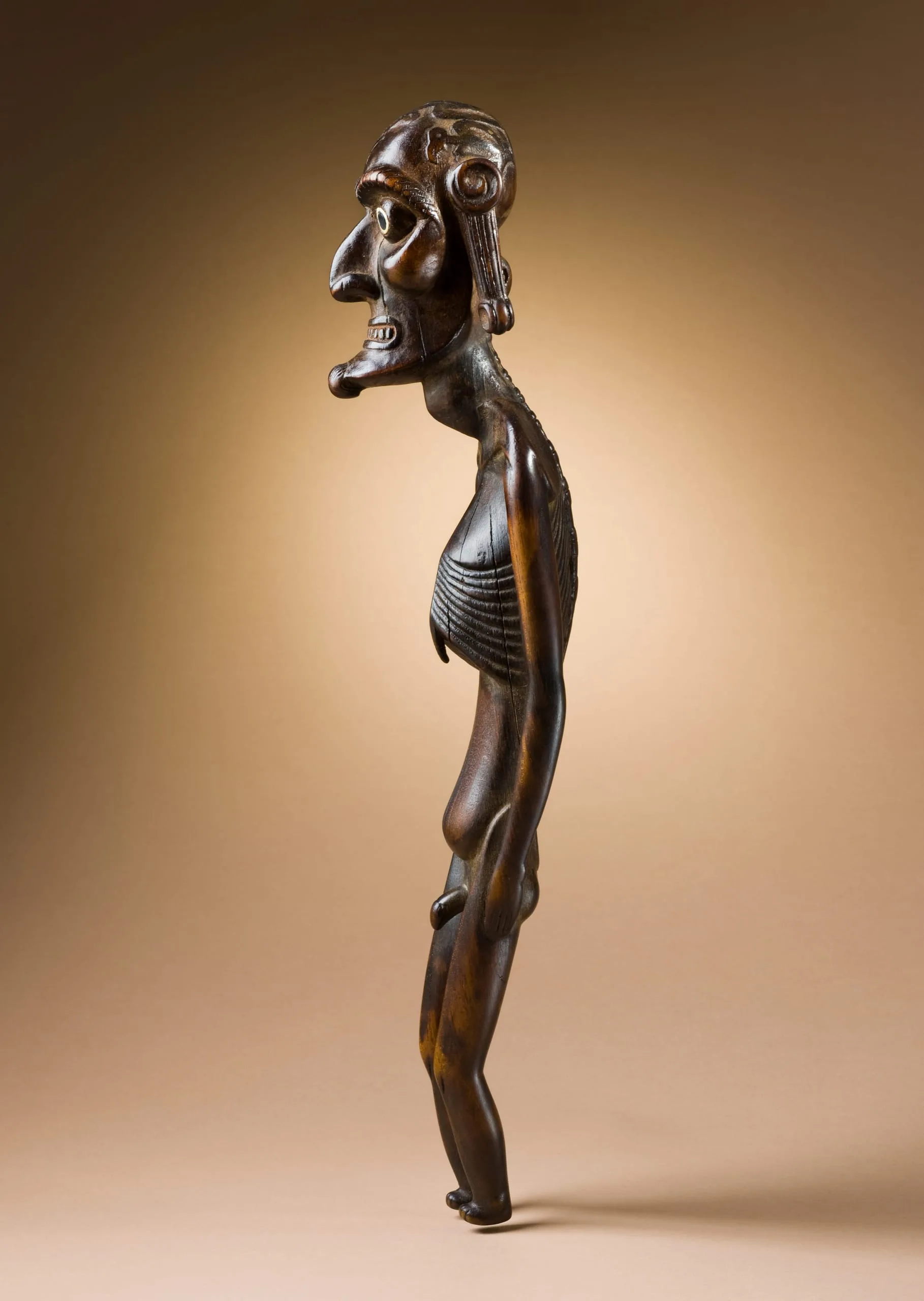
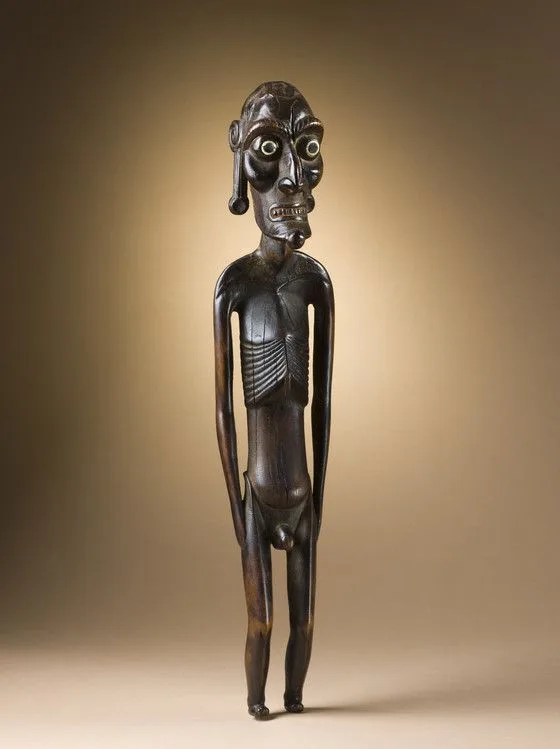
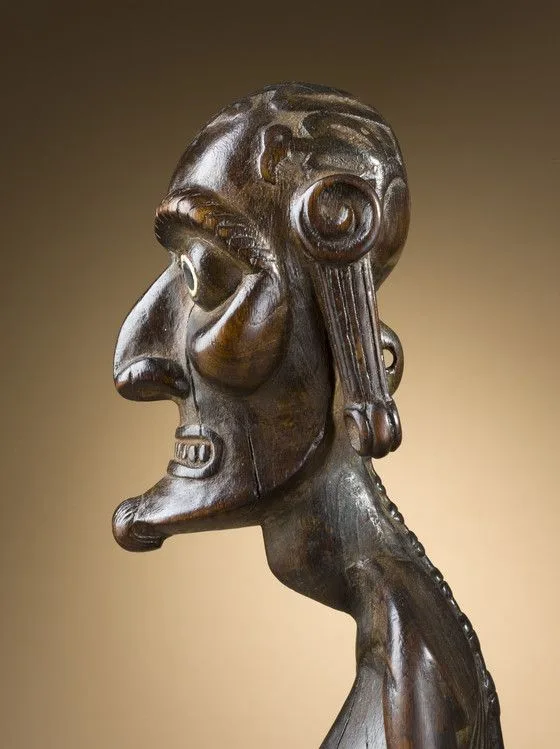
The emaciated figures of the moai kavakava (“image with ribs”) wood carvings are fairly prevalent in this sparsely wooded environment, and are the most collected of the Rapa Nui (Easter Island) carvings. The features of the moai kavakava are standard: sharp hooked nose, pointed beard, long earlobes, wide eyebrow ridge, projecting ribs, hunched back, obvious genitalia, bent legs and arms free of the body, short feet, skinny abdomen, open-ended mouth with lips, and exposed teeth in a slight grin. The head of this gaunt figure has no hair, and the skull is decorated with carved designs of zoomorphic or anthropomorphic figures. The carving work is surprisingly intricate and well done, and the arching form of the body comes from the curvature of a toromiro tree branch.
The specific function of the figure is unknown, although there are physical suggestions that it was worn around the neck. Tabs with holes to insert string found at the base of the figure’s neck may have been carved for suspension purposes. It is generally believed through myth stories that these fascinating figures represent the ghostly forms that ancient ancestors took when they appeared before a mythic hero. This hero then returned home to carve the ancestral beings that he had seen.