LACMA

ShopMembershipMyLACMATickets
LACMA
Los Angeles County Museum of Art
5905 Wilshire Blvd.
Los Angeles, CA 90036
info@lacma.org
(323) 857-6000
Sign up to receive emails
Subscribe
© Museum Associates 2025

Museum Hours

Monday

11 am–6 pm

Tuesday

11 am–6 pm

Wednesday

Closed

Thursday

11 am–6 pm

Friday

11 am–8 pm

Saturday

10 am–7 pm

Sunday

10 am–7 pm


  • About LACMA
  • Jobs
  • Building LACMA
  • Host An Event
  • Unframed
  • Press
  • FAQs
  • Log in to MyLACMA
  • Privacy Policy
© Museum Associates 2025
Collections

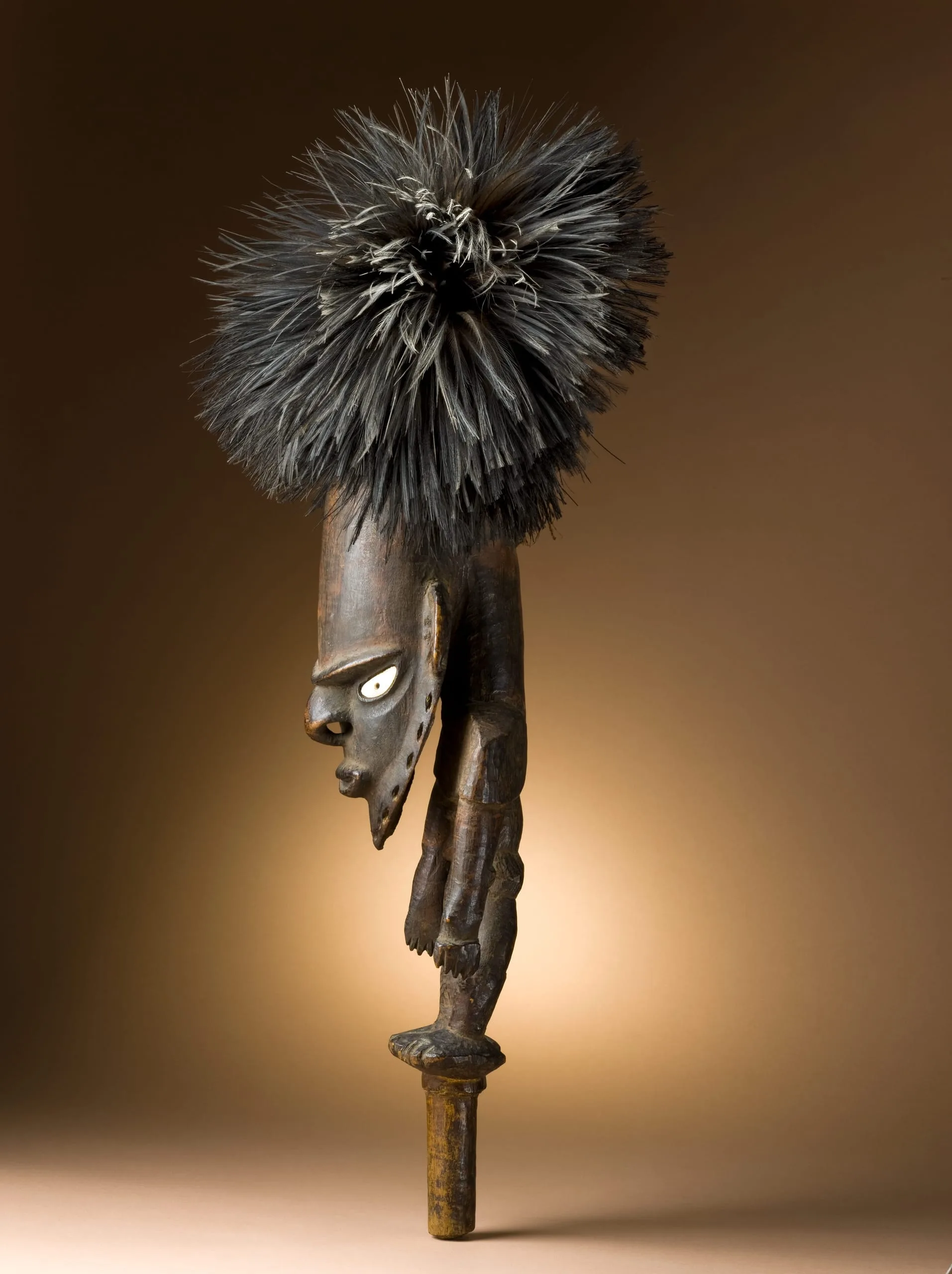
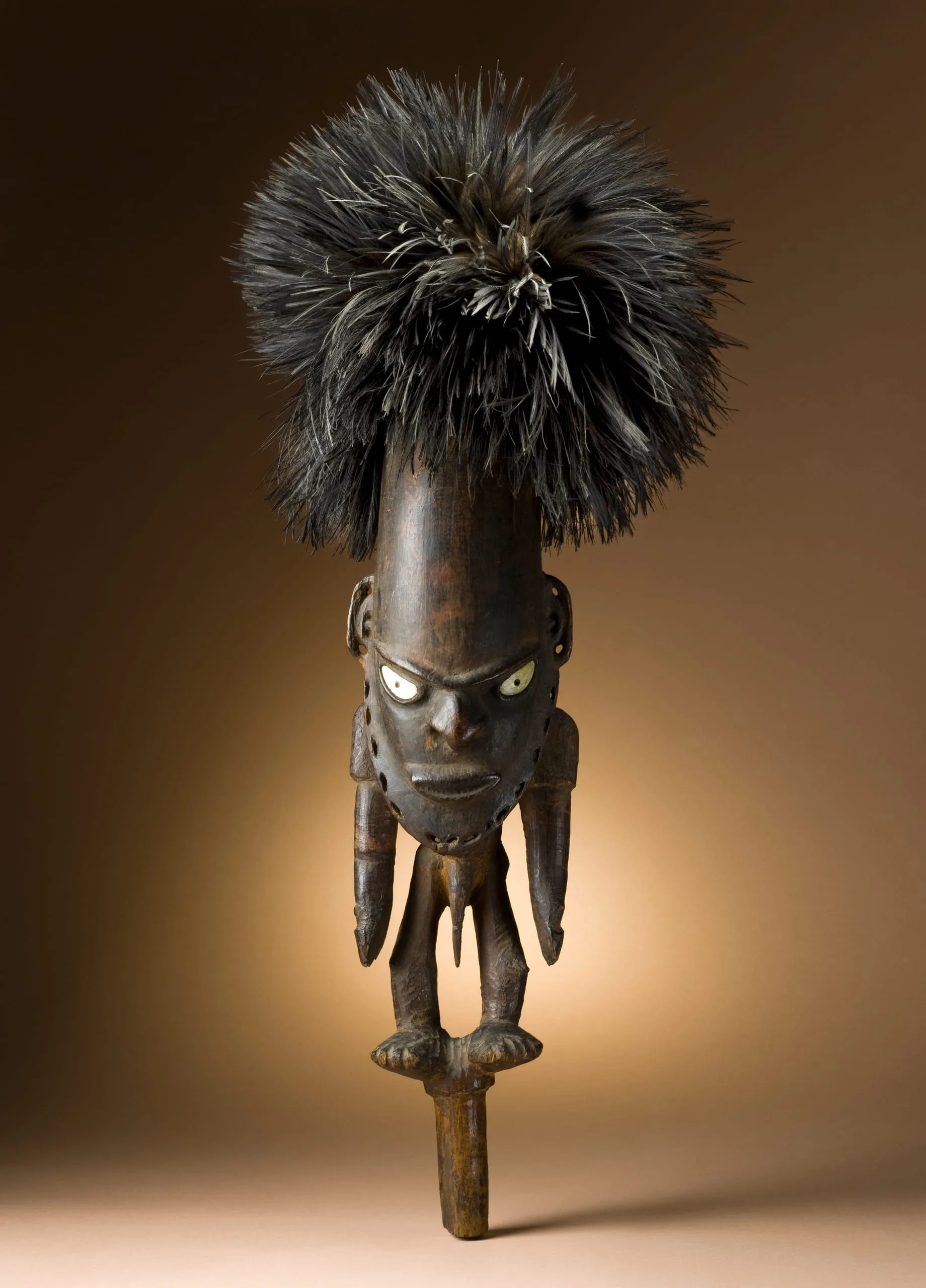
Flute Ornamentcirca 1925

Not on view
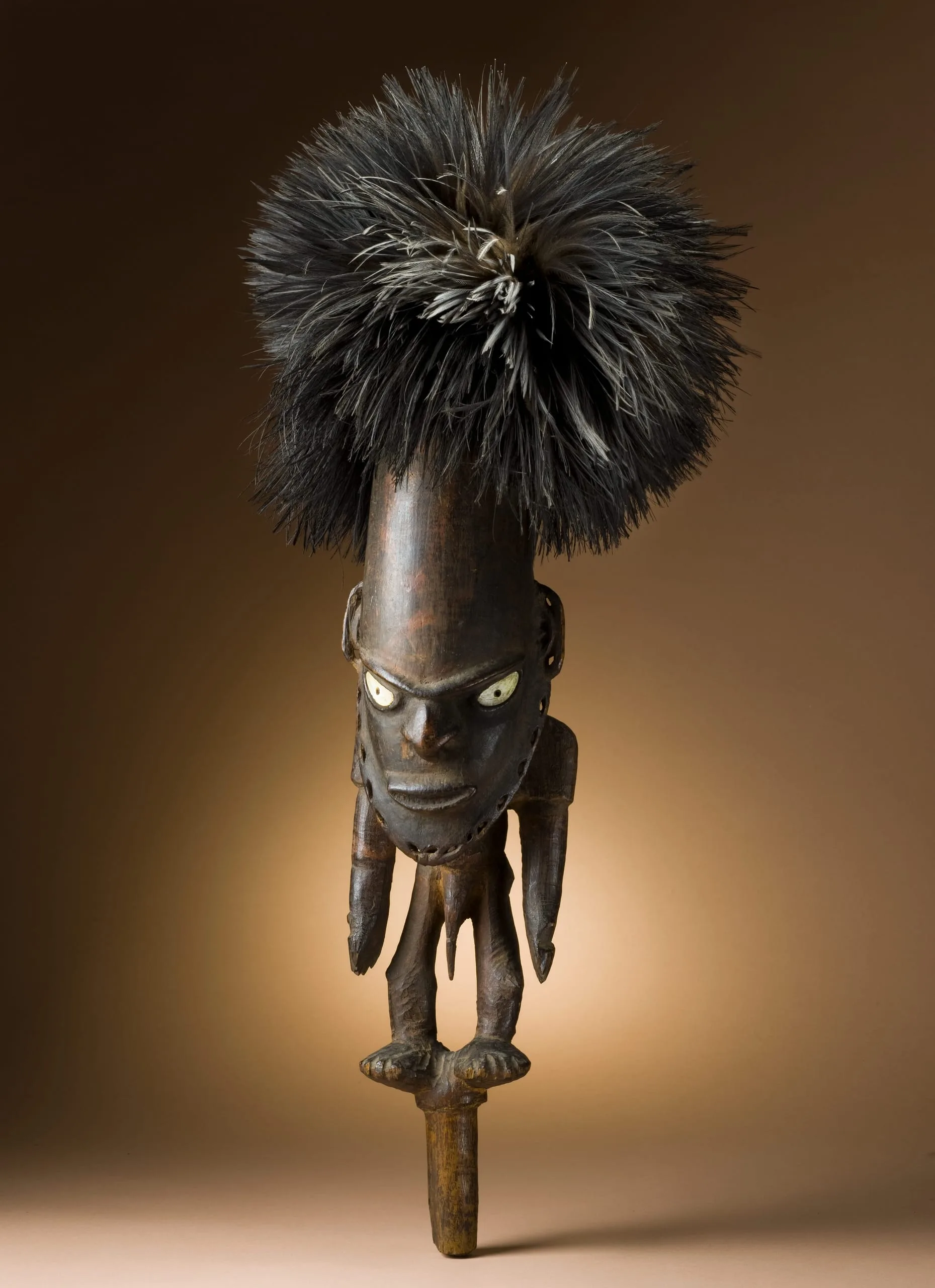
Dark wood sculpture of a small human figure with white inlaid eyes, outstretched arms, and a large spherical mass of dark feathers crowning the top, mounted on a short cylindrical handle
Carved wooden staff finial depicting a human figure with a face featuring white inlaid eyes and pierced cheeks, mounted on a cylindrical handle, topped with a large spherical headdress of dark radiating feathers or fiber, photographed against a warm brown gradient background.
Carved wooden figure on a cylindrical handle, with a stylized face featuring inlaid white eyes, projecting ears, and multiple horn-like appendages at the shoulders and base; topped with a large rounded mass of dark feathers; dark brown patinated surface.
Title
Flute Ornament
Culture
Biwat People
Place Made
Papua New Guinea, East Sepik Province, Yuat River
Date Made
circa 1925
Medium
Wood, shell inlay, cassowary feathers, and human hair
Dimensions
26 1/2 x 5 x 10 in. (67.31 x 12.7 x 25.4 cm)
Credit Line
Purchased with funds provided by the Eli and Edythe Broad Foundation with additional funding by Jane and Terry Semel, the David Bohnett Foundation, Camilla Chandler Frost, Gayle and Edward P. Roski, and The Ahmanson Foundation
Accession Number
M.2008.66.7
Classification
Sculpture
Collecting Area
Art of the Pacific
Curatorial Notes

Gallery Label
This elaborately decorated figural carving was used to plug the end of a Biwat flute. The plug was inserted into the mouthpiece of the long ceremonial flute, which would have been six to eight feet in length. The figure’s large head and smaller body is a representation of the ancestral crocodile spirit’s child. The carving has lost its painted surface, however the inlaid eyes and a cassowary bird feather headpiece are still in place. Though now lost, the figure also would have had a thick hair or shell beard, a shell or tusk piece in the septum of the nose, and ornaments of shell and fibers hanging from the large forehead and body. These additional adornments allowed only the eyes, nose, and mouth to be visible.

Flutes of this type were made in pairs and not played often. Initially used in a completion ceremony, they were stored as sacred objects until needed for rituals. Generally used in initiation ceremonies for young men, the flutes were hidden from the view of women, and sometimes given as part of a woman’s dowry.


Selected Bibliography
  • King, Jennifer, ed. Vera Lutter: Museum in the Camera. Los Angeles: Los Angeles County Museum of Art; Munich: DelMonico Books-Prestel, 2020.

  • Los Angeles County Museum of Art. Transformation: the LACMA Campaign. Los Angeles: Museum Associates, 2008.