- Title
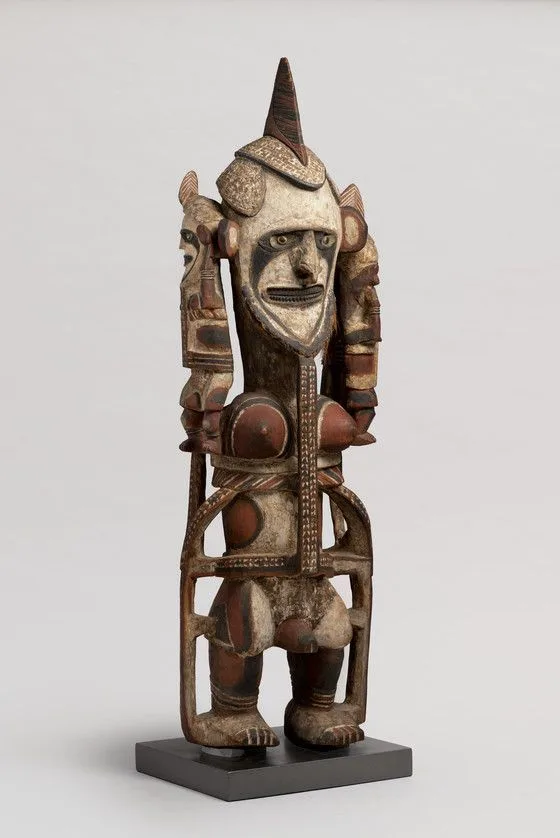
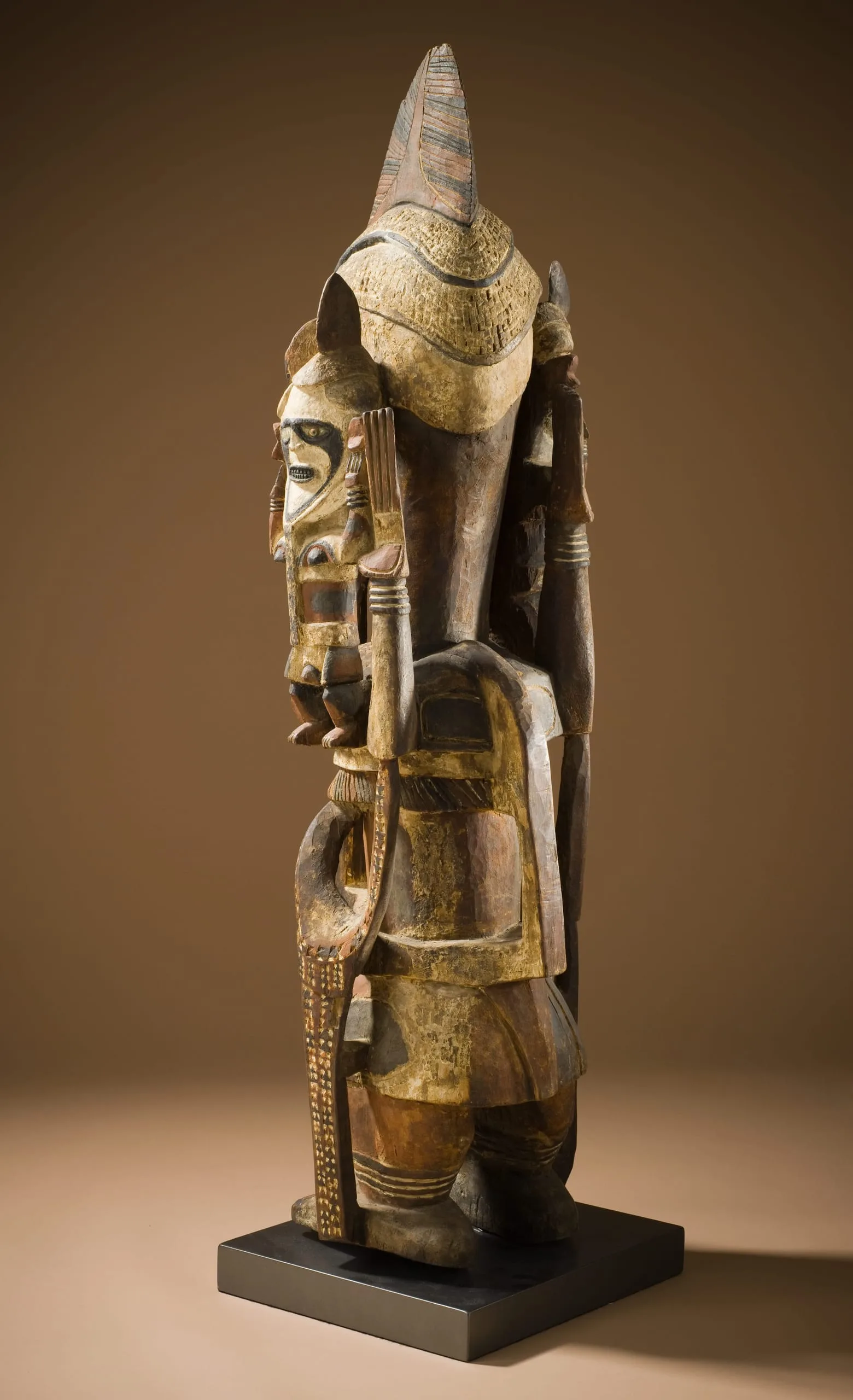
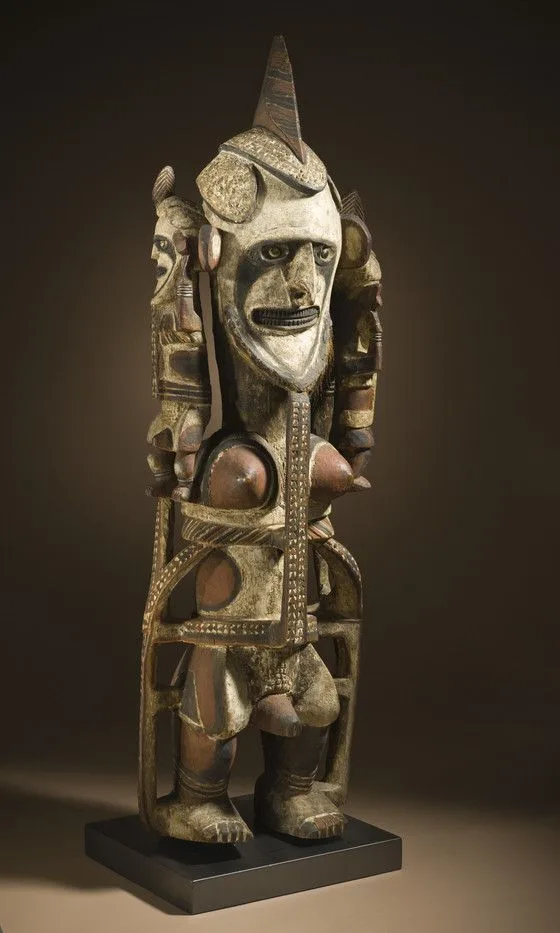
- Memorial Figure (uli, selambungin lorong type)
- Date Made
- circa 1900
- Medium
- Wood, shell inlay, fiber, and pigment
- Dimensions
- 52 1/2 x 16 x 15 1/2 in. (133.35 x 40.64 x 39.97 cm)
- Accession Number
- M.2008.66.3
- Collecting Area
- Art of the Pacific
- Curatorial Notes
Gallery Label
The hermaphroditic uli, or memorial figure, is used to represent the deceased male chiefs in funerary rites. This uli was used in the more mountainous and isolated interior of the island of New Ireland. Here, a larger carved central standing figure is flanked by a smaller figure on each side. The central figure is painted red, white, and black and is wearing the traditional clothing associated with mourning: a headpiece and wrist and ankle ornaments. The figure is carved with a beard and has black paint on the face in typical war designs. The hands are raised above the two side figures, while other prominent features of the figure stand out because of their unique pairing—visible male genitals and breasts. The breasts could represent the importance of fertility and the duty of the chiefs to provide for and protect women and families, while the phallus represents male power. This hermaphrodite theme is common in the costumes men wore during ceremonial dances, on which breasts were attached.
This figure was used during complex funeral ceremonies that included dances and feasts of pigs that had been brought for the occasion. Huts were constructed specifically for the display of the newly carved uli, along with older uli that were repainted for reuse. Painted skulls of the deceased were ritually presented to the uli sculptures, which represented ancestral power.
- Selected Bibliography
- Wardwell, Allen. Island Ancestors: Oceanic Art from the Masco Collection. [Seattle]: University of Washington Press, 1994.
- Muchnic, Suzanne. LACMA So Far: Portrait of a Museum in the Making. San Marino, California: Huntington Library, Art Collections, and Botanical Gardens, 2015.