LACMA

ShopMembershipMyLACMATickets
LACMA
Los Angeles County Museum of Art
5905 Wilshire Blvd.
Los Angeles, CA 90036
info@lacma.org
(323) 857-6000
Sign up to receive emails
Subscribe
© Museum Associates 2025

Museum Hours

Monday

11 am–6 pm

Tuesday

11 am–6 pm

Wednesday

Closed

Thursday

11 am–6 pm

Friday

11 am–8 pm

Saturday

10 am–7 pm

Sunday

10 am–7 pm


  • About LACMA
  • Jobs
  • Building LACMA
  • Host An Event
  • Unframed
  • Press
  • FAQs
  • Log in to MyLACMA
  • Privacy Policy
© Museum Associates 2025
Collections

Pigment Dishcirca 1950

Not on view
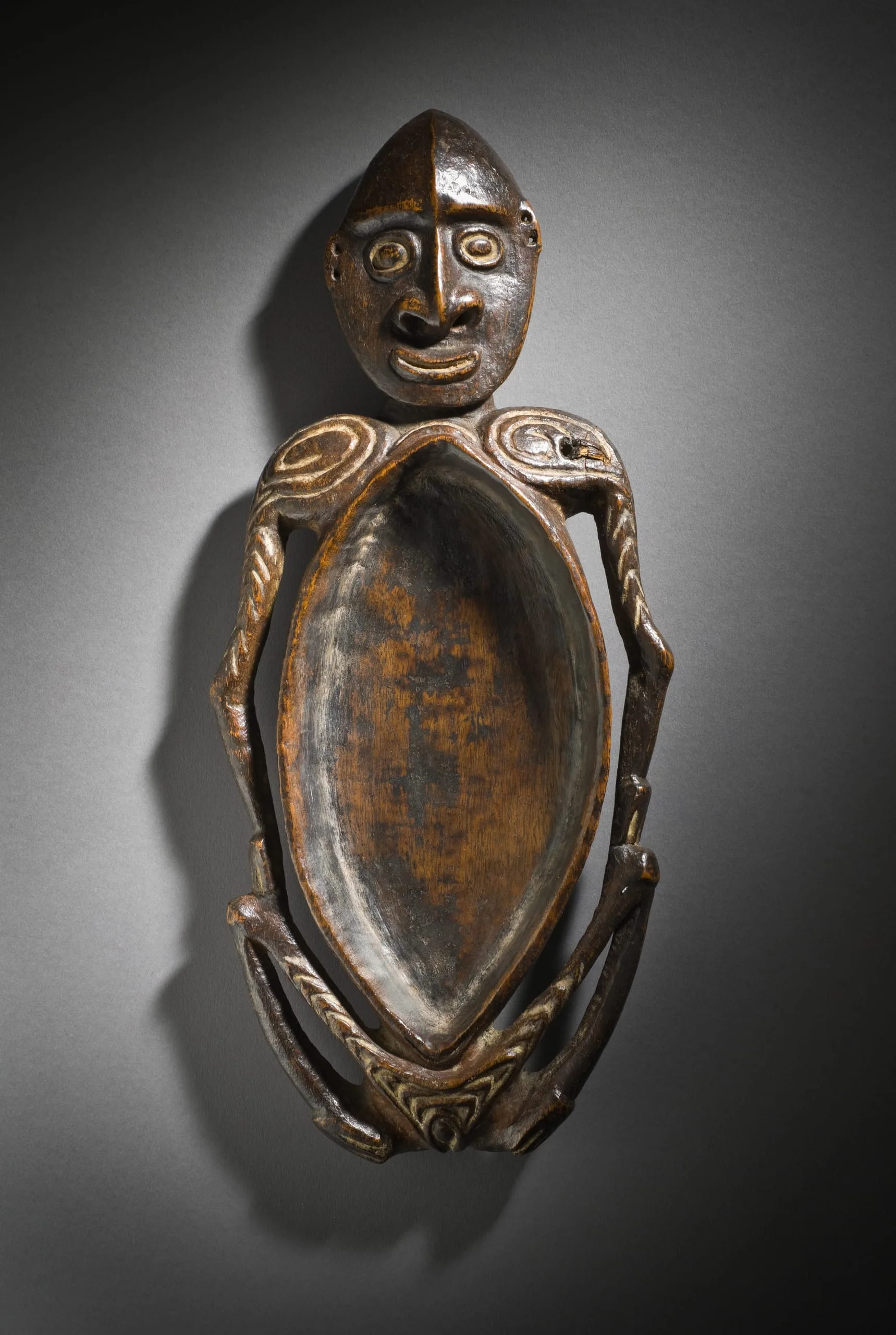
Carved wooden figural vessel with a human face at top, oval bowl forming the torso, and bent arms and legs framing the bowl, dark patina with honey-brown interior
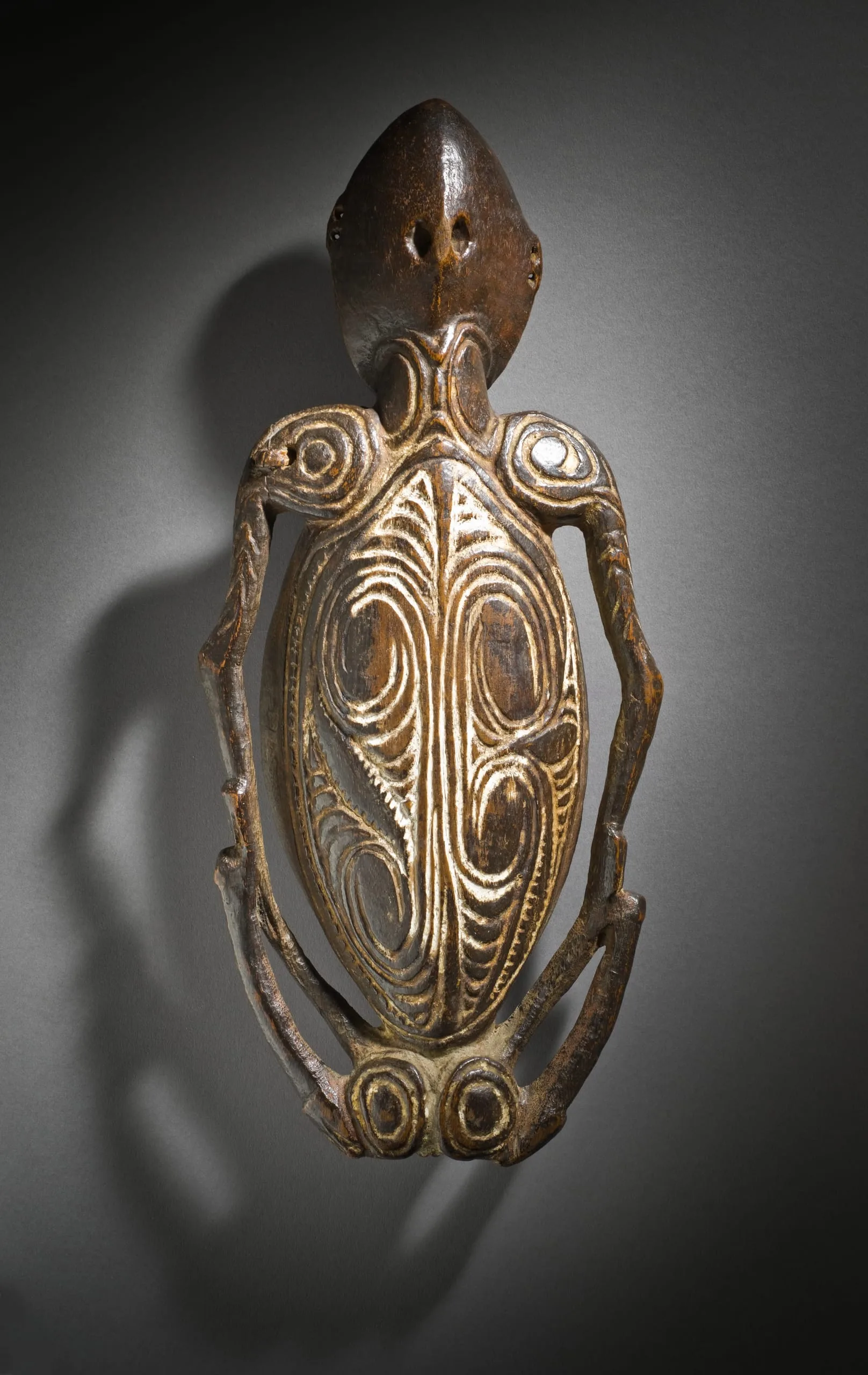
Carved wooden figure with an oval body covered in incised spiral and concentric line patterns, with elongated limb forms framing the sides, a smooth dark rounded head above, and small shell inlay eyes; dark brown patina with white pigment highlighting the carved designs.
Title
Pigment Dish
Culture
Iatmul People
Place Made
Papua New Guinea, East Sepik Province
Date Made
circa 1950
Medium
Wood, fiber, and pigment
Dimensions
11 1/2 x 5 1/2 x 1 1/2 in. (29.21 x 13.97 x 3.81 cm)
Credit Line
Purchased with funds provided by the Eli and Edythe Broad Foundation with additional funding by Jane and Terry Semel, the David Bohnett Foundation, Camilla Chandler Frost, Gayle and Edward P. Roski, and The Ahmanson Foundation
Accession Number
M.2008.66.10
Classification
Sculpture
Collecting Area
Art of the Pacific
Curatorial Notes

Gallery Label
This dish was used to mix pigments for ceremonial body paints common in the Middle Sepik River region. These paints were used to make designs on the body that pertain to certain rituals that often included the honoring of ancestors. Most pigment dishes were in animal forms, different birds, fish, or crocodiles found in the region; however, this example is of a crouching female figure. The carving is smoothly done for the figure, while the back has asymmetrical curvilinear relief carvings that are visible when the dish is not in use.

The work the artists put into the carving of this dish extends into the careful hanging storage of the dish when not in use, as well as the display of such dishes even when damaged. This reverence of a household object led scholars to believe that it represents a totemic ancestor carving. The important ceremonies requiring the mixing of paint concentrates power in the objects that facilitate these ceremonies. It was believed that the power of the spirit presence could transfer to the participants as the spirits entered first the dish, then the pigments, and ultimately the wearer of the paint.


Selected Bibliography
  • Wardwell, Allen. Island Ancestors: Oceanic Art from the Masco Collection. [Seattle]: University of Washington Press, 1994.