- Title
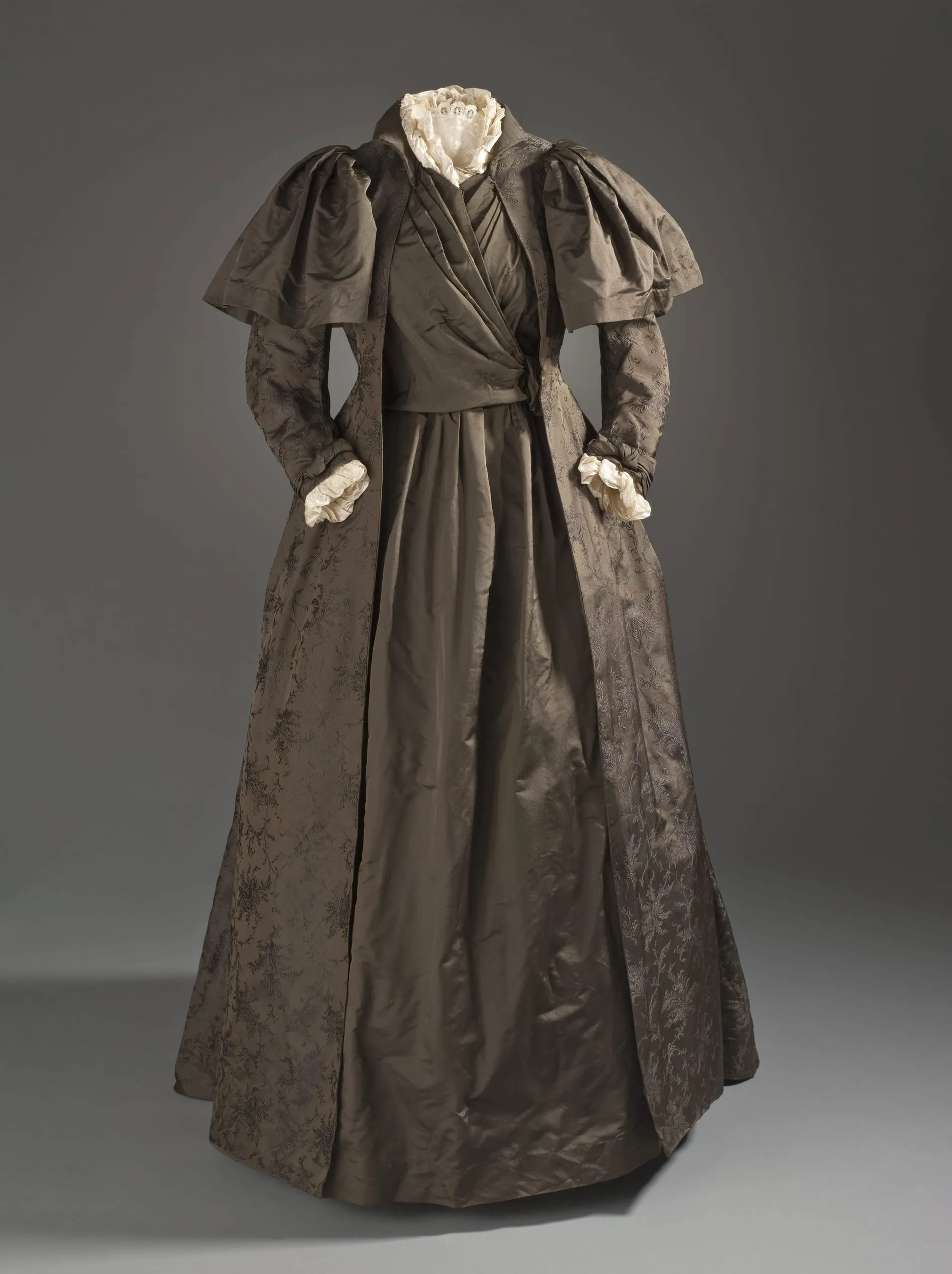
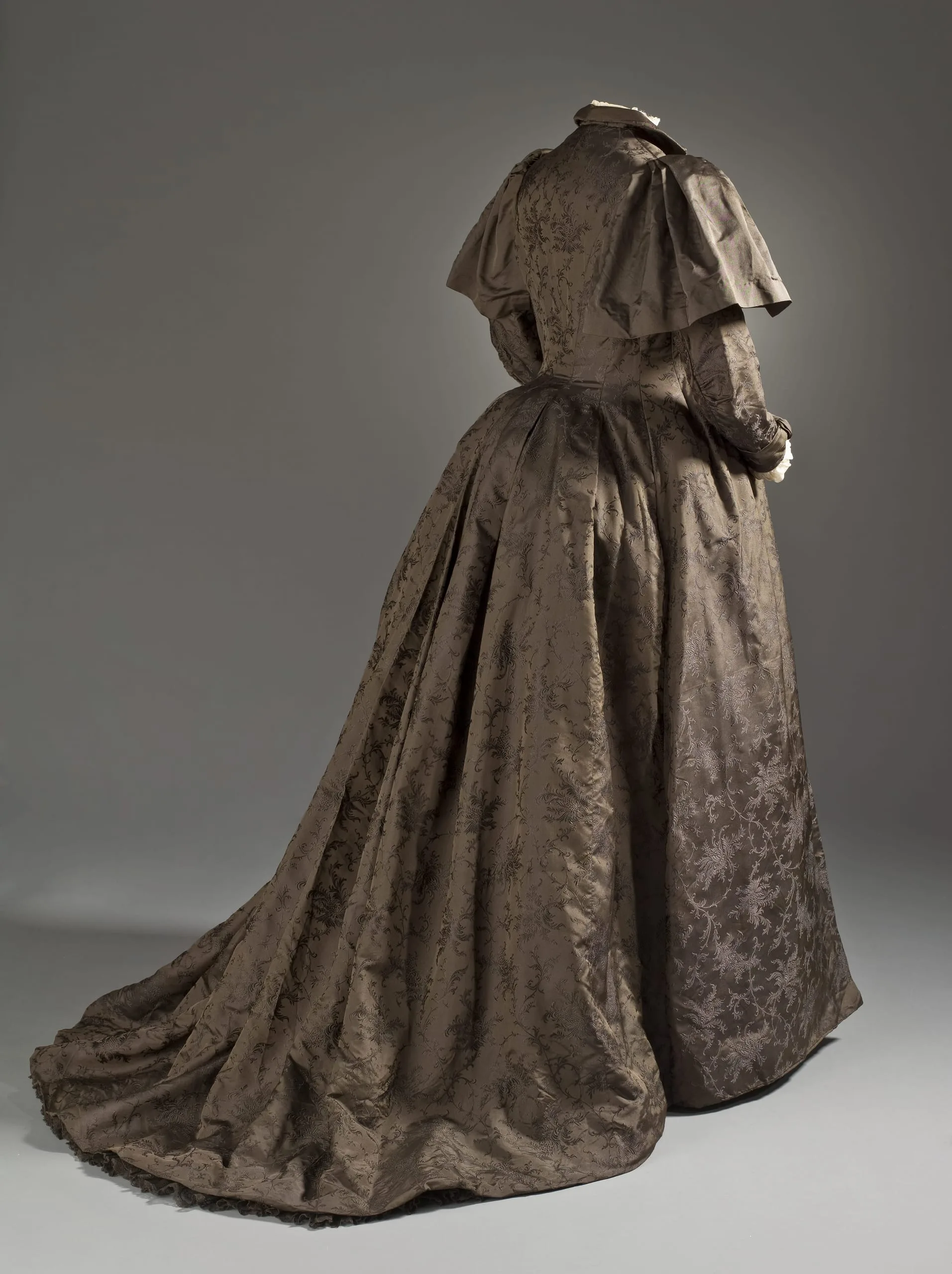
- Woman's Dress
- Date Made
- circa 1895
- Medium
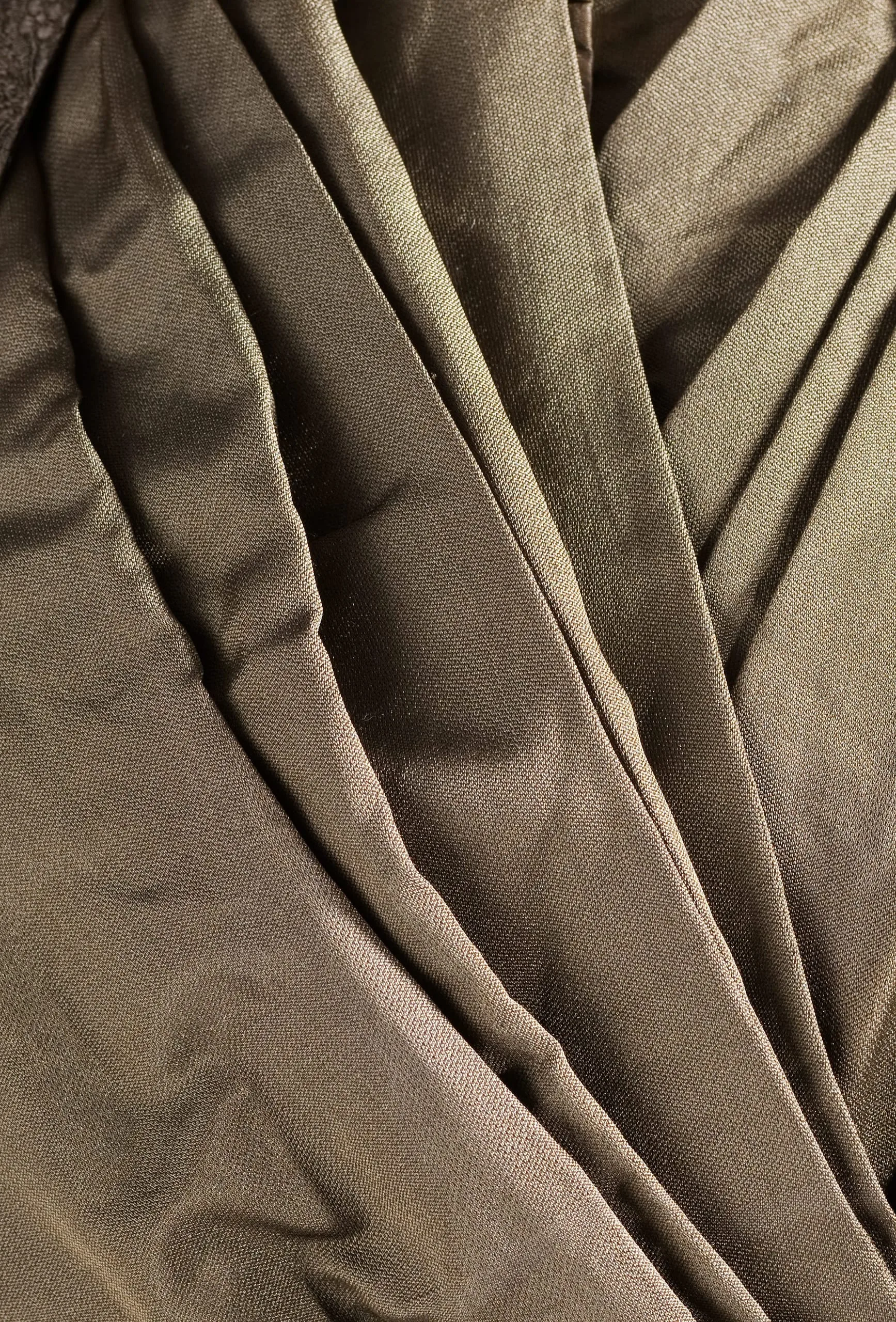
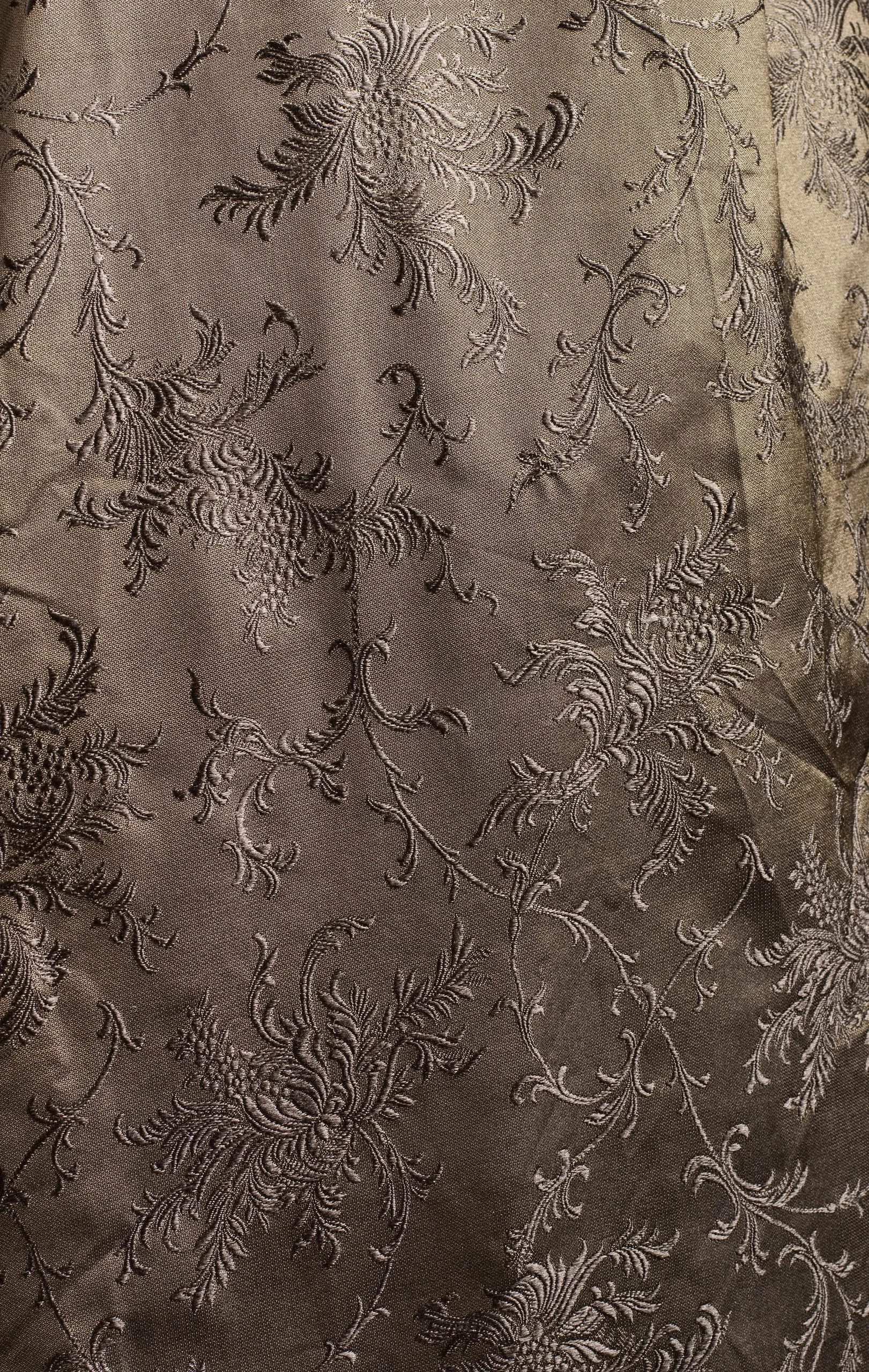
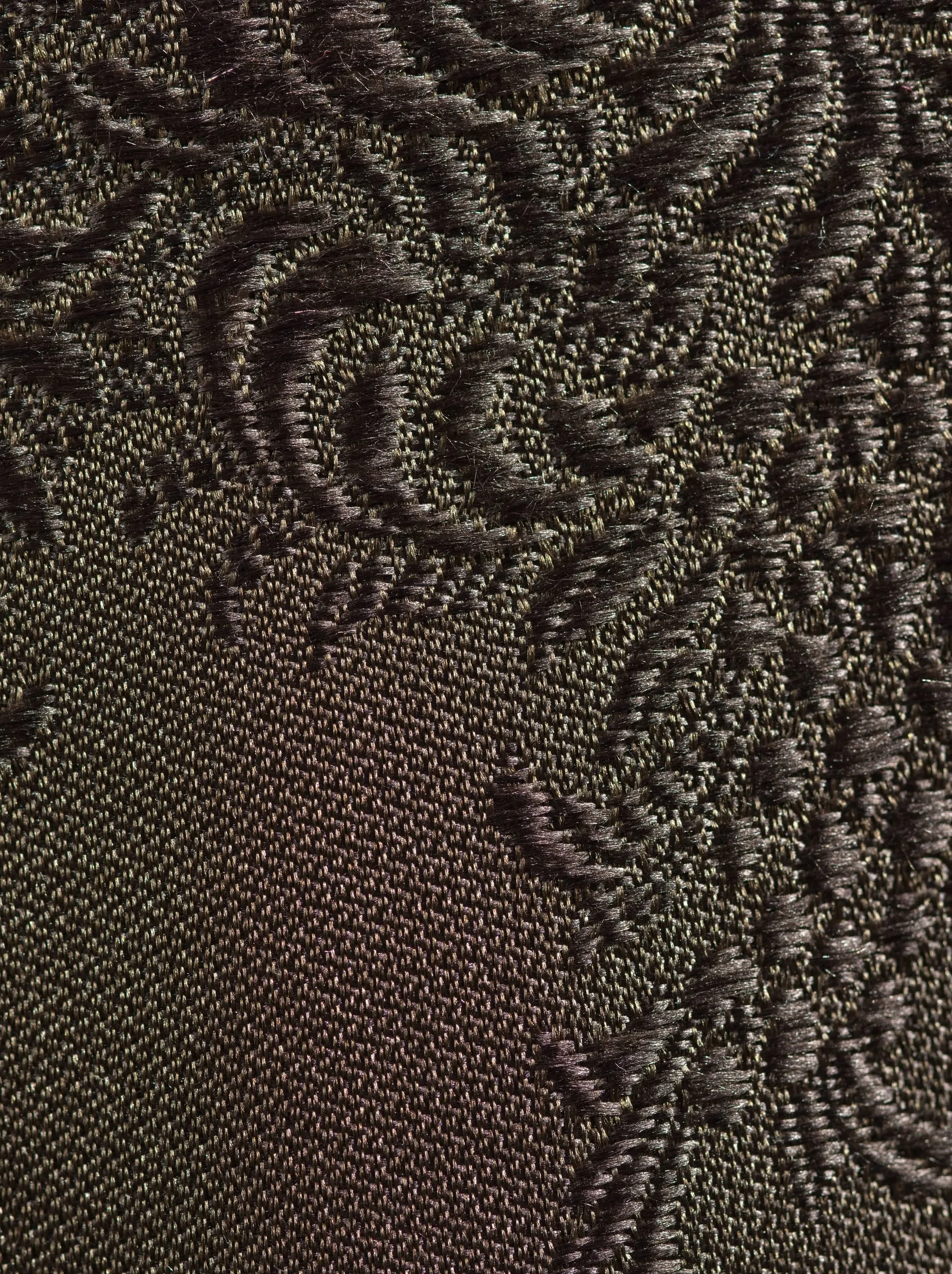
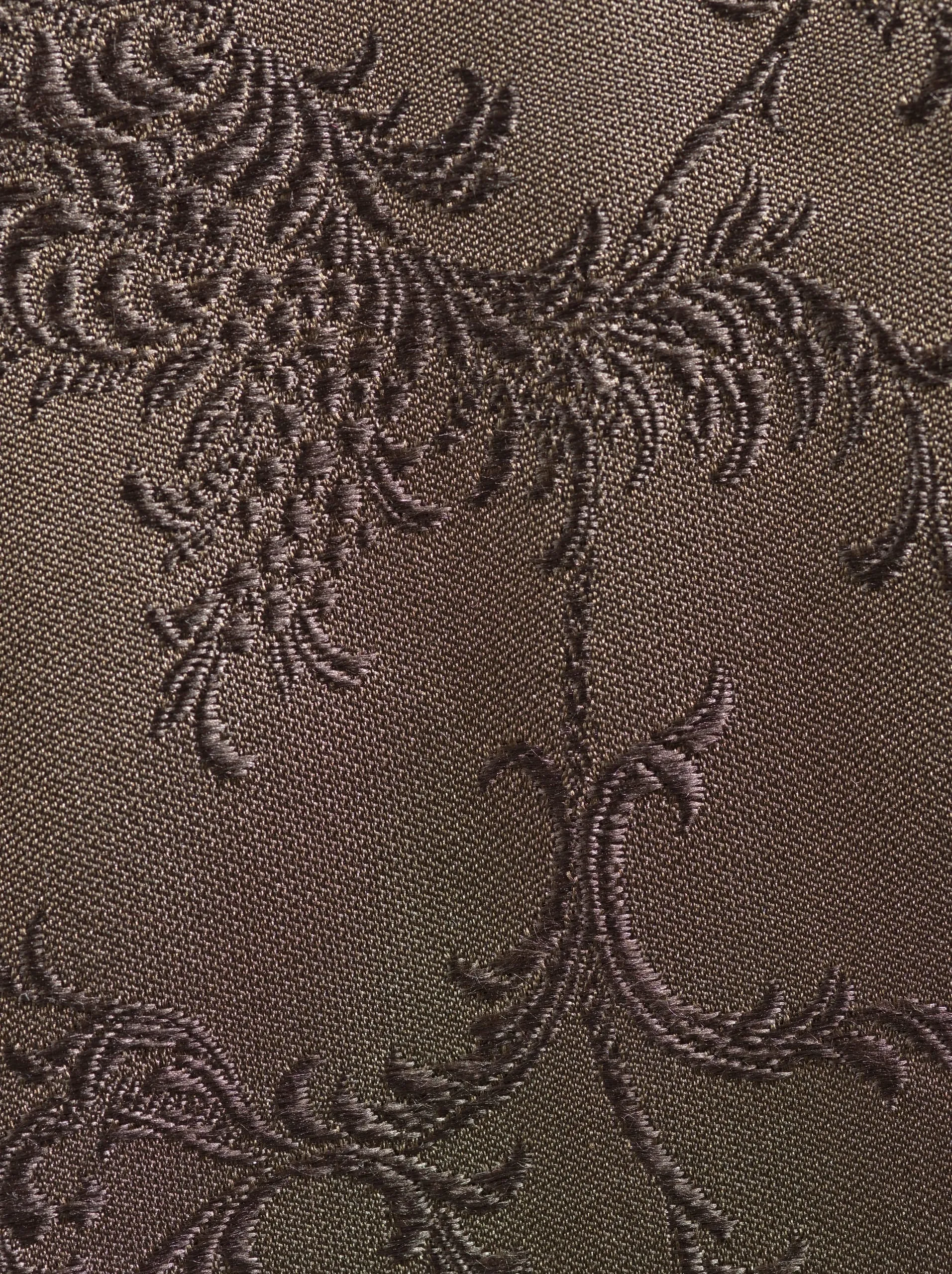
- Silk twill and silk twill with supplementary weft-float patterning, with silk plain weave
- Dimensions
- Center back length: 74 1/4 in. (188.6 cm)
- Accession Number
- M.2007.211.901
- Curatorial Notes
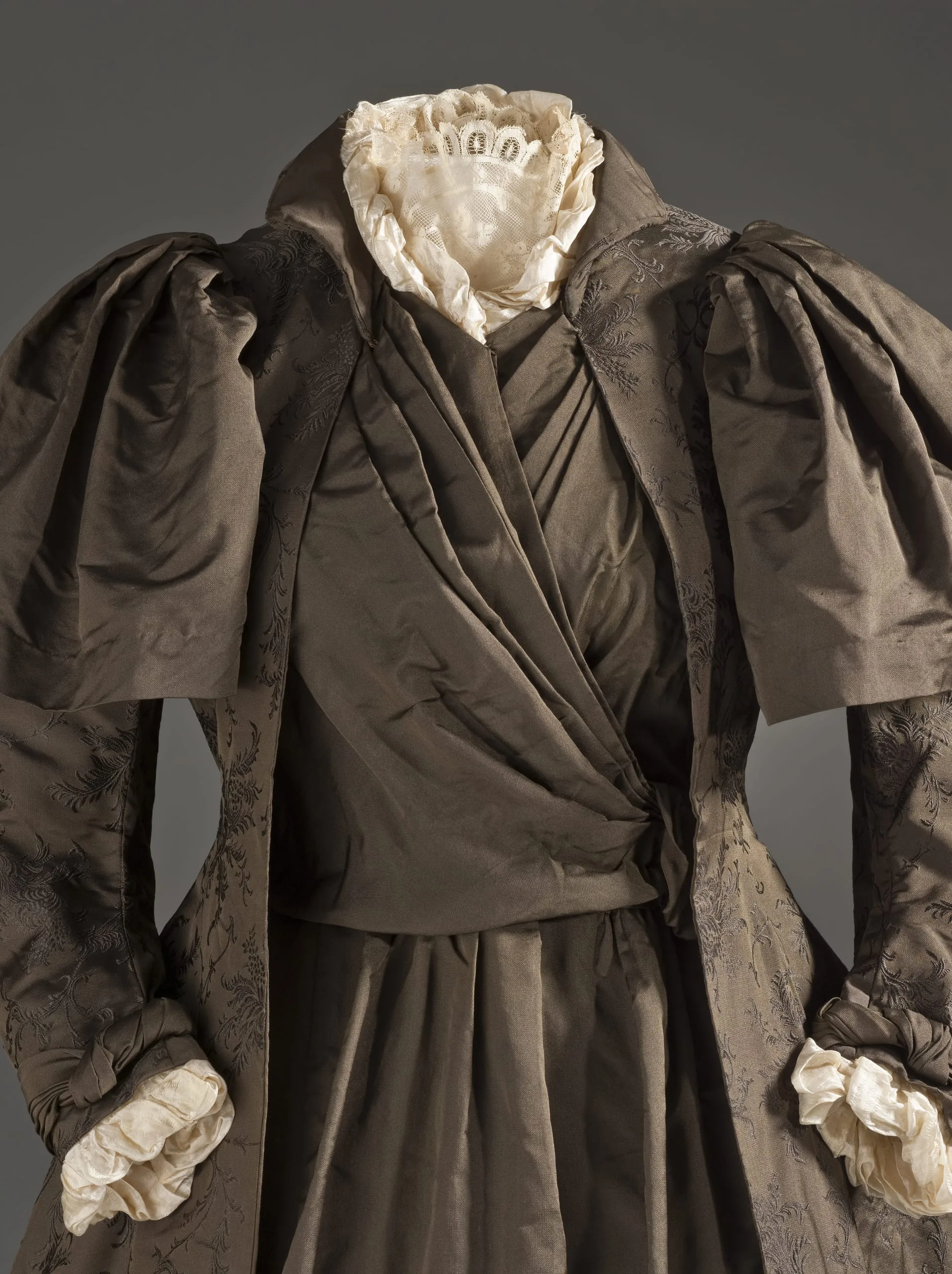
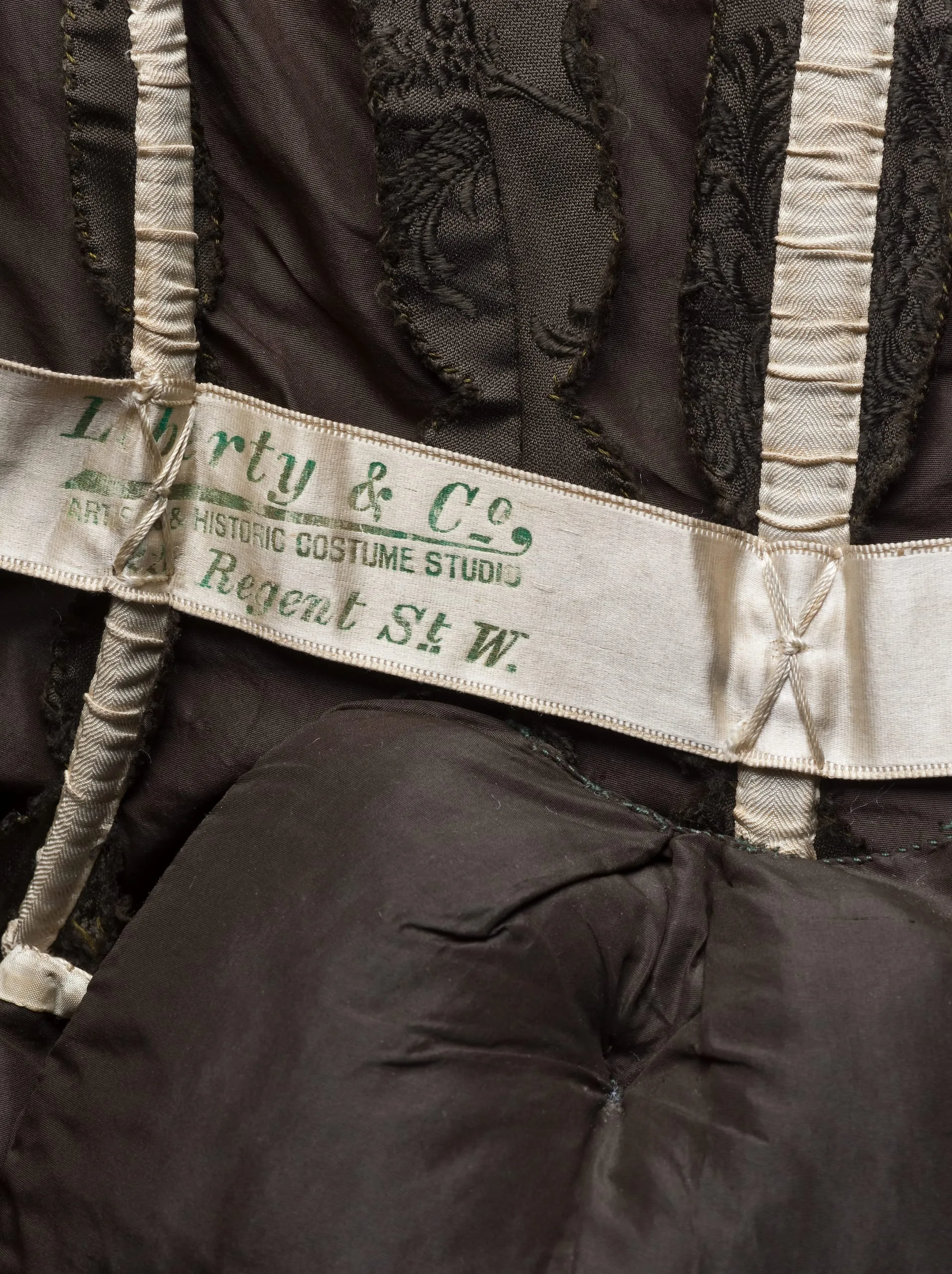
The tea gown—a loose, informal dress worn at home for afternoon entertaining—was a European innovation, inspired by traditional Asian garments. While some tea gowns appropriated the flowing lines of the Japanese kimono, this example’s intricate tailoring and interior boning are strictly Western in origin. It is the kimono-like crossover front bodice and luxurious silks that evoke the East. Contrasting plain and patterned silk textiles create the illusion of a two-piece ensemble. Historicizing details (such as the cape sleeves) and muted colors popularized by the Aesthetic movement were hallmarks of the Liberty & Co. department store, still in existence today.
- Selected Bibliography
- Takeda, Sharon Sadako and Kaye Durland Spilker. Fashioning Fashion: Deux Siècles de Mode Européenne, 1700-1915. Paris: Arts Décoratifs; Los Angeles: Los Angeles County Museum of Art; Munich; New York: Delmonico Books-Prestel, 2013.
- Takeda, Sharon Sadako and Kaye Durland Spilker. Fashioning Fashion: European Dress in Detail, 1700-1915. Los Angeles: Los Angeles County Museum of Art; Munich; New York: Delmonico Books/Prestel, 2010.
- Takeda, Sharon Sadako and Kaye Durland Spilker. Fashioning Fashion: Europäische Moden, 1700-1915. Los Angeles: Los Angeles County Museum of Art; Munich; New York: Prestel, 2012.