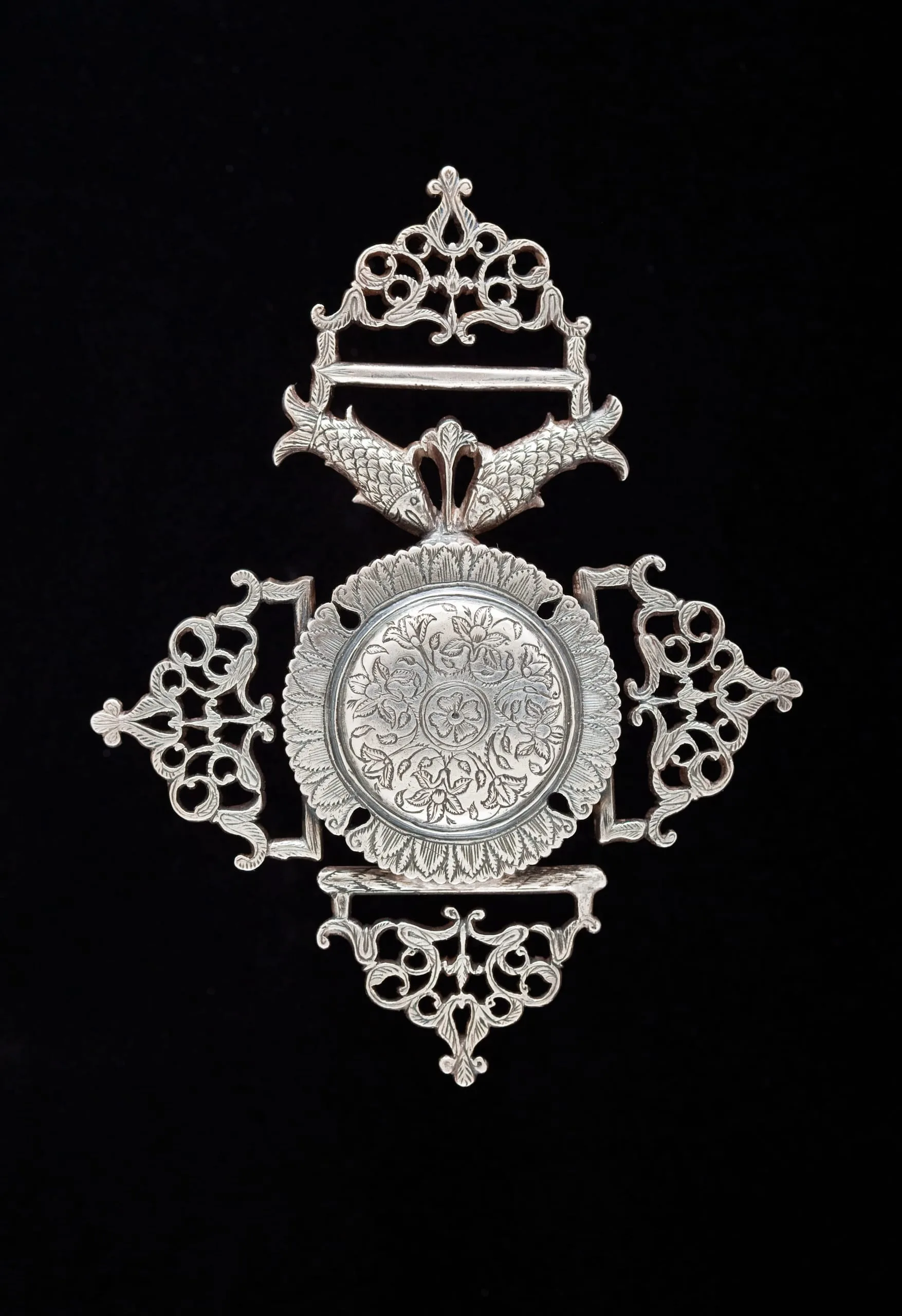
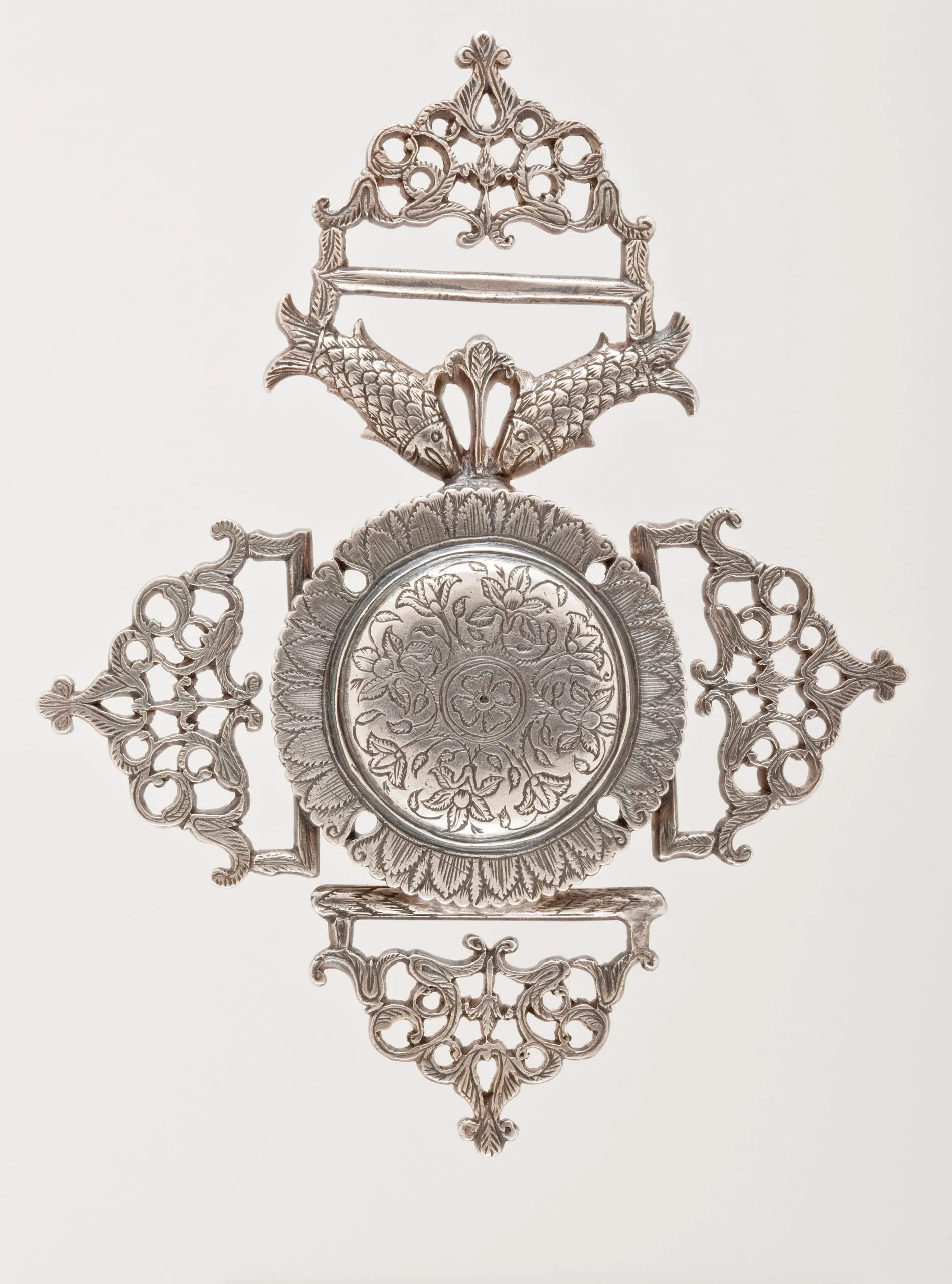
This elegant sword belt fitting is made of cast and chased silver. It was most likely used to suspend a scabbard from a waist-belt, with fabric straps connected to the openwork loop or possibly hook fasteners. Sword belt fittings such as this, sometimes called harness fittings, generally incorporated three uneven straps made of woven and/or brocaded silk, velvet, leather, braided cord, or gold chain. Ornate gold or enameled silver buckles, and sometimes matching support rings attached to the scabbard, were typically paired with brocade silk waist belts in the most opulent examples. Comparable enameled sword belt fittings from Lucknow are now in the National Museum, New Delhi (60.890/a-f).
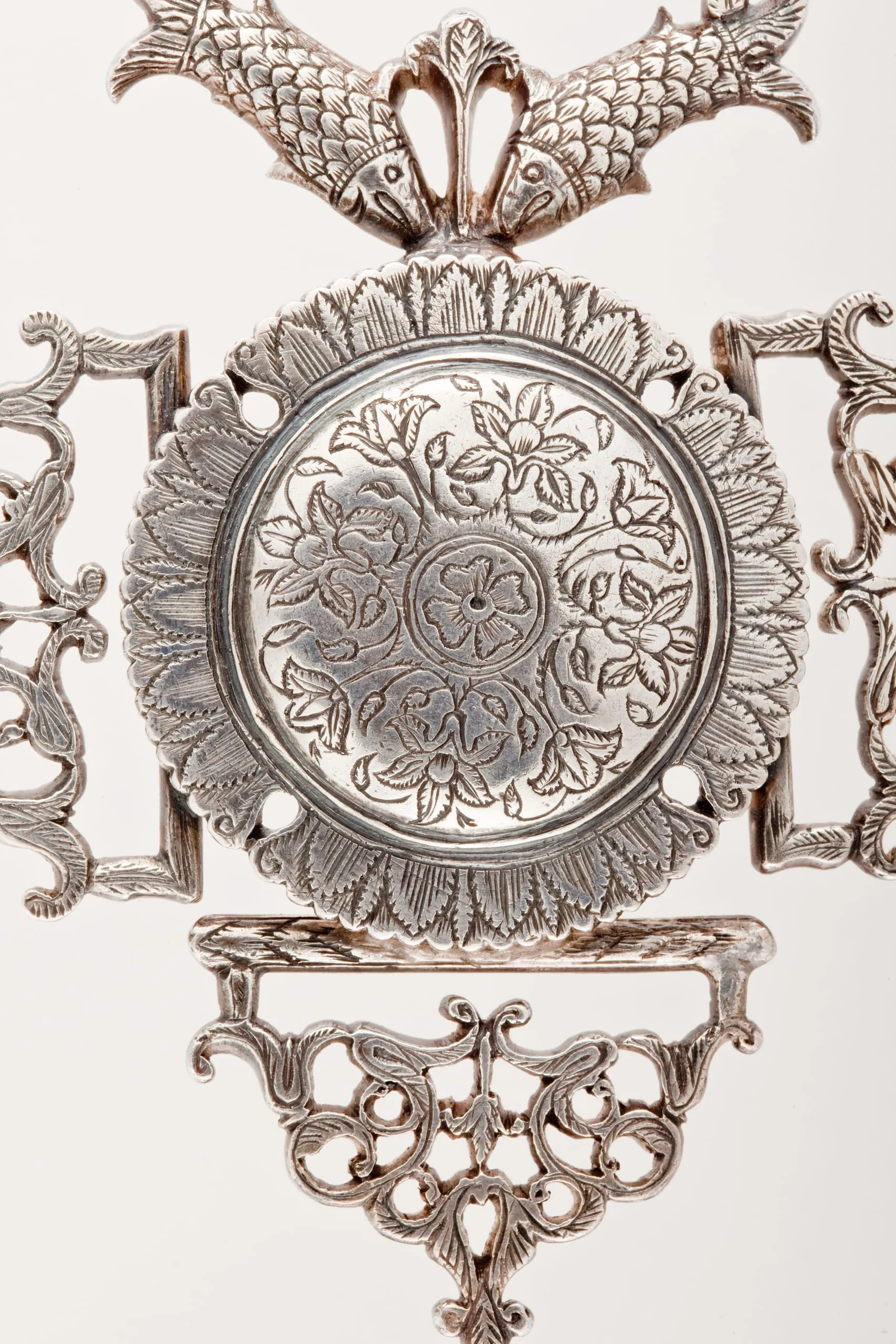
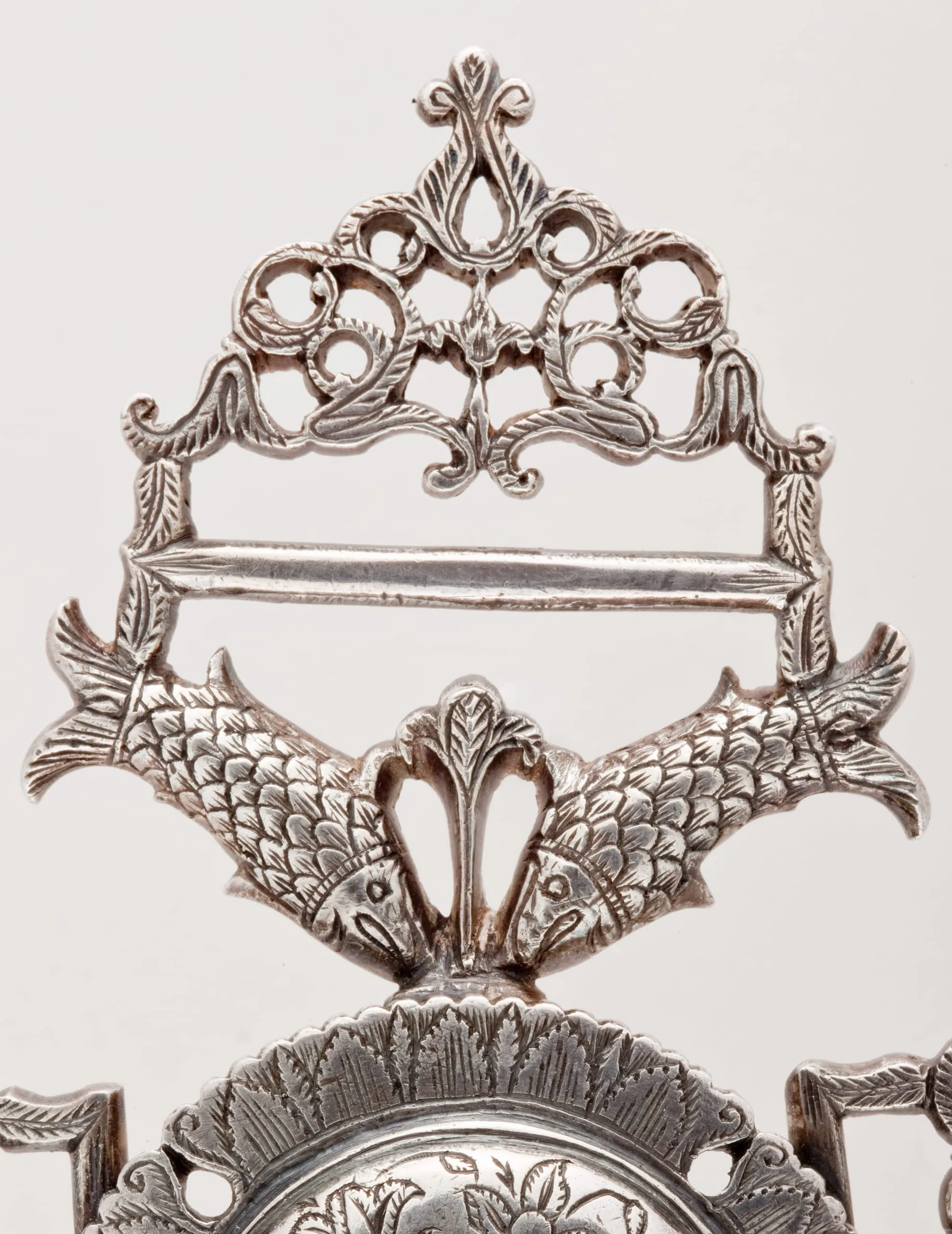
The decorative program features floral and foliate motifs drawn from the standard Mughal and Lucknow design repertoire. The epicenter of the roundel has an open poppy blossom viewed from above. It is surrounded by a concentric band of alternating five- and three-blossomed irises, although their small ovate leaves are not a botanical match for true awl-shaped iris leaves. The roundel’s outer border is a series of stylized acanthus leaves. The four flange-like fasteners are identical pierced-work finials in the form of arabesque bracts. The pair of fish represent the exalted military insignia of the mahi-ye maratib (Fish of Dignity), which served as the dynastic leitmotif of the Lucknow court and was frequently displayed on its decorative arts and palatial architecture.