LACMA

ShopMembershipMyLACMATickets
LACMA
Los Angeles County Museum of Art
5905 Wilshire Blvd.
Los Angeles, CA 90036
info@lacma.org
(323) 857-6000
Sign up to receive emails
Subscribe
© Museum Associates 2025

Museum Hours

Monday

11 am–6 pm

Tuesday

11 am–6 pm

Wednesday

Closed

Thursday

11 am–6 pm

Friday

11 am–8 pm

Saturday

10 am–7 pm

Sunday

10 am–7 pm


  • About LACMA
  • Jobs
  • Building LACMA
  • Host An Event
  • Unframed
  • Press
  • FAQs
  • Log in to MyLACMA
  • Privacy Policy
© Museum Associates 2025
Collections

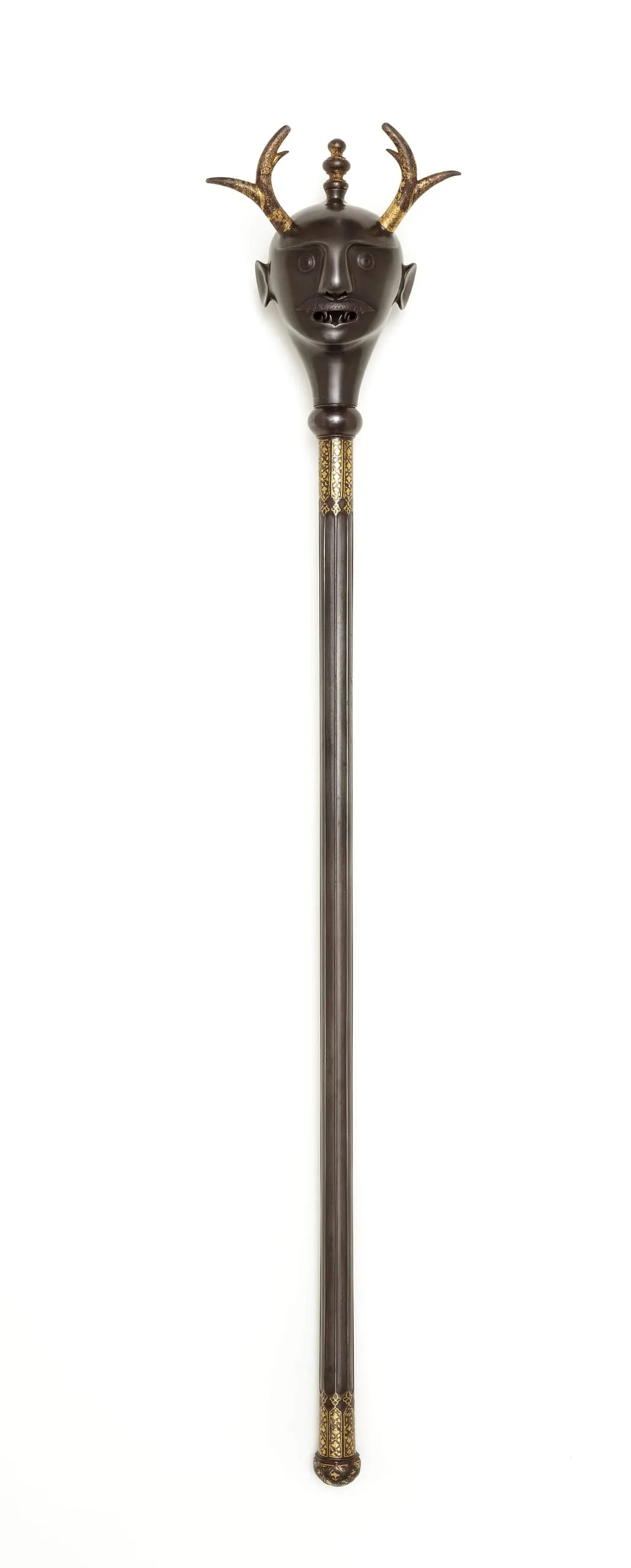
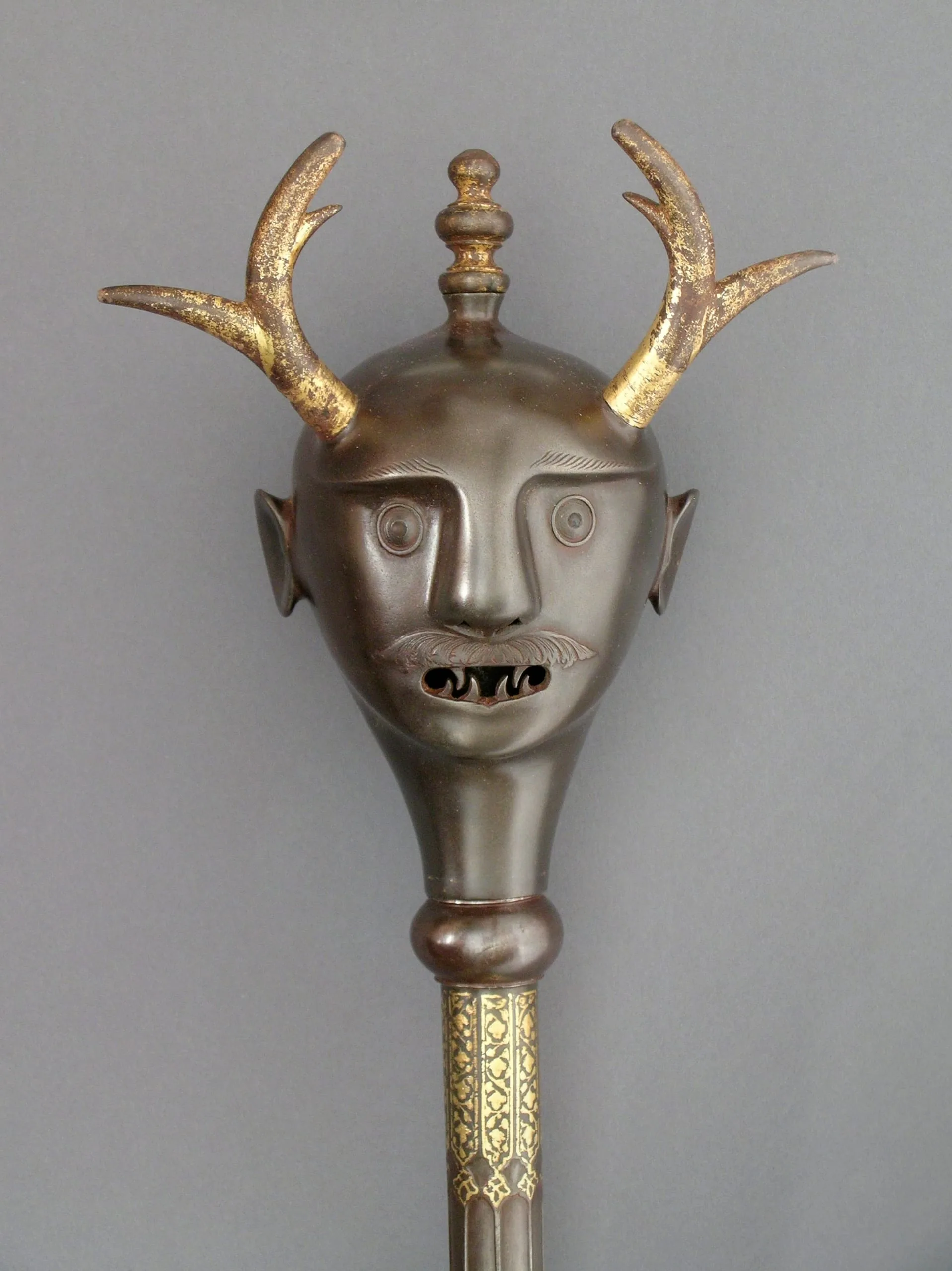
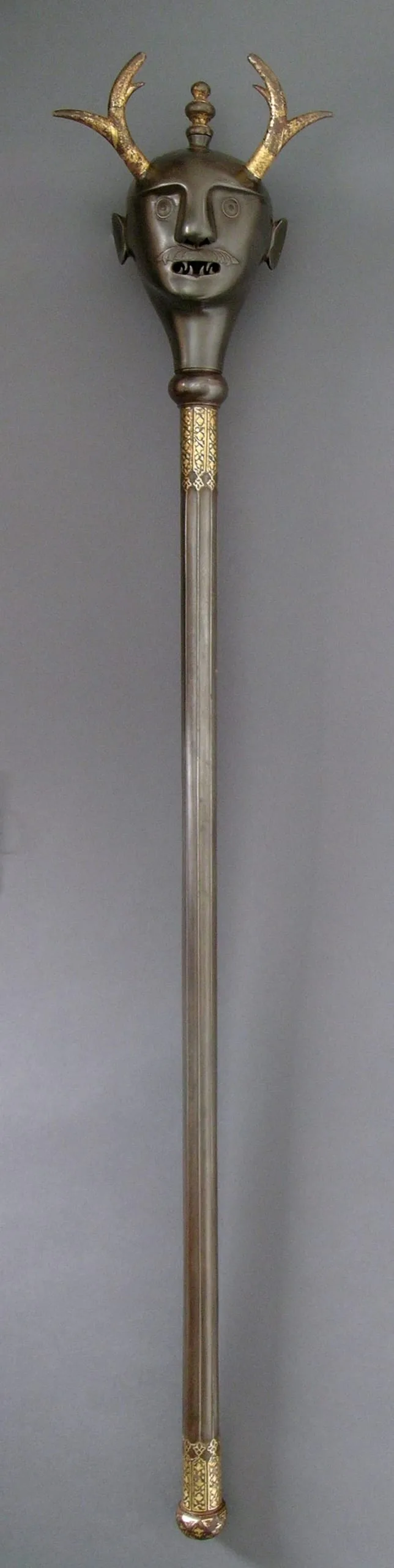
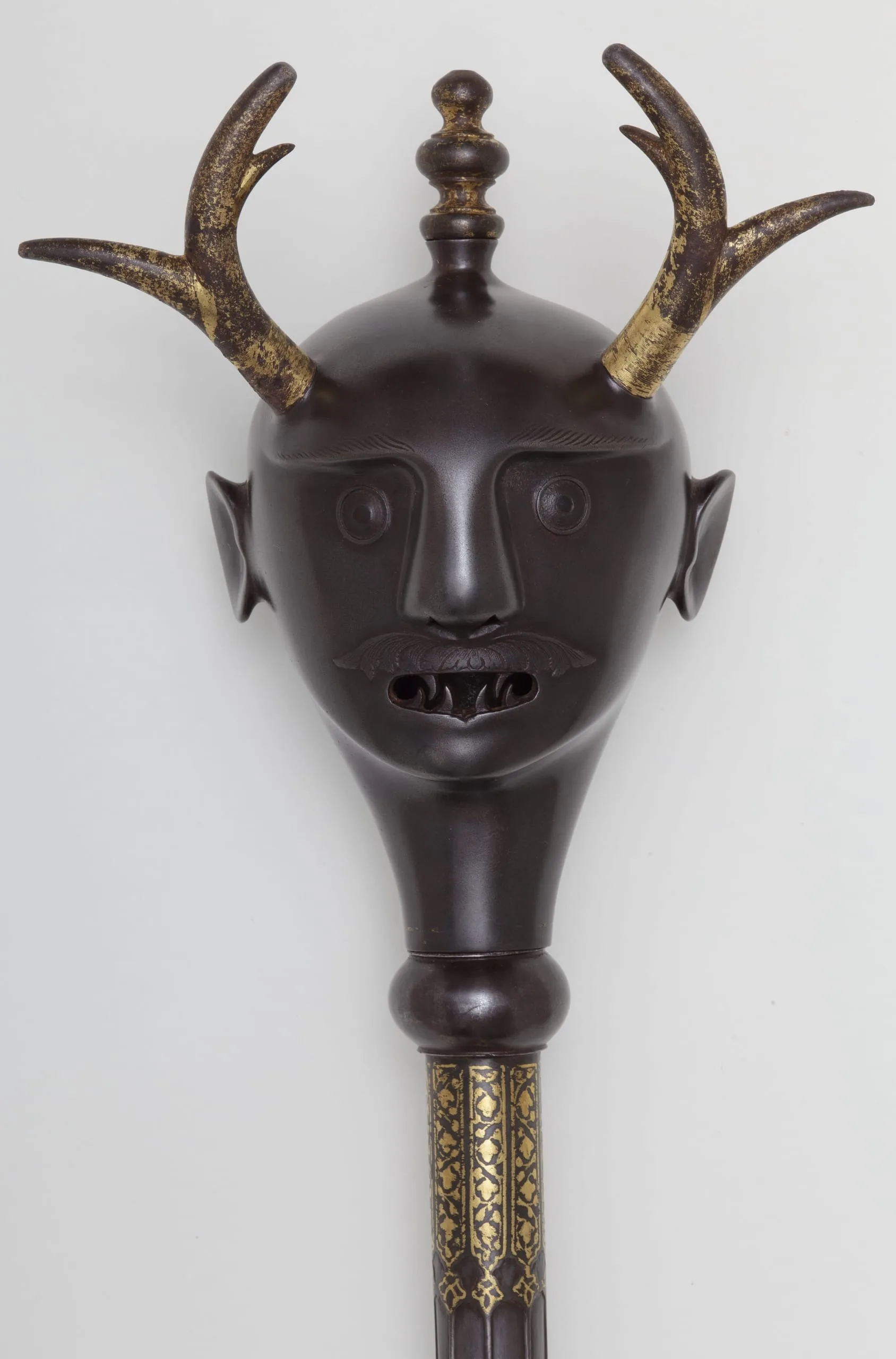
Mace19th century

Not on view
Dark brown metal ceremonial staff with a sculpted human face and gold antler-like projections at the top, and gold filigree bands near the top and base of the long cylindrical shaft
Polished dark steel ceremonial mace finial in the form of a stylized human head with engraved facial features, a pierced open mouth with visible teeth, small ear flanges, and two gilded antler-like projections flanking a central knop at the crown; the shaft below is decorated with dense gold-inlaid geometric and foliate patterns.
Metal ceremonial staff with a stylized human face at the top, featuring inlaid eyes and teeth, flanked by two upward-curving gilt horns; long slender shaft with gold-decorated bands near the top and bottom.
Dark bronze staff finial in the form of a human head with protruding ears, open mouth showing teeth, and real deer antlers mounted at the crown; handle features gold koftgari inlay in repeating floral patterns.
Title
Mace
Place Made
Iran
Date Made
19th century
Medium
Steel, gilt
Dimensions
33 1/2 × 6 1/4 in. (85.09 × 15.88 cm)
Credit Line
The Madina Collection of Islamic Art, gift of Camilla Chandler Frost
Accession Number
M.2002.1.582
Classification
Arms and Armor
Collecting Area
Art of the Middle East: Islamic
Curatorial Notes

Maces were wielded on Iranian battlefields since pre-Islamic times; however, this nineteenth-century example was not intended for combat. Rather, with its elegant gilding and fanged demon head, this mace may have been used ceremonially in dervish processions or initiation rites, or as a prop in performances, including Shi‘ite religious dramas and staged recitations of the Shahnama, the Iranian national epic, whose heroes are often described as carrying emblematic maces.

Selected Bibliography
  • Lo Terrenal y lo Divino: Arte Islámico siglos VII al XIX Colección del Museo de Arte del Condado de Los Ángeles. Santiago: Centro Cultural La Moneda, 2015.

  • Fine Oriental Miniatures, Manuscripts, Islamic Works of Art, and 19th Century Paintings (Sale 4264). New York: Sotheby Parke Bernet, 1979.