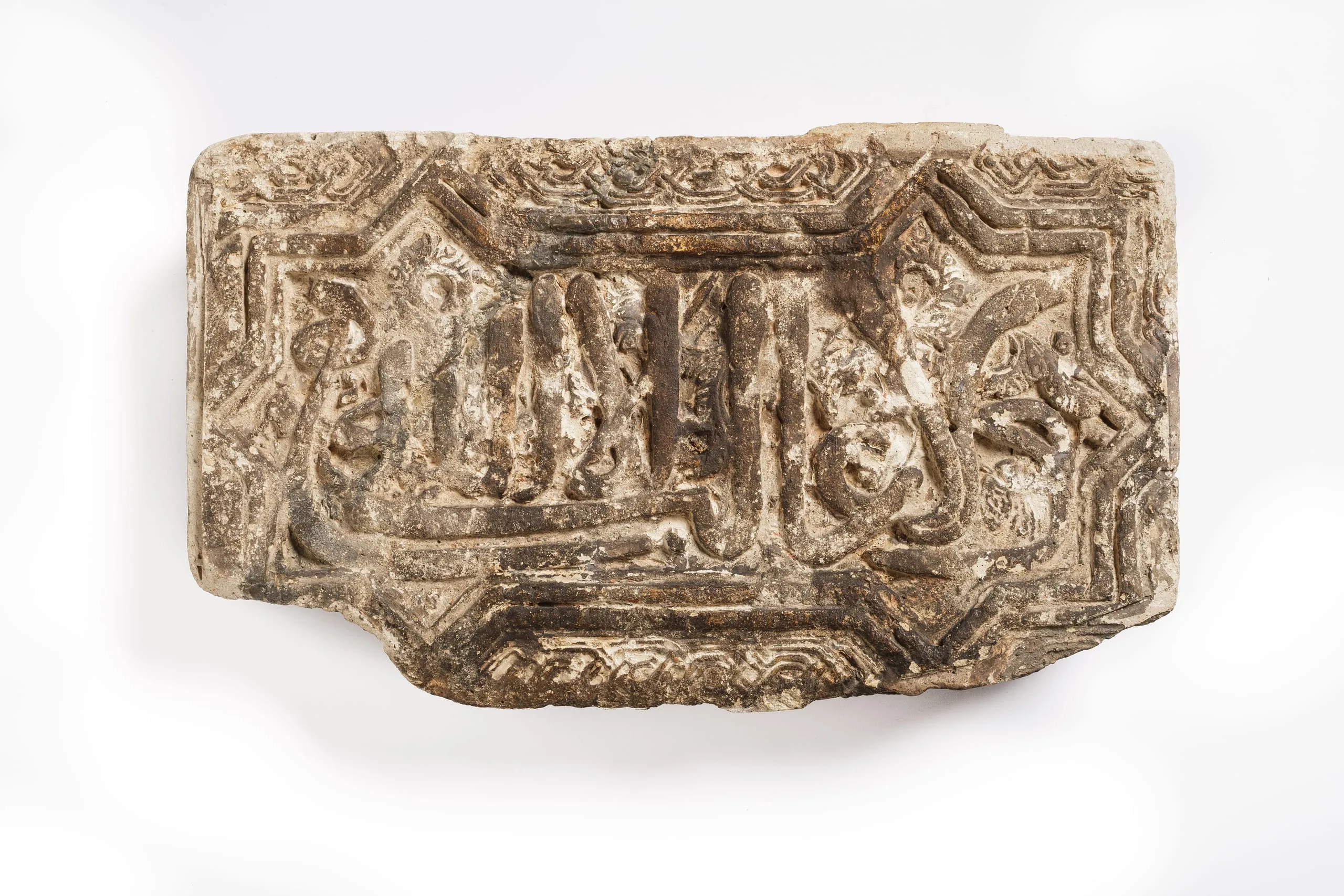
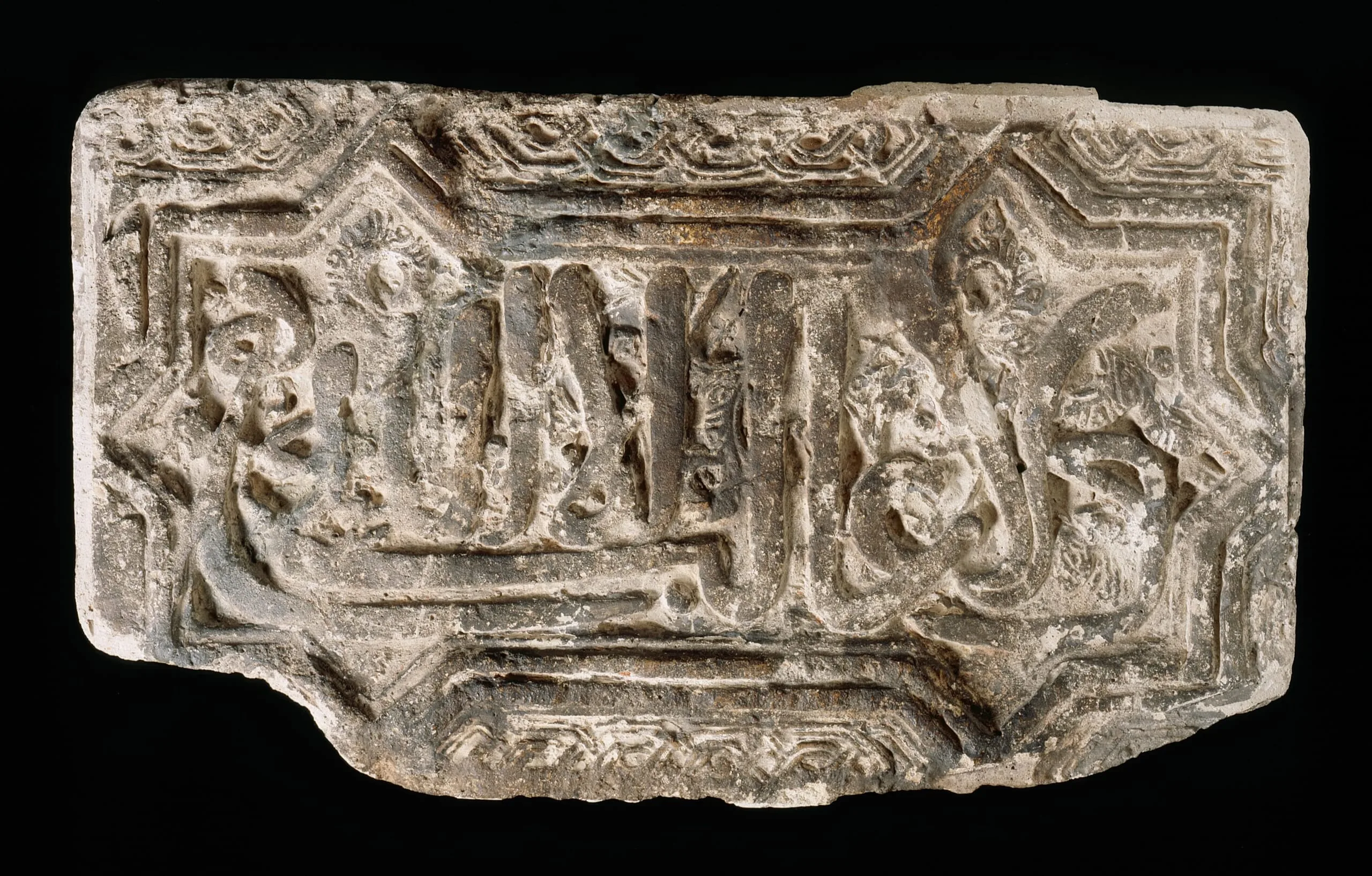
Dating from the thirteenth to the fifteenth century, the Alhambra, in Granada, is one of the world’s most famous buildings and the best-preserved palace of medieval Islam. It is also the most significant artistic achievement of the Nasrid dynasty (1232−1492), which ruled Granada, the last Muslim kingdom in Spain. The Alhambra is both a well-fortified palace and a royal city. It is guarded by stone walls and towers on the exterior, which conceal on the interior an elaborate succession of gardens, courtyards, and intricately decorated rooms, some of which had veneers of carved and painted stucco and colorful tiles. This molded stucco plaque is inscribed in Arabic with the Nasrids’ dynastic motto: “There is no conqueror but God” (for the same inscription on a tile from the Alhambra, see M.73.5.782). It was once painted, likely in bright red and blue, based on other stuccos that preserve their polychromy, on a white gypsum plaster ground now darkened by age and grime. In addition to colorful stucco and glazed tiles, the interior spaces would have been enlivened by vivid textiles for wall hangings and furnishings (see 55.57.19).
2025