LACMA

ShopMembershipMyLACMATickets
LACMA
Los Angeles County Museum of Art
5905 Wilshire Blvd.
Los Angeles, CA 90036
info@lacma.org
(323) 857-6000
Sign up to receive emails
Subscribe
© Museum Associates 2025

Museum Hours

Monday

11 am–6 pm

Tuesday

11 am–6 pm

Wednesday

Closed

Thursday

11 am–6 pm

Friday

11 am–8 pm

Saturday

10 am–7 pm

Sunday

10 am–7 pm


  • About LACMA
  • Jobs
  • Building LACMA
  • Host An Event
  • Unframed
  • Press
  • FAQs
  • Log in to MyLACMA
  • Privacy Policy
© Museum Associates 2025
Collections

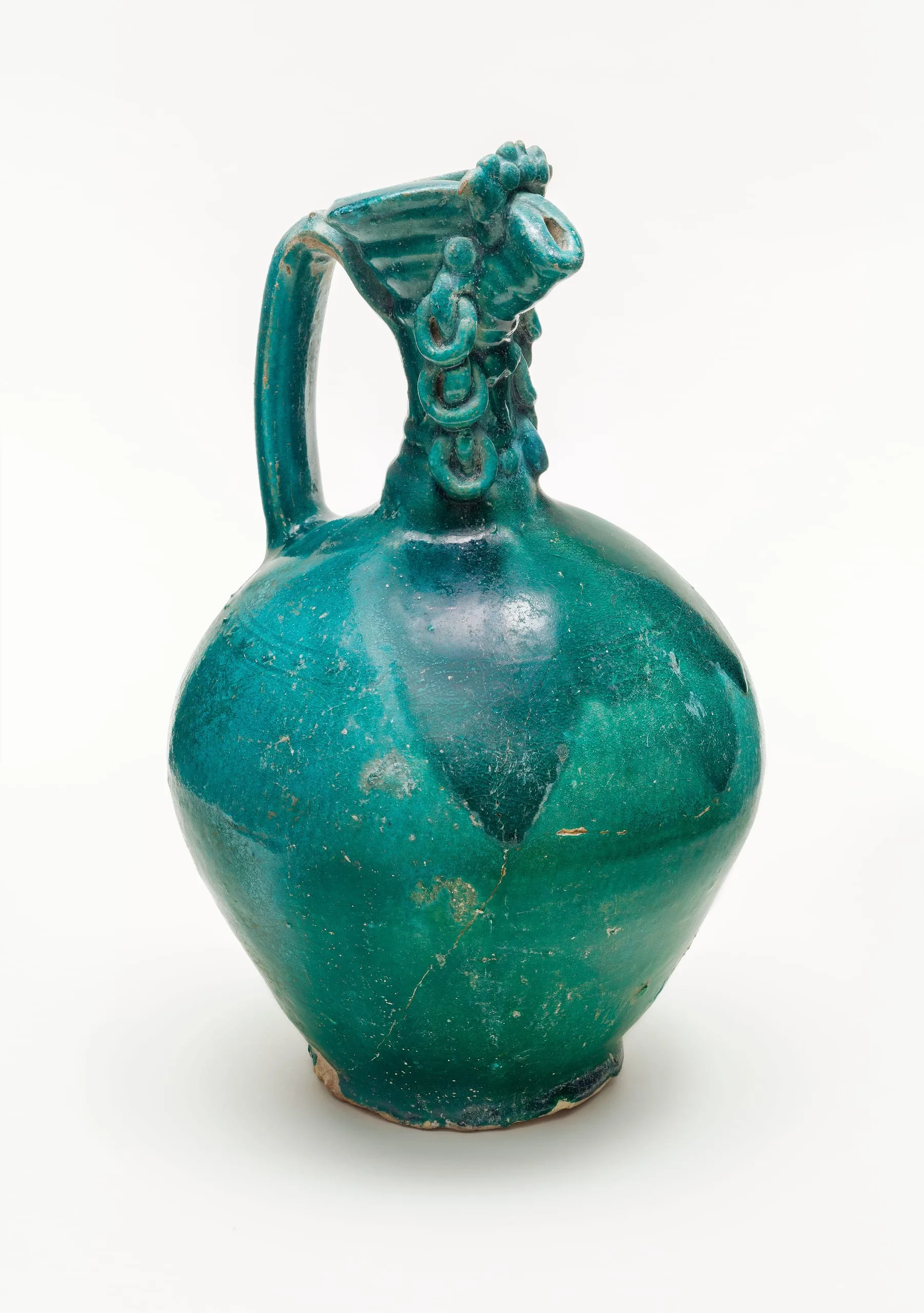
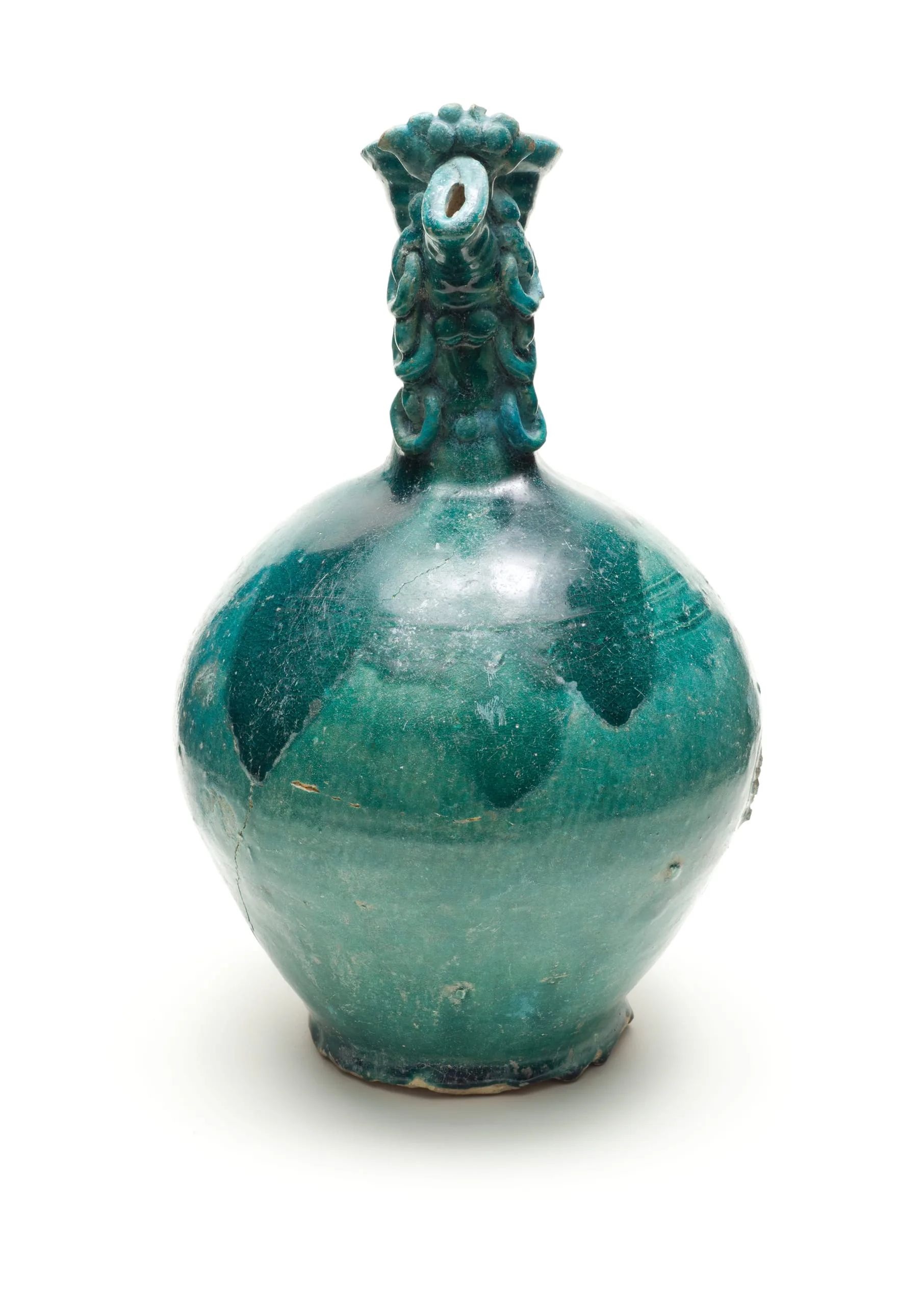
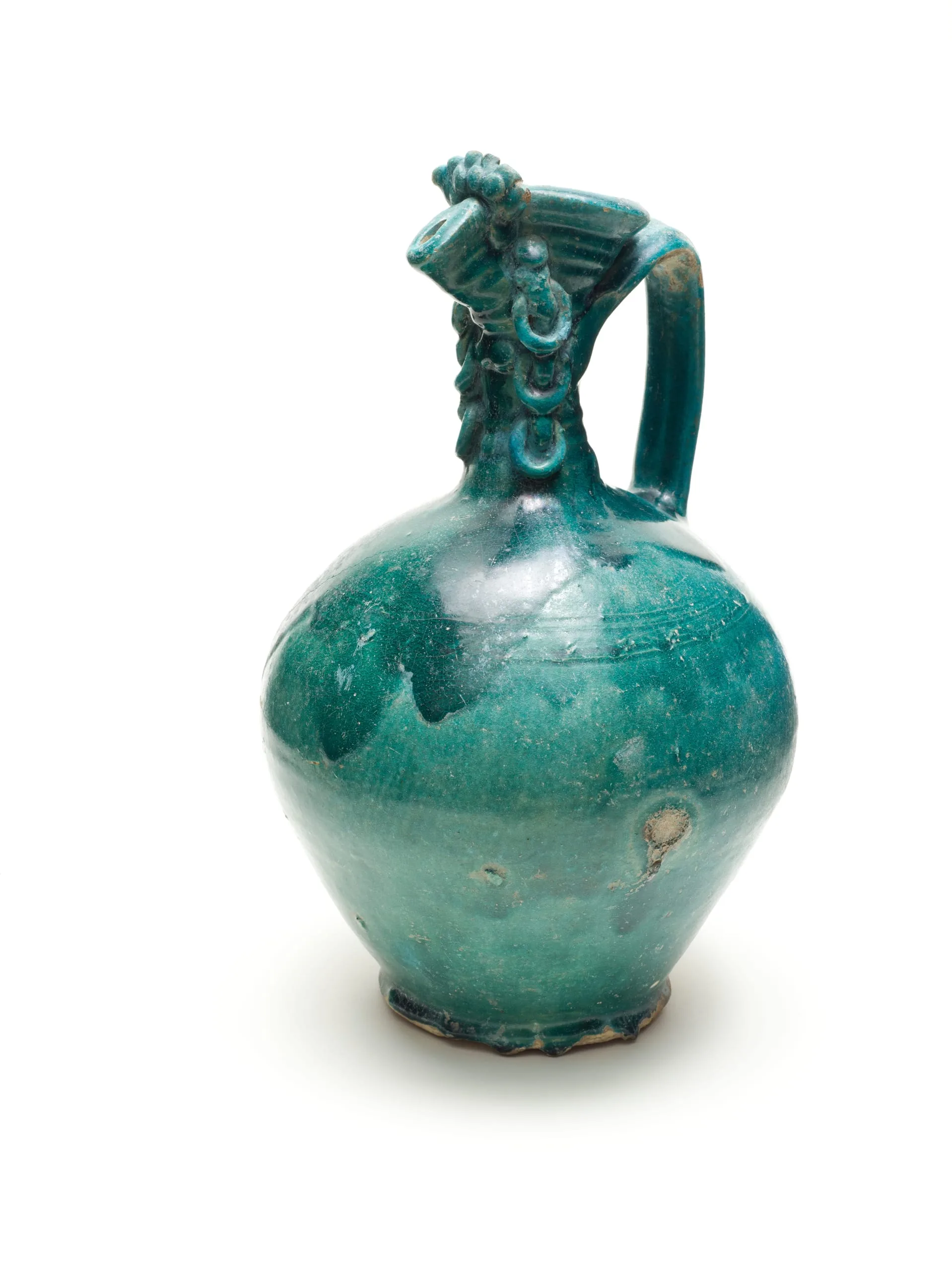
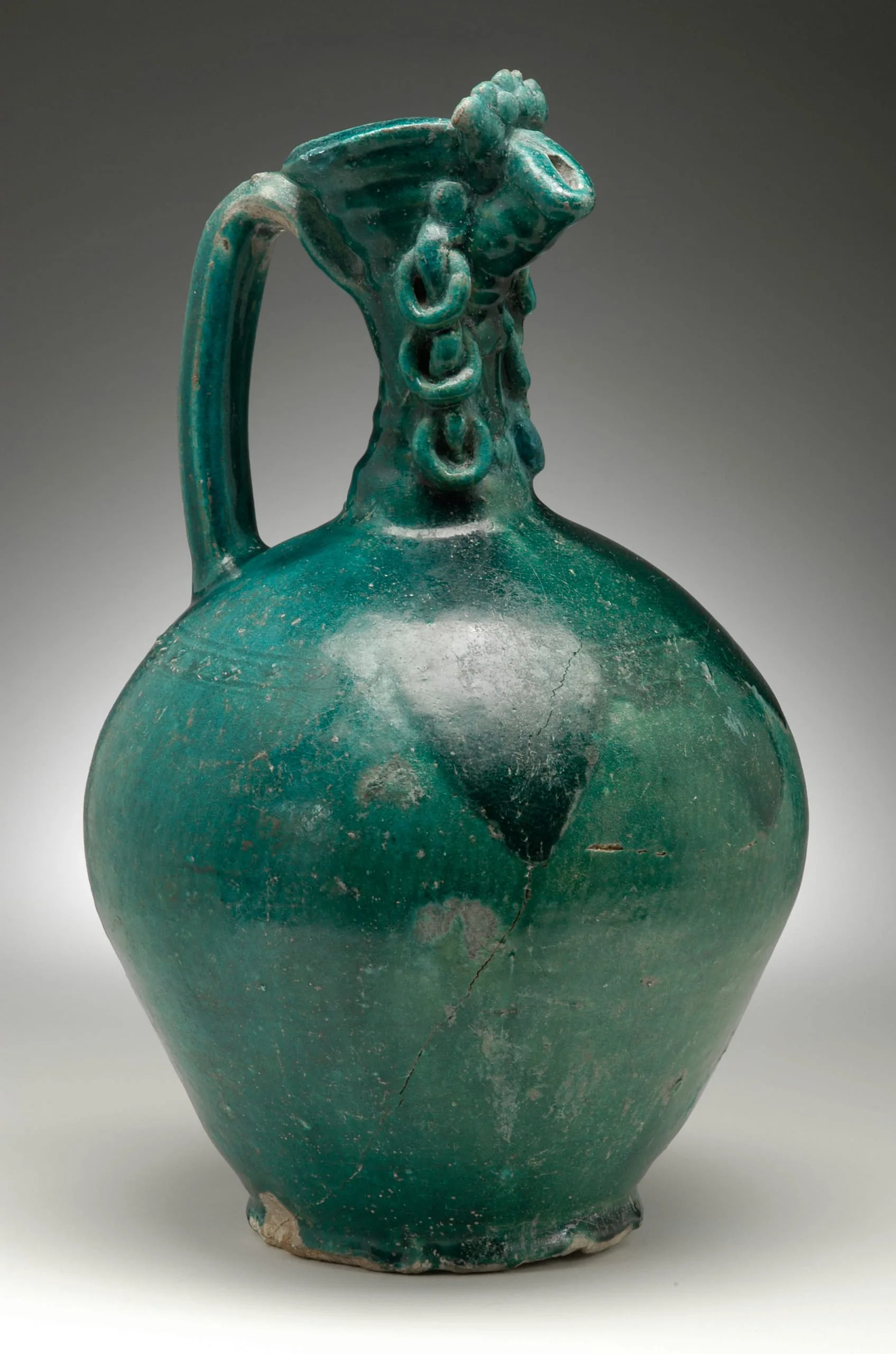
Rooster-Headed Ewer8th century

On view:
Geffen Galleries, Islamic Art and Late Antiquity
Ceramic ewer with a rounded turquoise-teal glazed body, strap handle, and applied relief decoration at the neck, showing surface wear and chips
Ceramic bottle with globular body and narrow neck, covered in vivid turquoise glaze with areas of darker pooling; neck topped with molded foliate and scrolling relief decoration surrounding a small circular opening.
Ceramic ewer with globular body and turquoise glaze, featuring a single handle and applied figural decoration at the neck with loop and chain elements; surface shows age-related losses and crazing.
Ceramic ewer with globular body and single handle, covered in turquoise glaze with areas of wear and iridescence. The neck features applied decorative loops and a zoomorphic spout at the top.
Title
Rooster-Headed Ewer
Place Made
Probably Iran
Date Made
8th century
Medium
Earthenware, underglaze-painted
Dimensions
Height: 12 × 7 1/2 × 7 1/2 in. (30.48 × 19.05 × 19.05 cm)
Credit Line
The Madina Collection of Islamic Art, gift of Camilla Chandler Frost
Accession Number
M.2002.1.308
Classification
Ceramics
Collecting Area
Art of the Middle East: Islamic
Curatorial Notes

Part of the genius of early Islamic potters was their ability to transform simple utilitarian objects into spectacular ones, as is the case with this striking blue-green glazed ewer. The vessel is meant to evoke a rooster, and elements applied at the pinched spout suggest the bird’s comb while the loops along the neck become its wattle. The latter devices are also typically found on metal ewers, where, when shaken, they would create a jingling sound, perhaps to signal for a refill. In the ceramic version, however, they are purely decorative.

Selected Bibliography
  • Lo Terrenal y lo Divino: Arte Islámico siglos VII al XIX Colección del Museo de Arte del Condado de Los Ángeles. Santiago: Centro Cultural La Moneda, 2015.