- Title
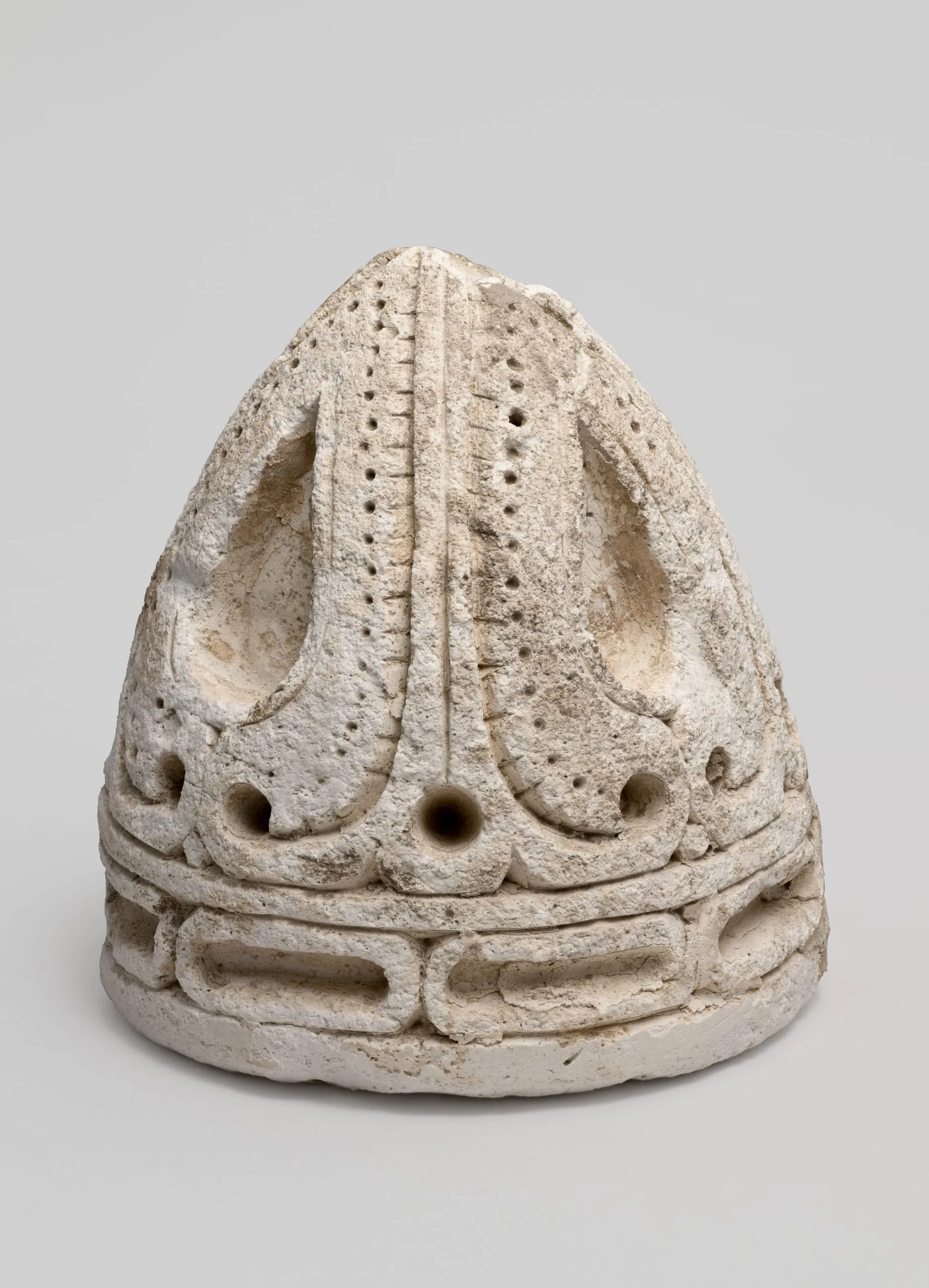
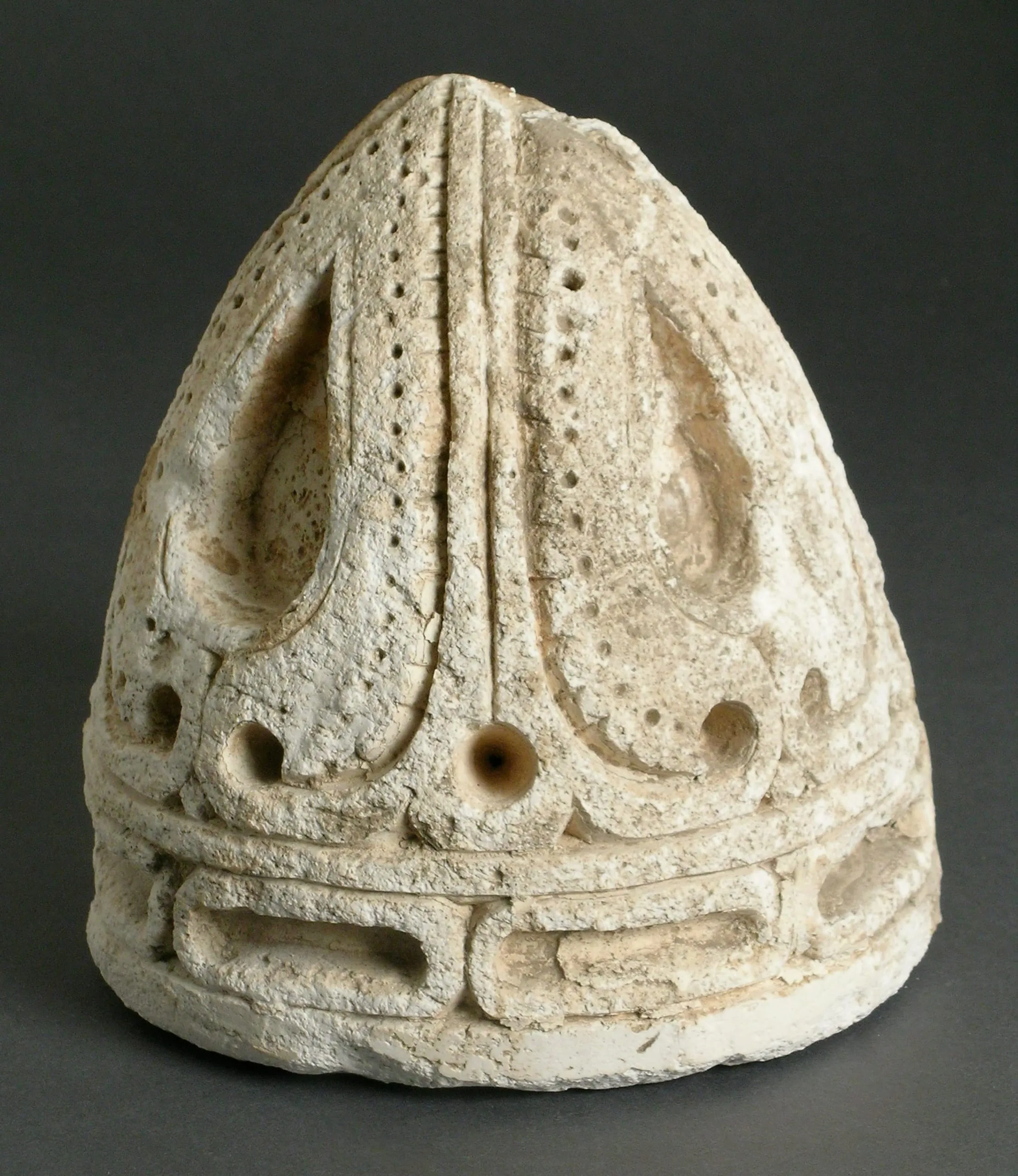
- Bosse or Finial
- Date Made
- 9th century
- Medium
- Stucco, carved and drilled
- Dimensions
- Height: 5 3/4 in. (14.6 cm); Diameter: 5 1/2 in. (13.97 cm)
- Accession Number
- M.2002.1.671
- Curatorial Notes
Stucco has a long history in the Mediterranean world. Beginning in the Islamic era, it generally consisted of gypsum mixed with sand and water and was used extensively as architectural decoration as it was easily molded or carved into a variety of forms. This stucco element relates on stylistic grounds to architectural decoration from the mosque of Ibn Tulun, in Cairo. Extensively decorated with stucco, the mosque was commissioned by Ahmad ibn Tulun, the largely independent ‘Abbasid governor of Egypt, and built between 876 and 879. On the bosse or finial, stylized leaf forms alternate with reversed split leaves decorated with circular drill marks resting on a band of horizontal lozenges. Closely related designs occur on the spandrels of the arches and engaged capitals facing the courtyard of the mosque, as well as on some of the interior decoration.
2024