LACMA

ShopMembershipMyLACMATickets
LACMA
Los Angeles County Museum of Art
5905 Wilshire Blvd.
Los Angeles, CA 90036
info@lacma.org
(323) 857-6000
Sign up to receive emails
Subscribe
© Museum Associates 2025

Museum Hours

Monday

11 am–6 pm

Tuesday

11 am–6 pm

Wednesday

Closed

Thursday

11 am–6 pm

Friday

11 am–8 pm

Saturday

10 am–7 pm

Sunday

10 am–7 pm


  • About LACMA
  • Jobs
  • Building LACMA
  • Host An Event
  • Unframed
  • Press
  • FAQs
  • Log in to MyLACMA
  • Privacy Policy
© Museum Associates 2025
Collections

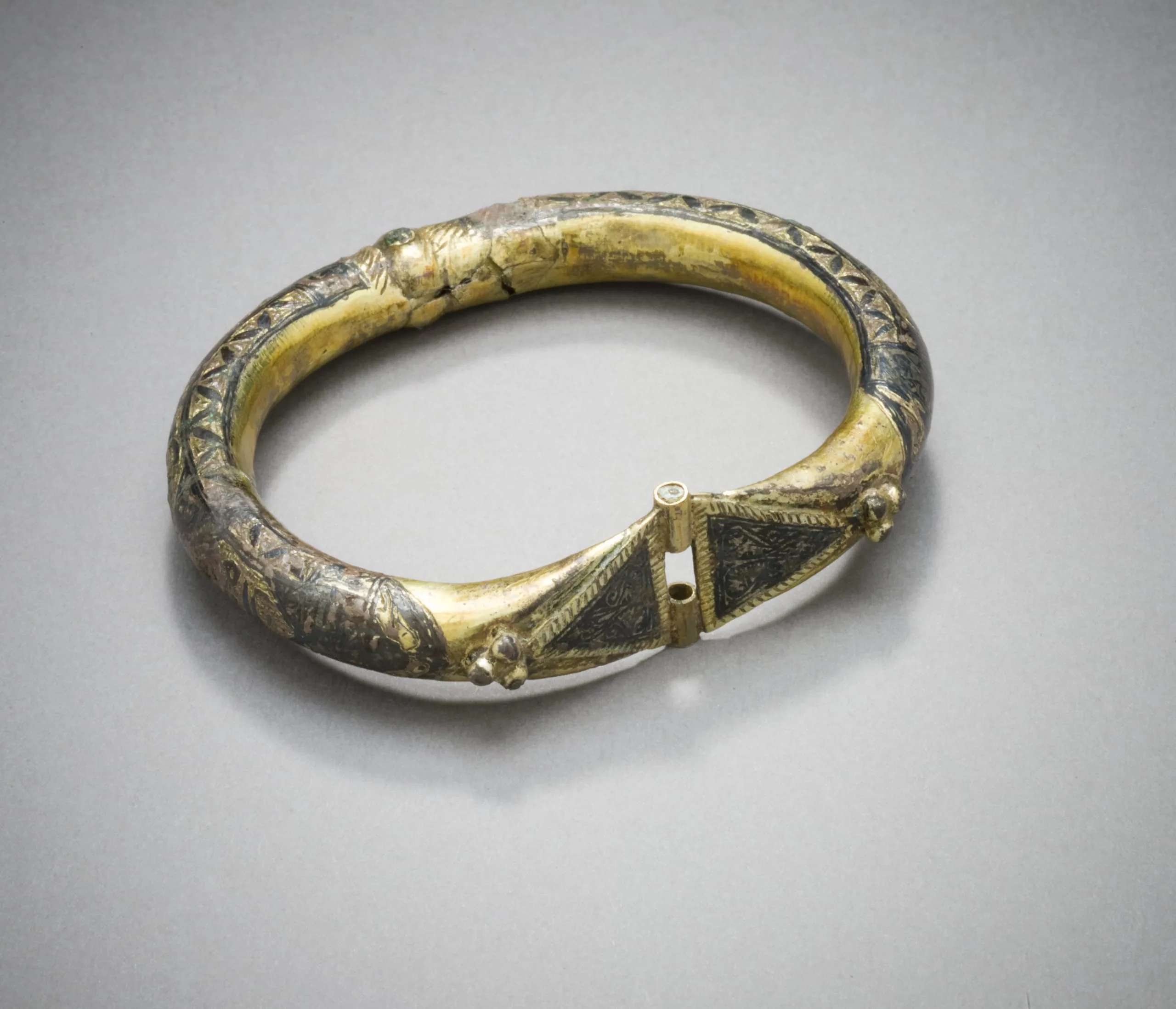
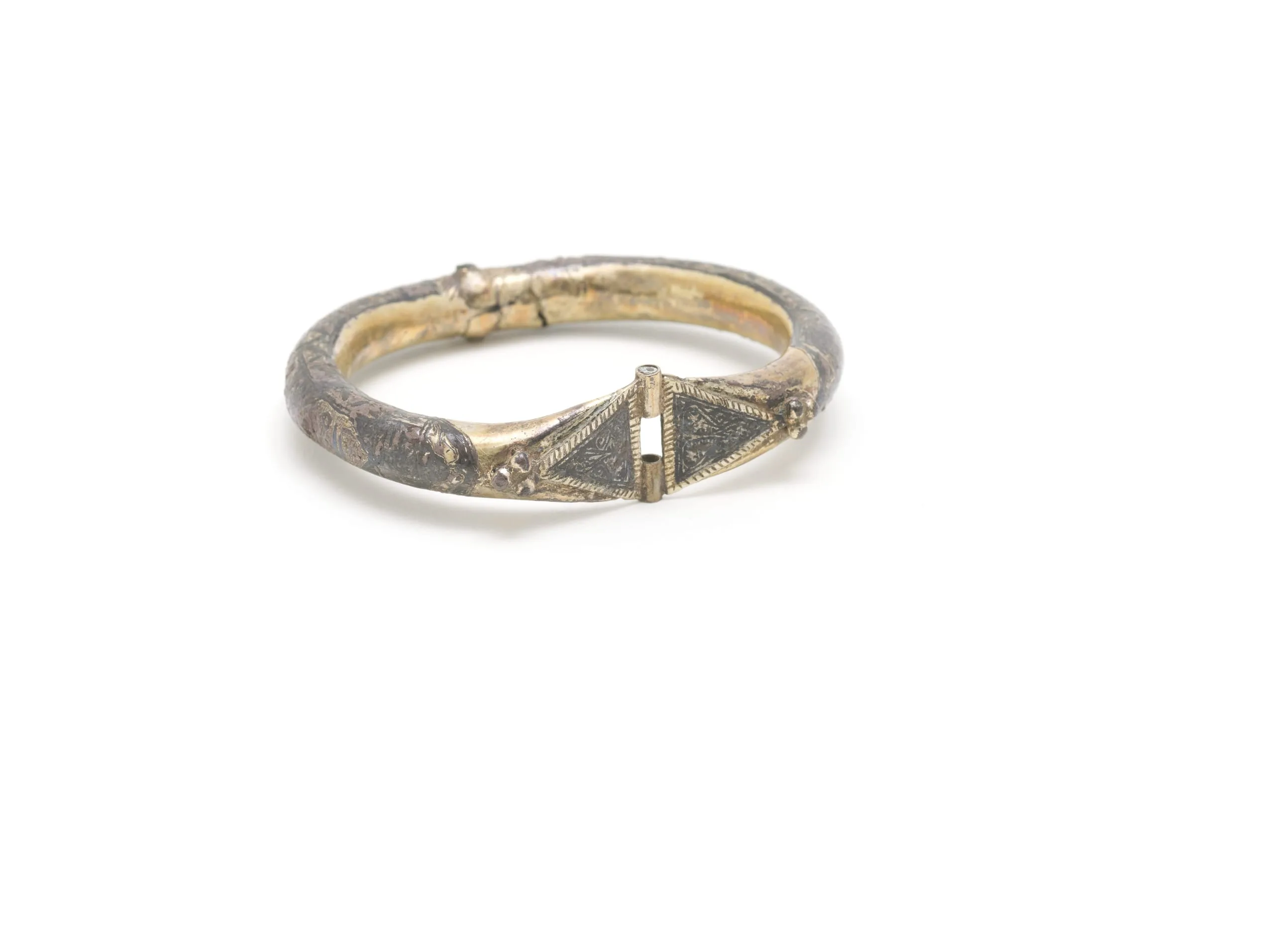
Gilt Silver Bracelet11th century

Not on view
Metal bracelet with oxidized dark band covered in engraved foliate patterns and a gold-toned triangular clasp with rope-twist borders
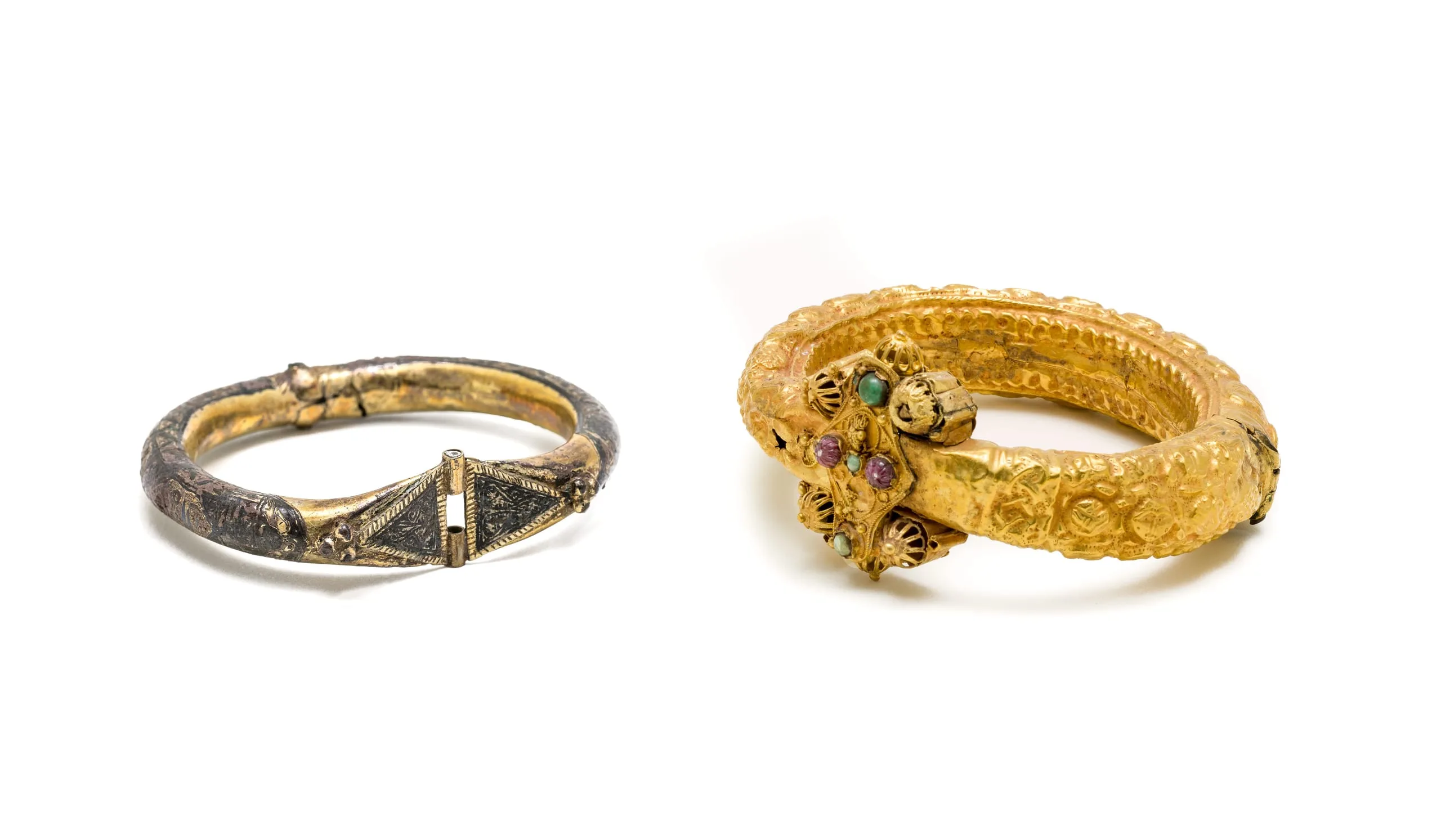
Two metal bracelets against a white background. Left: a hinged bangle in darkened silver and gold with engraved geometric and triangular patterns at the clasp. Right: a heavily textured gold bangle with repoussé surface and a floral cluster set with green and purple cabochon stones.
Gold and darkened metal bangle bracelet with a hinged clasp featuring two triangular panels, the surface densely covered with incised geometric and foliate patterns, with small applied knob details at the clasp.
Title
Gilt Silver Bracelet
Place Made
Egypt or Syria
Date Made
11th century
Medium
Fabricated from sheet, incised, and decorated with gilding, niello inlay, and grains
Dimensions
Length: 2 1/8 in. (5.4 cm); Width: 2 9/16 in. (6.51 cm)
Credit Line
The Madina Collection of Islamic Art, gift of Camilla Chandler Frost
Accession Number
M.2002.1.552
Classification
Jewelry and Adornments
Collecting Area
Art of the Middle East: Islamic
Curatorial Notes

Jewelry played an important role in the lives of women living in Fatimid-controlled Egypt and Syria, and it is clear from surviving trousseau lists that it was the most valuable component of a bride’s dowry, providing a source of financial security in the event of divorce or her husband’s death. Jewelry such as this elegant gilt silver bracelet, which was likely once part of a matched pair, may have been owned for this purpose. Such tubular or hollow bracelets possibly fit the description manfukh (Arabic for "inflated" or "puffed up"), often found in contemporaneous trousseau lists and associated with the wealthiest of brides.
Selected Bibliography
  • Lo Terrenal y lo Divino: Arte Islámico siglos VII al XIX Colección del Museo de Arte del Condado de Los Ángeles. Santiago: Centro Cultural La Moneda, 2015.

  • Komaroff, Linda. Beauty and Identity: Islamic Art from the Los Angeles County Museum of Art. Los Angeles: Los Angeles County Museum of Art, 2016.