- Title
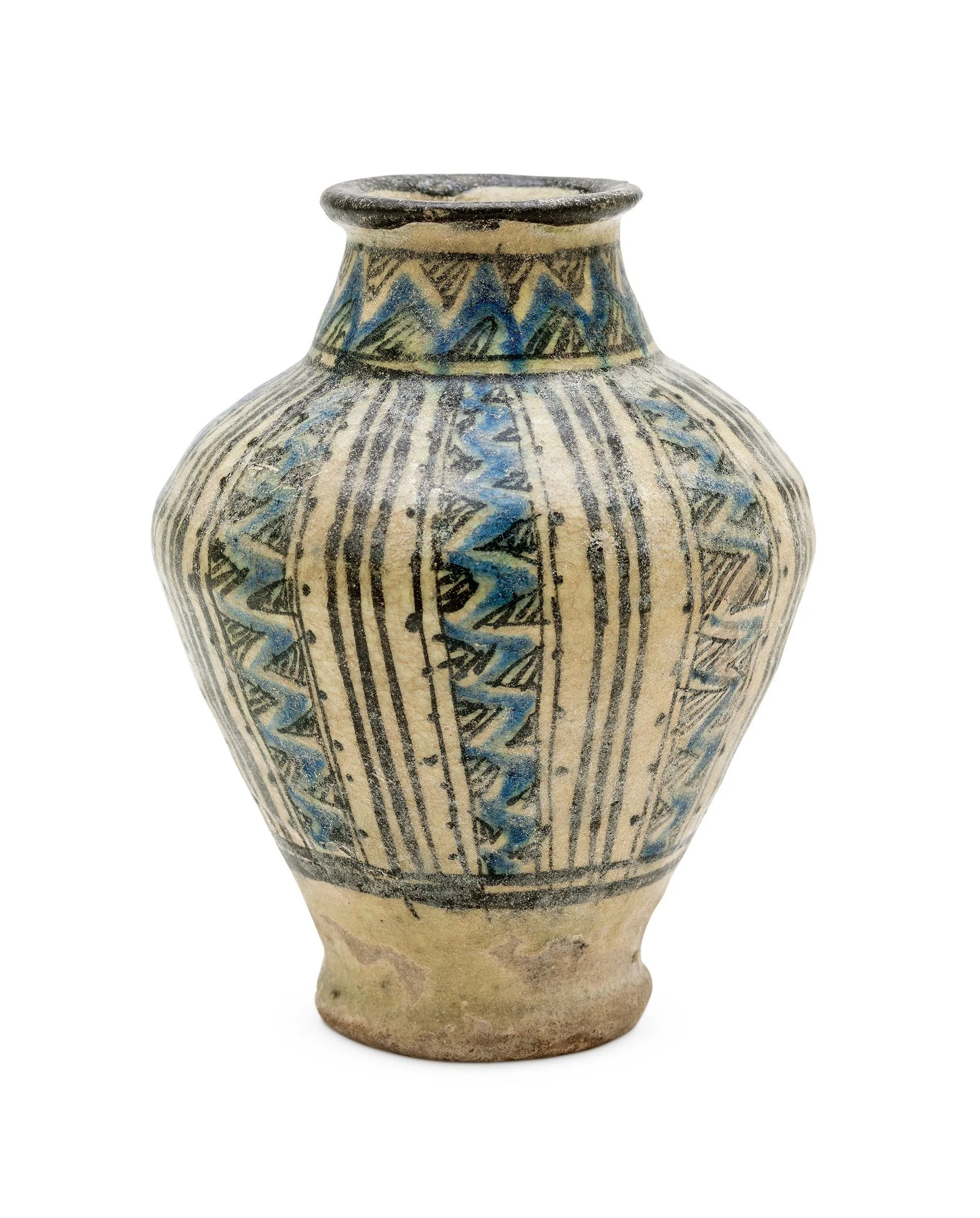
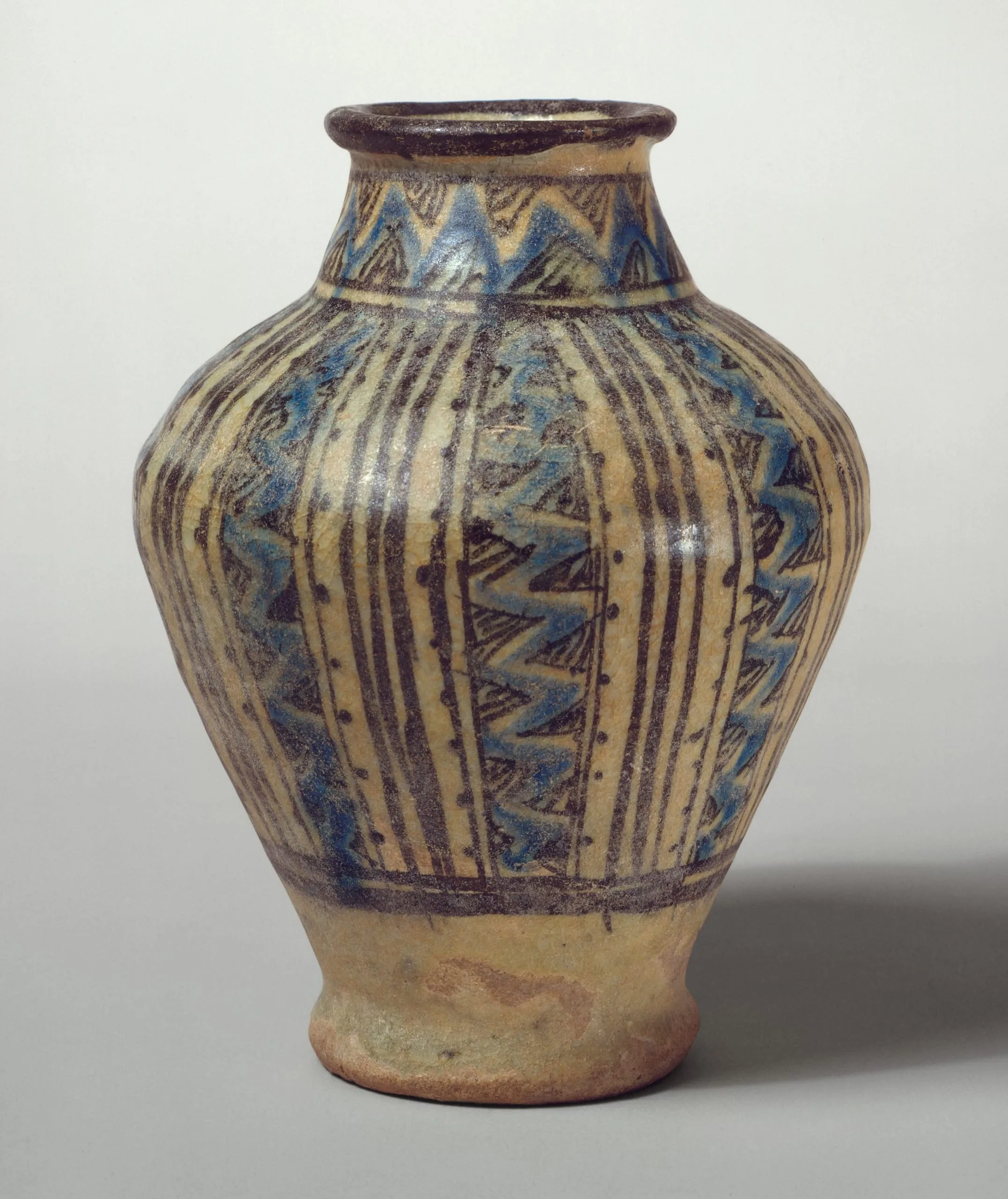
- Jar
- Date Made
- 14th century
- Medium
- Fritware, underglaze-painted
- Dimensions
- Height: 6 1/4 in. (15.87 cm); Diameter: 2 1/4 in. (5.71 cm)
- Accession Number
- M.2002.1.55
- Curatorial Notes
Trade encouraged the diffusion of artistic styles and techniques throughout the Islamic empire in the late medieval period. One example is the spread of "Sultanabad-style" ceramics, named for a region of Iran where they were found, from Iran to Syria and Egypt in the fourteenth and fifteenth centuries. This jar is decorated in a particular and oft-repeated manner in which the surface is divided into alternating panels filled with patterns such as lines, flowers, and scrolls (see the related bowl, M.2002.1.66).
Jars of this shape and with the same blue and black color scheme were themselves items of trade but beyond the Islamic world. Jars of similar type have been excavated in Northwest Europe and are believed to have been exchanged and sold by apothecaries as containers for exotic fruits and spices exported from Damascus. Indeed, 14th-century apothecary inventories list quantities of these ‘pots from Damascus’, which came to be valued for their own sake even after their costly contents had been consumed.