- Title
- Bowl
- Date Made
- 9th-10th century
- Medium
- Earthenware, overglaze luster-painted
- Dimensions
- Height: 2 1/8 in. (5.39 cm); Diameter: 6 1/2 in. (16.51 cm)
- Accession Number
- M.2002.1.338
- Curatorial Notes
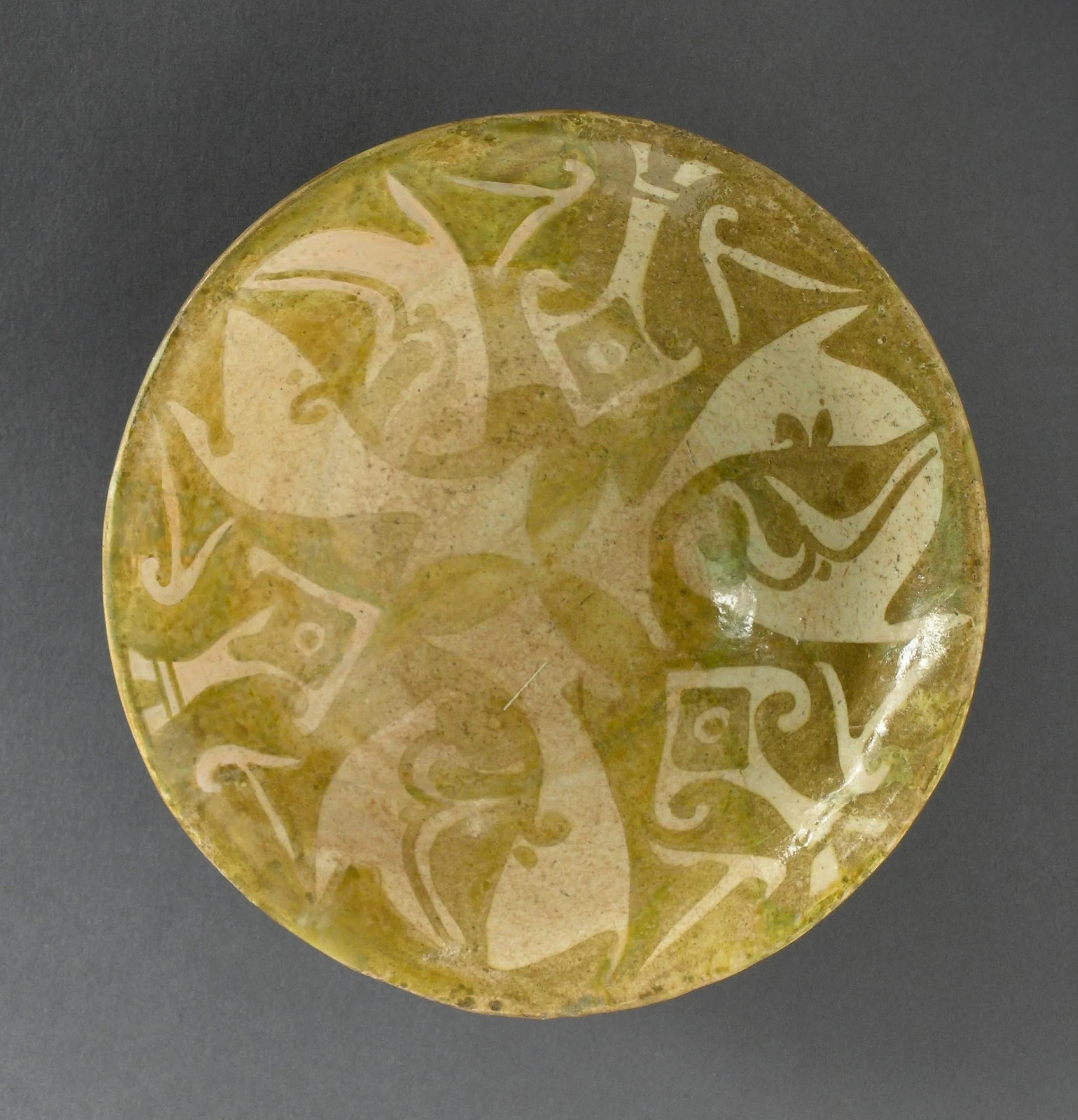
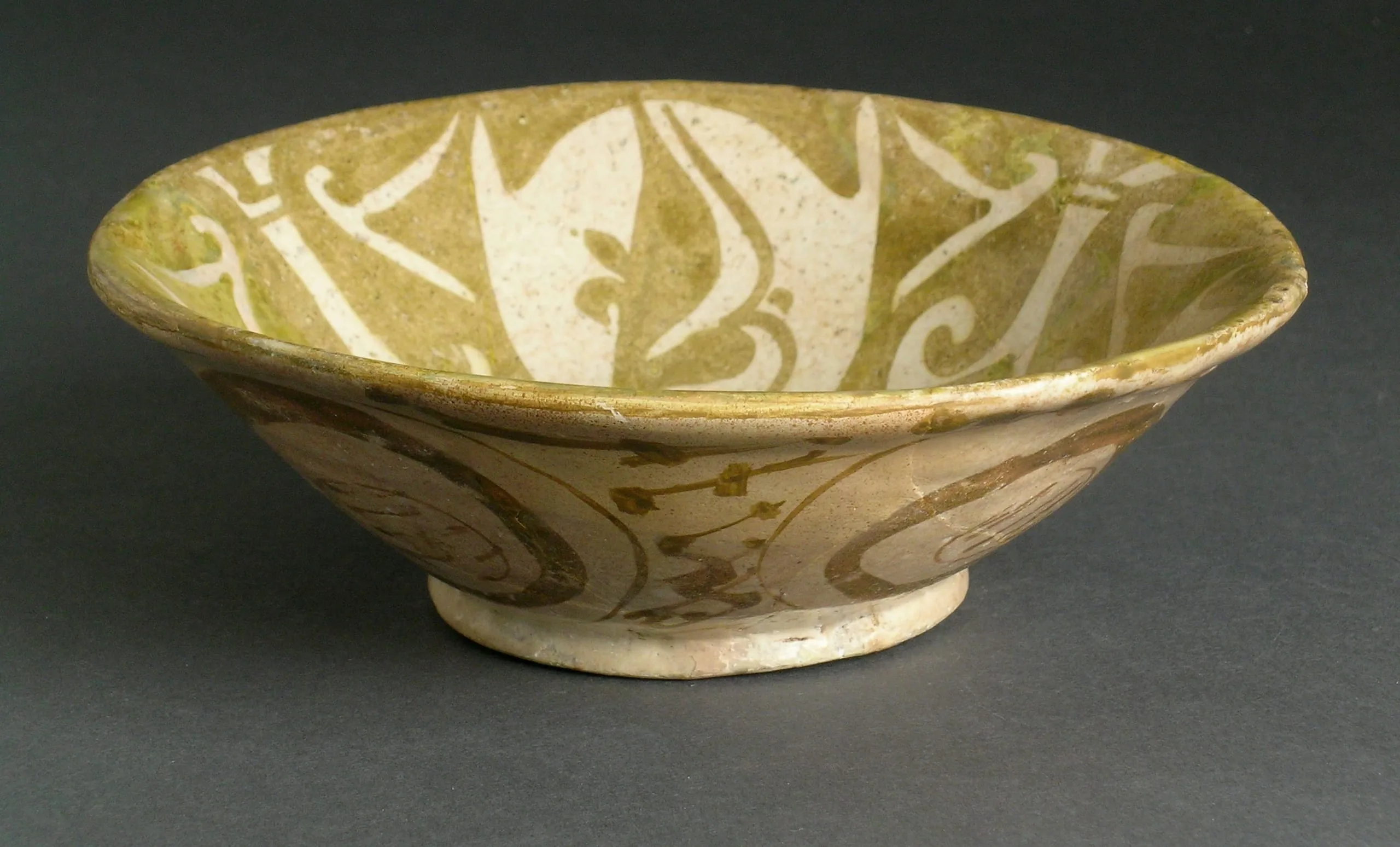
The spectacular technique of luster painting was introduced in the ninth century, probably by Egyptian artists familiar with the secret of luster-painted glass who had perhaps immigrated to Basra, in southern Iraq, where a new ceramic industry developed under the ‘Abbasid dynasty (750–1258). Lusterwares were luxury ceramics that required two firings. In the first firing, an opaque, generally white glaze was applied, and in the second, the design was rendered over the glaze with a paste of silver and copper compounds ground with sulfur. The second firing took place in a special kiln that restricted the flow of oxygen; this reducing atmosphere forced the metals to give up their oxygen, thereby creating a thin, lustrous film that fused with the glazed surface.
The intriguing interior decoration of this luster bowl combines leafy and abstract elements. The bowl features an important type of design introduced in the early Islamic era in which the relationship between primary and interstitial forms, or foreground and background, is deliberately ambiguous. Does one focus on the golden forms rendered in well-preserved luster or those reserved in white?
2024