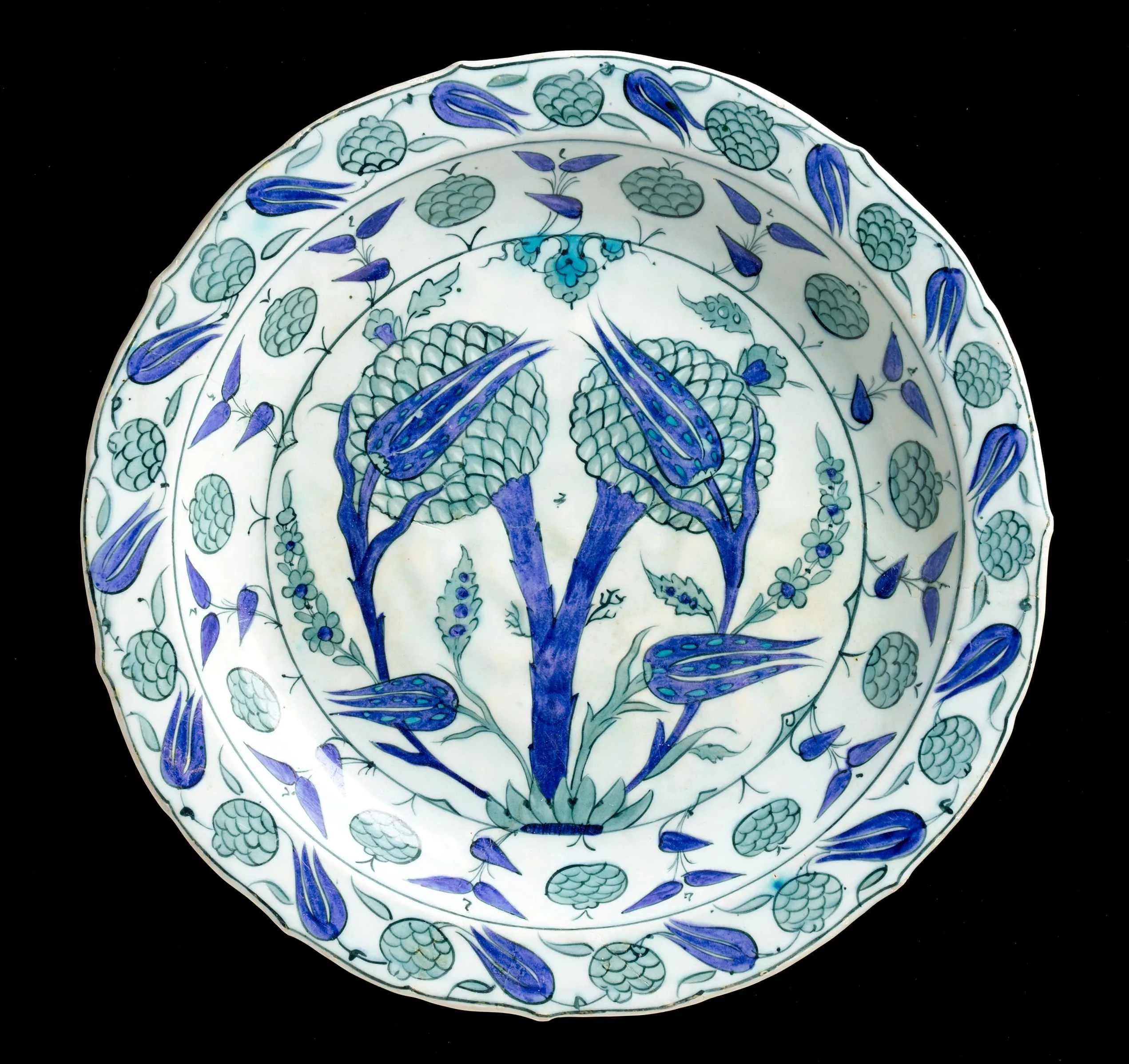
Ceramics made in Iznik, in western Turkey, represent one of the most renowned and influential arts of the Ottoman period. The Iznik kilns, about 85 miles southeast of the capital, Istanbul, manufactured both architectural revetment and tableware such as this handsome dish. It belongs to a specific phase in Iznik ceramics, beginning sometime in the 1540s, when potters introduced manganese purple, sage green, and black to their palette, which had previously focused on blue and white (see M.85.237.80). Their decorative repertoire continued to privilege plant-based designs such as peonies, pomegranates, rosettes, tulips, and artichokes. The latter two motifs form the main decoration at the center of this large dish, where they are rendered in blue and green, while the cavetto and rim bear green pomegranates alternating with blue sprays of either leaves or tulips. Unlike earlier blue and white and the most popular color scheme of red, green, and blue, introduced in the mid-sixteenth century, this specific palette was not used for architectural revetment, and the tableware had a more limited period of production.