LACMA

ShopMembershipMyLACMATickets
LACMA
Los Angeles County Museum of Art
5905 Wilshire Blvd.
Los Angeles, CA 90036
info@lacma.org
(323) 857-6000
Sign up to receive emails
Subscribe
© Museum Associates 2026
  • About LACMA
  • Jobs
  • Building LACMA
  • Host An Event
  • Unframed
  • Press
  • FAQs
  • Log in to MyLACMA
  • Privacy Policy
© Museum Associates 2026
Collections

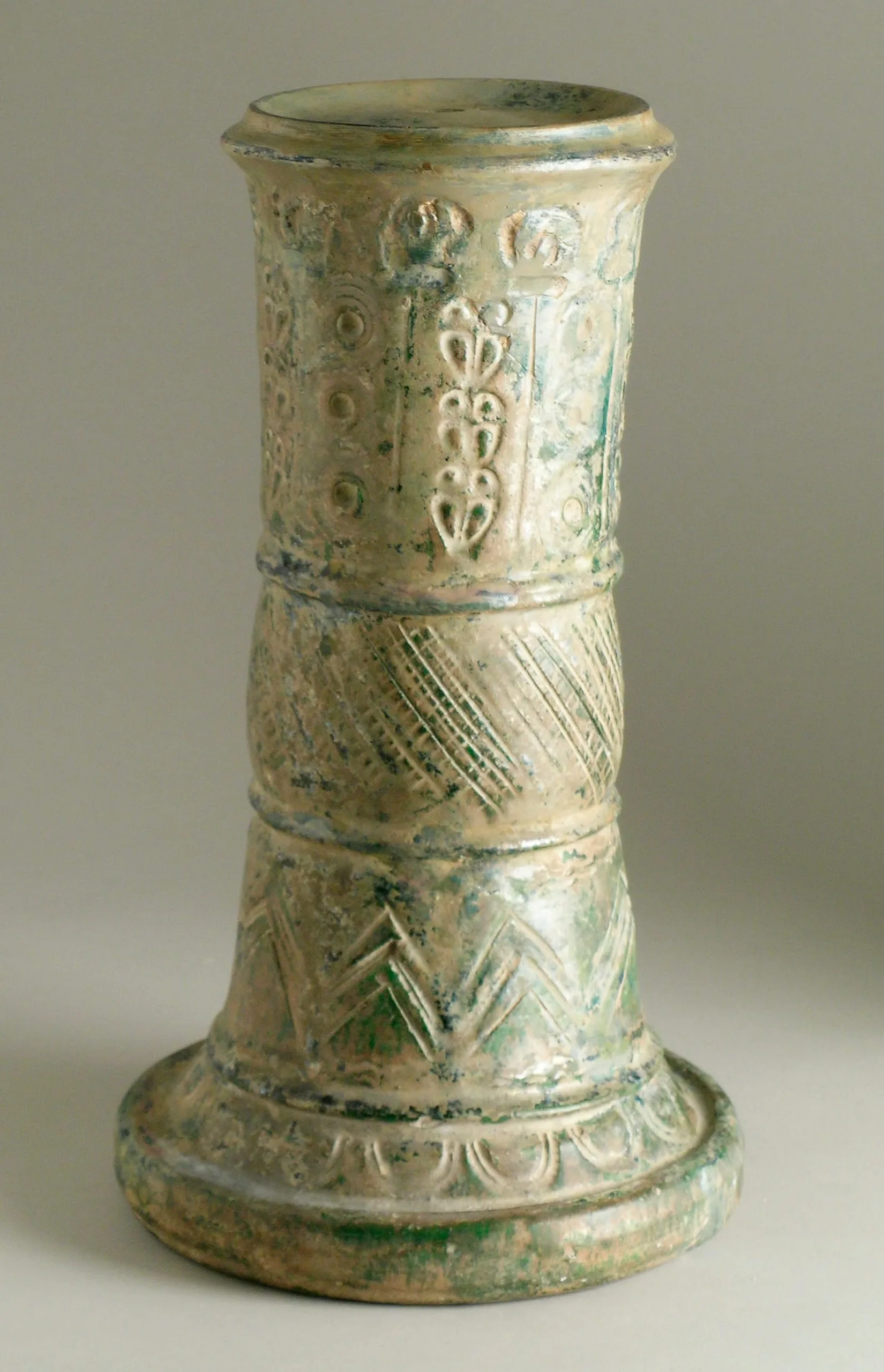
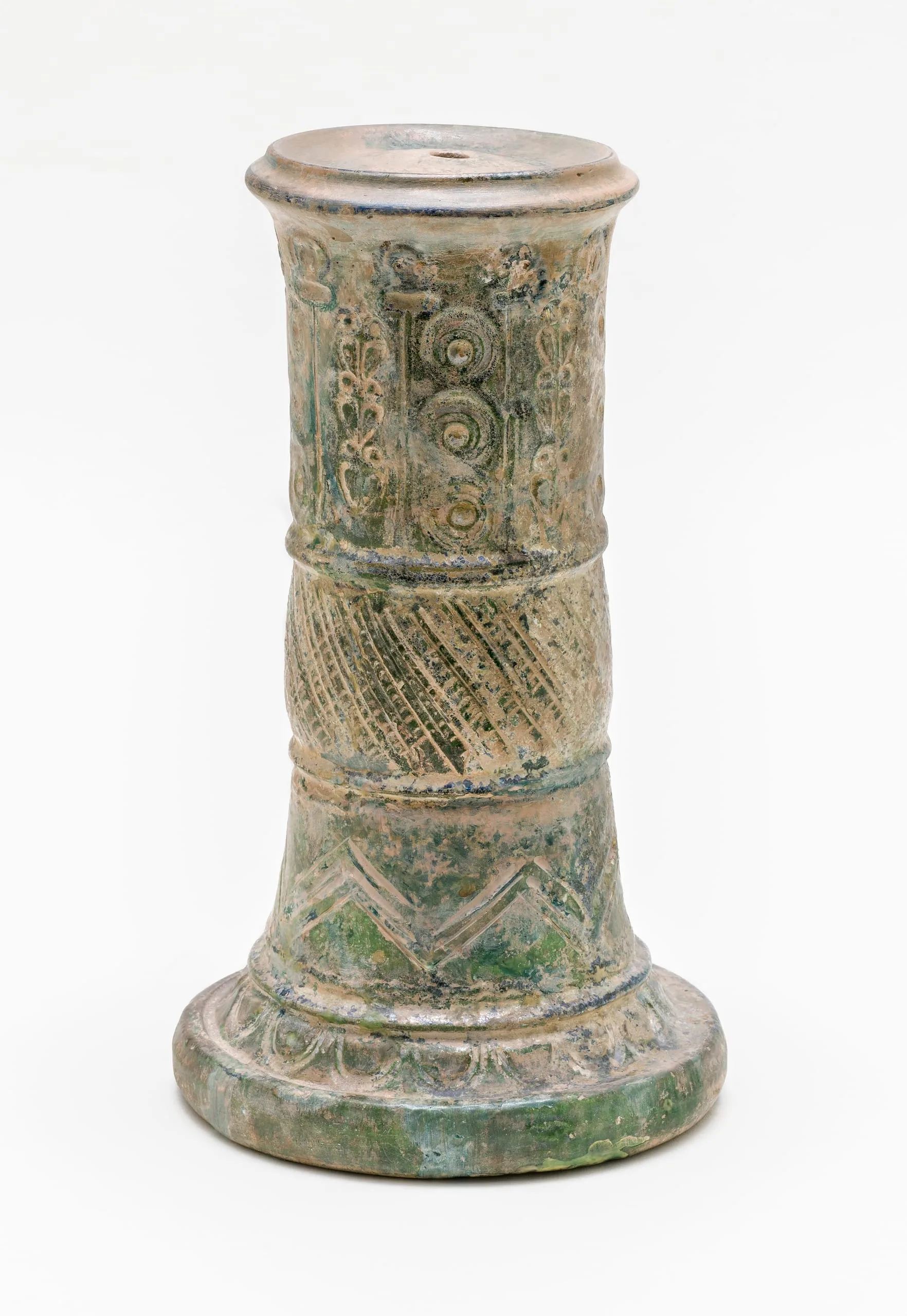
Lampstandfirst half of 8th century

On view:
Geffen Galleries
Ceramic candlestick with cylindrical shaft and wide flat foot, covered in aged green glaze with raised relief decoration in three distinct bands
Ceramic vessel with cylindrical upper body flaring to a wide base, covered in degraded green glaze over buff clay, with molded and incised geometric and foliate patterns arranged in horizontal registers.

Unknown, Lampstand, first half of 8th century, Los Angeles County Museum of Art, The Madina Collection of Islamic Art, gift of Camilla Chandler Frost, photo © Museum Associates/LACMA

Title
Lampstand
Place Made
Iraq, Iran, or Syria
Date Made
first half of 8th century
Medium
Earthenware, incised, stamped, and glazed
Dimensions
Height: 11 1/4 in. (28.57 cm); Diameter: 6 1/2 in. (16.51 cm)
Credit Line
The Madina Collection of Islamic Art, gift of Camilla Chandler Frost
Accession Number
M.2002.1.88
Classification
Ceramics
Collecting Area
Art of the Middle East: Islamic
Curatorial Notes

As a portable source of light, oil lamps were an important element of daily life across the ancient Mediterranean region. While lamps were made from a variety of materials, such as stone, glass, and metal, ceramic versions were the most ubiquitous, as evidenced by the large numbers uncovered at archaeological sites. Clay provided a cheap and easy means for mass-producing small oil lamps, and numerous examples survive especially from the Late Antique period onward. This pillar-shaped, glazed ceramic lampstand, a rare survival from the eighth century, once supported a smaller oil lamp on its upper surface (see M.2002.1.73). Like the lamp, the stand was portable, allowing for the light source to be elevated at a practical height in a culture where many activities took place on cushions and coverings set on or close to the ground.

2024
Selected Bibliography
  • Lo Terrenal y lo Divino: Arte Islámico siglos VII al XIX Colección del Museo de Arte del Condado de Los Ángeles. Santiago: Centro Cultural La Moneda, 2015.