LACMA

ShopMembershipMyLACMATickets
LACMA
Los Angeles County Museum of Art
5905 Wilshire Blvd.
Los Angeles, CA 90036
info@lacma.org
(323) 857-6000
Sign up to receive emails
Subscribe
© Museum Associates 2025
  • About LACMA
  • Jobs
  • Building LACMA
  • Host An Event
  • Unframed
  • Press
  • FAQs
  • Log in to MyLACMA
  • Privacy Policy
© Museum Associates 2025
Collections

Canteen15th century

On view:
Geffen Galleries, Earth and Water
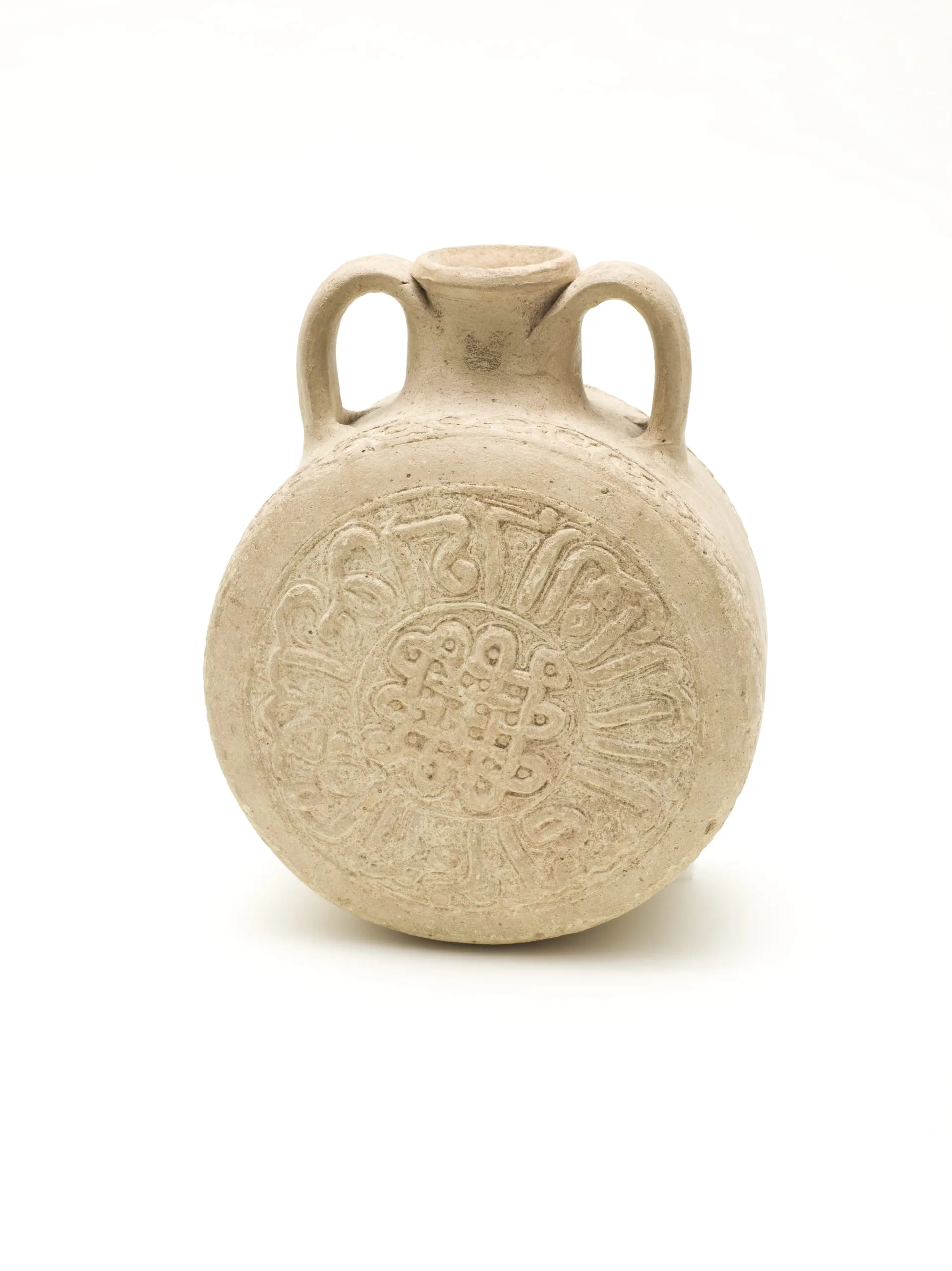
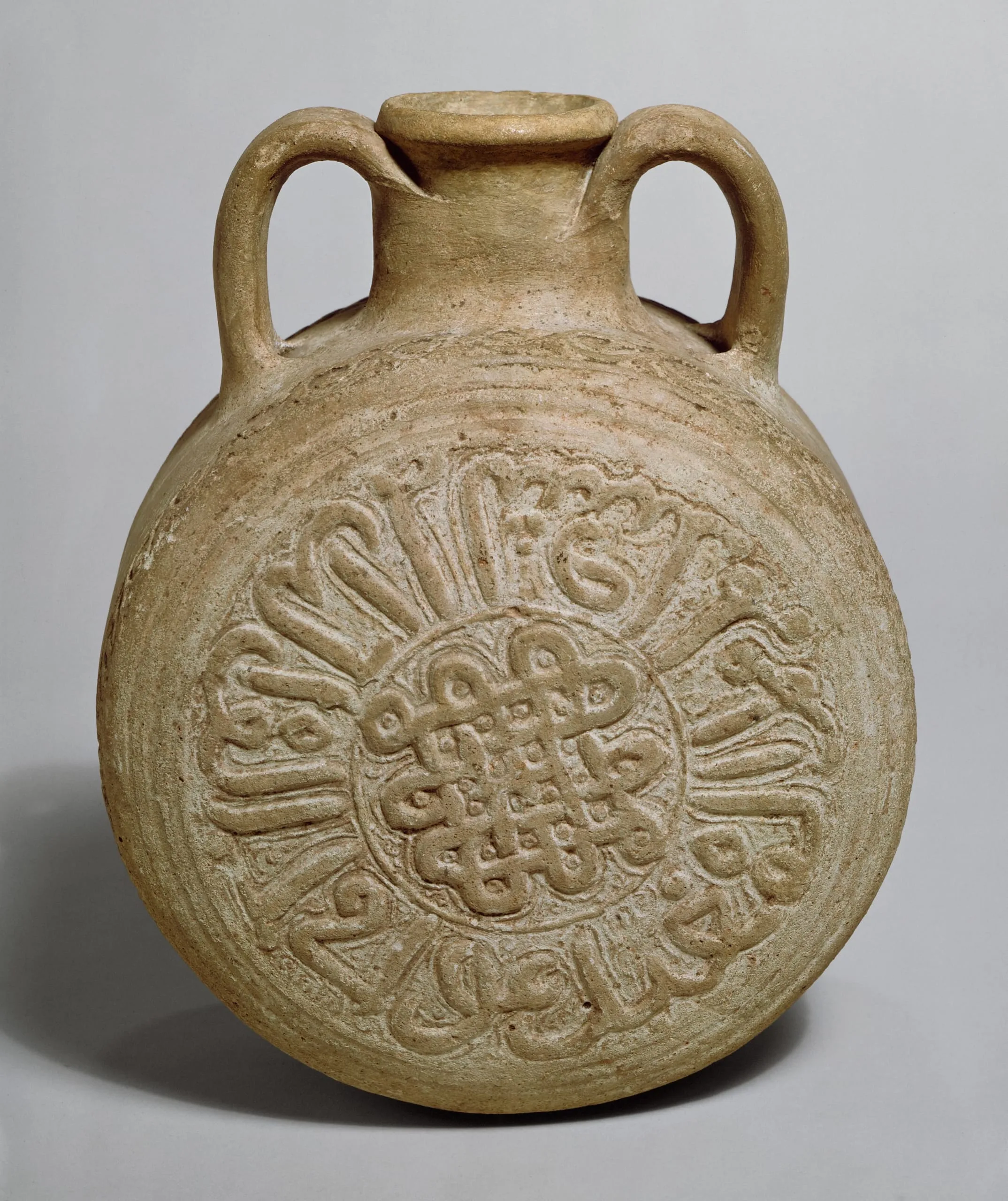
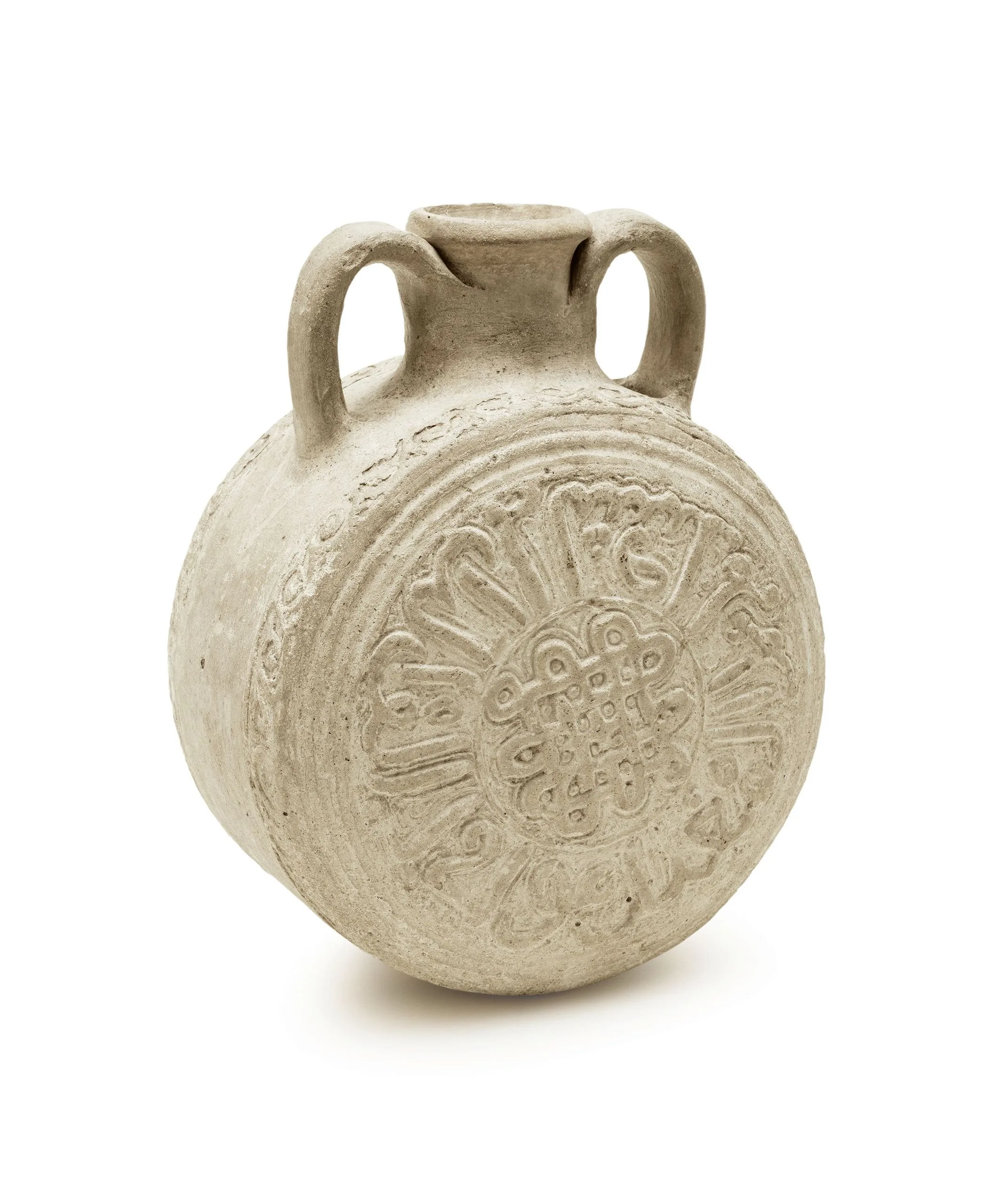
Unglazed ceramic pilgrim flask with a flat disk-shaped body, two loop handles, and molded sunburst and scrolling vine decoration in relief
Ceramic pilgrim flask with flat circular body, two loop handles, and short narrow neck, covered in a pale buff slip with molded relief decoration featuring a central medallion of interlaced knotwork surrounded by radiating scroll and floral motifs.
Ceramic pilgrim flask with a flat circular body and two loop handles, unglazed buff earthenware, with molded relief decoration featuring a central medallion of interlaced Arabic script surrounded by radiating petal forms.

Unknown, Canteen, 15th century, Los Angeles County Museum of Art, The Madina Collection of Islamic Art, gift of Camilla Chandler Frost, photo © Museum Associates/LACMA

Title
Canteen
Place Made
Syria or Egypt
Date Made
15th century
Medium
Fritware, unglazed
Dimensions
Height: 10 × 4 1/4 in. (25.4 × 10.8 cm) Diameter (Diameter): 7 7/8 in. (20.0025 cm)
Credit Line
The Madina Collection of Islamic Art, gift of Camilla Chandler Frost
Accession Number
M.2002.1.56
Classification
Ceramics
Collecting Area
Art of the Middle East: Islamic
Curatorial Notes

Traceable to Roman times, the basic form of the canteen has changed little over the centuries and is still in use today. While medieval Islamic canteens are sometimes referred to as pilgrim flasks, most seem to have played a more ordinary role as personal water vessels designed for portability. Although made in a variety of materials, canteens in the Islamic world most often were ceramic, and were frequently left unglazed to allow for evaporation to keep their contents cooler. Their applied handles enabled them to be suspended from a saddle or a belt. Despite their humble material, they were nonetheless often richly decorated, as can be seen in this example. Its molded ornament, identical on both sides, is dominated by a central medallion with an elaborately coiled knot motif surrounded by an inscription offering good wishes and providing the name of its maker, a certain al-Mufid. Such unglazed, molded canteens are especially associated with Syrian pottery workshops under the Mamluk dynasty (12501517) and must have been made for soldiers and their officers, as some carry the blazons or heraldic devices of high-ranking amirs.

2024
Selected Bibliography
  • Atil, Esin. Renaissance of Islam: Art of the Mamluks. Washington, D.C.: Smithsonian Institution Press, 1981.
  • Hess, Catherine. The Arts of Fire: Islamic Influences on Glass and Ceramics of the Italian Renaissance. Los Angeles: J. Paul Getty Trust, 2004.
  • Lo Terrenal y lo Divino: Arte Islámico siglos VII al XIX Colección del Museo de Arte del Condado de Los Ángeles. Santiago: Centro Cultural La Moneda, 2015.

  • Komaroff, Linda. Beauty and Identity: Islamic Art from the Los Angeles County Museum of Art. Los Angeles: Los Angeles County Museum of Art, 2016.
  • Townsend, Jen and Renée Zettle-Sterling. Cast: Art and Objects Made Using Humanity's Most Transformational Process. Atglen, PA: Schiffer Publishing Ltd., 2017.
  • Komaroff, Linda, editor. Dining with the Sultan: The Fine Art of Feasting. Los Angeles: Los Angeles County Museum of Art; New York: DelMonico Books, 2023.