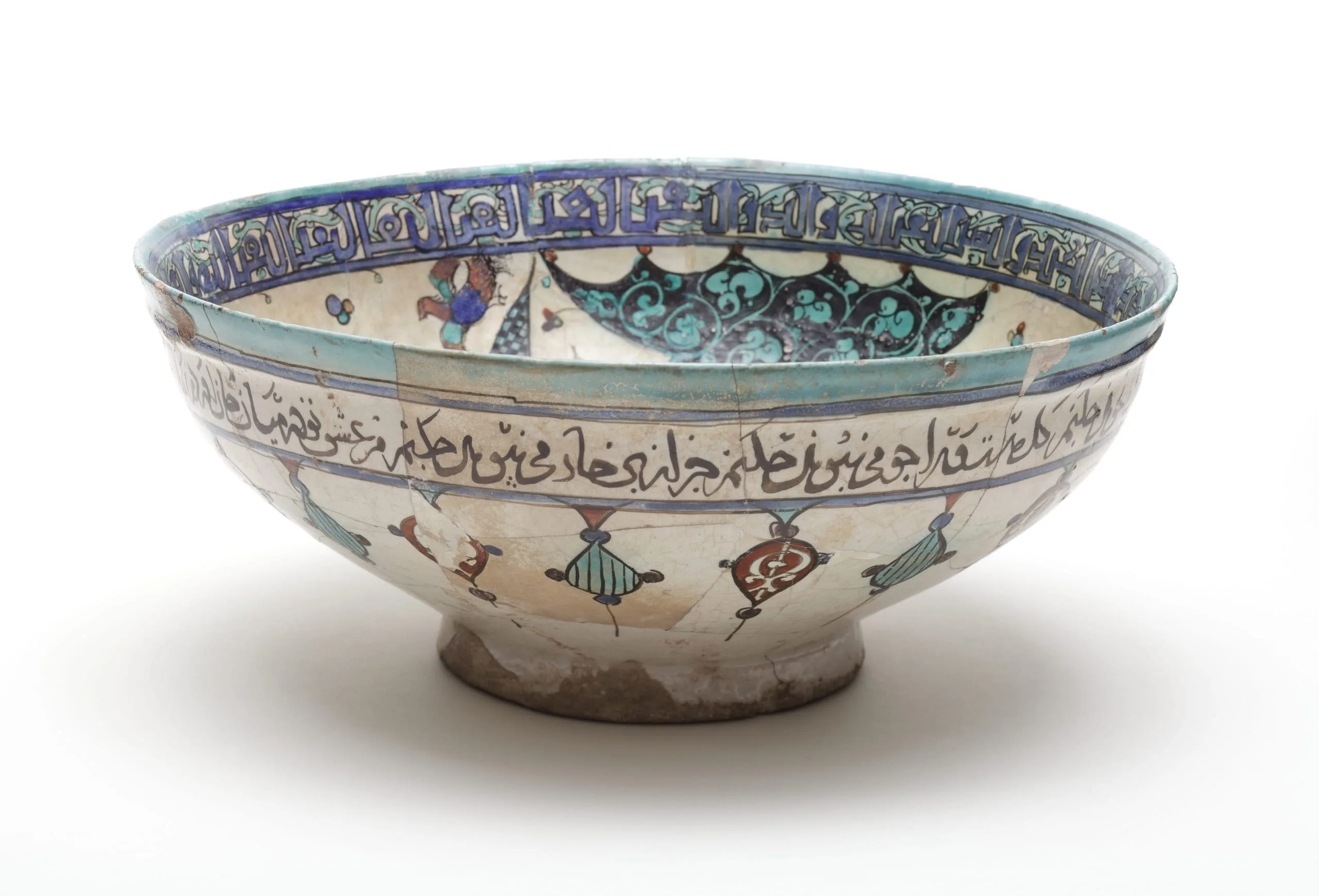
Mina’i wares such as this demonstrate the technical virtuosity of the Persian potter and the evident demand in medieval Iran for functional objects of great beauty. The method for producing the polychrome enamel pigments is described in a treatise on pottery making by Abu’l-Qasim of Kashan, completed in AD 1301, by which time mina’i or haft rang (seven colors) wares, as they are known in the textual tradition, were no longer being produced.
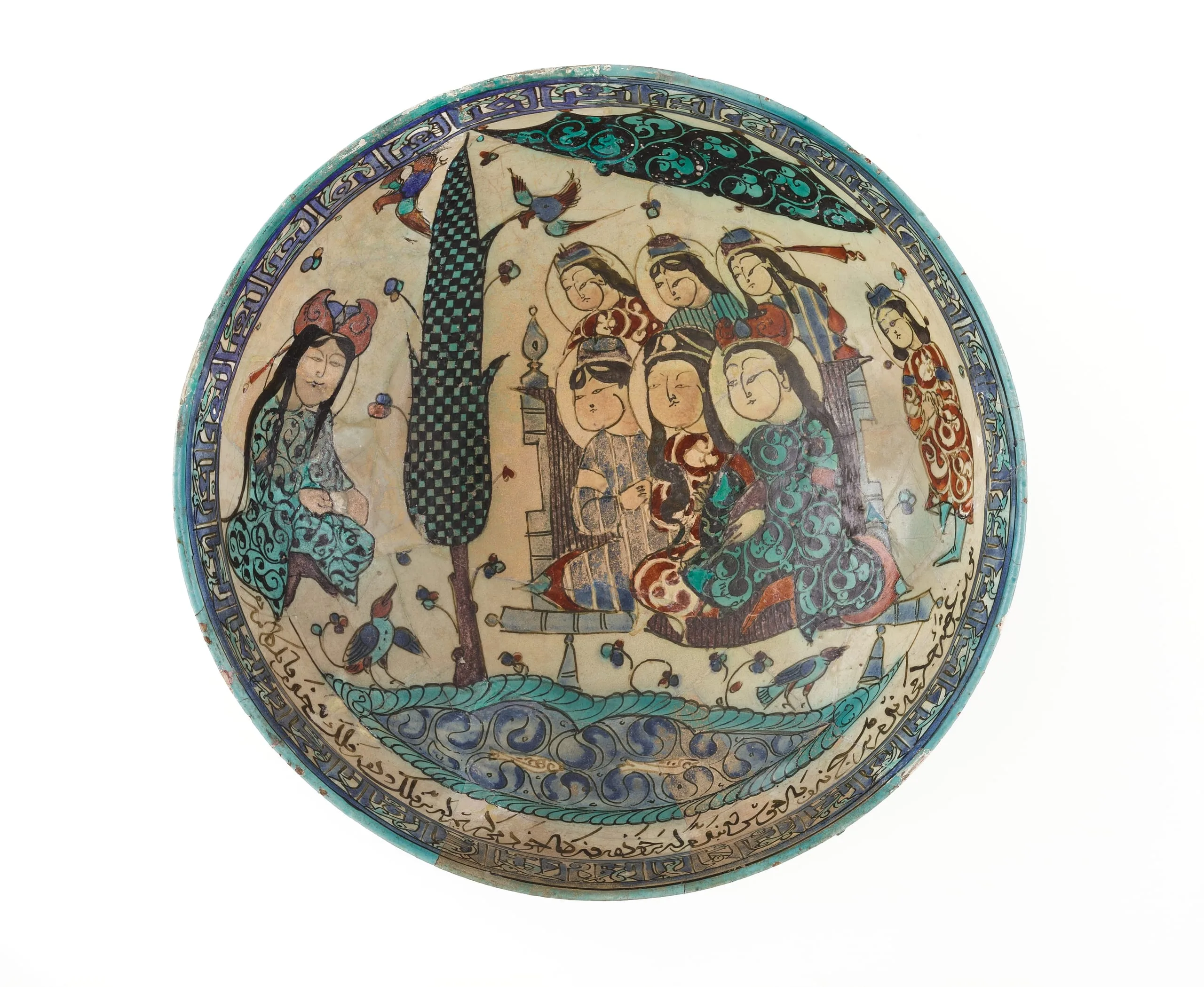
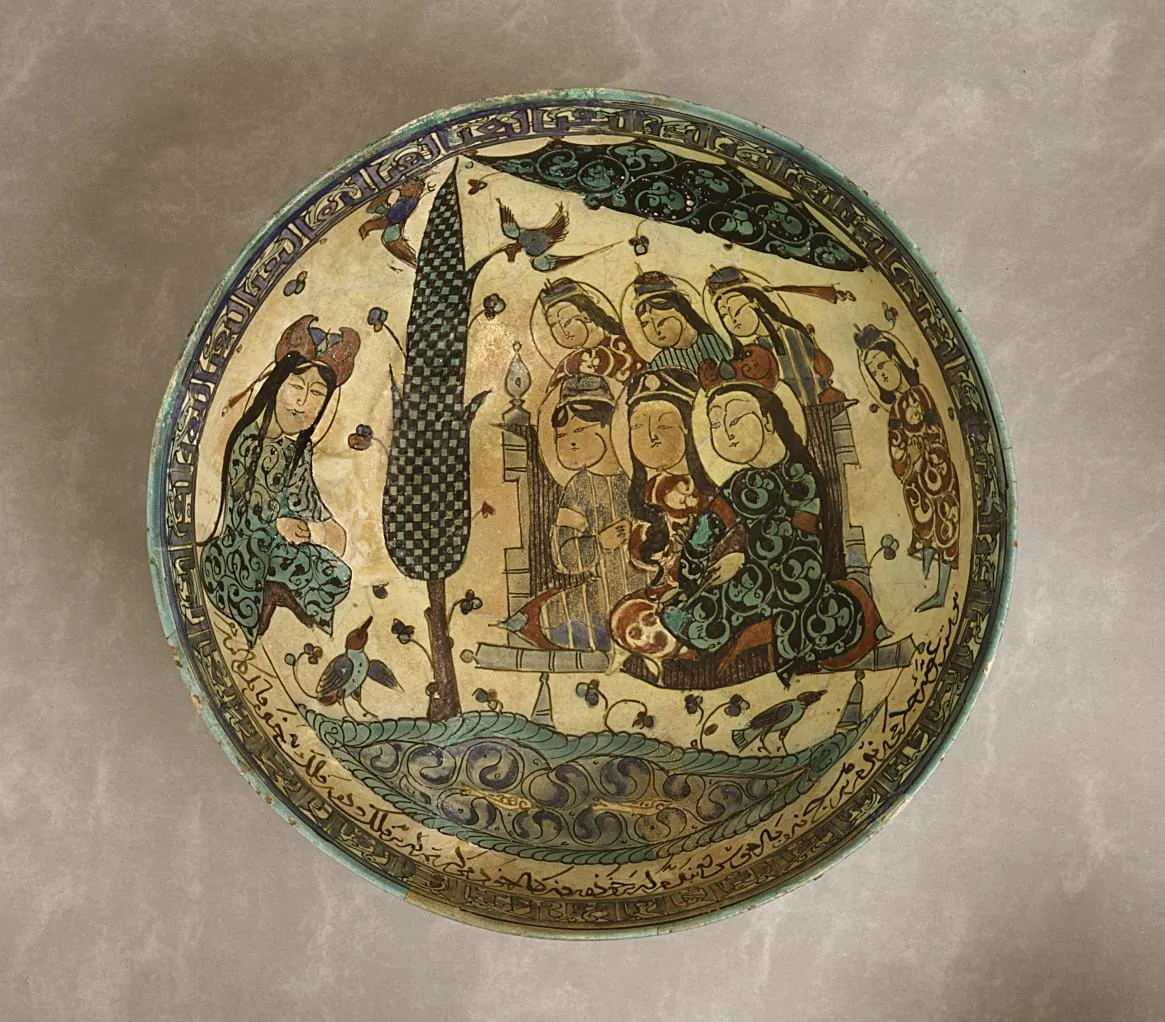
Some mina’i ceramics enjoy a particularly close relationship to poetry. Many examples are inscribed with verses, and others are decorated with figures referring to well-known poetic themes and tales, including Firdawsi’s Shahnama or Book of Kings, the Iranian national epic, completed in AD 1010. Several of these colorful wares, including this bowl, perhaps depict the act of poetic recitation itself: it can be imagined that the performer here, seated at the left before a courtly audience, is delivering the verses inscribed along the exterior rim of the bowl, which begin: "If the beloved leaves me, what am I to do? If s/he does not see the wisdom of our union, what am I to do?" An alternate interpretation proposes that the scene relates to the hero later king Faridun and his three sons, as recounted in the Shahnama.