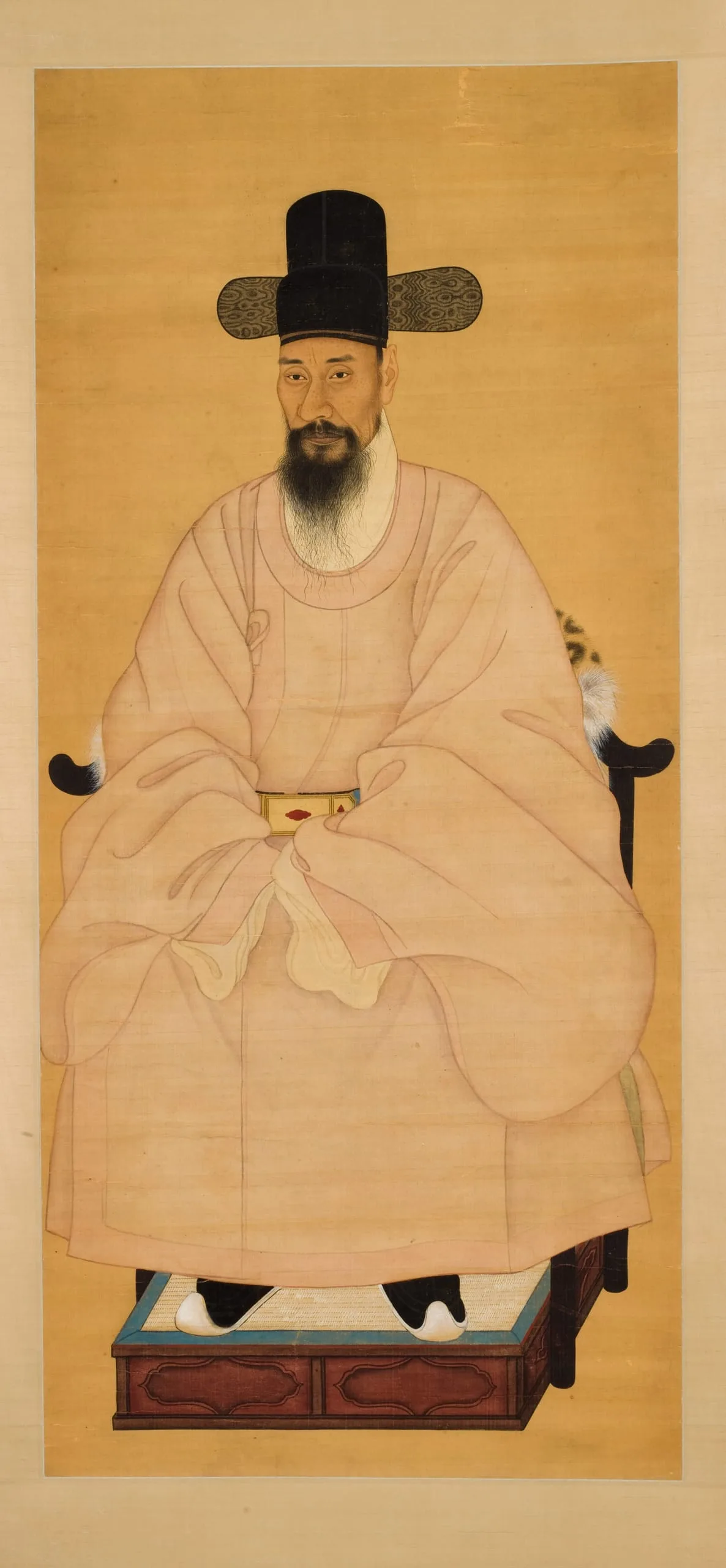
The primary concern of portrait painters in East Asia was to create a highly realistic portrayal of the sitter. It was so important that a traditional saying evolved: “If one hair is different from the real one, it is not the portrait of that person.” To produce realistic portraits, painters usually made numerous drafts before executing the final version.[1] Sometimes the artist produced several versions of same portrait so that the person who commissioned the painting could select the one he preferred.[2] Accuracy was also important because, if the sitter was an important person, the portrait would often be reproduced by later artists to disseminate the image or to create a replacement if the original was damaged.
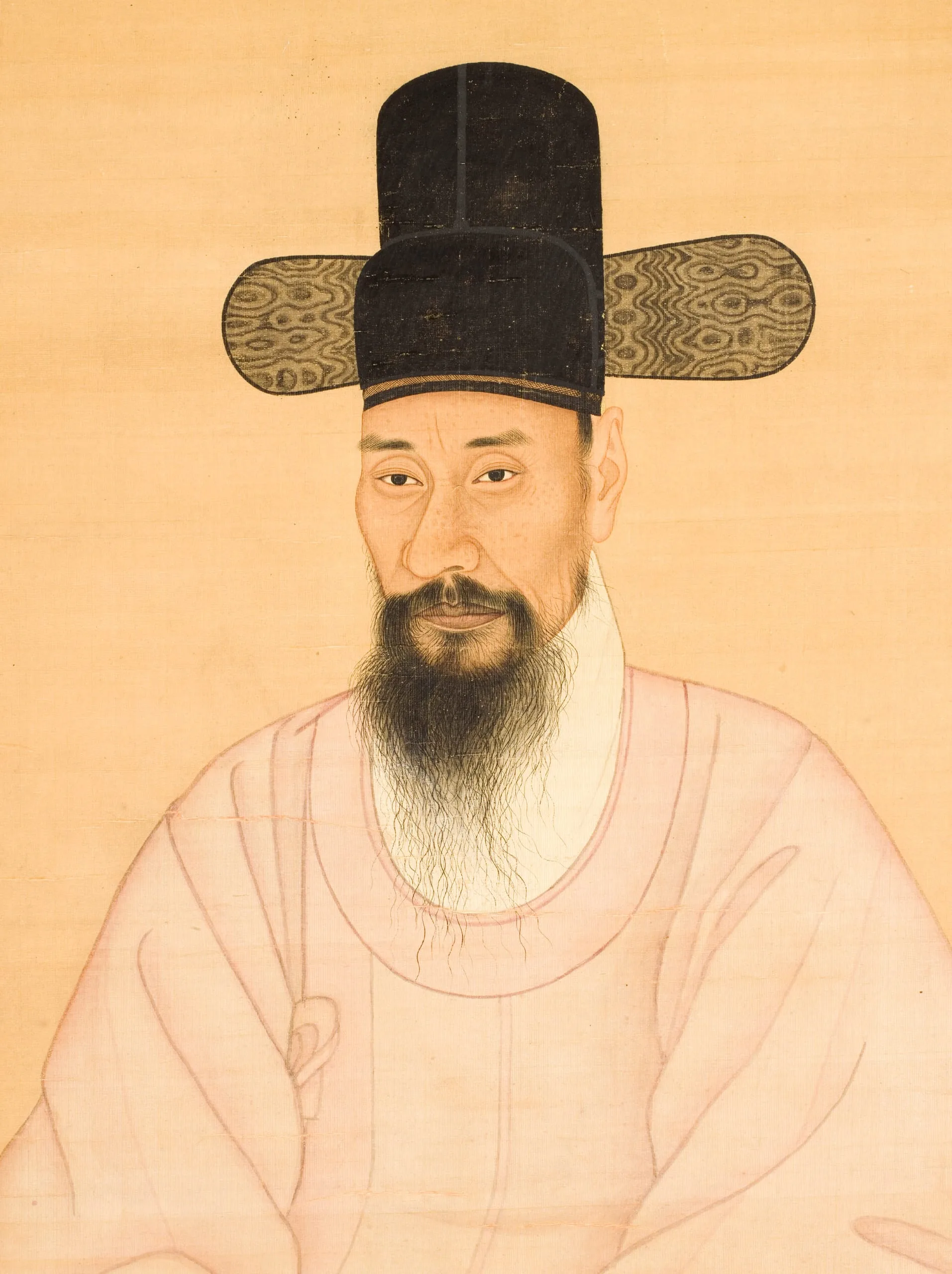
To represent the subject of a portrait accurately, the artist focused on the details of the face, leaving the robe and background more abstract and decorative. In most Korean portraits, the face is depicted with such great realism that even imperfections are carefully rendered to capture the distinguishing characteristics of the individual. In this unidentified portrait of a scholar-official wearing a pink robe, the face was painted so realistically that it reveals some moles on his nose and cheek as well as the wrinkles on his forehead (det.1). His beard was delicately painted in several intensive steps: after the artist painted the face with color pigment, he used layers of very thin white and black lines to form the beard.[3]
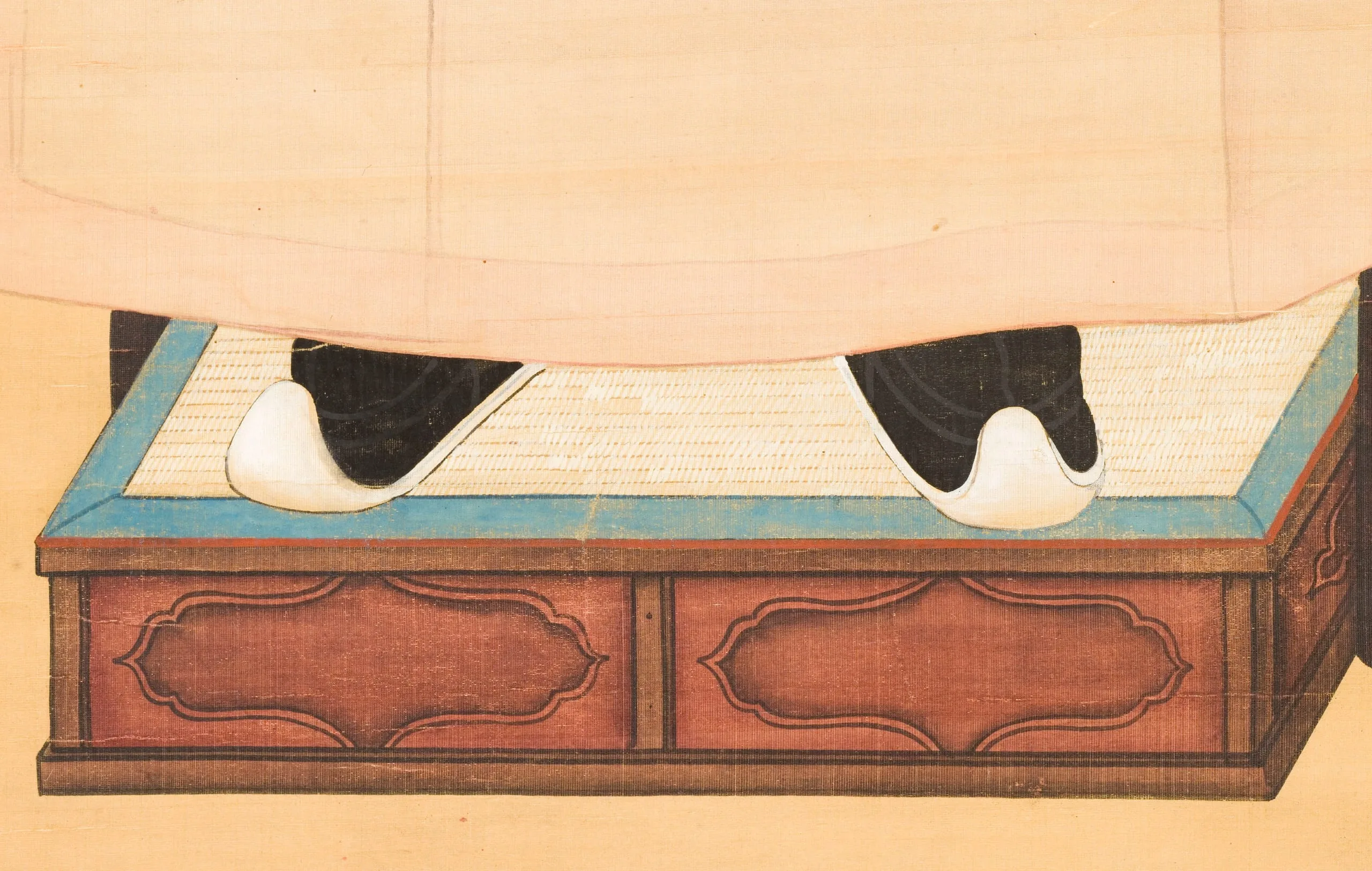
Because the painting does not include a signature or inscription, the identity of the sitter and the artist are unknown. The sitter wears an official’s robe without a rank badge.[4] This type of robe, called a sibok, was made of cotton or hemp rather than the high-quality silk used for the formal garments of the officials, which include rank badges.[5] An official wearing a sibok also usually wore a black hat, a belt, and wooden shoes, seen here. The sibok – a practical garment for daily activities – was either pink or blue. Because officials of the highest three ranks wore pink and those of lower ranks wore blue, the subject of LACMA’s portrait was clearly a high-ranking official.
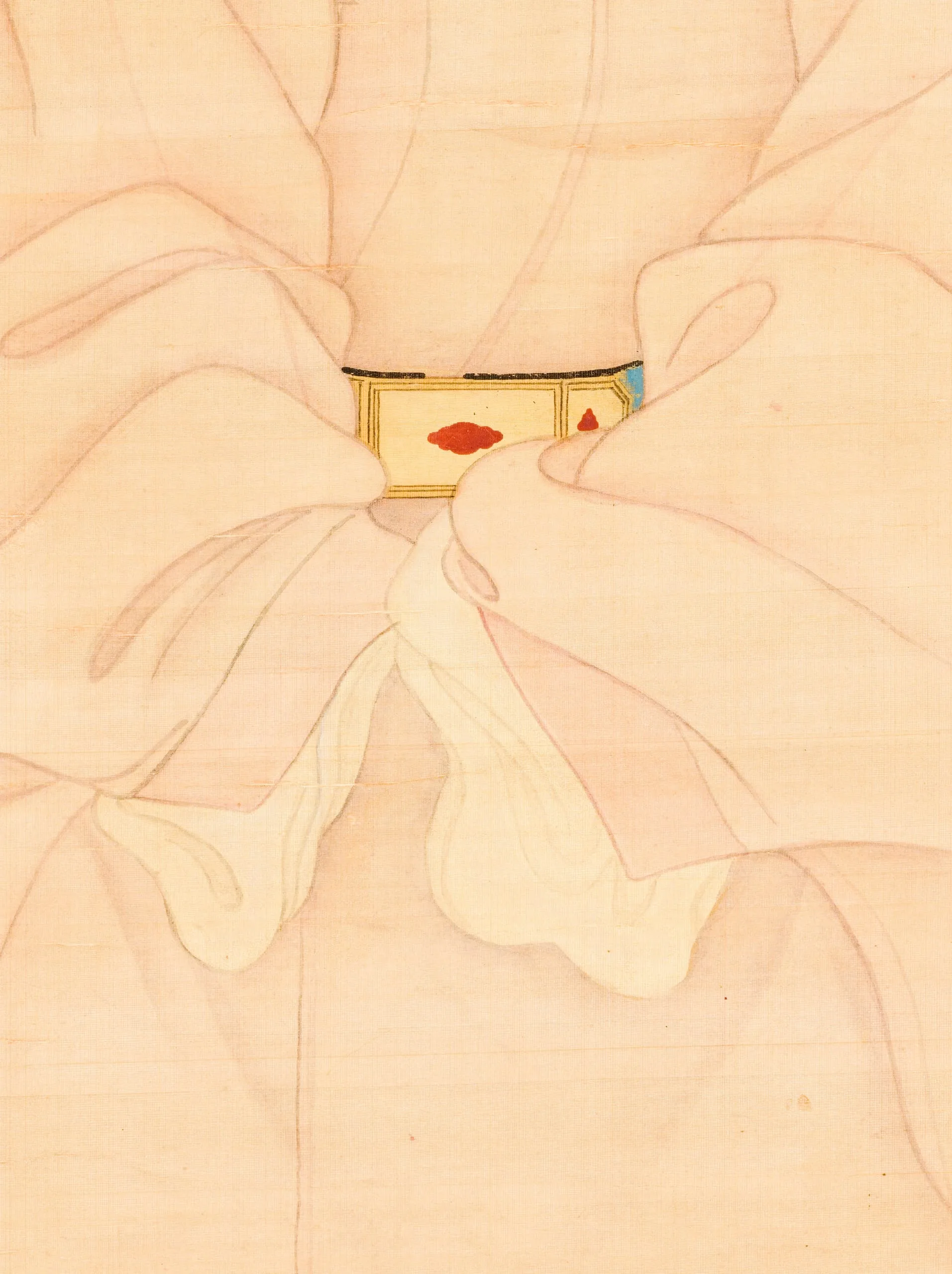
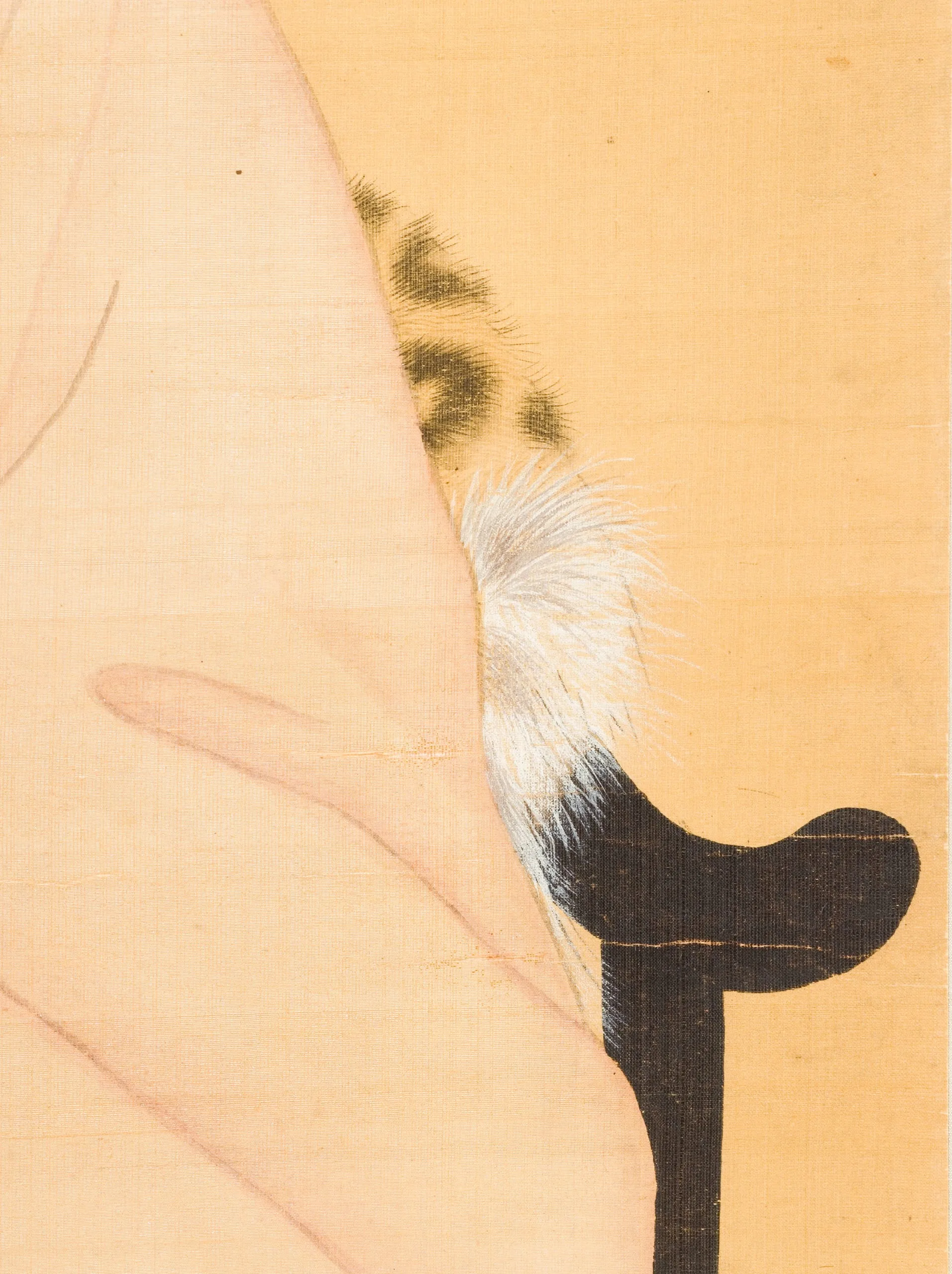
The background of this painting is plain – there is no exotic carpet or traditional Korean mat on floor – and the sitter’s feet rest on a simple wood footstool (det. 2). This unadorned portrait style first appeared in the eighteenth century and continued through the nineteenth century. The artist has used Western shading techniques, which can be seen, for example, in the face and in the creases of the robe (det. 3). Because these Western techniques were commonly used in nineteenth-century portraits, this portrait can be dated to the nineteenth century.
Footnotes
[1] For more on the portrait-making process in Korea, refer to the National Museum of Korea, Portrait Sketches of the Joseon Period, Chobon (Seoul: National Museum of Korea, 2007).
[2] For more about the production of multiple versions of portraits, see the entry in this online exhibition for Portrait of Scholar Official Yun Bonggu (1681 - 1767) in His Seventieth Year (M.2000.15.17).
[3] Cho Seonmi, “Historical Survey of Korean Portraits [Hanguk chosanghwa sajeok gaegwan],” in Seoul City Museum, Picturing Spirit: Portraiture in East Asia (Seoul: Aju munmul, 2004), 176.
[4] For a portrait of an official wearing a formal official robe with rank badges, see the entry in this online exhibition for Portrait of a Scholar‑Official in a Black Robe (M.2000.15.18).
[5] Hong Nayoung, “Sibok,” in Academy of Korean Studies, Encyclopedia of Korean Culture [Hanguk minjok munhwa daebaekgwa sajeon], vol. 13, 519.