LACMA

ShopMembershipMyLACMATickets
LACMA
Los Angeles County Museum of Art
5905 Wilshire Blvd.
Los Angeles, CA 90036
info@lacma.org
(323) 857-6000
Sign up to receive emails
Subscribe
© Museum Associates 2025

Museum Hours

Monday

11 am–6 pm

Tuesday

11 am–6 pm

Wednesday

Closed

Thursday

11 am–6 pm

Friday

11 am–8 pm

Saturday

10 am–7 pm

Sunday

10 am–7 pm


  • About LACMA
  • Jobs
  • Building LACMA
  • Host An Event
  • Unframed
  • Press
  • FAQs
  • Log in to MyLACMA
  • Privacy Policy
© Museum Associates 2025
Collections

Byeon Sang-byeok
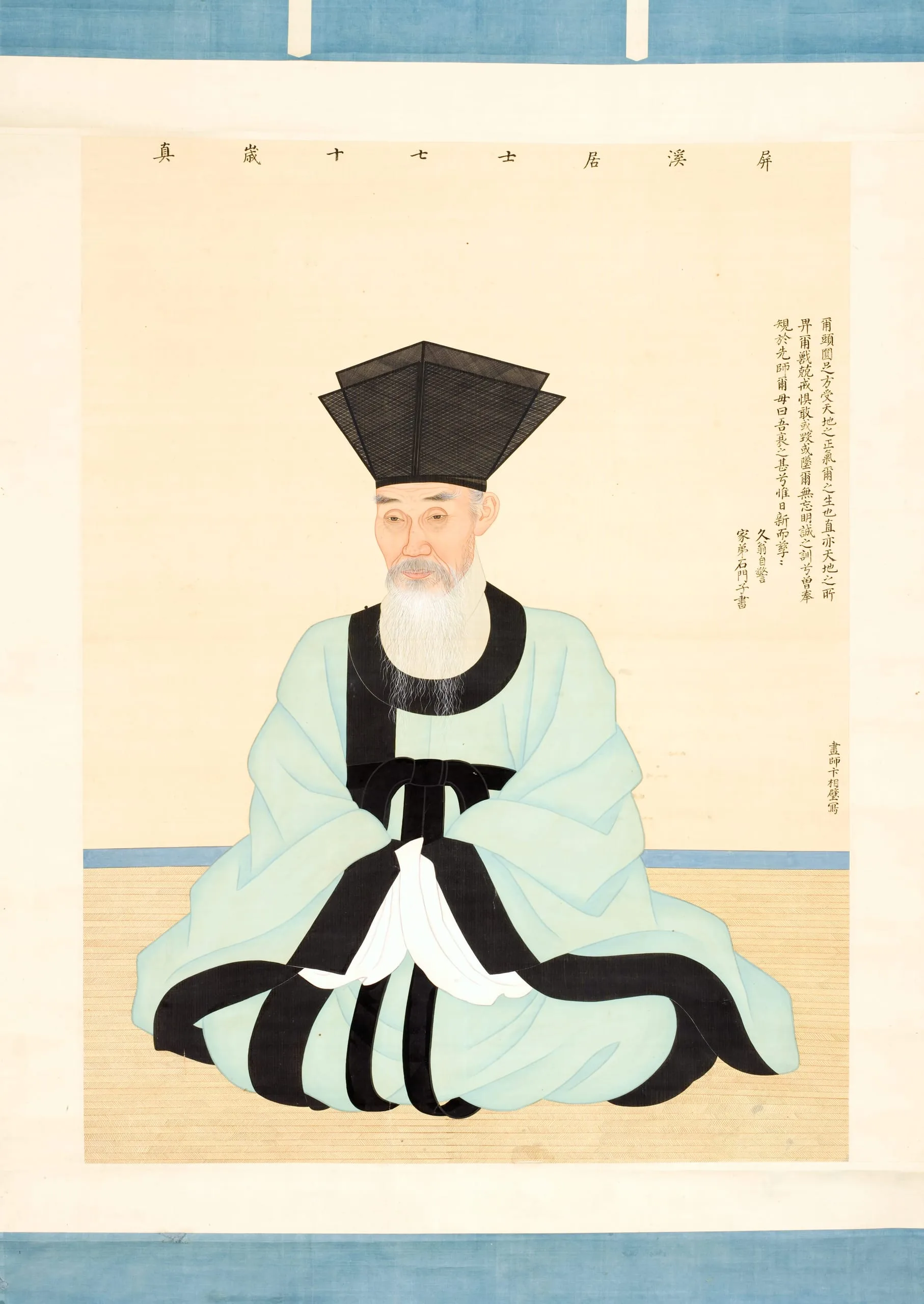
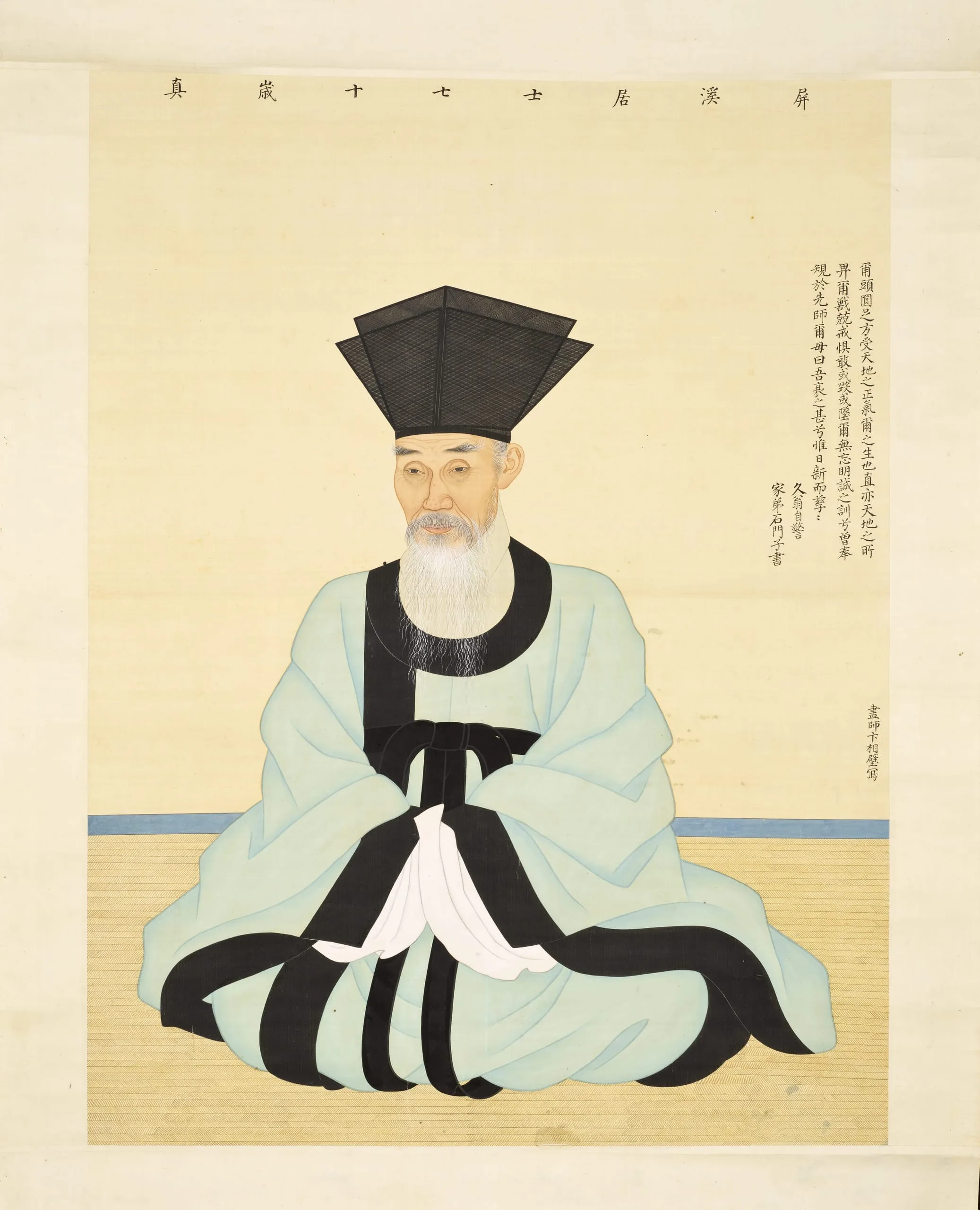
Portrait of Scholar-Official Yun Bonggu (1681-1767) in his Seventieth YearJoseon dynasty (1392-1910), dated 1750

Not on view
Hanging scroll portrait painting of a seated elder man in pale celadon robes with black trim and a wide black hat, with Chinese-script inscriptions above and to the right
Hanging scroll portrait of an elderly man with a white beard, seated on a mat in pale blue-green scholar's robes with black trim and a layered black official's hat; columns of Chinese characters appear along the top and right side.
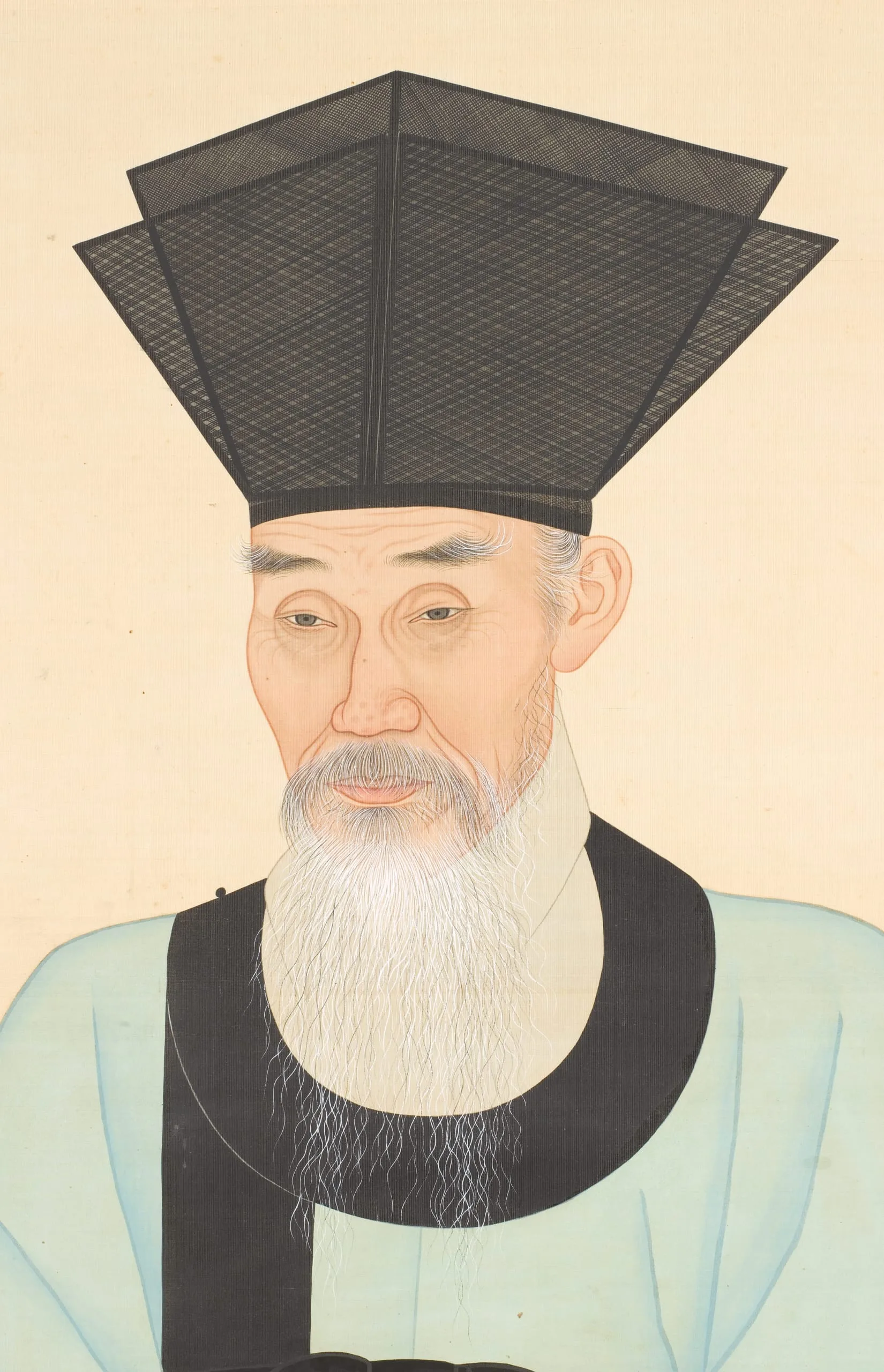
Hanging scroll portrait of an elderly man wearing a black gauze official's hat and pale blue robe with dark collar, with a long white beard, rendered in fine brushwork against a plain cream ground.
Horizontal paper panel with eight Chinese characters spaced evenly in a single row, rendered in fine brushwork
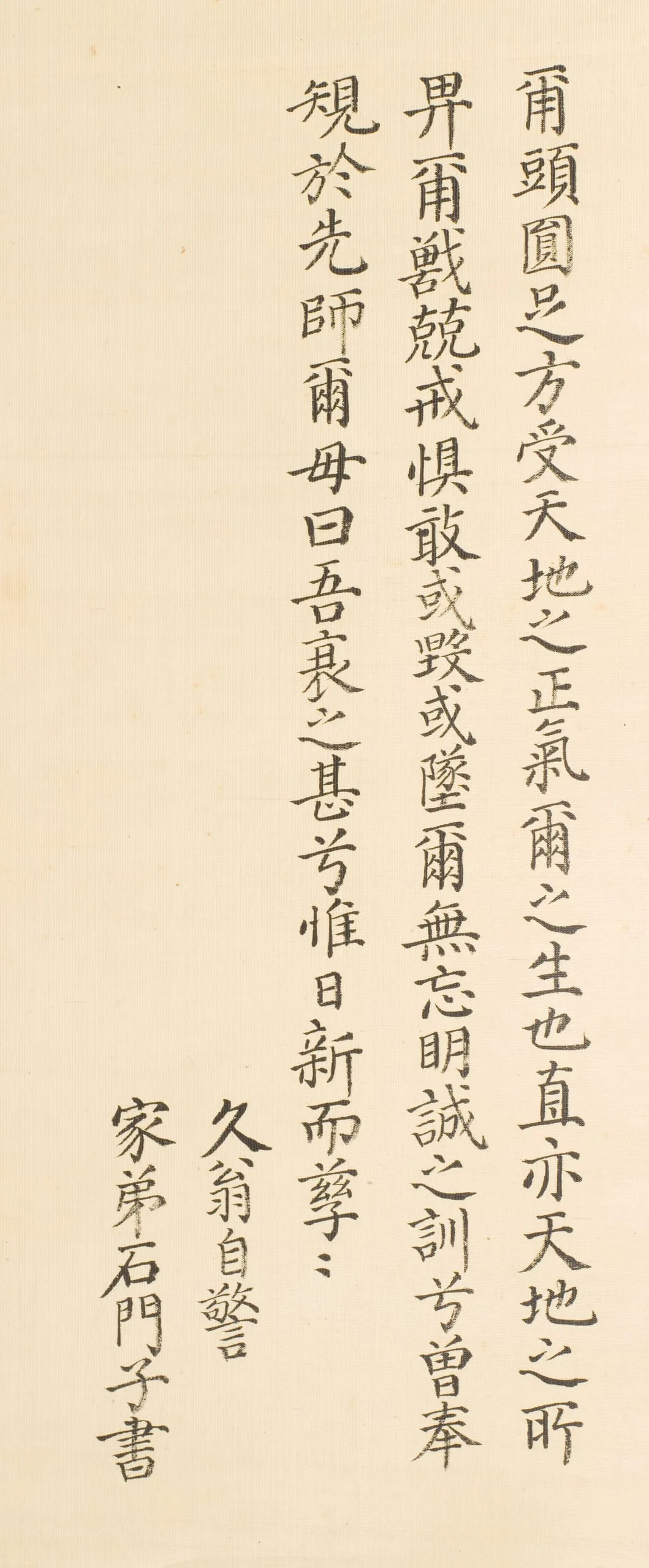
Ink on paper with columns of Chinese calligraphy in a fluid, semi-cursive script on cream-colored paper, with a signature and seal at lower left.
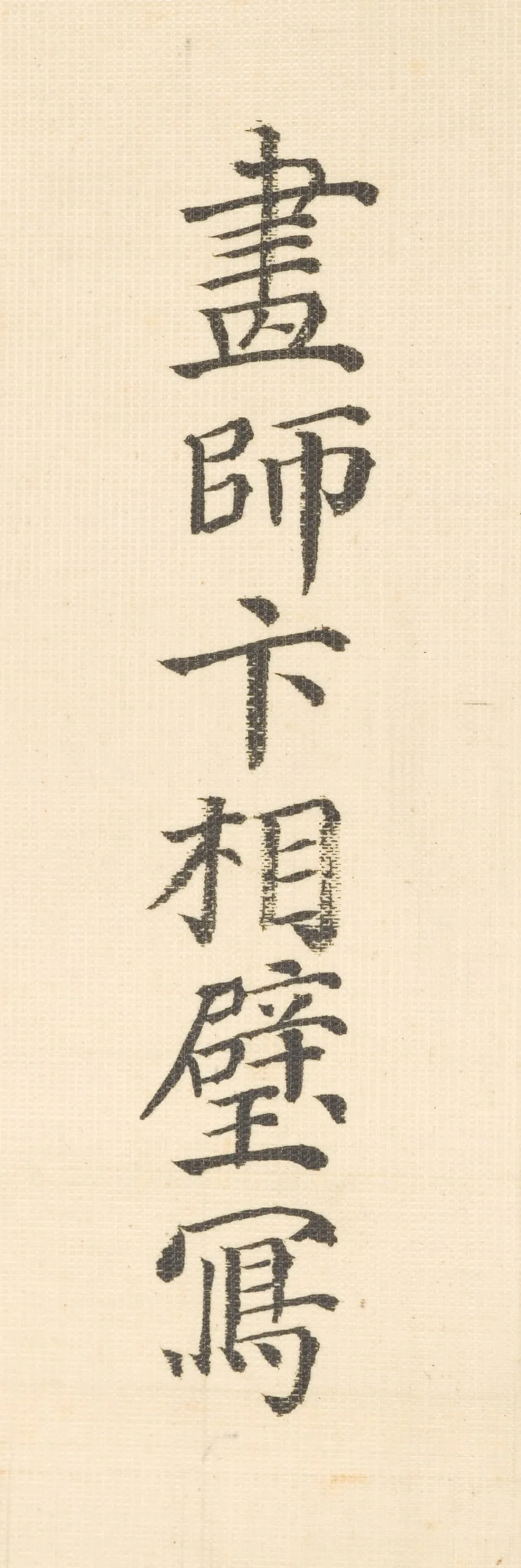
Ink on paper, vertical column of six large Chinese characters in regular script, brushed in black ink on a cream-colored ground.
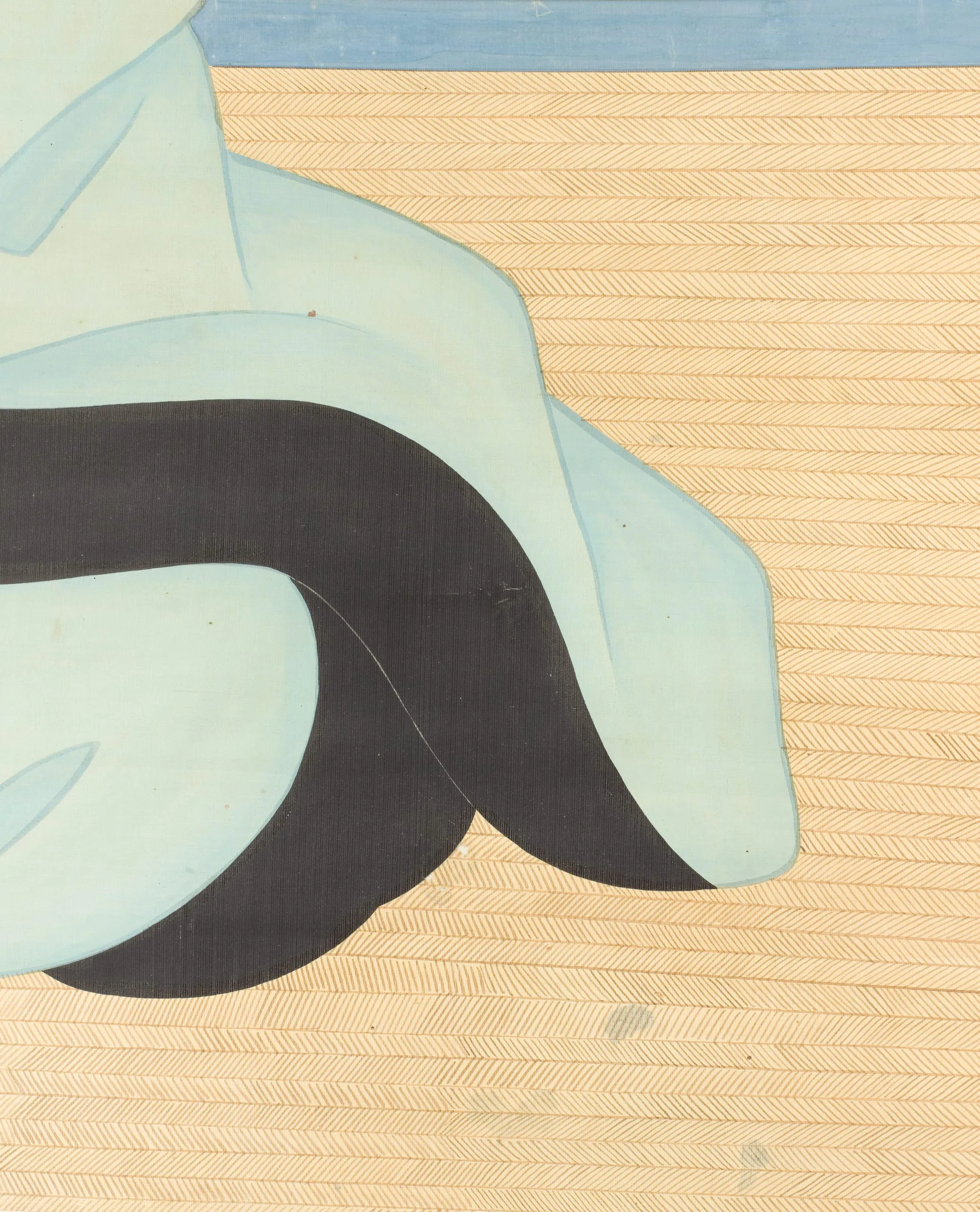
Painting with flat, simplified forms in pale blue and dark charcoal gray against a warm beige background with fine herringbone texture; cropped composition suggests a reclining figure, rendered with smooth, graphic outlines.
Artist or Maker
Byeon Sang-byeok
Korea, 1725-1775
Title
Portrait of Scholar-Official Yun Bonggu (1681-1767) in his Seventieth Year
Place Made
Korea
Date Made
Joseon dynasty (1392-1910), dated 1750
Medium
Hanging scroll, ink and color on silk
Dimensions
Image: 47 x 35 1/2 in. (119.38 x 90.17 cm); Mount: 76 1/2 x 43 1/2 in. (194.31 x 110.49 cm); Roller: 43 3/4 in. (111.13 cm)
Credit Line
Purchased with Museum Funds
Accession Number
M.2000.15.17
Classification
Paintings
Collecting Area
Chinese and Korean Art
Curatorial Notes

Yun Bonggu first met the artist Byeon Sangbyeok for the occasion of this seventieth-year portrait, although Yun confessed that he had previously heard about the artist many times. After he saw the final version, Yun praised the painter not only for painting his image so realistically but also for capturing his spirit. When the portrait was displayed, Yun noted that he was amused by the fact that neighbors were awed by the realistic depiction.[9] However, Yun Bonggu also appreciated that the artist had fulfilled one of the primary functions of formal portraits in Korea: the portrait would transmit Yun Bonggu’s ideas to future generations.

Footnotes

[1] It was believed in ancient Chinese philosophy that heaven was round and earth was square. According to the physiognomy theory of Yi Hwang (1501-1570), the expression “a head is round and feet square” means that the body resembles the heaven and earth and, therefore, the universe.

[2] 屏溪居士七十歲真

甭[爾]頭圓足方 受天地之正氣 爾之生也直 亦天地之所畀
甭[爾]戰兢戒慎 敢或毀或墜 爾無忘明誠之訓兮 曾奉規於先師
爾毋曰 吾衰之甚兮 惟日新而孳孳

久翁自警 家弟石門子書

畫師卞相璧寫

The translation into English was modified from Kang Kwan-shik, “Self-cultivation in the Portraits of Joseon Literati Scholars,” Korea Journal (summer 2005), 200.

[3] A representative example of a Byeon cat painting is Cats and Sparrows (National Museum of Korea). For an illustration, see Hwi-joon Ahn, Gukbo 10: Huihwa (Seoul: Aegyung, 1989), 129.

[4] Choi Sunwu, “Byeon Sangbyeok,” in Encyclopedia of Korean Culture [Hanguk minjok daebaekgwa sajeon] , vol. 9, 668.

[5] Yun Bonggu’s comment, which is the same as the inscription on the painting in discussion, was included in his own book: Yun Bonggu, Collected Works of Byonggye [Byeongye sunsaeng jip], gwon 44, 31.

[6] Concerning the relationship between identity and portraits, see Kang Kwan-shik, “Self-cultivation in the Portraits of Joseon Literati Scholars,” Korea Journal (summer 2005), 182-215. The original article, in Korean, is Kang Kwan-shik, “Joseon sidae chosanghwa eui dosang gwa shimsang,” Misul sahak 15 (2001.8), 7-48. The discussion between the author and discussant, Yi Taeho, follows in Misul sahak 15 (2001.8), 49-55.

[7] Two of Yun’s portraits are now in the National Museum of Korea. See Seonmi Cho, Korean Portraits [Hanguk eu chosanghua] (Seoul: Yeolhwadang, 1983), 310.

[8] Yun Bonggu, Collected Works of Byonggye [Byeongye sunsaeng jip], gwon 43, 42b, 43a.

[9] Ibid.
Selected Bibliography
  • Moon, Dong soo. 2012. The Secret of the Joseon Portraits. Seoul: National Museum of Korea.
  • Woo, Hyunsoo, ed. Treasures from Korea: Arts and Culture of the Joseon Dynasty, 1392-1910. Philadelphia: Philadelphia Museum of Art, 2014.
  • Korean Art Collection of the Los Angeles County Museum of Art, U.S.A. Daejeon, Republic of Korea: National Research Institute of Cultural Heritage, 2012.
  • Wilson, J. Keith. "Korean Art at the Los Angeles County Museum of Art." in Korean Art: Articles from Orientations 1970-2013, edited by Yifawn Lee and Jason Steuber, 428-35. Hong Kong: Orientations Magazine Ltd, 2014.
  • Muchnic, Suzanne. LACMA So Far: Portrait of a Museum in the Making. San Marino, California: Huntington Library, Art Collections, and Botanical Gardens, 2015.