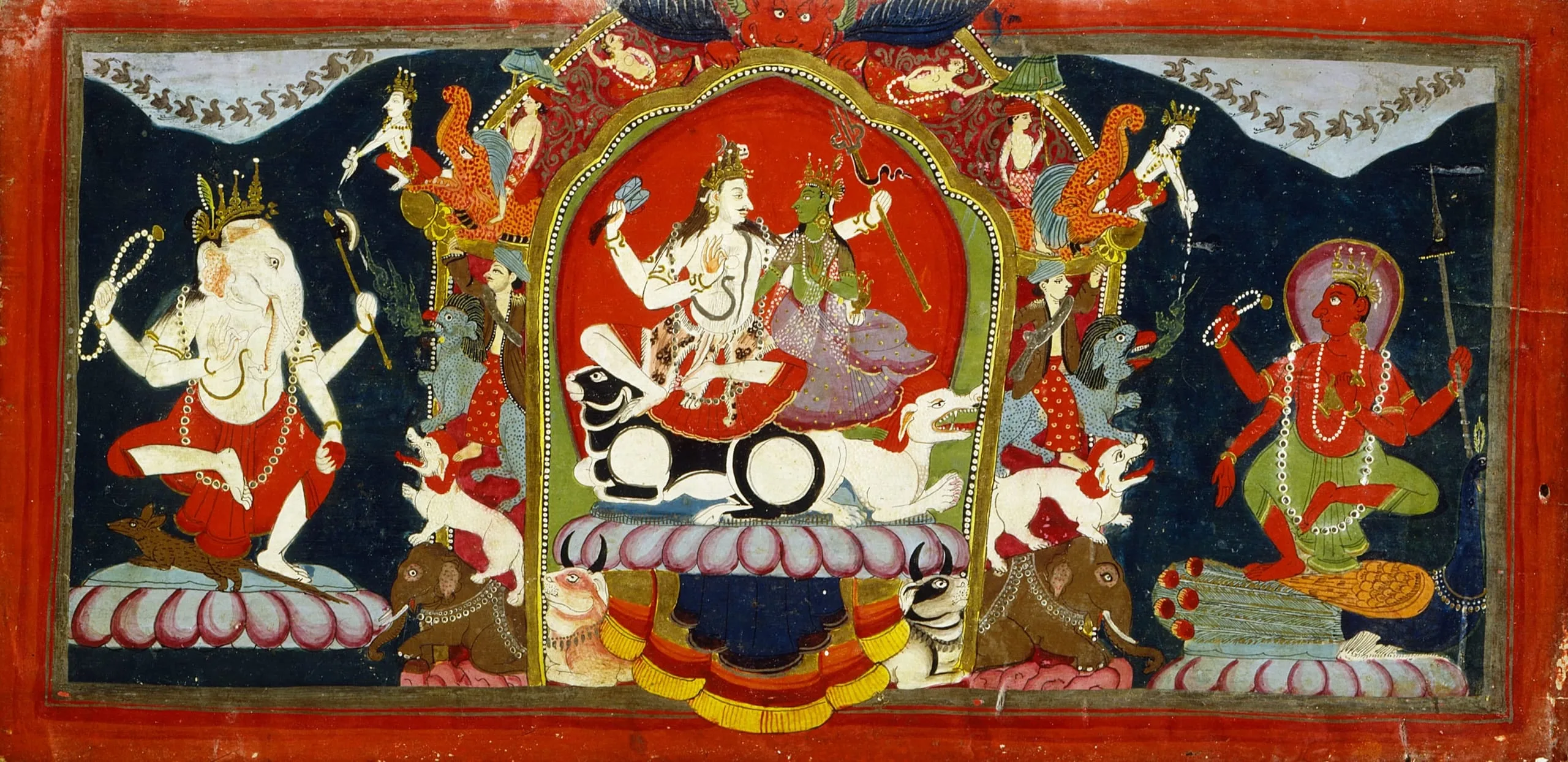
This illustrated manuscript cover probably once bound a Shivadharmapurana, a compilation of mythological stories about the Hindu god Shiva. In the center of the composition is Shiva, in this form called Maheshvara (the Great Lord), seated with his wife, Parvati, here called Uma (a variant form of Mother). Beneath the holy couple are their vehicles, his bull and her lion. Flanking them are their sons, the elephant-headed Ganesha and Karttikeya, who are shown dancing on their respective mounts, the rat and peacock.
Although the subject matter is Indian in origin, Nepalese artists developed their own innovations. The elaborate arch (torana) that enshrines Maheshvara and Uma is a characteristic entryway element of temple architecture in the Kathmandu Valley. Its complex iconography features various entities drawn from the South Asia religious pantheon. Auspicious mythical creatures include the makaras (mythical aquatic creatures associated with fecundity), fire-breathing dragons (assimilated from Tibeto-Chinese artistic traditions), and a stylized lion’s head known as a kirttimukha (face of glory) at the apex of the arch. Powerful animals associated with royalty and typically depicted on traditional South Asian thronebacks include the elephants and lions at the base of the arch. Celestial and earthly attendants in traditional Nepalese garb ride the great animals, carry honorific parasols, and make salutatory gestures.