LACMA

ShopMembershipMyLACMATickets
LACMA
Los Angeles County Museum of Art
5905 Wilshire Blvd.
Los Angeles, CA 90036
info@lacma.org
(323) 857-6000
Sign up to receive emails
Subscribe
© Museum Associates 2025

Museum Hours

Monday

11 am–6 pm

Tuesday

11 am–6 pm

Wednesday

Closed

Thursday

11 am–6 pm

Friday

11 am–8 pm

Saturday

10 am–7 pm

Sunday

10 am–7 pm


  • About LACMA
  • Jobs
  • Building LACMA
  • Host An Event
  • Unframed
  • Press
  • FAQs
  • Log in to MyLACMA
  • Privacy Policy
© Museum Associates 2025
Collections

Unknown
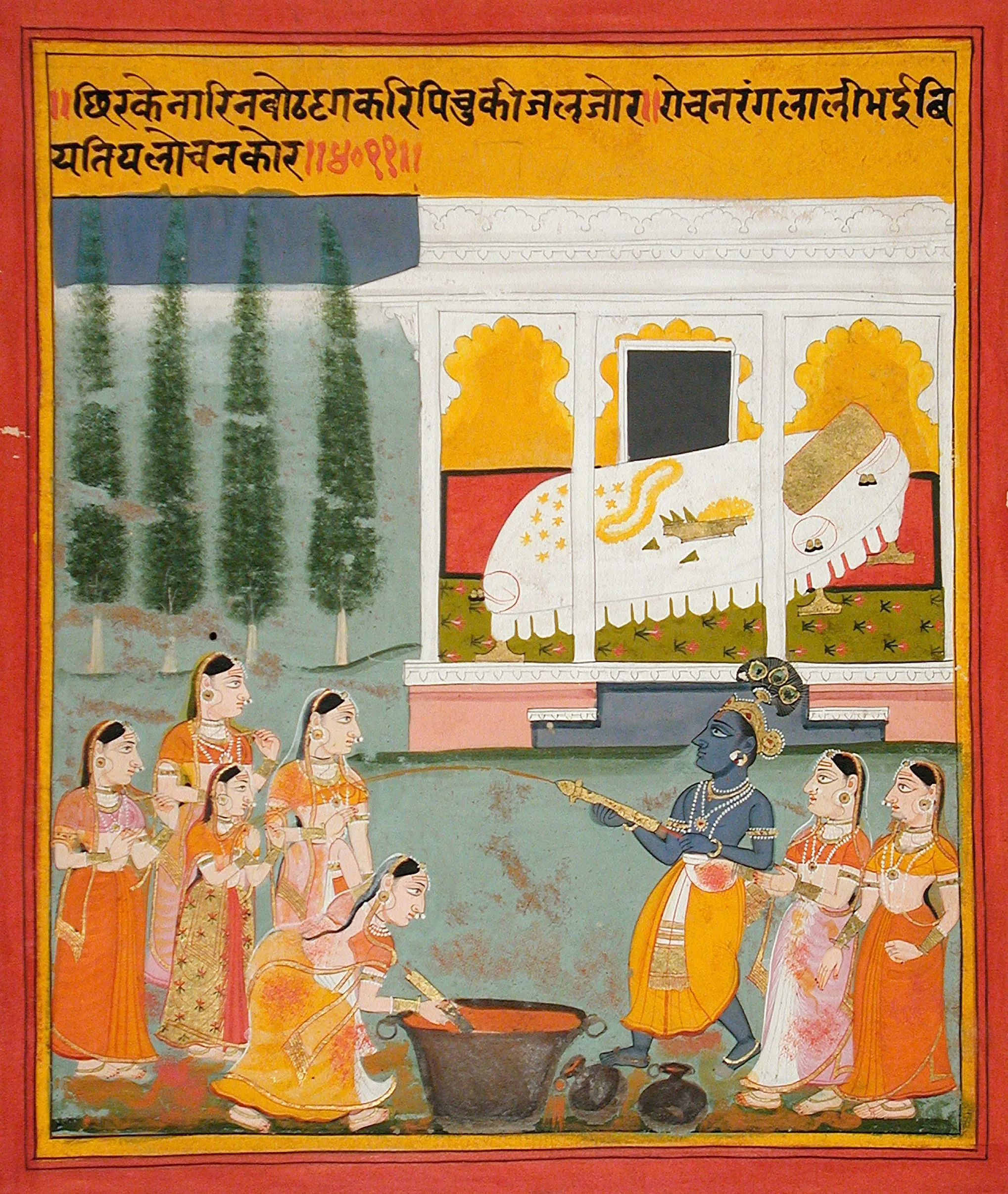
Krishna and Gopis Celebrating the Holi Festivalcirca 1700-1720

Not on view
Indian painting on paper, blue-skinned male figure with peacock-feather crown extends a stick toward a large vessel, surrounded by richly dressed women; pavilion with reclining figure visible behind; Devanagari text above
Artist or Maker
Unknown
Title
Krishna and Gopis Celebrating the Holi Festival
Place Made
India, Rajasthan, Mewar
Date Made
circa 1700-1720
Medium
Opaque watercolor, gold, and ink on paper
Dimensions
8 3/16 x 7 1/8 in. (20.8 x 18.1 cm)
Credit Line
Gift of Jane Greenough Green in memory of Edward Pelton Green
Accession Number
AC1999.127.23
Classification
Drawings
Collecting Area
South and Southeast Asian Art
Curatorial Notes

The Holi Festival in India, celebrated in the Hindu month of Phalguna (February-March), heralds the arrival of spring, the end of winter, and the divine love of Radha and Krishna. The popular festival engenders communal revelry with celebrators in a joyous frenzy spraying everyone with red-colored water shot from oversize syringes, throwing balloons filled with colored water at each other, and pelting each other with colored powder. Merrymakers carrying drums and other musical instruments wander the streets singing, dancing, and enjoying delicacies.

Here, the blue-skinned Krishna shoots a stream of red water with a large syringe onto a group of gopis (herdswomen). Another gopi is refilling her syringe from a large vat of red oblations. Krishna and the gopis are covered with red water stains. In a palace bedchamber behind them a king-size bed prepared with cushions, garlands, and pan (betelnut quids) symbolizes their ensuing rapturous tryst. The header is inscribed with poetic verses, which have yet to be translated. See also M.76.149.2, M.79.252.7, and M.81.280.2.