- Title
- Cane Handle Inscribed to Tipu Sultan (r. 1782-1799)
- Date Made
- circa 1800-1850
- Medium
- Antler with traces of gilding and foil-backed gemstones and insets
- Dimensions
- 2 x 5 3/4 x 1 1/2 in. (5.08 x 14.61 x 3.81 cm)
- Accession Number
- AC1999.147.1
- Curatorial Notes
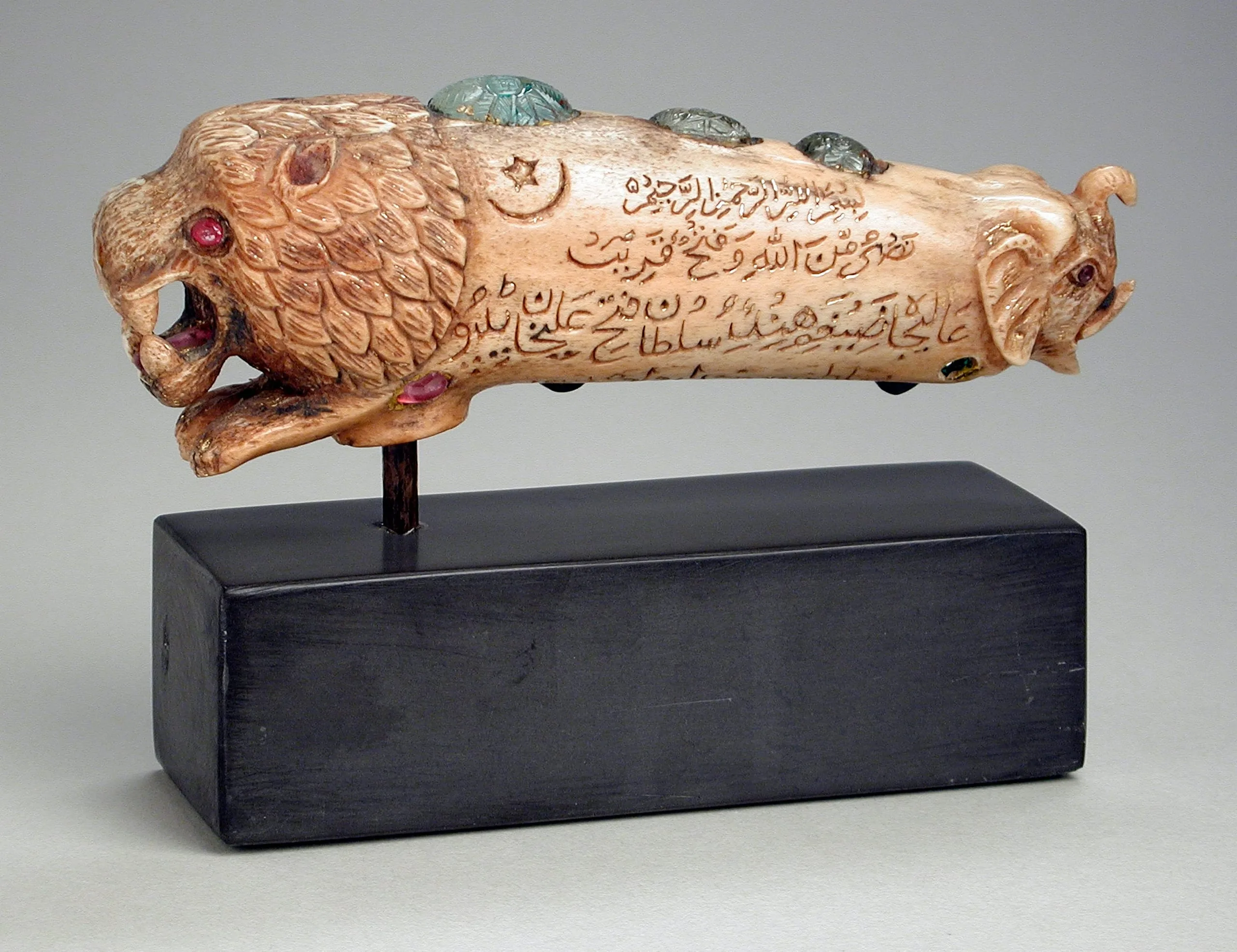
Ornate walking canes were a fashionable accoutrement and status symbol for wealthy men and women in the mid-17th to 19th centuries. Thanks to a fresh reading of this cane handle’s dedicatory inscription by Mohammed Masood (personal communication), the inscription with the name and titles of Tipu Sultan (r. 1782–1799) and the Hijri date 1198 (November 1783-November 1784) is now thought to be likely apocryphal. Tipu Sultan ascended the throne of Mysore in December 1782 after the death of his father Sultan Hyder Ali (r. 1761–1782). His opulent reign is known for many administrative and military innovations. Called the “Tiger of Mysore,” he died defending his palace at Seringapatam (modern Srirangapatna) in May 1799. Because of his notoriety, numerous objects were falsely ascribed to Tipu as collector’s items.
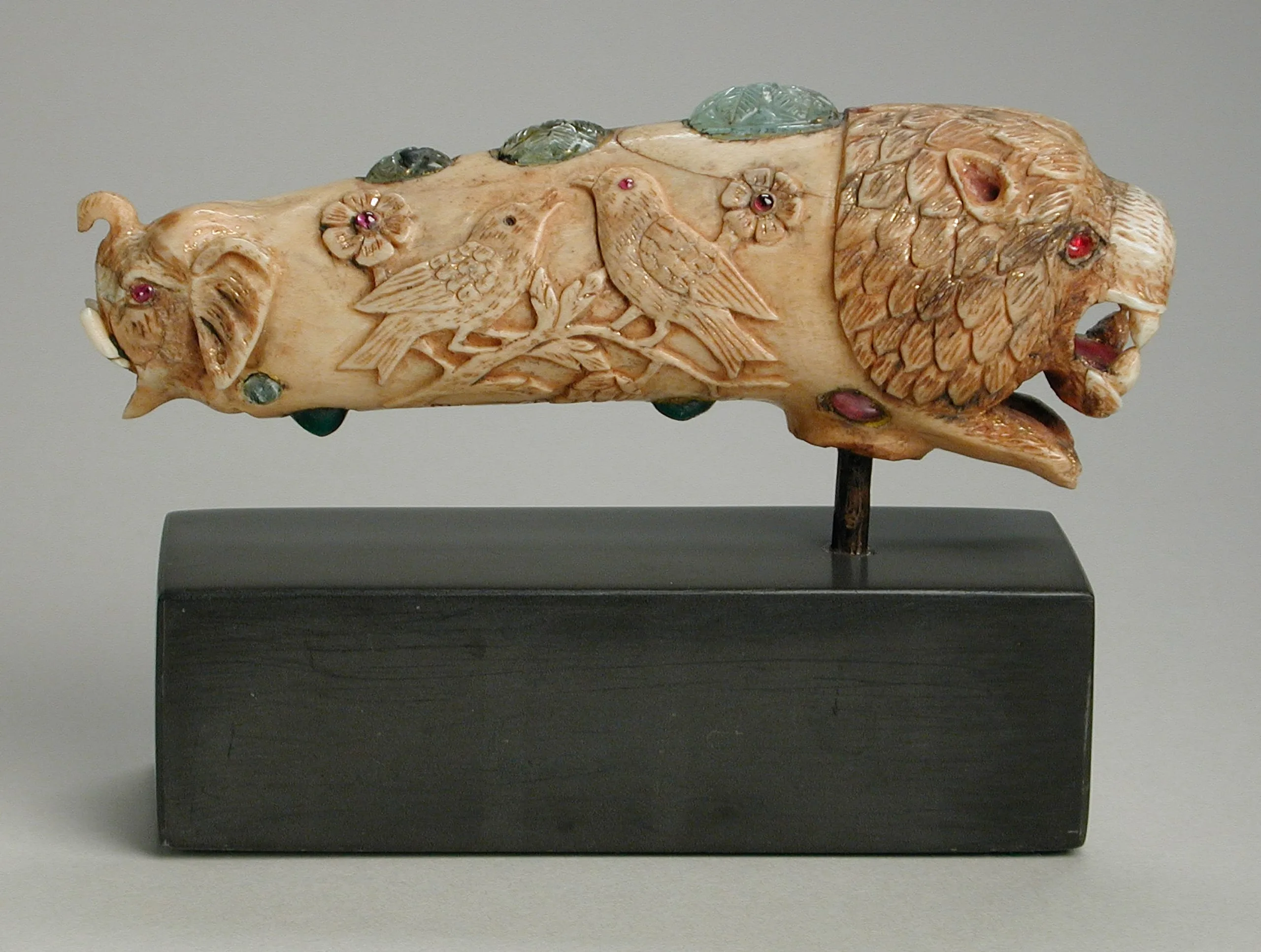
Fashioned of antler, the cane handle’s technical design is inspired by European L-shaped cane handles, perhaps specifically a French opera-style cane handle given their similar shape and Tipu Sultan’s strong ties to the French. It has two animal head terminals. The primary terminal in the form of a roaring lion is positioned above of the vertical shank originally leading to the metal collar that connected the handle to the wooden shaft. The secondary terminal is a smaller elephant’s head. The inscription is engraved on one side of the lion's torso and the bottom. The other side features two birds-on-blossoming branches. The present gemstones and insets are later replacements.